Introduction
The government of Gujarat Maritime Board (GMB) has just secured approval for a sweeping set of six new maritime policies aimed at transforming the state’s ports and coastal infrastructure. This major regulatory overhaul reflects Gujarat’s ambition to cement its place as a top maritime hub in India improving port governance, enabling modern shipbuilding, managing coastal land efficiently, and ensuring safer navigation. In this article, we dive into the details of these new policies and what they mean for marine professionals, businesses, students, and stakeholders.
What is the change about?
The newly approved policy package comprises six sector-specific regulations and rulebooks.
These cover:
- A shipbuilding and ship-repair policy
- A unified land-management policy
- A land-reclamation policy
- A new Vessel Traffic Management System (VTMS) framework for the Gulf of Khambhat
- Two sets of regulations under the Gujarat Inland Vessels Act one for Category A & B vessels, the other for Category C (including leisure/pleasure crafts under 10 metres)
Together, these policies mark one of the biggest regulatory overhauls in Gujarat’s maritime sector in recent years. Officials say the move aims to modernise port operations, boost infrastructure investment, improve safety, and strengthen regulatory clarity.
What Each Policy Means
Shipbuilding and Repair Policy
This is perhaps the headline measure. The new shipbuilding policy is designed to attract investments into:
- New shipyards and dry-dock facilities
- Fabrication units and marine component manufacturing clusters
- Supporting infrastructure such as repair facilities and ancillary services
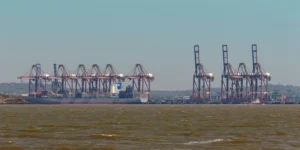
For a state that already hosts major shipbuilding pockets such as Pipavav, Bhavnagar, and Hazira this policy could significantly scale up capacity and bring in new-age marine engineering capabilities.
In practical terms, shipbuilders, repair yards, and marine service providers may get a clearer policy framework, easier approvals, and possibly better investment confidence all conducive to expansion and modernization.
Unified Land-Management Policy
Earlier, land under GMB’s control whether vested, acquired, reclaimed or procured was managed under multiple circulars, guidelines, and legacy practices. The new land-management policy consolidates all of those into a single comprehensive regulation.
This brings clarity and consistency for land use across the maritime infrastructure sector. For investors, port operators, developers or even businesses seeking to lease or operate on GMB-controlled land the unified policy helps reduce confusion and improves regulatory transparency.
Land-Reclamation Policy
As Gujarat expands port capacity and builds infrastructure along its long 1,600-km coastline, reclaimed land has become more relevant. The land-reclamation policy establishes a formal and structured approach to manage this. It will cover:
- Rules to allocate, lease, regulate, and monitor reclaimed coastal land
- Guidelines for usage, development and oversight of such reclaimed zones
This is a key enabler for future port expansions, coastal infrastructure, and related developments ensuring reclaimed land is managed sustainably and legally.
VTMS (Vessel Traffic Management System) Policy for Gulf of Khambhat
One of the most sensitive and strategically important parts of Gujarat’s coastline is the Gulf of Khambhat. To manage vessel movements there, the new VTMS policy provides a regulatory framework around:
- Ownership of the traffic-management system
- Operational protocols and maintenance standards
- Staffing norms and responsibilities for vessel monitoring
This will help ensure safer, more efficient navigation, reduce collision or accident risks, and support environmental and maritime security especially in a region with heavy maritime traffic.
Inland Vessels Regulations (Category-based under Gujarat Inland Vessels Act)
Under the Gujarat Inland Vessels Act, new rulebooks will cover two broad categories of vessels:
- Category A & B: larger inland or coastal commercial vessels
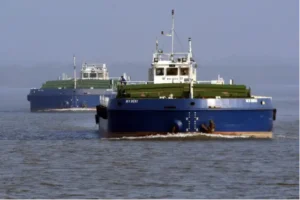
- Category C: including smaller crafts, especially leisure or pleasure boats below 10 metres in length
These rules will standardize procedures for:
- Vessel surveys and registration
- Safety certification and compliance
- Detention protocols, when necessary
- Pollution-control measures and environmental compliance
The regulations aim to align with national standards while also addressing Gujarat’s specific coastal and inland waterway conditions.
Why This Matters, Strategic Significance
Taken together, these policies put Gujarat on a stronger footing for several reasons:
- Boost for Shipbuilding & Marine Industry: With dedicated policy support, maritime-engineering firms, shipyards, and repair facilities are likely to see more clarity, enabling growth and investments. This can generate jobs, attract private capital, and elevate Gujarat’s standing among India’s maritime states.
- Port Governance & Land Clarity: Consolidated land-management and land-reclamation regulations reduce administrative confusion helpful for developers, port operators, and regulatory authorities alike.
- Enhanced Safety & Navigation: The VTMS framework for Gulf of Khambhat can dramatically improve vessel monitoring, reduce accidents, and ensure safer maritime operations essential for a busy coastal state.
- Environmental & Regulatory Compliance: The inland vessel norms and pollution control measures will ensure that maritime expansion does not come at the cost of environmental degradation.
- Investor Confidence: A well-defined legal/regulatory framework tends to attract investors local and international making future port projects, shipyards, and coastal infrastructure more bankable.
In short, Gujarat is not merely expanding it’s building a robust, regulation-driven maritime ecosystem.
Context: Gujarat’s Maritime Ambitions
This is not happening in isolation. The broader national and state-level push for maritime growth provides strong context:
- The Indian government recently passed the Indian Ports Act, 2025, replacing the colonial-era law from 1908. This overhaul aims to modernize port governance across the country and ensure environmental, safety, and administrative compliance.
- The state government of Gujarat has laid out ambitious plans to scale up capacity at both major and non-major ports, targeting a throughput of 3,000 MMTPA by 2047.
- Gujarat’s coastline, deep-water ports, shipbuilding legacy and strategic location make it a natural contender for becoming India’s maritime powerhouse — and these new policies reinforce that trajectory.
Also read: India Boosts Maritime Sector with New Funding and Advanced Skill Programmes
What Stakeholders Should Watch For
For marine-industry professionals, businesses, students studying maritime courses, port-related investors here are some key things to keep an eye on:
- Announcement of detailed notification dates for each new policy/regulation. As of now, state officials say the policies will be officially released soon.
- Opportunities for new shipyard proposals, marine-component manufacturing units, dry-dock expansion, repairs and related infrastructure.
- Leasing or allocation of reclaimed land potential for industrial, commercial or port-related developments.
- Implementation of VTMS in Gulf of Khambhat updates on equipment, staffing, operations, which could affect shipping schedules, port traffic, and safety protocols.
- Compliance requirements under new inland-vessel regulations especially for operators of commercial craft or pleasure boats.
- Investment interest: with better regulatory clarity, private investors (domestic or foreign) may begin showing interest in port or marine-industry projects in Gujarat.
Conclusion
With the approval of six new maritime policies, Gujarat is taking a bold, comprehensive step toward creating a modern, regulated, and investor-friendly maritime ecosystem. From boosting shipbuilding capacity to streamlining land governance, enabling land reclamation, regulating inland vessels, and ensuring safer navigation through VTMS the reforms address multiple dimensions of port and coastal development.
For marine professionals, port operators, investors, and students, this is a moment of opportunity. Gujarat’s coastline could well become a hub not just for cargo and ships but for growth, innovation, and sustainable maritime infrastructure.
Source: indiashippingnews.com