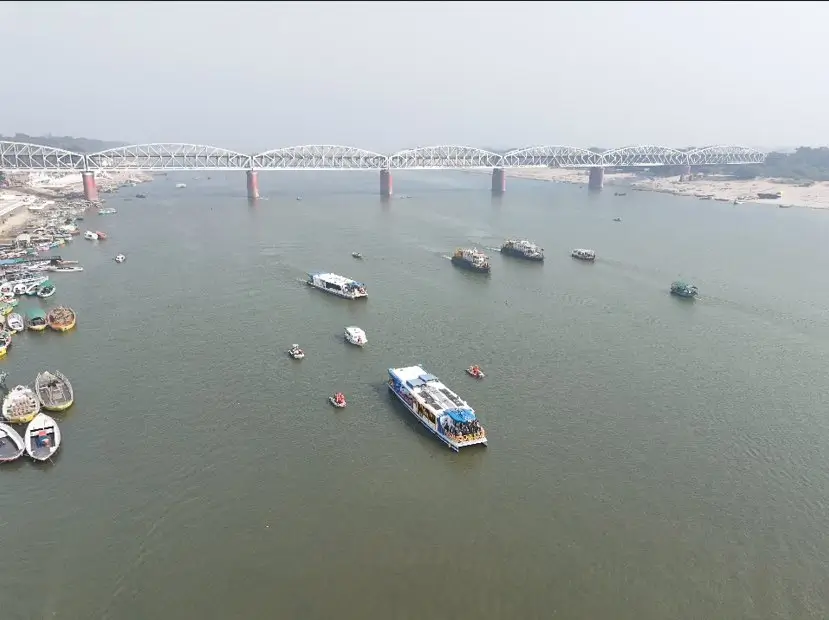
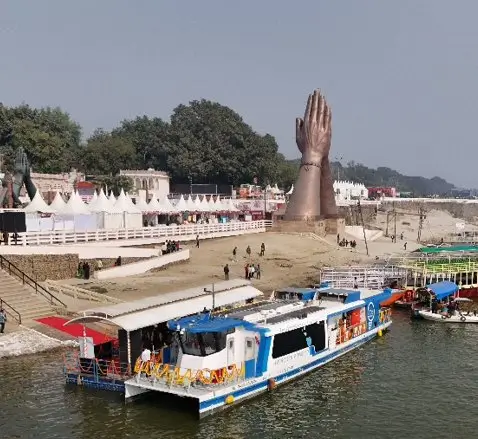
India has officially entered a new era of clean marine mobility with the launch of the country’s first indigenous hydrogen passenger ship in Varanasi. The introduction of this hydrogen fuel cell vessel revolutionary craft marks a major turning point for the future of zero-emission waterways, aligning strongly with India’s push for sustainable development. The launch event also reflects the country’s wider ambition to lead in green maritime technology under key national visions such as Maritime India Vision 2030 and the Maritime Amrit Kaal Vision 2047.
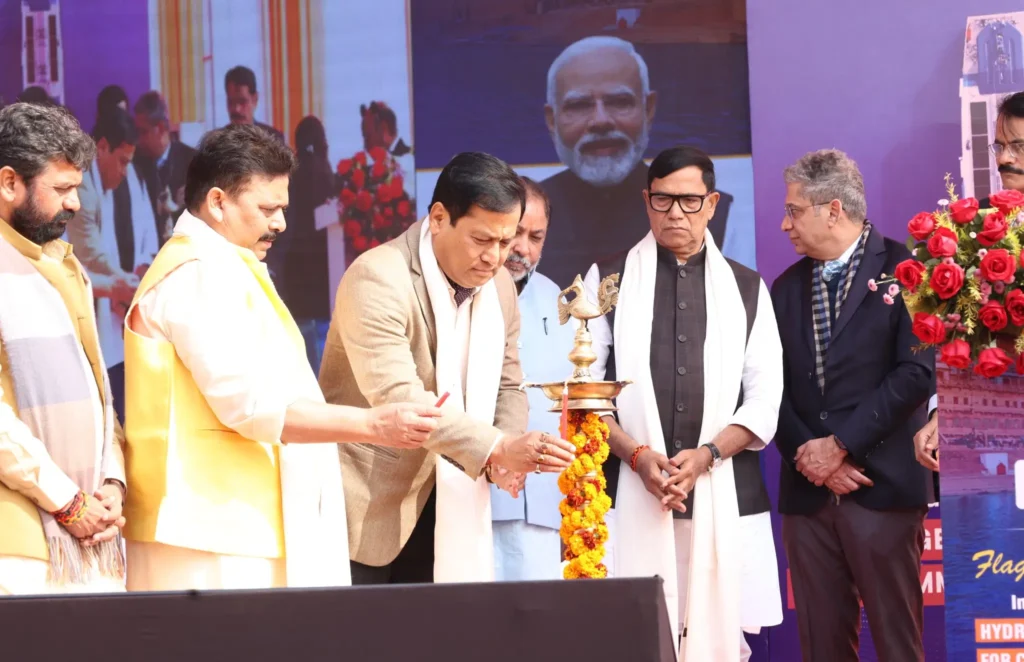
Union Minister for Ports, Shipping and Waterways, Sarbananda Sonowal, flagged off the vessel’s maiden commercial run from Namo Ghat, Varanasi. As the first ever hydrogen passenger ship India has produced and deployed, the vessel showcases both innovation and self-reliance, two pillars central to India’s maritime transformation.
A First-of-its-Kind Hydrogen Fuel Cell Vessel for India
This new hydrogen fuel cell vessel is India’s first demonstration of hydrogen-powered propulsion in the maritime sector. Built completely using indigenous technology, it uses a Low Temperature Proton Exchange Membrane (LT-PEM) fuel cell system. The system works by converting stored hydrogen into electricity, producing only water as a byproduct,making it a true symbol of zero-emission waterways.
The vessel belongs to the Inland Waterways Authority of India (IWAI) and was constructed by Cochin Shipyard Ltd (CSL). After completing extensive trial operations, it now begins commercial service on the Ganga River, marking a historic moment for inland water transport in the country.
With growing global focus on decarbonisation, the emergence of the first hydrogen passenger ship India positions the nation among the early adopters of hydrogen-based marine mobility.
Clean, Sustainable & Future-Ready Waterways
During the inauguration, Minister Sonowal emphasized that this achievement reflects Prime Minister Narendra Modi’s commitment to creating a green, sustainable, and self-reliant transportation system across all sectors. According to the Minister, the hydrogen fuel cell vessel strengthens India’s mission of rejuvenating and preserving the sacred Ganga while promoting green maritime technology for long-term environmental protection.
He highlighted that the hydrogen passenger ship India has launched is more than just a vessel, it is a living example of the nation’s shift toward new-age propulsion systems that cut pollution without compromising efficiency.
This launch supports India’s long-term pledge to achieve net-zero emissions by 2070. It also complements MoPSW’s broader program to promote clean fuels, including hydrogen, green ammonia, biodiesel, and electric propulsion, across India’s inland water network.
Technical Features of the 24-Meter Hydrogen Catamaran
Designed as a 24-meter catamaran, the vessel is built for urban water transit and can accommodate 50 passengers in a fully air-conditioned cabin. With a service speed of 6.5 knots (and up to 9 knots during certain operations), it combines clean energy with modern passenger comfort.
Key technological features include:
A. Hybrid Propulsion System
The vessel uses a powerful combination of:
- Hydrogen fuel cells
- Battery energy storage
- Solar power
This hybrid arrangement allows the vessel to operate up to eight hours on a single hydrogen refill, making it a reliable and sustainable choice for daily river transport.
B. Zero Noise, Zero Smoke, Zero Pollution
Because hydrogen fuel cells produce only water vapor, passengers enjoy smoke-free, noise-free travel, an important improvement for both commuters and pilgrims navigating the Ganga.
C. Certified for Safe Operations
The vessel is certified by the Indian Register of Shipping (IRS), ensuring its compliance with national and international maritime safety standards.
D. A Boost for Tourism and Urban Mobility
As one of the world’s first cities to adopt hydrogen-powered passenger transport, Varanasi is expected to see:
- Reduced road congestion
- Faster water-based mobility
- Increased tourism opportunities
- New job creation in inland water transport
The introduction of this hydrogen passenger ship India puts Varanasi on the global map of futuristic, sustainable transport systems.
E. A Symbolic Beginning on the Ganga
The commercial launch included a five-kilometer ceremonial trip from Namo Ghat to Lalita Ghat. Several dignitaries were onboard, including Union Ministers, senior officials from IWAI and MoPSW, and state leaders from Uttar Pradesh. Their presence highlighted the importance the government places on inland water transport as a future-shaping industry for India.
This moment is not just a technological milestone; it is also symbolic, showing how ancient river routes like the Ganga are being revived with modern, emission-free mobility solutions.
The Tripartite Agreement That Powers the Project
To ensure smooth and safe operations of the pilot vessel FCV Pilot-01, a tripartite agreement has been signed between:
- Inland Waterways Authority of India (IWAI)
- Cochin Shipyard Ltd (CSL)
- Inland and Coastal Shipping Ltd (ICSL)
The agreement covers:
- Technical support
- Operational procedures
- Safety management systems
- Financial terms
- Monitoring and periodic inspections
This structured framework strengthens the long-term reliability of the project, paving the way for replication across other waterways.
A Crucial Step in India’s Decarbonisation Roadmap
The deployment of India’s first hydrogen fuel cell vessel comes shortly after the introduction of hybrid electric catamarans in various waterways. Together, these steps highlight IWAI’s commitment to modernising and decarbonising inland water transport.
The hydrogen vessel serves as:
- A test platform for future hydrogen fleets
- A prototype for scaling clean technology across India
- A foundation for hydrogen-based maritime innovation
As the world moves toward clean fuel, the successful rollout of the first hydrogen passenger ship India represents India’s determination to develop its own indigenous green maritime solutions.
Conclusion
The start of commercial service for India’s first hydrogen passenger ship India is more than an engineering achievement, it is a monumental step toward sustainable development, green innovation, and modern mobility.
By integrating hydrogen fuel cell technology, India has opened the door to a new generation of zero-emission waterways, advanced green maritime technology, and climate-friendly inland water transport systems. Guided by national visions and strong leadership, the country is shaping a maritime future that is cleaner, smarter, and self-reliant. This vessel is not just the first of its kind, it is the beginning of a cleaner tomorrow.
Source: PIB