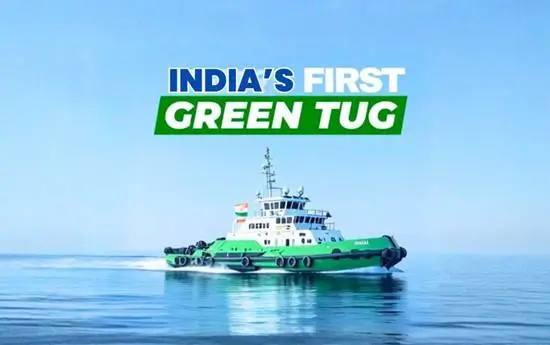
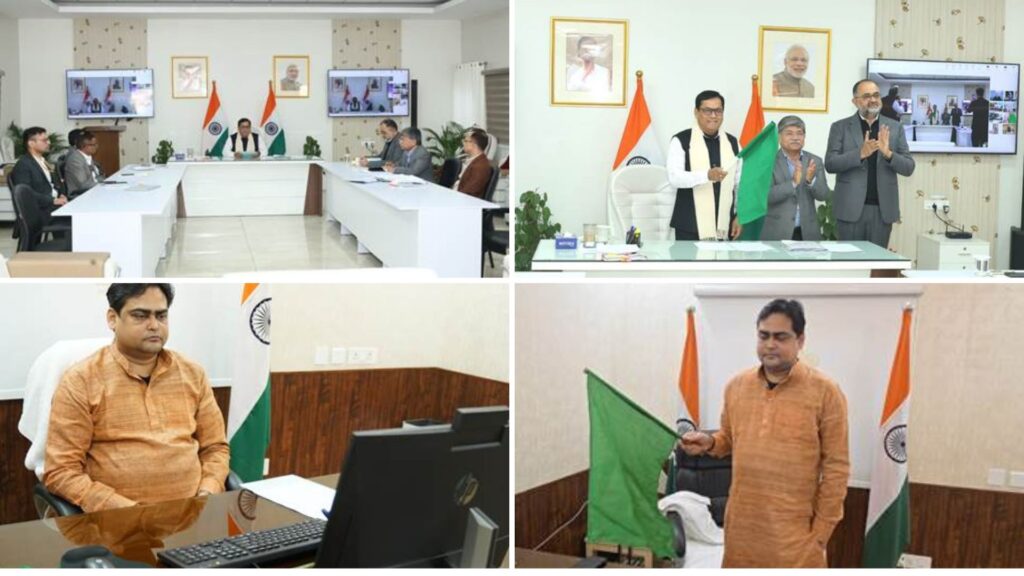
India has taken a historic step in transforming its maritime sector with the launch of its first electric tugboat, flagged off virtually by Union Minister Sarbananda Sonowal. This milestone marks a new era in green port development, reflecting the nation’s growing commitment to sustainable technology, cleaner operations, and a future-ready shipping ecosystem.
The tug, built for the Deendayal Port Authority (DPA) in Kandla, is being developed under the Ministry of Ports, Shipping and Waterways’ Green Tug Transition Programme (GTTP). This initiative strengthens India’s position as a country actively embracing maritime decarbonisation while modernising India port infrastructure across major ports.
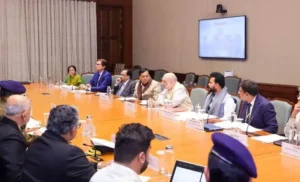
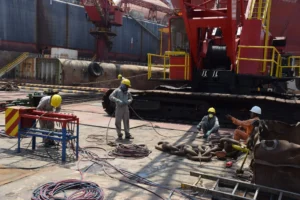
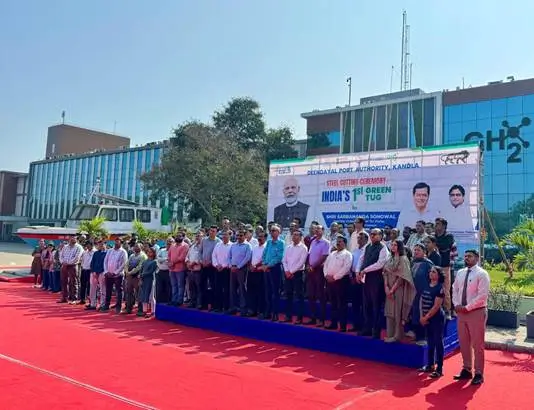
The steel-cutting ceremony gathered key figures such as Minister of State Shantanu Thakur, senior officials from the Ministry, DPA leadership, engineers from Atreya Shipyard, experts from Kongsberg, and representatives from Netincon and Ripley. Their participation highlighted the collaborative effort driving India’s green maritime shift.
A Vision Aligned With a Greener Future
Speaking during the virtual ceremony, Sarbananda Sonowal emphasized that this first electric tugboat is a direct reflection of Prime Minister Narendra Modi’s long-term vision for clean energy, innovation, and sustainable growth. He stated that India’s maritime future is deeply connected to the idea of Viksit Bharat, where advanced technology and environmental responsibility go hand in hand.
The Minister highlighted that the Prime Minister has consistently encouraged the use of eco-friendly infrastructure and green innovations. According to Sonowal, initiatives like the GTTP show India’s commitment to becoming a global leader in maritime decarbonisation while building a powerful, modern, and self-reliant shipping industry.
This tugboat, he said, is not just a vessel it symbolises India’s readiness to move towards a zero-emission maritime future.
What Makes the Electric Tugboat Special?
The new all-electric tug for DPA will feature a 60-ton bollard pull capacity, enabling it to perform major port operations efficiently and silently. As an electric tugboat, it operates with zero carbon emissions, reduced fuel dependency, and enhanced energy efficiency.
The tug will support key port activities such as:
- harbour maneuvering
- escort operations
- emergency response
- port vessel assistance
Its electric propulsion system and modern navigation technologies are expected to lower both operating costs and maintenance needs. This advancement shows how technology is shaping green port development and strengthening India port infrastructure for long-term sustainability.
Officials also believe this vessel will become a benchmark for next-generation fleet modernisation in major Indian ports. With its low-noise and zero-emission operations, the tug sets a new standard in maritime decarbonisation.
Green Tug Transition Programme: The Bigger Picture
The Green Tug Transition Programme (GTTP) is one of India’s flagship sustainability missions in the maritime sector. The programme plans to induct 50 green tugs by 2030, with the first phase deploying 16 electric or hybrid tugs between 2024 and 2027.
Under Phase 1:
- DPA (Kandla)
- Paradip Port Authority
- Jawaharlal Nehru Port Authority
- V.O. Chidambaranar Port Authority
will each station two green tugs.
The remaining eight major ports in India will receive one tug each.
Work orders for four tugs have already been awarded to DPA, VPA, JNPA and VoCPA. DPA is the first port to formally begin construction another strong indicator of how rapidly India is moving toward green port development.
Sonowal noted that DPA’s proactive leadership shows the world that India is not just planning for the future it is acting decisively to build it today.
Building a Strong Indian Shipbuilding Ecosystem
One of the key messages from the Minister was the importance of strengthening domestic manufacturing. The new electric tugboat is being built at Atreya Shipyard, reflecting India’s growing capabilities in ship design, engineering, and green technology.
This aligns closely with the nation’s Make in India and Make for the World frameworks. Projects like this not only push for maritime decarbonisation, but also create opportunities for innovation, skills development, and employment inside the country.
Sonowal remarked that this tugboat will serve as a showcase for what India can produce reinforcing the country’s ambition to become a global manufacturing hub for green maritime technologies.
This commitment to local shipbuilding is also expected to boost confidence among international partners who view India as a rising leader in the global maritime transition.
A Turning Point for India Port Infrastructure
As the world shifts toward sustainable practices, ports are becoming key locations for green transformation. India understands this clearly, and the introduction of an electric tugboat forms a crucial part of renewing and upgrading India port infrastructure.
The tug will help ports transition into clean-energy zones, where emissions remain low, safety remains high, and operations become more efficient. The project will also provide valuable data on electric propulsion in real port conditions, helping shape future innovations and operational policies.
This marks a major step forward in modernising India’s maritime backbone and supporting long-term growth in trade, logistics, and connectivity.
Strengthening India’s Global Maritime Position
The GTTP supports India’s commitments under international decarbonisation frameworks, including global maritime regulations and environmental agreements. It also aligns with long-term national strategies like:
- Maritime India Vision 2030
- India’s Amrit Kaal roadmap
These frameworks aim to make India a global maritime powerhouse with world-class infrastructure and sustainable operations.
By launching its first electric tugboat, India is demonstrating to the world that it is ready to lead the future of green port development and low-carbon shipping practices. The move strengthens the nation’s reputation as a responsible and futuristic maritime player.
Also read: India Tops Vote to Retain IMO Council Seat, Leads Category B With Strong Global Support
A Milestone That Symbolises a New Era
In his concluding remarks, Sonowal said the electric tugboat represents a new era of bold innovation and environmental responsibility. He credited Prime Minister Modi’s leadership for inspiring India’s decisive push toward maritime decarbonisation and powerful India port infrastructure upgrades.
“This green tug,” he said, “is just the beginning. Every innovation we adopt builds the maritime foundation for a developed India.”
With this project, India has signalled that the future of shipping will be electric, efficient, and environmentally conscious.
The journey has just begun but the direction is clear. India is steering confidently toward cleaner ports, stronger infrastructure, and global leadership in sustainable maritime operations.
Source: PIB