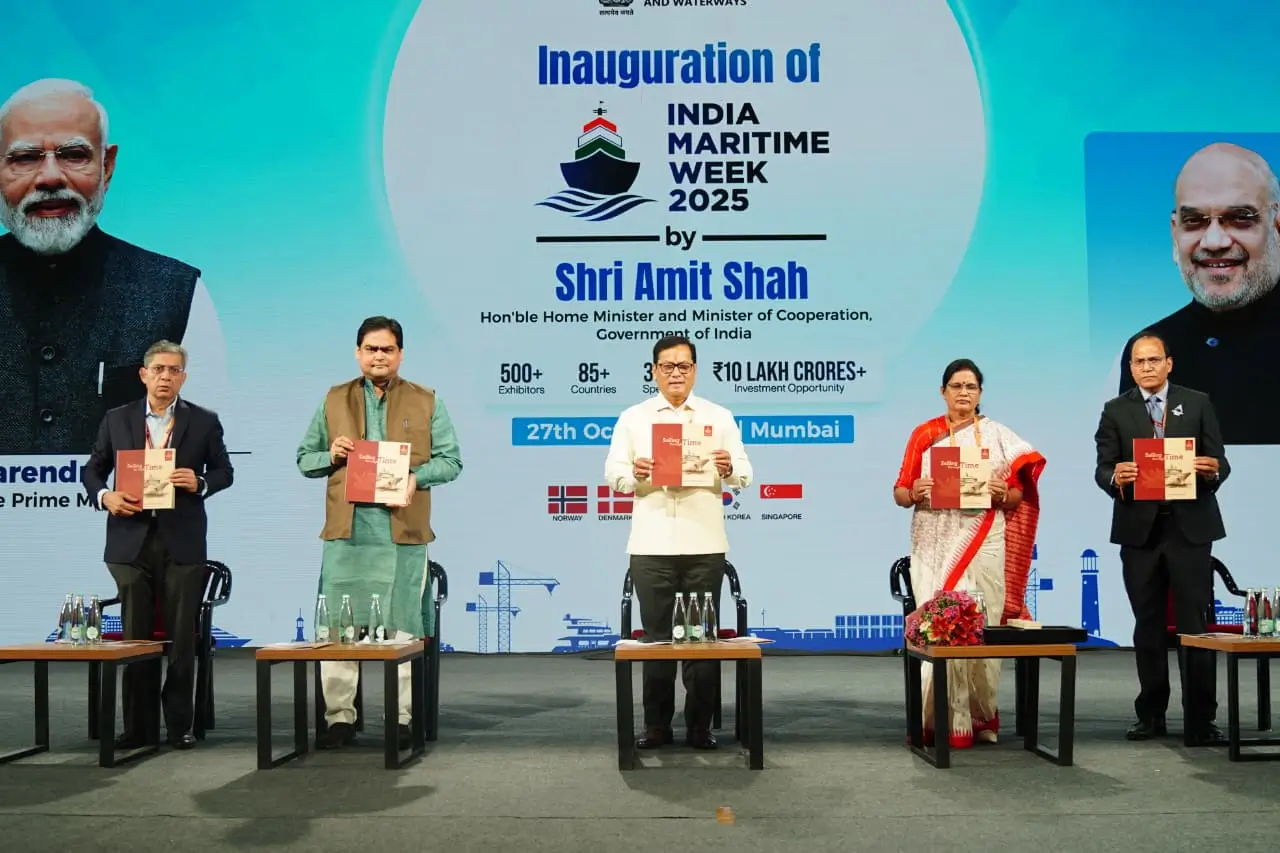
India Maritime Week (IMW) 2025 marked a significant moment for India’s maritime transformation, spotlighting sustainability, technological innovation, port modernization, and domestic defence shipbuilding. Senior policymakers, international partners, maritime businesses, shipowners, technologists, and port leaders participated in discussions that underlined India’s ambition to emerge as a leading global maritime hub in the coming decades.
Day Two of IMW 2025 focused on thematic sessions on Green Maritime, Inland Waterways, Maritime Safety and Security, Cruise and Passenger Economy, and Strengthening Global Supply Chains — signalling a comprehensive approach to building a future-ready maritime sector.
Green Maritime Day – India’s Net Zero Pathway
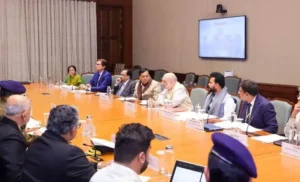
Speaking at the Green Maritime Day session, Union Minister for Ports, Shipping and Waterways Sarbananda Sonowal emphasized India’s commitment to building a cleaner, smarter, and more resilient maritime ecosystem.
He noted that over 95% of India’s trade by volume moves through the sea, making the maritime sector central to economic development. Under India’s Net Zero by 2070 commitment, the government aims to reduce carbon emissions per ton of cargo by 30% by 2030 and 70% by 2047.
“Our goal is not only to expand maritime capacity but also to make it greener, smarter, and more resilient,” Sonowal said.“ India is positioned along key global trade routes and is ready to become a hub for green shipping corridors connecting domestic and international markets through clean energy trade.”
Green Hydrogen and Port Decarbonisation
India is actively developing green hydrogen ecosystems, with VOC Port, Paradip Port, and Deendayal Port designated as green hydrogen hubs. These hubs will enable production, bunkering, and export of green fuels, supporting new economic opportunities and jobs.
More than 12 million metric tonnes of green hydrogen-based e-fuel capacity has already been announced nationwide. To cut emissions from vessels at berth, India introduced its first national shore-power standard, enabling ships to draw renewable electricity while docked. Ports such as JNPA are transitioning to battery-electric logistics systems, including electric trucks and yard equipment.
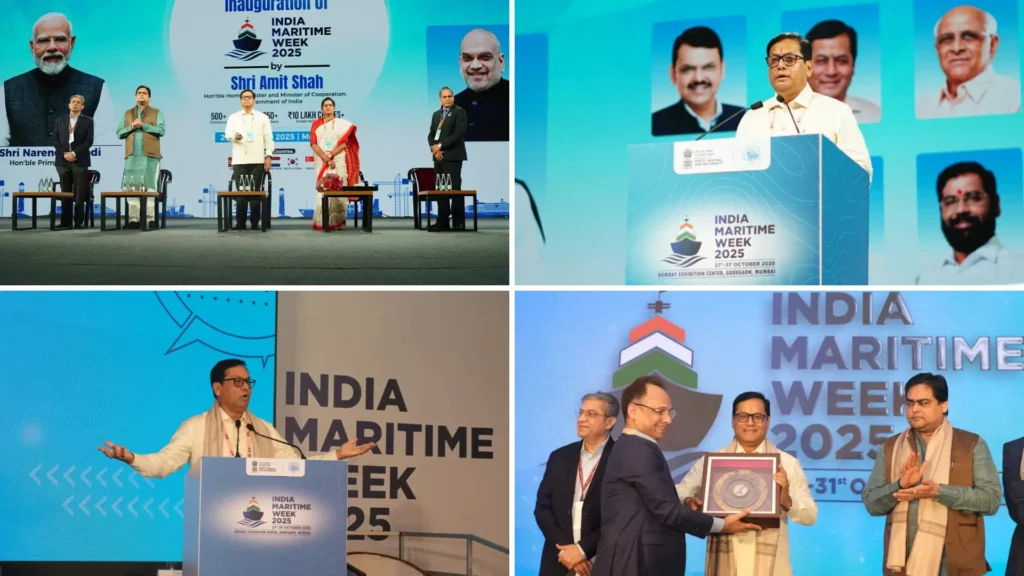
Global Collaboration – Partnerships with Singapore, Rotterdam, Norway and Sweden
India launched Green and Digital Shipping Corridors (GDSCs) with:
- Singapore
- Port of Rotterdam (Netherlands)
These corridors are expected to:
- Enable cleaner shipping fuel usage
- Digitize cargo and vessel movement systems
- Facilitate green trade investments
- Strengthen India’s position in global supply chains
Country sessions with Norway and Sweden focused on AI-driven port automation, electric vessel technology, LNG and methanol fuelling, and smart port operations. Northern European partners shared operational models for sustainable port and shipyard ecosystems.
Defence Shipbuilding Breakthrough – First Public–Private Shipbuilding Partnership
A landmark development came with the signing of a Public–Private Partnership (PPP) agreement between: Mazagaon Dock Shipbuilders Ltd. (MDL) &
Swan Defence & Heavy Industries Ltd. The partnership will jointly construct Landing Platform Docks (LPDs) for the Indian Navy, marking India’s first major PPP in defence shipbuilding.
This collaboration is expected to:
- Increase domestic shipbuilding capacity
- Reduce import dependency
- Create skilled shipbuilding employment
- Strengthen naval maritime readiness under Atmanirbhar Bharat
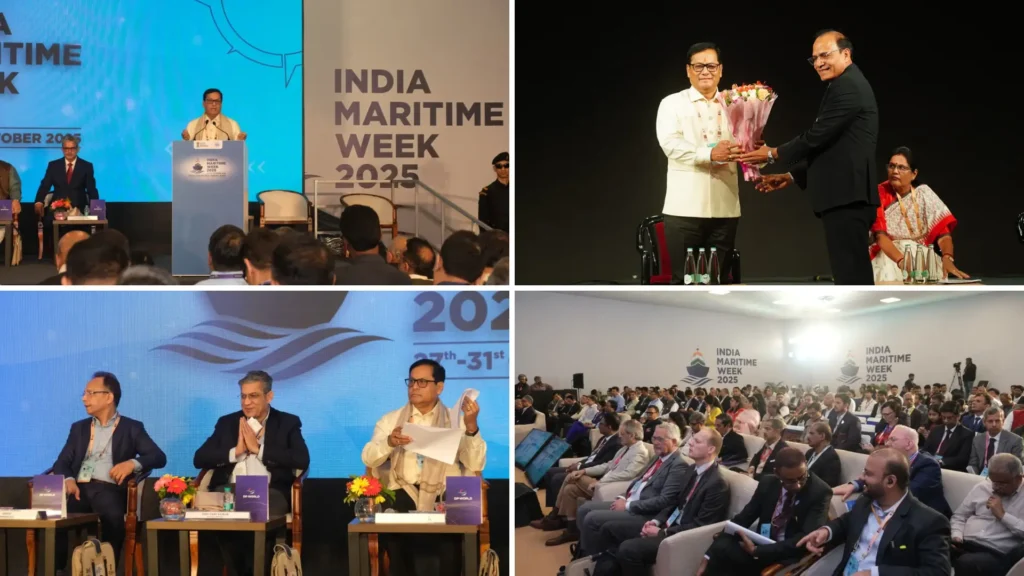
Key Technical Sessions and Sector Insights
1. Ports as Engines of Transformation
The session highlighted ports as anchors of regional industrial growth. Key priorities discussed:
- Digital cargo management
- Climate-resilient infrastructure
- Multimodal connectivity to industrial corridors
2. Reviving Inland Waterways
Experts emphasized the role of inland waterways in reducing logistics costs. The IWAI presented plans to expand:
- Terminal capacity
- River navigation systems
- Cargo movement on national waterways
3. Guardians of the Sea – Maritime Safety and Security
Global representatives discussed:
- Cybersecurity in ports
- Autonomous vessel regulation
- Harmonized ocean safety standards
The HSSC Management Standard for maritime safety harmonization was released.
4. Cruise and Passenger Economy
India’s cruise tourism potential was highlighted. Cordelia Cruises announced plans to expand to 10 ships by 2031, adding Cochin and Vizag as new home ports.
5. Fortifying Global Supply Chains
This session emphasized digital integration to build resilient and low-carbon maritime trade corridors.
State Sessions – Karnataka and Andhra Pradesh Showcase Regional Strength
Both states highlighted opportunities in:
- Port infrastructure
- Fisheries modernization
- Logistics networks
- Marine tourism
- Shipbuilding clusters
Their presentations underlined how state-level innovation drives national maritime growth.
Also read: Mumbai Goes Maritime – India Maritime Week 2025 Opens with Ports, Projects and Policy Announcements
Why This Matters for Students and Young Professionals
For maritime students and early-career professionals, this is a moment of transition. The sector is changing, which means new opportunities are opening.
Future-ready job paths include:
- Green fuel handling and bunkering operations
- Port automation systems engineering
- Marine environmental regulation compliance
- Ocean data systems and maritime analytics
Young professionals who learn digital tools and sustainability standards will be in demand across ports, shipping companies, and global logistics firms. India Maritime Week showed that the maritime sector is moving from traditional manual processes to an integrated, data-driven framework. Adaptability and continuous learning are the key advantages now.
Conclusion
As Day Two concluded, India Maritime Week 2025 reinforced a clear message: India’s maritime future is being shaped through green growth, global collaboration, technology adoption, and defence self-reliance. “India’s maritime renaissance is anchored in sustainability, innovation, and collaboration,” Sonowal said. “Our goal is to ensure maritime growth strengthens both our economy and our environment.”
Source : Ministry of Ports, Shipping & Waterways ( PIB )