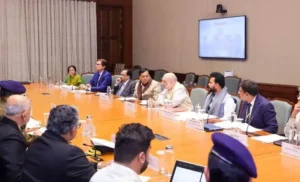
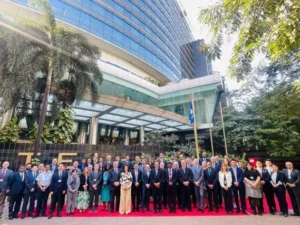
Mumbai — The India maritime sector marked a significant milestone as Maritime Week 2025 concluded in Mumbai from October 27 to 31. The event, themed “Uniting Oceans, One Maritime Vision,” brought together policymakers, global delegates, and industry experts from 85+ countries, 1 lakh+ attendees, and 500+ exhibitors. The discussions and agreements throughout the event highlighted India’s growing ambition to strengthen its role in global trade, sustainability, innovation, and the blue economy.
Reviving Maritime Heritage While Shaping the Future
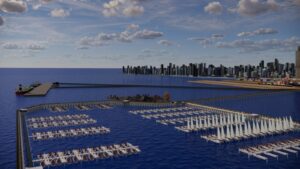
The government emphasized the importance of connecting India’s maritime future with its ancient past. The National Maritime Heritage Complex at Lothal, currently under development, was highlighted as a key cultural and educational centerpiece. The complex aims to celebrate India’s ancient maritime trade connections and serve as a museum, research centre, and heritage tourism site.
This effort aligns with India’s broader maritime strategy under the Maritime Vision 2047, which seeks to enhance global maritime presence while ensuring cooperation, economic growth, and environmental responsibility.
Sustainability and Green Transition in Focus
Sustainability remained one of the strongest themes throughout Maritime Week 2025. India has committed to reducing carbon emissions in shipping. The goal is to cut carbon emissions per ton of cargo by 30% by 2030 and 70% by 2047, supporting India’s Net Zero 2070 declaration.
Key steps announced include:
- Development of green shipping corridors
- Hydrogen bunkering infrastructure at major ports
- Expansion of methanol-powered vessels
- Implementation of energy-efficient port technologies
A notable achievement under this initiative is the launch of India’s first megawatt-scale green hydrogen facility at Kandla Port, signaling a major step in energy transition within the India maritime sector and blue economy.
Infrastructure Growth and Improved Logistics
The event showcased clear progress in India’s logistics and shipping performance. The World Bank Logistics Performance Index (LPI) shows India improving from 54th in 2014 to 38th in 2022.
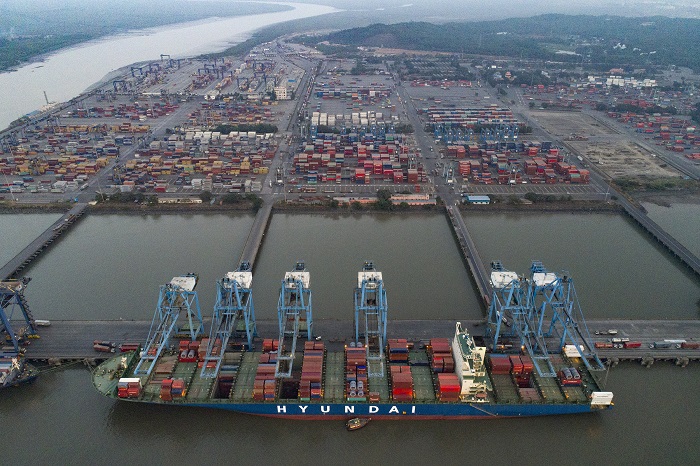
Further progress is seen in port capacity development. India’s port capacity has almost doubled, increasing from 1,400 MMTPA in 2013–14 to 2,762 MMTPA in 2024–25. This expansion enables India to handle larger trade volumes while reducing congestion.
Additionally, India has seen a 200% rise in the number of seafarers, reaching 3.2 lakh, supporting employment growth in the blue economy.
The newly operational Vizhinjam Port in Kerala hosted the world’s largest container vessel, MSC IRINA, marking India’s readiness to operate ultra-large shipping vessels.

Strategic Investments and Global Partnerships
More than 600 MoUs were signed during Maritime Week 2025, reflecting confidence in the India maritime sector. This marked a 41% increase in partnerships compared to the Global Maritime India Summit in 2023.
Prime Minister Narendra Modi announced a ₹70,000 crore investment dedicated to boosting port modernization and shipbuilding. Long-term investment plans under Maritime Vision 2047 include ₹80 lakh crore to improve port connectivity, inland waterways, coastal shipping, and maritime digital systems.
Flagship programs highlighted include:
- Sagarmala
- Maritime India Vision (MIV) 2030
- Jalvahak inland waterway initiative
- Cruise Bharat mission
- National Logistics Portal – Marine, a digital single-window logistics platform
These initiatives aim to reduce transportation costs and support the blue economy through job creation and maritime tourism.
India’s Maritime Scale and Economic Importance
The India maritime sector remains central to national economic growth:
- 95% of India’s trade by volume and 70% by value moves through maritime routes.
- India has 11,000 km of coastline and 13 coastal states.
- Its Exclusive Economic Zone covers 23.7 lakh sq. km.
- Coastal states contribute 60% of India’s GDP, supporting the livelihoods of 800+ million people.
With such vast coastal and ocean resources, expanding the blue economy is considered vital for India’s long-term economic development.
Also read: European Delegation Visits Green Hydrogen Plant at Kandla Port
Conclusion
The outcomes of Maritime Week 2025 reflect India’s shift from being a regional maritime player to an emerging global maritime power. With strong port capacity expansion, sustainability commitments, international cooperation, and strategic investment under Maritime Vision 2047, the India maritime sector is set to play a crucial role in future global trade networks.
However, experts emphasize that achieving targets will require consistent policy execution, private sector involvement, and international collaboration. The direction is clear, India is preparing to lead at sea.