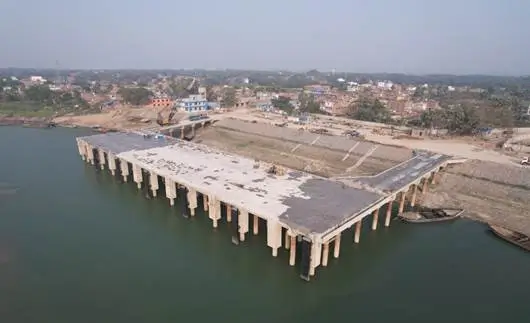
The Inland Waterways Authority of India (IWAI) under the Ministry of Ports, Shipping and Waterways has taken two major steps forward in strengthening India’s inland water transport network. As part of the Jal Marg Vikas Project, the Kalughat Intermodal Terminal in Bihar has officially been handed over to a private operator under the public-private partnership (PPP) model. At the same time, cargo operations have begun at the Haldia Multi-Modal Terminal in West Bengal. Both developments mark progress in modernizing infrastructure and improving cargo connectivity along the National Waterway-1.
Kalughat Intermodal Terminal Handed Over Under PPP Model
The Kalughat Intermodal Terminal is located in the Saran district of Bihar and has been developed by the Inland Waterways Authority of India with financial and technical support from the World Bank. The terminal is designed to handle a range of cargo and improve trade access in the region.
The terminal has now been handed over to SAPL – Summit Alliance Port East Gateway (India) Pvt. Ltd. for operations and maintenance. The agreement operates on a revenue-sharing basis, where IWAI will receive 38.30% of the gross revenue generated by terminal operations. This PPP model is expected to ensure efficient management, professional handling of cargo, and a financially sustainable operation over the long term.
By involving private operators, the Jal Marg Vikas Project aims to enhance operational performance while maintaining public interest. The collaboration supports long-term growth of inland water transport and encourages wider participation from logistics and shipping stakeholders.
Cargo Operations Begin at Haldia Multi-Modal Terminal
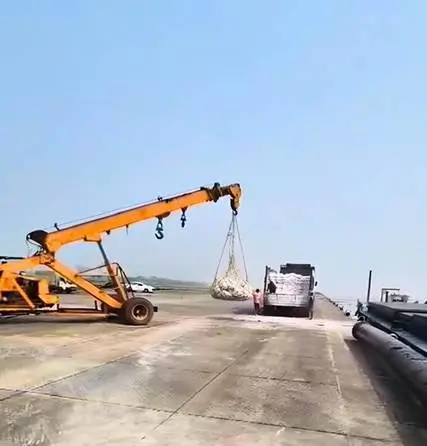
At the downstream end of National Waterway-1, the Haldia Multi-Modal Terminal in West Bengal has begun cargo movement. The terminal is operated by IRC Natural Resources Pvt. Ltd., and its first consignment included Granulated Blast Furnace Slag (GBFS) shipped from Tata Steel. The cargo is being transported to Pandu in Guwahati, Assam.
The Haldia Multi-Modal Terminal has a handling capacity of 3.08 million metric tonnes per annum (MMTPA). This makes it an important asset for connecting eastern India with the northeast through inland water transport. Transportation via waterways is cost-effective, fuel-efficient, and more environmentally sustainable compared to road-based logistics. The terminal’s operationalization supports the goal of reducing logistics costs and carbon emissions across India’s freight network.
Strengthening National Waterway-1 and Regional Trade
Both the Kalughat Intermodal Terminal and the Haldia Multi-Modal Terminal are key components of the Jal Marg Vikas Project, which focuses on developing the 1,390 km stretch of National Waterway-1. This waterway passes through Uttar Pradesh, Bihar, Jharkhand, and West Bengal, linking major industrial and trade centers across these states.
Under the project, IWAI has taken up:
- Fairway development to ensure adequate water depth for vessel movement
- Construction of multi-modal and intermodal terminals
- Deployment of modern navigation systems
- Installation of more than 60 community jetties to support local river-based livelihoods
These steps aim to make inland water transport an essential part of India’s logistics ecosystem.
Government Vision: Efficient, Sustainable and Integrated Logistics
The Government of India is promoting inland water transport as a cleaner and more efficient freight movement alternative. By shifting freight from highways to waterways, the government seeks to:
- Lower transportation costs
- Reduce carbon emissions
- Improve port connectivity
- Strengthen the sustainable logistics framework
Chairman In-charge of IWAI, Shri Sunil Kumar Singh, noted that handing over the Kalughat Intermodal Terminal and operationalizing the Haldia Multi-Modal Terminal reflect a major leap toward achieving integrated logistics along National Waterway-1. He highlighted that these developments will create new opportunities for trade, business expansion, and economic growth across river-connected regions.
Also read: India Maritime Week 2025 Highlights India’s Push for Global Maritime Leadership
A Step Toward a Green and Connected Inland Water Network
The transition of both terminals to PPP-based operations represents the continued commitment of the Inland Waterways Authority of India to professional management and efficient asset use. The Jal Marg Vikas Project is also designed to support environmental sustainability by promoting low-emission freight transport.
With infrastructure now in place and operations underway, industries in eastern and northeastern India can increasingly look toward waterways as a primary freight transportation route. This shift will support faster, greener, and more economical logistics nationwide.
Conclusion
The operationalization of the Kalughat Intermodal Terminal and the commencement of cargo movement at the Haldia Multi-Modal Terminal are major steps in India’s transition toward a modern, efficient, and environmentally responsible inland water transport network. These milestones under the Jal Marg Vikas Project strengthen national connectivity, promote sustainable freight operations, and revive historic river routes as major trade corridors.
Source: Ministry of Ports, Shipping and Waterways ( PIB )