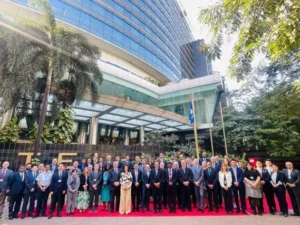
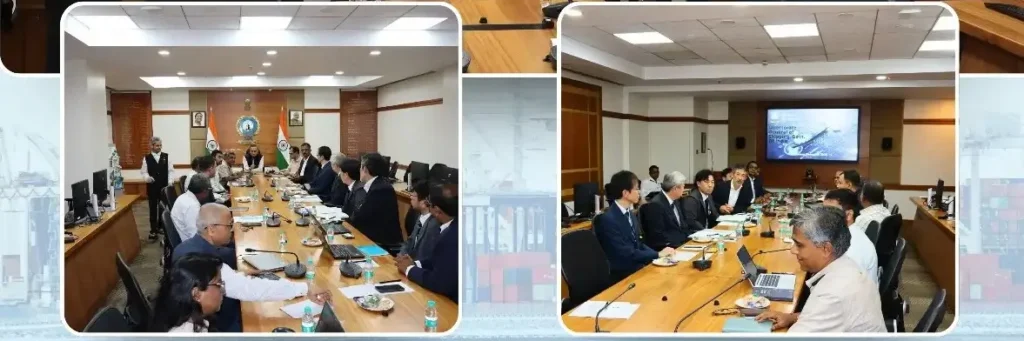
Mumbai — A high-level Japanese delegation from Japan’s Ministry of Land, Infrastructure, Transport and Tourism (MLIT) visited the Directorate General of Shipping (DGS) in Mumbai to discuss expanding cooperation in India’s maritime sector. The visit focused on understanding India’s maritime education system, training standards, and the strong professional ecosystem that supports skilled and disciplined seafarers.
The discussions were aimed at creating long-term collaboration pathways in maritime training, workforce development, and sustainable shipping standards. Both sides emphasized shared interests in safety, skill development, and enhancing employment opportunities for Indian maritime professionals in Japan’s global shipping industry.
Delegation Studies India’s Maritime Training and Certification System
During the visit, the Japanese delegation held detailed discussions with senior officials of the Directorate General of Shipping. A key focus was understanding India’s Examination System for maritime qualifications, which plays a major role in maintaining skilled manpower in India’s maritime sector.
The team also reviewed the Maritime Training Courses offered by institutes across India. These courses include certification, advanced simulation-based learning, navigational training, and specialized operational skill-building designed to meet international maritime safety and performance norms.
Another major area of discussion was the Comprehensive Inspection Programme (CIP). This programme ensures the quality, compliance, and safety standards of maritime training institutes nationwide. The Japanese representatives appreciated how CIP helps maintain uniform training quality and upholds global norms.
Recognition of India’s Skilled Seafarers
The Japanese delegation expressed interest in India’s seafarers, who are widely recognized for their discipline, technical proficiency, and adaptability. India remains one of the world’s largest suppliers of maritime workforce for global shipping companies.
Japan, facing an aging workforce and rising demand in maritime manpower, has been exploring ways to engage more Indian seafarers in its shipping sector. The visit highlighted Japan’s confidence in India’s ability to supply well-trained and reliable marine talent.
India’s seafarer competency framework respected globally was also reviewed. Japan acknowledged India’s strong reputation in producing competitive maritime professionals who can work onboard domestic and international fleets.
Identifying New Collaboration Avenues
A key objective of the visit was to identify Indian maritime training institutes that could serve as partners for training cooperation, exchange programs, and curriculum alignment.
The Japanese delegation expressed interest in:
- Joint certification programs
- Student and instructor exchange
- Co-development of new training modules
- Safety and compliance benchmarking
This collaboration would allow maritime training institutes in both countries to learn from each other, adopt best practices, and prepare seafarers for evolving technologies in global shipping.
Focus on Safety and Sustainable Shipping Practices
Both India and Japan share an interest in improving safety standards and enabling greener shipping practices. Discussions emphasized:
- Maritime safety protocols
- Environmental compliance norms
- Sustainable shipping technologies
- Transition toward low-emission vessels
Japan has been promoting advanced maritime technologies, while India is expanding capacity in training, certification, and port operations. Collaboration in these areas can contribute significantly to the modernization of India’s maritime sector.
Strengthening Human Resource Development
India has long been recognized as a major hub for maritime talent. The Japanese delegation acknowledged that India’s strength lies not only in numbers but in the quality and discipline of its seafarers.
This visit highlighted the importance of human resource development as a bridge between the two nations. Both sides agreed that sustained cooperation will help:
- Create more employment opportunities for Indian maritime professionals
- Support Japan’s manpower requirements
- Expand global competitiveness in shipping fleets
- Encourage innovation in maritime training
Also read: IWAI Advances Jal Marg Vikas Project with Kalughat and Haldia Terminal Operations
India’s Growing Maritime Presence
India continues to strengthen its role in global maritime trade. The visit reaffirmed India’s image as a hub for skilled maritime manpower and as a country committed to excellence, safety, and innovation.
The Directorate General of Shipping emphasized that India is dedicated to developing an inclusive, globally competitive, and technology-ready maritime training ecosystem. This aligns with India’s larger national agenda of improving logistics efficiency, shipping sustainability, and international maritime cooperation.
Conclusion
The meeting between the Japanese delegation and the Directorate General of Shipping marks another milestone in the long-standing maritime relationship between India and Japan. The discussions reflect a shared commitment to strengthening cooperation in India’s maritime sector, especially in maritime training, safety standards, and workforce development.
With continued collaboration, both countries aim to build a future-ready maritime workforce, expand opportunities for Indian seafarers, and promote sustainable innovation in international shipping.
Source: indiashippingnews.com