India Approves World-Class Marina Project for Mumbai
The Government of India has approved a major infrastructure project aimed at transforming Mumbai’s waterfront and strengthening the country’s maritime tourism ecosystem. The ₹887 crore ‘Viksit Bharat Mumbai Marina’ project, cleared by the Ministry of Ports, Shipping and Waterways, is expected to give a strong boost to coastal shipping, maritime tourism, employment generation, and waterfront-led urban development in India’s financial capital.
The project reflects the government’s broader vision of positioning Indian coastal cities on the global maritime tourism map, while supporting the country’s long-term Blue Economy goals. Once completed, the Mumbai Marina will serve as a landmark development, bringing world-class marine infrastructure to one of India’s most prominent ports.
Vision Behind the ‘Viksit Bharat Mumbai Marina’
The approval of the Mumbai Marina project aligns with the vision articulated by Prime Minister Narendra Modi to develop global-standard tourism and maritime infrastructure across India. According to the Union Minister of Ports, Shipping and Waterways, Shri Sarbananda Sonowal, the project is a critical step toward opening Mumbai’s waterfront for public use and encouraging private investment in coastal infrastructure.
Speaking on the occasion, the Minister highlighted that the marina will not only strengthen maritime tourism but also support coastal shipping development, create new economic opportunities, and generate significant employment across allied sectors. The initiative is designed to combine infrastructure development with sustainability, accessibility, and long-term economic impact.
Project Cost and Hybrid Development Model
The total estimated cost of the Mumbai Marina project is ₹887 crore, making it one of the most significant maritime tourism investments in the country. The project will be implemented through a hybrid development model, involving both public and private sector participation.
Under this model, the Mumbai Port Authority will invest approximately ₹470 crore to develop the core marina infrastructure. This portion of the project will be executed on an Engineering, Procurement and Construction (EPC) basis, ensuring timely delivery and adherence to technical standards.
The remaining ₹417 crore will be invested by a private operator, who will be responsible for developing the onshore facilities and commercial infrastructure. The Ministry has already approved the port authority’s investment, and tenders for the project have been floated, with bids scheduled to close on 29 December 2025.
Scale and Capacity of the Marina
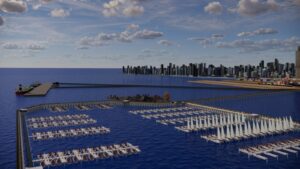
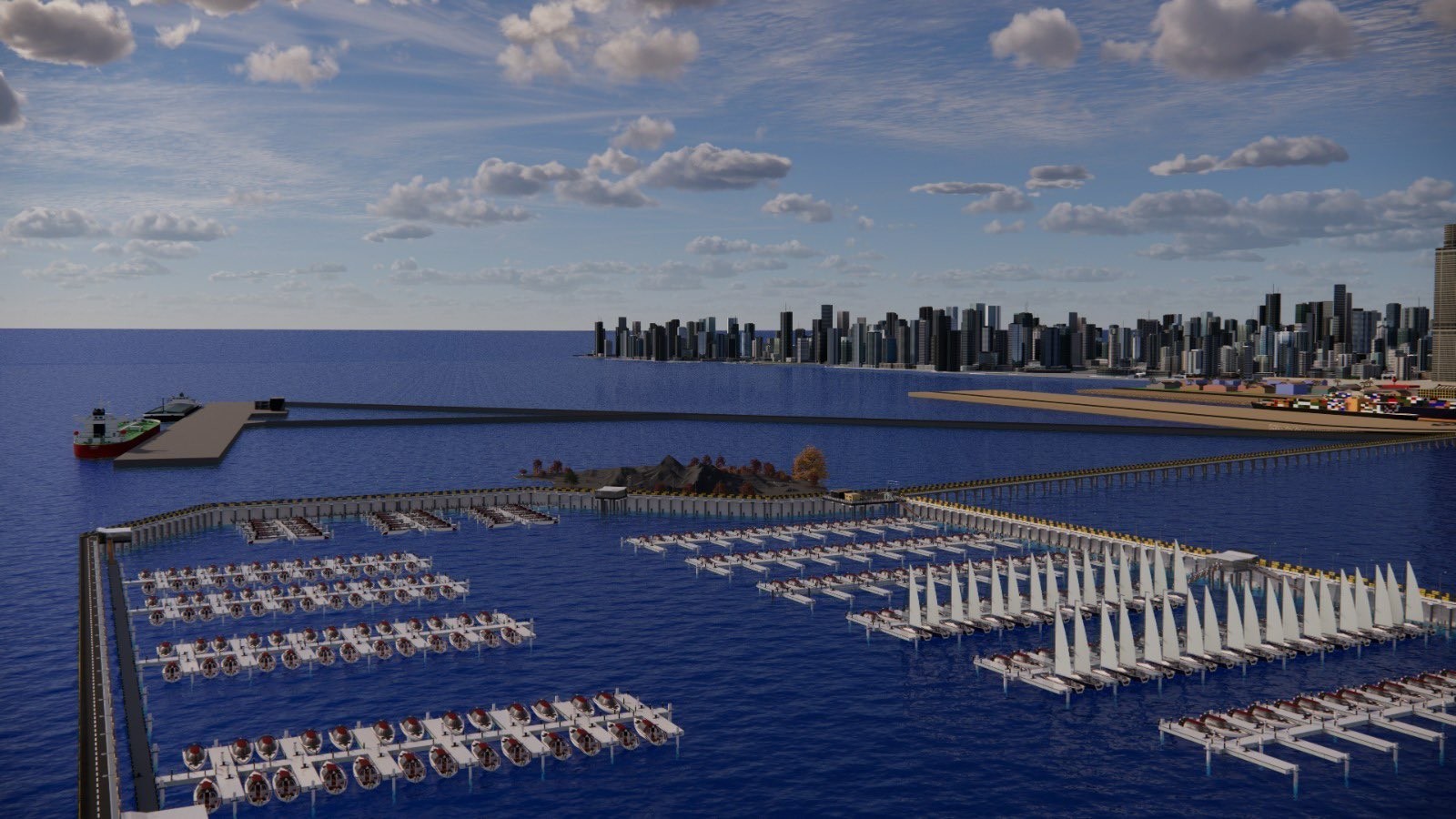
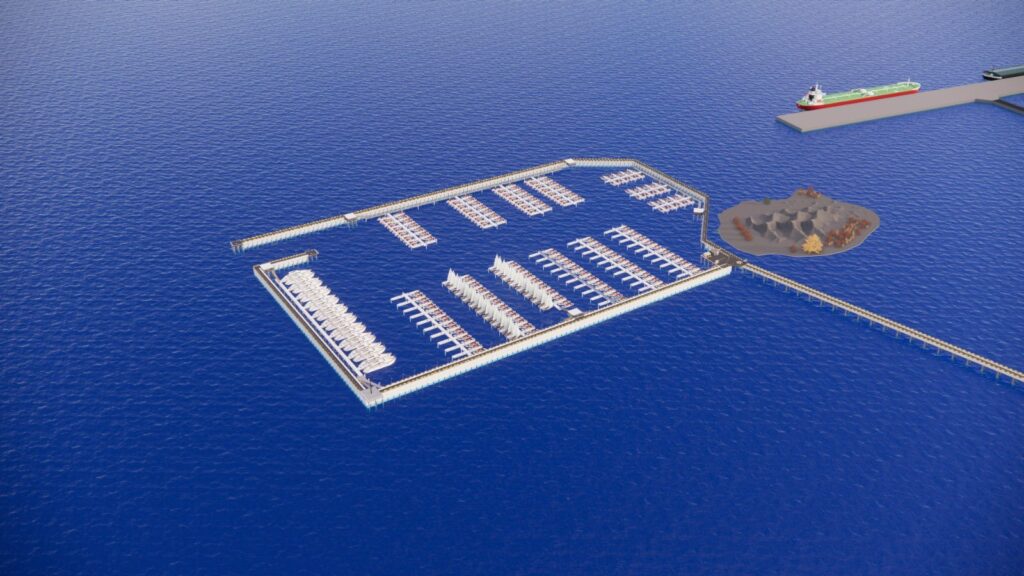
Planned over nearly 12 hectares of sea water area, the Viksit Bharat Mumbai Marina is designed to accommodate large-scale yachting and marine leisure activities. The marina will have the capacity to berth 424 yachts, with individual vessels measuring up to 30 metres in length.
The marine infrastructure will include essential facilities such as:
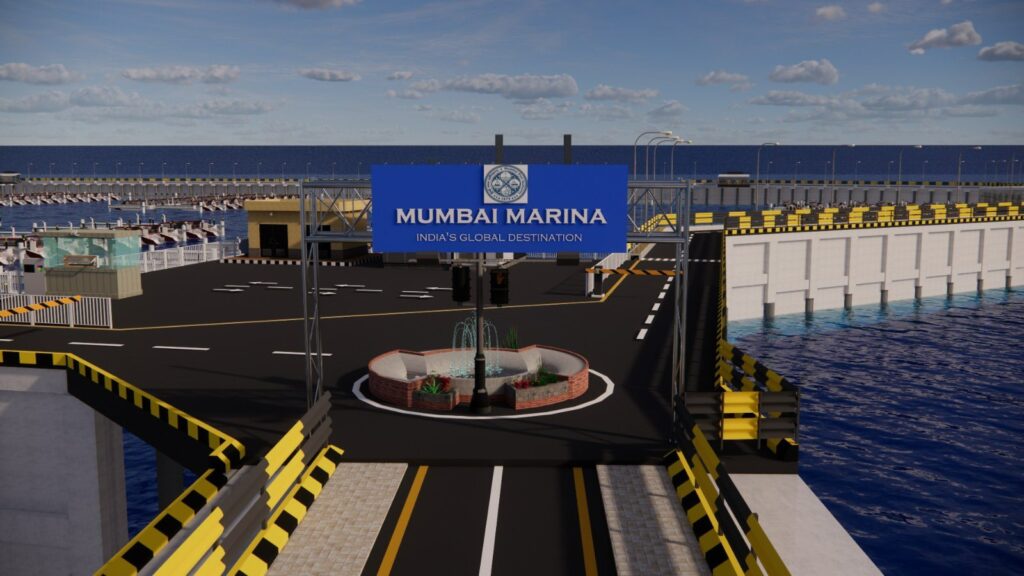
- An approach trestle for smooth access
- Piled breakwaters to ensure safety and calm waters
- Service platforms for operations and maintenance
- Pontoons and gangways to support efficient and safe yacht movement
These features are intended to meet international marina standards and ensure safe, efficient, and sustainable operations.
Onshore Facilities and Tourism Infrastructure
In addition to marine-side infrastructure, the project places strong emphasis on onshore development, which will be undertaken by the private operator. The planned facilities are designed to create a comprehensive maritime tourism ecosystem.
Key onshore components include:
- A Marina Terminal Building for passenger and visitor services
- Namo Bharat International Sailing School, aimed at promoting sailing sports and maritime skills
- A Maritime Tourism Development Centre to support tourism activities
- Hotel and clubhouse facilities to attract domestic and international visitors
- A Skill Development Centre to train manpower for marina operations and allied services
- Yacht stacking and repair infrastructure to support maintenance and long-term operations
Together, these facilities will help Mumbai emerge as a premier destination for yachting, sailing, and marine leisure activities.
Employment Generation and Economic Impact
One of the most significant outcomes of the Mumbai Marina project is its potential for job creation. According to the Ministry, the project is expected to generate over 2,000 jobs across various sectors.
Employment opportunities will arise in:
- Marina operations and management
- Cruise and yacht services
- Hospitality and tourism
- Skill training and maritime education
- Maintenance, repair, and logistics services
Beyond direct employment, the project is expected to create indirect jobs through increased tourism, local businesses, transport services, and supply chains. This makes the marina a major contributor to Mumbai’s urban economy and the broader maritime sector.
Strengthening Coastal Shipping and Blue Economy
The Mumbai Marina project is not just a tourism initiative; it also plays an important role in strengthening coastal shipping development and advancing India’s Blue Economy vision. By creating modern waterfront infrastructure, the project supports greater use of coastal routes for passenger movement and leisure activities.
The marina aligns with several national frameworks, including:
- Maritime India Vision (MIV) 2030
- Maritime Amrit Kaal Vision (MAKV) 2047
- Sagarmala Programme
- Cruise Bharat Mission
- Mumbai Port Authority Port Master Plan 2047
These initiatives collectively aim to enhance port-led development, improve logistics efficiency, promote cruise tourism, and integrate sustainability into maritime growth.
Opening Mumbai’s Waterfront to the Public
A key objective of the Viksit Bharat Mumbai Marina is to improve public access to Mumbai’s waterfront. Traditionally, large sections of the city’s port areas have remained inaccessible to the general public. The marina project aims to change this by creating vibrant, well-planned spaces that blend tourism, recreation, and maritime activity. This approach supports waterfront-led urban development, making the coastline an active part of the city’s social and economic life while preserving its maritime character.
Private Sector Participation and Global Positioning
By adopting a hybrid development model, the government is encouraging private sector participation in coastal infrastructure. This approach helps attract global expertise, improve service quality, and reduce the financial burden on public authorities.
According to Shri Sarbananda Sonowal, the project is expected to position Mumbai as a global maritime tourism hub, comparable to leading marina destinations worldwide. The combination of modern infrastructure, skilled manpower, and strategic location makes Mumbai well-suited to attract international yachting and cruise traffic.
Also read: Shipbuilding and Recycling Drive to Generate 22 Lakh Jobs in India
A Landmark Step for Mumbai’s Maritime Future
The approval of the ₹887 crore Viksit Bharat Mumbai Marina marks a landmark moment in India’s maritime and tourism development journey. By integrating world-class marina infrastructure with tourism, employment, and sustainability goals, the project reflects a forward-looking approach to coastal development.
As implementation progresses, the Mumbai Marina is expected to play a transformative role in boosting maritime tourism, strengthening coastal shipping, generating employment, and advancing India’s Blue Economy. For students, marine professionals, and industry stakeholders, the project offers a clear example of how infrastructure-led development can reshape the maritime landscape of a global city.
Source: PIB