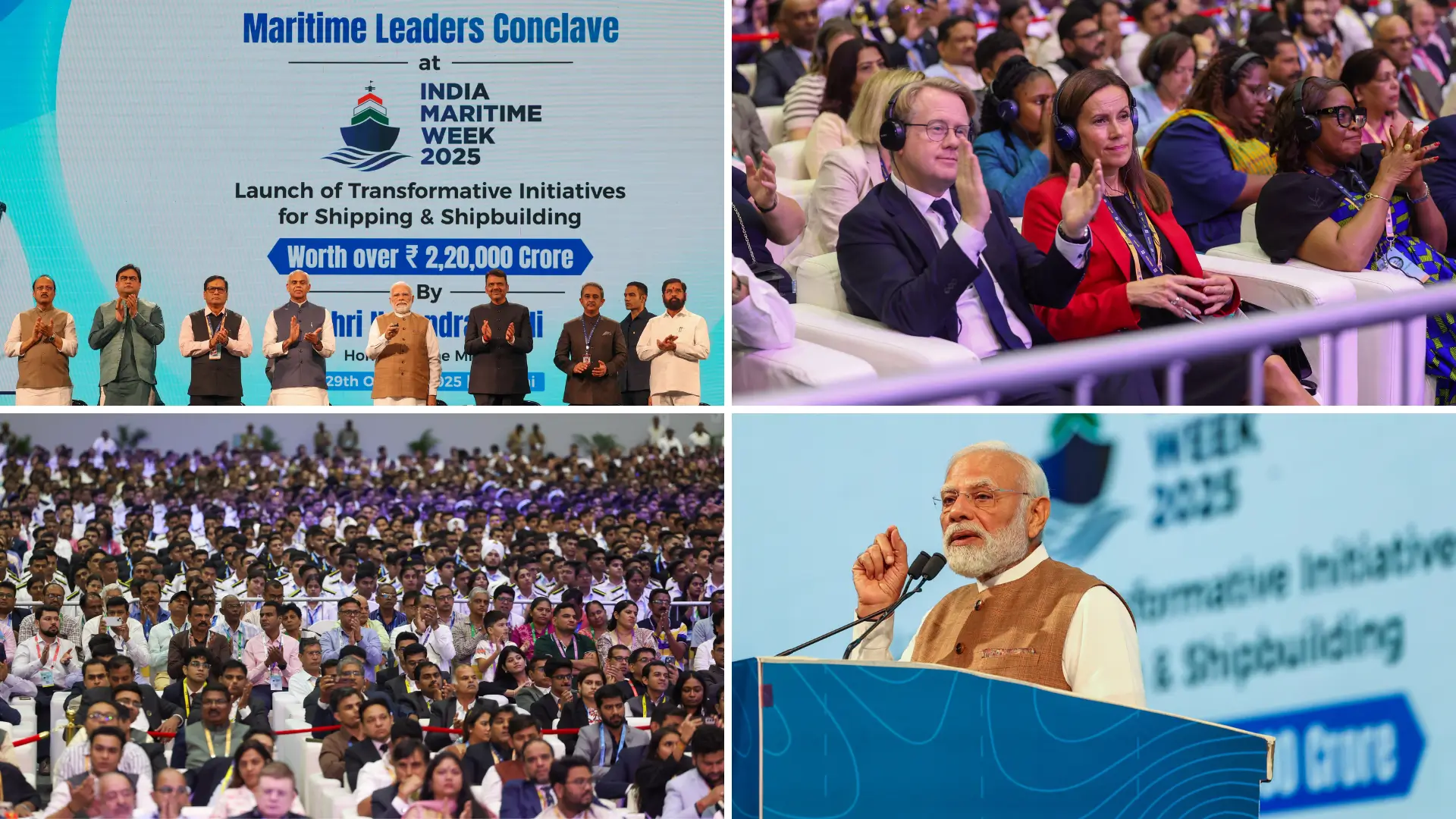
PM Modi Addresses Maritime Leaders Conclave
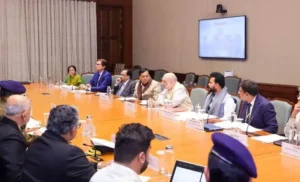
Prime Minister Modi addressed the Maritime Leaders Conclave and chaired the Global Maritime CEO Forum during India Maritime Week 2025 in Mumbai, Maharashtra. Welcoming global delegates, investors, policymakers, port authorities, and maritime innovators, he stated that the event has grown from a domestic industry initiative in 2016 into a global summit that now represents shared maritime interests and aspirations across continents.
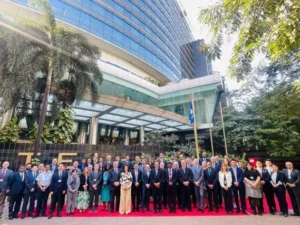
Participation from more than 85 countries, including small island developing states, major shipping companies, and global port operators, marked the Conclave as one of the world’s largest platforms for maritime cooperation and knowledge exchange. India Maritime Week 2025 aims to shape the nation’s maritime vision for the next two decades, with sustainability, competitiveness, and collaboration at its core.
A Vote of Global Confidence in India’s Maritime Growth
Prime Minister Modi emphasized that the signing of Memorandums of Understanding worth several lakh crores during the summit reflects growing international confidence in India’s maritime capabilities. He noted the presence of leaders from global shipping companies, maritime startups, blue economy research institutions, and technology firms as a sign of shared commitment to shaping the future of the world’s oceans. “In the 21st century, India’s maritime sector is advancing with great speed and energy,” the Prime Minister remarked.
India’s Major Maritime Milestones in 2024–25
Prime Minister Narendra Modi highlighted several landmark achievements in India’s maritime sector during 2024–25, marking a year of significant progress in port operations, infrastructure expansion, and green energy adoption. Vizhinjam Port, India’s first deep-water international transshipment hub, became operational this year. The world’s largest container vessel recently berthed here, underscoring India’s growing relevance in global shipping routes.
India’s major ports recorded their highest-ever cargo handling volumes, demonstrating increased efficiency and expanding global trade linkages. At Kandla (Deendayal) Port, India’s first indigenous megawatt-scale green hydrogen facility has been commissioned, positioning the country for future clean fuel production and maritime decarbonisation.
Phase 2 of the Bharat Mumbai Container Terminal at JNPT has been inaugurated, doubling the terminal’s handling capacity. This expansion was supported by the largest foreign direct investment in India’s port infrastructure, enabled through a strategic partnership with Singapore. Together, these developments signal India’s emergence as a central logistics and trade anchor within the Global Maritime Hub network.
Modern Maritime Legislative Reforms
Prime Minister Modi highlighted that India has replaced outdated colonial-era maritime laws with modern frameworks that align with global standards and support 21st-century maritime needs.
Merchant Shipping Act Modernisation
- Aligns Indian maritime safety provisions with international conventions
- Enhances ease of doing business for shipping and logistics companies
- Reduces government intervention and compliance burden
- Strengthens global confidence in Indian shipping practices and seafarers
Coastal Shipping Act
- Simplifies coastal trade procedures
- Enhances supply chain security
- Promotes balanced coastal economic development
One Nation, One Port Process
- Standardizes port documentation across the country
- Reduces delays and paperwork
- Improves logistics efficiency across domestic and global trade corridors
Port Efficiency Gains Over the Past Decade
The past ten years have seen transformational improvements across India’s ports and inland waterways.
| Indicator | Earlier | Now | Impact |
|---|---|---|---|
| Operational waterways | 3 | 32 | 700% increase in inland water cargo movement |
| Major port capacity | Nearly doubled | Sustained surplus | Stronger trade handling capability |
| Container dwell time | 7+ days | < 3 days | Faster than several developed nations |
| Vessel turnaround time | 96 hours | 48 hours | Increased port competitiveness |
| Number of Indian seafarers | 1.25 lakh | 3 lakh+ | India now ranks top 3 globally |
The Prime Minister stated that Indian ports are now among the most efficient in the developing world, and in several cases, outperform ports in advanced economies.
The Next 25 Years: Focus on the Blue Economy
Looking ahead, the Prime Minister emphasized that the coming decades will define India’s ocean-linked identity.
Key national priorities include:
- Blue Economy expansion
- Green logistics corridors
- Coastal industrial and export clusters
- Low-emission and climate-resilient port ecosystems
The Blue Economy will play a critical role in:
- Food and energy security
- Coastal livelihood support
- Resilient global trade connectivity
Shipbuilding as a Strategic Priority
The Prime Minister underlined that shipbuilding is central to India’s maritime strategy.
Historical Legacy
India has a long tradition of shipbuilding, reflected in ancient maritime craftsmanship and early vessel designs depicted in the Ajanta cave murals. Indian-built ships once played a significant role in global maritime trade.
Present Momentum
India is accelerating:
- Greenfield and brownfield shipyard expansion
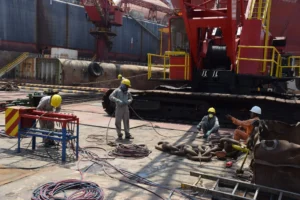
- Skill development for marine engineering and ship repair
- Private sector and foreign investment participation
₹70,000 Crore National Investment Push
The Government will invest ₹70,000 crore to:
- Expand shipbuilding capacity
- Support indigenous manufacturing of commercial and naval ships
- Enable long-term, lower-cost financing for shipyards
- Create millions of skilled maritime jobs
New Mega Port at Vadhavan: Boosting Global Supply Chain Strength
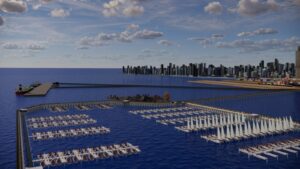
A ₹76,000 crore deep-water mega port is being developed at Vadhavan, Maharashtra, designed to handle the world’s largest vessels and expand India’s share in global container shipping.
The project is expected to:
- Significantly increase cargo capacity
- Support coastal industrial and logistics clusters
- Strengthen global supply chain resilience
The Prime Minister invited investors, shipping companies, logistics firms, and port operators to participate under “Make in India, Make for the World.”
India as a Stable Maritime Partner
In a world facing geopolitical tensions and shifting supply chains, India positions itself as:
- A stable democratic maritime power
- A reliable logistics and trade partner
- A bridge between developed and developing maritime economies
- A responsible advocate for sustainable oceans
He also emphasized supporting Small Island Developing States and Least Developed Countries, ensuring that the Blue Economy remains inclusive.
Source : Ministry of Ports, Shipping & Waterways (PIB)