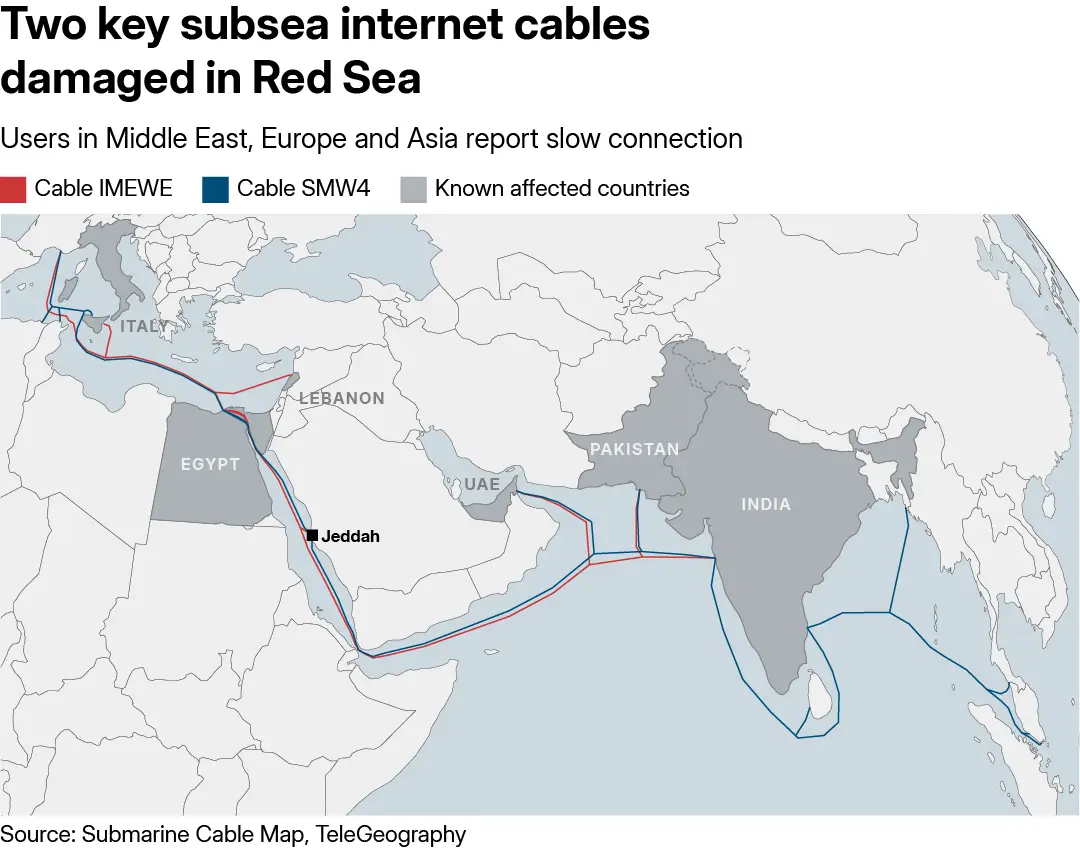
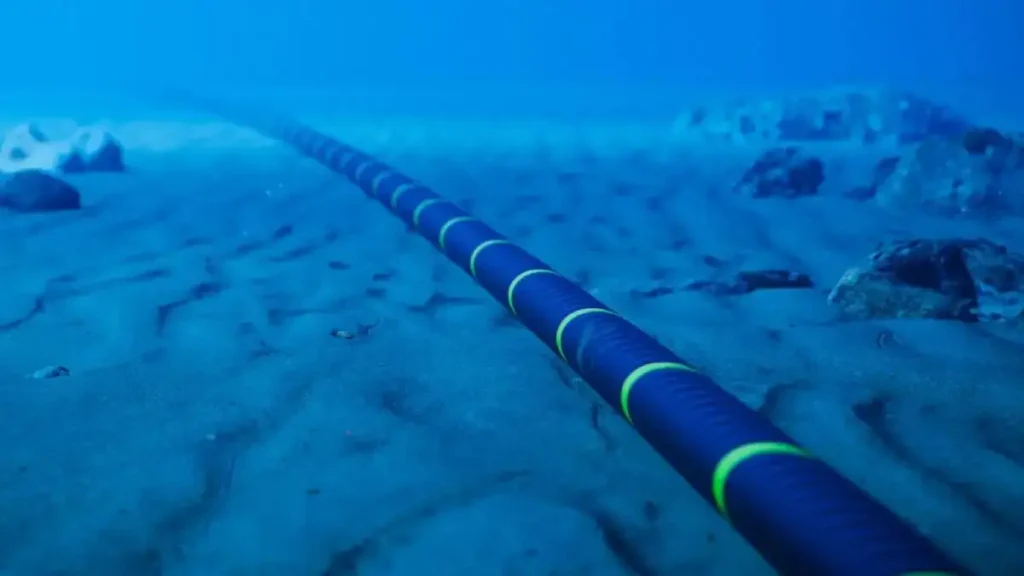
A string of undersea cable cuts near the Red Sea has disrupted internet connectivity across multiple countries in Asia and the Middle East, with India among those experiencing performance degradation. The incidents involve major subsea cable systems such as SMW4 (South East Asia–Middle East-Western Europe 4), IMEWE (India-Middle East-Western Europe), FALCON GCX, and the Europe India Gateway, with failures occurring off Jeddah, Saudi Arabia.
What Happened
- Outages & Affected Cables: SMW4 and IMEWE are reported as being cut near Jeddah. The FALCON GCX cable is also reported damaged. Additionally, the Europe India Gateway cable is now seen as affected.
- Countries impacted: India, Pakistan, the United Arab Emirates (UAE), Kuwait and others in Asia and the Middle East have seen slower internet speeds, increased latency, intermittent outages.
- Cloud & Service Impact: Microsoft’s Azure cloud services reported increased latency for traffic that normally travels through the Middle East. Some services have been rerouted via alternative paths.
Probable Causes & Speculation
- Accidental damage seems a leading hypothesis. Experts suggest that a commercial ship dragging its anchor over shallow seabed sections may have severed the cables.
- Sabotage or deliberate action is also part of speculation, given the history of maritime tensions in the region. Yemen’s Houthi rebels have been suggested by some observers, but there is no confirmed evidence implicating them in this particular incident. The Houthis have denied responsibility.
Direct Impact on India
- Latency & Speed Degradation: Indian users, especially those accessing international (Europe-Asia) routes, saw increased delays. Traffic that would normally go via IMEWE or SMW4 had to be rerouted, producing slower responses and degraded performance.
- ISP & Telecom Effects: Indian cable landing stations that connect international and regional internet traffic (via IMEWE, SMW4) are part of the chain impacted. Telecom providers have been managing reroutes and alternative paths. While services are not offline, quality and speed have been affected.
Also read: Taiwan Boosts Sea Cable Patrols Amid China Grey-Zone Threat Targeting Subsea Cables
Strategic and Broader Implications
- The Red Sea remains a critical chokepoint for global internet infrastructure, especially for traffic between Asia, Europe, and the Middle East. Cables there carry a large share of fiber-optic international data.
- The frequency of such incidents highlights both the vulnerability of undersea cables and the importance of redundancy, alternative routes, and more resilient designs. Repairing submarine cables is complex and can take weeks, given the need for specialized vessels, technical crews, and often difficult permitting and environmental/logistical constraints.
What’s Next
- Repair efforts are expected to begin as soon as the damage sites are clearly identified. However, full restoration is likely to take time possibly days or weeks depending on vessel availability and geopolitical permissions.
- Meanwhile, ISPs and cloud providers are relying on rerouting and backup cables to maintain connectivity, though with reduced speed or increased latency.
- There is growing pressure for governments, international bodies, and companies to ensure the physical security of submarine cables, possibly increasing oversight, surveillance, legal frameworks, and preventive measures in key maritime zones.
Source: (AP News) (The Times of India) (Reuters)