As concerns over China’s grey-zone warfare tactics intensify, Taiwan is significantly ramping up sea cable patrols to protect critical undersea cables linking the island to the global internet. These cables are emerging as a potential weak point in Taiwan’s communications infrastructure, and in response the Taiwan Coast Guard has placed protecting them at the top of its maritime security agenda.
Grey-Zone Threat and Subsea Cable Vulnerability
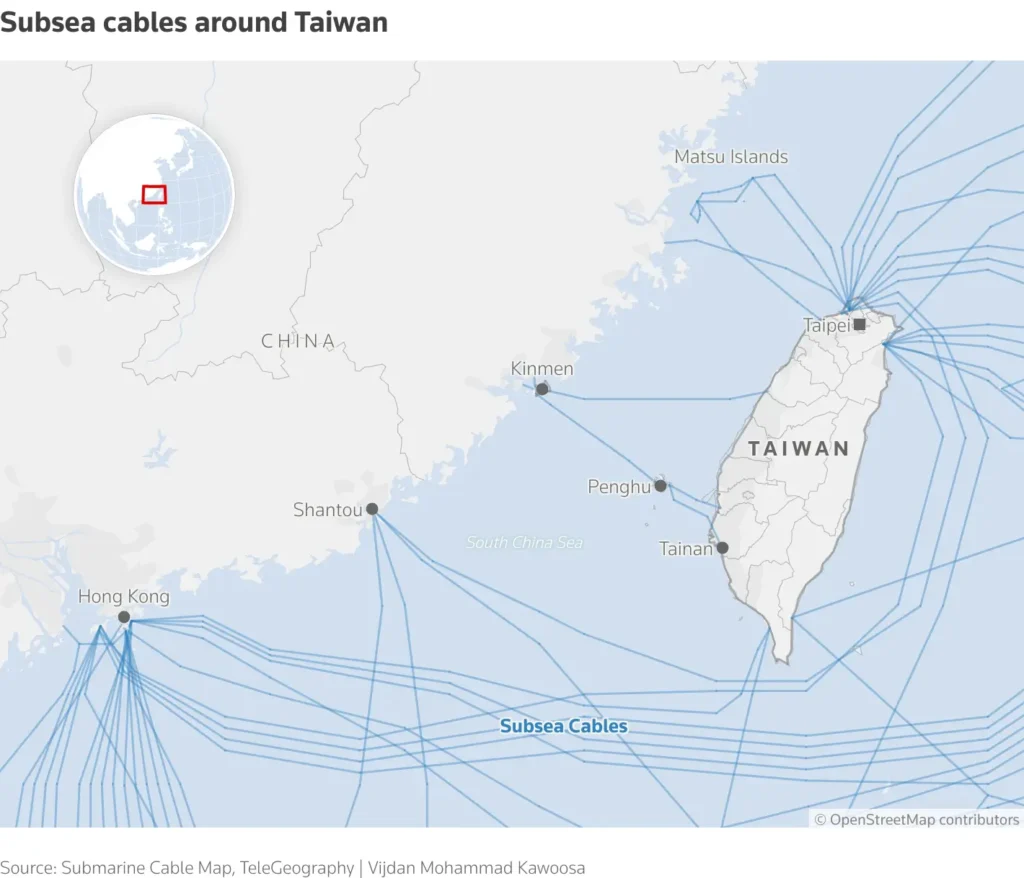
China’s grey-zone operations are methods short of outright war disruptive, forced actions that blur legal and military thresholds. One of the newest fronts in this domain is undersea or subsea cable sabotage. Taiwan has identified that cables such as TP3 are vital targets. TP3, among 24 cables connecting Taiwan domestically and internationally, made headlines earlier this year when a Chinese captain was found guilty of deliberately severing it.
With such incidents occurring, Taiwan considers its communications network exposed to potential disruption, which could undermine public services, economic stability and civilian trust. Undersea cables are vastly under protected, and many run close to high-traffic or disputed maritime zones, making them more vulnerable.
Taiwan’s Response: 24-Hour Patrols & Monitoring
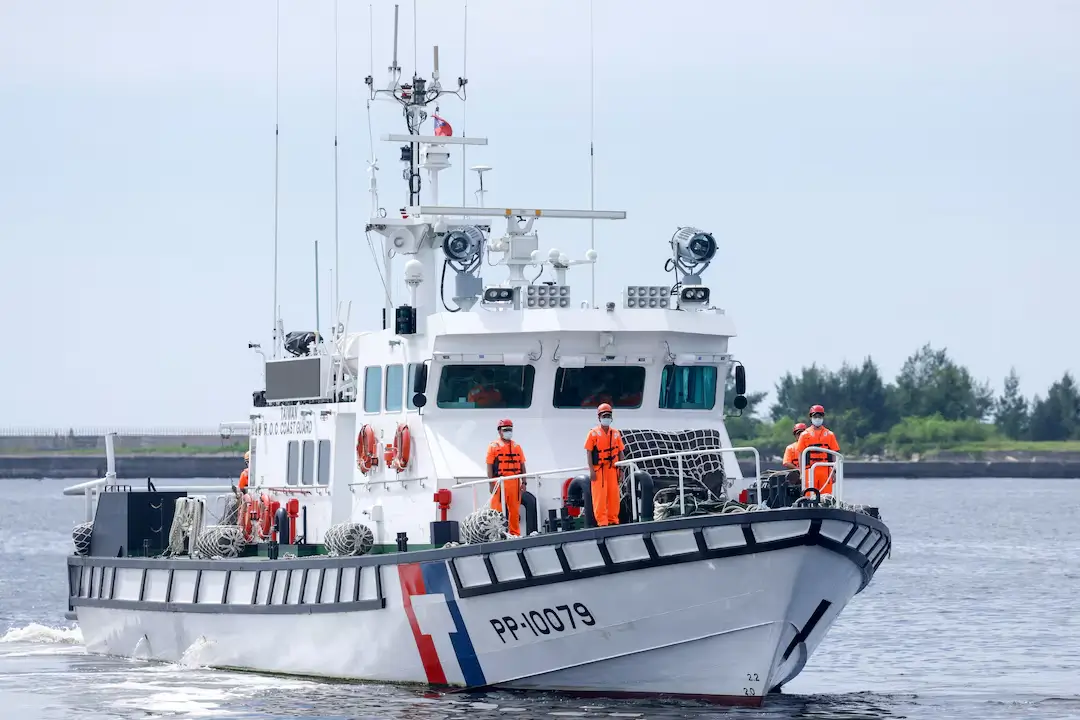
To counter these threats, Taiwan has implemented round-the-clock sea cable patrols near sensitive cable routes like TP3. Coast Guard vessels, some equipped with water cannons and autocannons, are deployed alongside radar stations and a monitoring system that detects slow-moving vessels within a one-kilometer radius of key cable segments.
When suspicious vessels are detected, radio warnings are issued. If noncompliance continues, larger response vessels are dispatched. These operations are resource-intensive: Taiwan has committed eight coast guard boats and almost 500 officers to the surveillance and protection of submarine cable zones.
China-Linked Activity & Intelligence Sharing
Taiwanese authorities have connected a number of suspected underwater sabotage incidents to Chinese-linked vessels. Some of these boats are on Taiwan’s blacklist (96 in total), frequently flying flags of convenience to obscure their origin. Another nearly 400 China-affiliated boats are also under observation, including cargo ships that could be repurposed for more aggressive roles.
Taipei is not acting alone. It is sharing intelligence with “like-minded capitals” on vessel movements in real time. Radar, AIS tracking, and other maritime intelligence tools are helping to build situational awareness. Taiwanese officials describe many of the vessels involved as older, dilapidated boats “piles of scrap metal” used to carry out low-cost, high-impact disruption.
Strategic Stakes and Challenges
Taiwan’s proximity to mainland China means that many submerged cable routes pass through or near areas of high geopolitical tension. Deputy Secretary-General of Taiwan’s National Security Council, Lin Fei-fan, has said that Taiwan “ranks among the top countries facing this issue,” given its closeness to China and the density of submarine cable infrastructure.
At the same time, protecting these cables poses serious logistical and operational challenges. The coast guard has to balance these missions with life-saving operations, maritime law enforcement, and other responsibilities. Resources are stretched, and constant monitoring over wide maritime zones demands both personnel and technology.
Also read: India Makes History with COLP48 – Oceans Law & Policy Conference in New Delhi
Implications for Regional Security
Taiwan’s escalation of subsea cable security reflects a broader trend in maritime domain awareness, particularly among states threatened by grey-zone tactics. Similar concerns have been raised globally after suspected underwater sabotage in regions like the Baltic Sea since Russia’s invasion of Ukraine.
These developments underscore how undersea infrastructure, often unseen is becoming a frontline in information warfare and strategic coercion. For Taiwan, ensuring the integrity of its undersea cables is not just about maintaining internet connectivity; it’s now a core national security priority.
Source: (gCaptain)