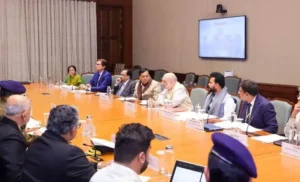
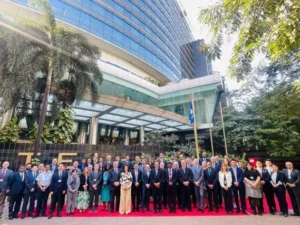
On July 17, 2025, Mumbai played host to the Maharashtra Maritime Summit 2025, a high‑profile gathering of policymakers, industry leaders, global experts, and diplomatic representatives aimed at charting Maharashtra’s course toward becoming a premier global shipping hub. Inaugurated by Chief Minister Devendra Fadnavis and chaired by Ports & Fisheries Minister Nitesh Rane, the summit provided a platform for in‑depth discussions on the state’s maritime infrastructure, human capital development, and policy framework, underscoring Maharashtra’s ambition to elevate its maritime sector to international prominence.
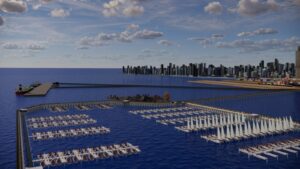
Chief Minister Fadnavis opened the Summit by characterizing the upcoming Vadhavan Port project as more than a cargo terminal—it is “an economic revolution focal point” poised to rank among the world’s top ten ports upon full operation. He linked this development directly to India’s broader goal of becoming the world’s third‑largest economy, with Maharashtra ready to lead that charge. “Vadhavan Port will be among the top 10 ports in the world once it is fully operational, aligning the project with India’s trajectory to become the world’s third‑largest economy and Maharashtra’s readiness to lead this growth,” Fadnavis declared.
A centrepiece of the Vadhavan Port vision is the creation of India’s first offshore airport situated adjacent to the port, establishing seamless multimodal connectivity. Under the central government’s Sagarmala initiative, the project will integrate waterways, railways, highways, including dedicated access‑controlled roads to the Samruddhi Mahamarg and air routes to streamline cargo movement and passenger transfers. Fadnavis highlighted that the Sagarmala project’s funding and planning support have already expedited the laying of a robust railway network linking Vadhavan Port, enabling efficient multi‑modal cargo handling and enhancing the capabilities of non‑major ports across the region.

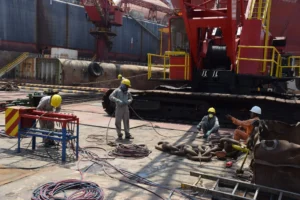
Beyond freight logistics, the Chief Minister emphasized Maharashtra’s broader maritime ecosystem ambitions expanding shipbuilding yards, formalizing ship‑recycling facilities, and enhancing water‑transport services, particularly along the Mumbai–Navi Mumbai corridor. He noted that improved intra‑city ferry and water‑taxi services could significantly uplift urban mobility and quality of life, providing an eco‑friendly alternative to congested road networks. Complementing these initiatives, the recently inaugurated Samruddhi Highway has already slashed travel times between 15–16 districts and the JNPT port from several days to under ten hours, demonstrating the transformative power of integrated infrastructure projects.
Minister Nitesh Rane set the tone for human capital development by announcing the formation of a “Maritime Acceleration Task Force” tasked with driving modernization efforts and upskilling the workforce to meet the demands of a rapidly evolving maritime sector. He underscored the importance of equipping young professionals with cutting‑edge expertise in port operations, logistics management, and maritime technology to ensure that Maharashtra’s ports operate at global best‑practice standards. Rane also chaired expert panels that delved into thematic areas such as state maritime policy, inland and coastal water transport, shipbuilding innovation, and sustainable ship‑recycling techniques.

The summit attracted top-tier participation from key industry stakeholders, signaling robust private‑sector confidence. Representatives from Adani Ports, Damen Shipyards, Thyssenkrupp Marine Systems, DP World, JSW Infrastructure, Haskoning, Rural Enhancers Group, Indigo Seaways, and Candela engaged in roundtable discussions, while diplomats from countries across Asia, Europe, and the Middle East explored avenues for bilateral collaboration and investment. Their involvement underscored the growing global interest in Maharashtra’s maritime potential and opened doors for technology transfers, joint ventures, and financing partnerships.
Anchoring these initiatives within a long‑term strategic framework, both Fadnavis and Rane reaffirmed their commitment to aligning state projects with the Central government’s “India Maritime Vision 2030” and the ambitious “Amritkal Maritime Vision 2047.” Fadnavis assured attendees that all summit recommendations would be meticulously compiled and integrated into Maharashtra’s maritime policy, ensuring that legislative, financial, and institutional reforms keep pace with infrastructural growth. “Mumbai Port and JNPT Port are the ports that make Mumbai the economic engine of India. Now we are determined to become a power in the global supply chain, so we have to increase the capacity, efficiency, and connectivity of the ports,” he affirmed.
Also read: Visakhapatnam Port to Get ₹276 Crore Infrastructure Boost
Maharashtra has plans to develop Vadhavan Port as a major facility and utilize its coastal resources. The outcomes of the Summit represent a step toward enhancing both the state’s and India’s position within the maritime sector. Through policy support, infrastructure development, and attention to human capital, Maharashtra aims to strengthen its role in global shipping in the coming years.
Source: (India Shipping News, shippingtribune.com)