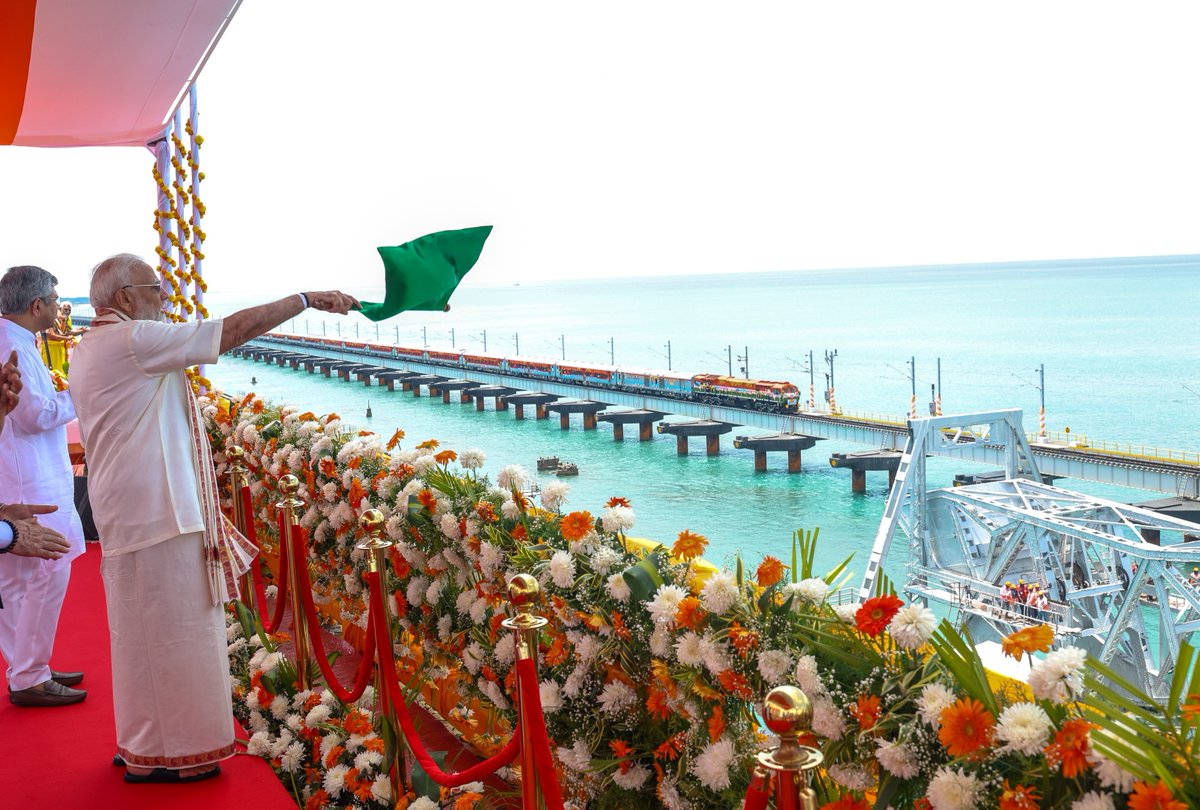
In a landmark event on April 6, 2025, Prime Minister Narendra Modi visited Rameswaram, Tamil Nadu, to unveil transformative projects that signal a bold step forward in modern infrastructure and maritime growth. With initiatives worth over ₹8,300 crore and the debut of India’s first vertical lift sea bridge, the ceremony highlighted Tamil Nadu’s pivotal role in bolstering connectivity, the Blue Economy, and cultural outreach all essential elements for a stronger national future.
Engineering Marvel: The New Pamban Bridge
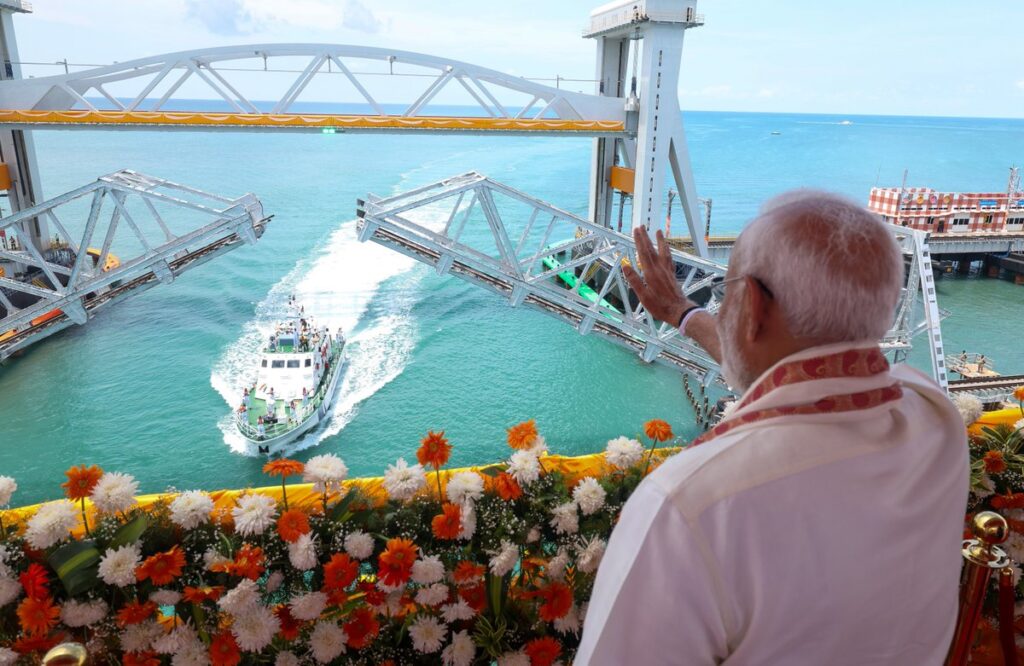
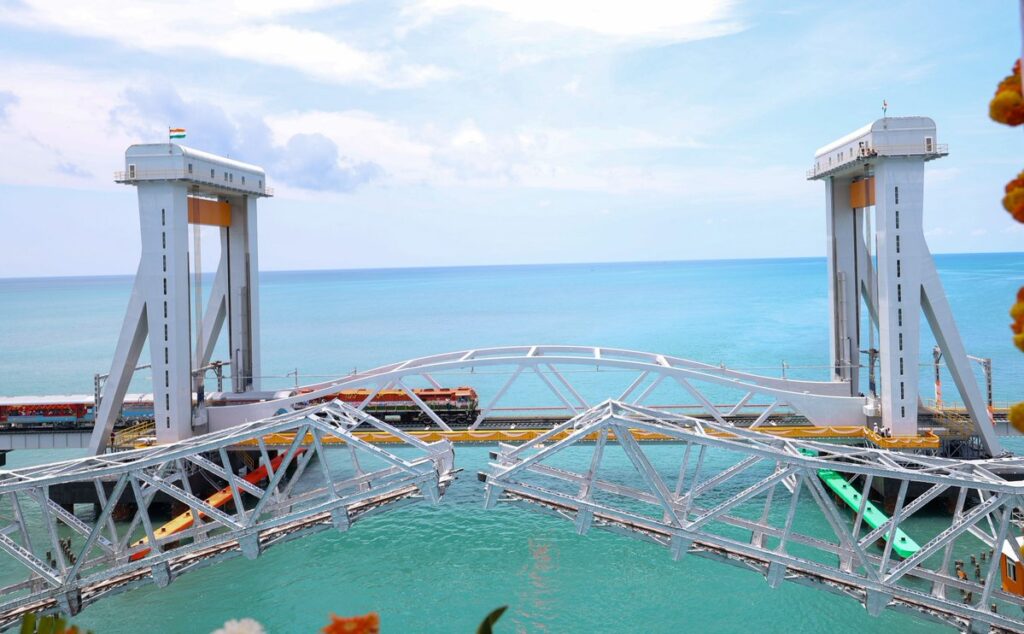
One of the most striking highlights of the day was the inauguration of the new Pamban Rail Bridge India’s first vertical lift sea bridge, which stands as a symbol of the union between modern technology and timeless tradition. Spanning 2.08 kilometres with 99 spans, the bridge includes a 72.5‑meter vertical lift segment that can rise up to 17 meters. This engineering innovation allows large ships to pass safely beneath while enabling uninterrupted rail service.
Constructed at a cost exceeding ₹700 crore, the Pamban Rail Bridge is more than just a transportation link; it’s a reflection of visionary engineering combined with cultural pride. The bridge is built using stainless steel reinforcement, high‑grade protective paint, fully welded joints, and protected with a special polysiloxane coating to ensure long-term durability in the harsh marine environment.
Designed with dual rail tracks for future growth, this modern marvel not only enhances travel efficiency between Rameswaram and Chennai but also stands as a testament to India’s ability to blend engineering ingenuity with rich historical legacy. Prime Minister Modi remarked that the bridge embodies a fusion of innovation and tradition a crucial element in India’s journey towards sustainable development.
Driving the Blue Economy and Empowering Local Communities
In his address, Modi underscored that India’s Blue Economy will play a crucial role in driving national growth a sector where Tamil Nadu is emerging as a global leader. He stated, “India’s blue economy will play a significant role in the country’s growth, and Tamil Nadu’s strength in this sector will be recognized globally.” This commitment is evident in the extensive support provided to the state’s fisheries and maritime sectors.
Under the PM Matsya Sampada Yojana, the central government has infused hundreds of crores of rupees over the past five years into modernizing fisheries infrastructure. Investments have been directed toward developing state‑of‑the‑art seaweed parks, fishing harbours, and landing centres to provide fishermen with modern facilities and improved economic opportunities.
Modi emphasized that these measures not only enhance economic prospects but also ensure the safety of fishermen. Over the past decade, more than 3,700 fishermen have been repatriated from Sri Lanka, including over 600 in the previous year alone, highlighting the government’s robust focus on welfare and security.
Also Read: Dark Waters and Dimmed Lights: The Queen Anne’s Tense Passage
This strategic push in the Blue Economy stands as a complementary pillar to the nation’s broader infrastructural developments. As enhanced maritime infrastructure couples with improved road and rail networks, it creates a multi-dimensional development environment that benefits trade, tourism, and local livelihoods alike. The ripple effect of these initiatives is expected to foster job creation, boost regional commerce, and position Tamil Nadu as a crucial player in India’s overall growth story.
Infrastructure Breakthroughs Across Tamil Nadu
During the event, the Prime Minister laid the foundation stone for multiple rail and road projects that span across the state. These projects, valued at over ₹8,300 crore, are designed to dramatically enhance regional connectivity and spark economic growth. The initiatives include a comprehensive upgrade of existing transport links through a series of highway improvements, with projects such as –
- A 28‑km four‑lane expansion of the Walajapet–Ranipet stretch along NH‑40.
- A 29‑km upgrade on the Viluppuram–Puducherry corridor (NH‑332).
- A 57‑km development project along the Poondiyankuppam–Sattanathapuram section of NH‑32.
- A 48‑km improvement on the Cholapuram–Thanjavur stretch of NH‑36.
These highway projects are strategically planned to connect pilgrim centres, tourist spots, medical institutions, and ports, ensuring faster access for local communities and local industries. In doing so, they empower farmers, boost small-scale industry growth, and facilitate the smoother movement of goods and people across the region.
Furthermore, additional high-level projects include the upgrade of 77 railway stations (including Rameswaram station) and extensive rural road improvements that total more than 4,000 kilometres since 2014. Such steps are a testament to the state and central government’s commitment to reinforcing connectivity and fostering local development.
Conclusion
The Rameswaram inauguration captured a multi-faceted agenda: the deployment of breakthrough infrastructure projects, the unveiling of engineering marvels like the Pamban Rail Bridge, the strategic push to harness the Blue Economy, and the reinforcement of cultural and political foundations. Each of these elements plays a critical role in shaping the future of not only Tamil Nadu but also the broader Indian economy.
By advancing connectivity through extensive road, rail, and maritime projects, the government is setting the stage for enhanced trade, tourism, and economic activity. The technical brilliance of the new Pamban Rail Bridge reinforces India’s commitment to creating infrastructure that stands the test of time while inspiring future growth. Simultaneously, targeted investments in the Blue Economy promise to elevate Tamil Nadu’s maritime capabilities and secure the livelihoods of thousands in the fisheries sector.