Report: 14 rescued, 2 missing after Russian ship sinks.
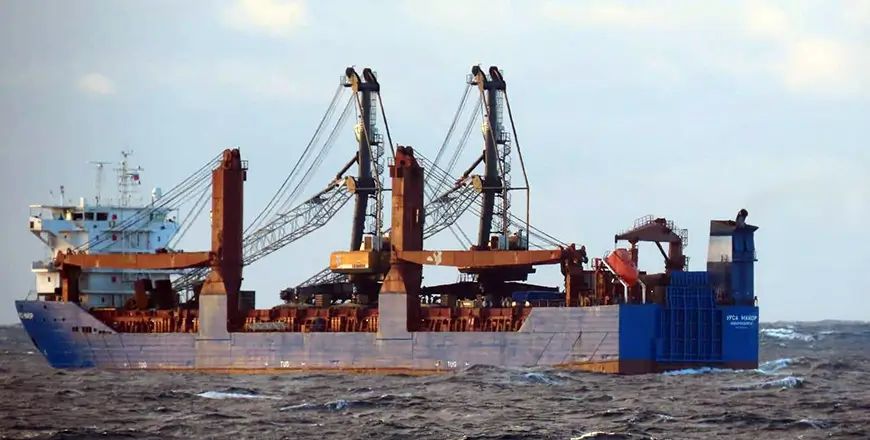
In a tragic maritime incident, a Russian-flagged merchant ship sank in the Mediterranean Sea on Tuesday morning, leaving 14 crew members rescued and two still missing. The vessel, identified as the MV Kalypso, was en route to Alexandria, Egypt, from the Turkish port of Iskenderun when it encountered severe weather conditions.
Incident Details
According to initial reports from maritime authorities, the MV Kalypso issued a distress signal late Monday night after battling increasingly rough seas for hours. The ship reportedly encountered gale-force winds and waves reaching heights of up to 6 meters, which overwhelmed its stability and ultimately led to its sinking around 50 nautical miles off the coast of Crete.
The vessel’s crew of 16 comprised Russian nationals. Maritime experts believe that the extreme weather, combined with the ship’s cargo—steel coils—may have contributed to the capsizing, as heavy cargo can shift and destabilize a vessel in rough conditions.
Rescue Operations
Greek and Turkish rescue teams swiftly responded to the distress call. The Hellenic Coast Guard deployed helicopters, patrol boats, and a frigate to the area, while nearby commercial vessels joined the search-and-rescue effort. Turkish maritime authorities also provided logistical support and aerial surveillance.
“We received the distress signal at approximately 11:30 p.m. local time and immediately launched a coordinated rescue operation,” said Captain Nikos Pantazis of the Hellenic Coast Guard. “Despite the challenging weather conditions, we managed to locate and recover 14 crew members alive.”
The rescued crew members were transferred to Heraklion, Crete, where they received medical attention. Local hospital officials confirmed that several crew members suffered from hypothermia and minor injuries but are in stable condition.
Missing Crew Members
However, the fate of two crew members remains uncertain. Search efforts continued through the day, with helicopters and patrol boats scouring the area where the ship was last located. Officials expressed concern about the decreasing chances of survival due to the frigid sea temperatures.
“Time is critical,” said Commander Andreas Petrou of the search-and-rescue team. “We are doing everything in our power to locate the missing crew members, but the conditions are challenging.”
Families of the missing sailors have been informed and are anxiously awaiting updates. Russian consular officials in Greece have offered their support and have been in constant communication with local authorities.
Investigation Underway
The sinking of the MV Kalypso has sparked questions about the ship’s condition and whether proper safety protocols were followed. A full investigation is underway, led by Greek maritime authorities in collaboration with their Russian counterparts.
Initial assessments suggest that the vessel might have been overloaded or poorly maintained. An anonymous maritime expert speculated, “The combination of an aging vessel and a heavy cargo like steel coils makes it susceptible to capsizing, especially in severe weather conditions.”
Russia’s Ministry of Transport released a statement expressing condolences to the families affected by the tragedy and pledging full cooperation in the investigation. “We are committed to uncovering the circumstances that led to this unfortunate incident and ensuring that measures are implemented to prevent such occurrences in the future,” the statement read.
Also Read: Fatal Collision: Indian Navy Speedboat Rams into Passenger Ferry, Killing 13
Regional Implications
This incident highlights the ongoing risks faced by maritime workers in the Mediterranean, a critical corridor for global trade but one prone to volatile weather patterns. Maritime unions have called for stricter regulations and enforcement to ensure the safety of ships and their crews.
“Every life lost at sea is a tragedy that could often be prevented with better safety standards,” said Maria Andros, spokesperson for the International Transport Workers’ Federation (ITF). “We urge governments and shipping companies to prioritize the well-being of seafarers over profit margins.”
International Response
The international maritime community has rallied to support the rescue efforts and the subsequent investigation. Neighboring countries such as Cyprus, Egypt, and Turkey have offered resources and expertise. The European Maritime Safety Agency (EMSA) has also pledged to assist in evaluating the causes of the accident.
The incident comes at a time when maritime safety in the Mediterranean is under scrutiny, with increasing shipping traffic and the challenges posed by climate change contributing to more frequent severe weather events. Experts have called for enhanced tracking and monitoring systems to provide real-time updates to vessels in the region.
Conclusion
The sinking of the MV Kalypso serves as a stark reminder of the dangers that maritime workers face daily. While the successful rescue of 14 crew members is a testament to the efficiency of international rescue operations, the ongoing search for the two missing sailors underscores the urgent need for improved safety measures in the shipping industry. As investigations continue, it is hoped that lessons learned from this tragedy will lead to reforms that prioritize the lives and well-being of those who work at sea.
Also Read: Russian Tanker Sinks in Kerch Strait, Causing Oil Spill and Fatality