Oil Tanker Explodes in Thailand, 1 Dead, 4 Hurt & others missing

19/01/2023

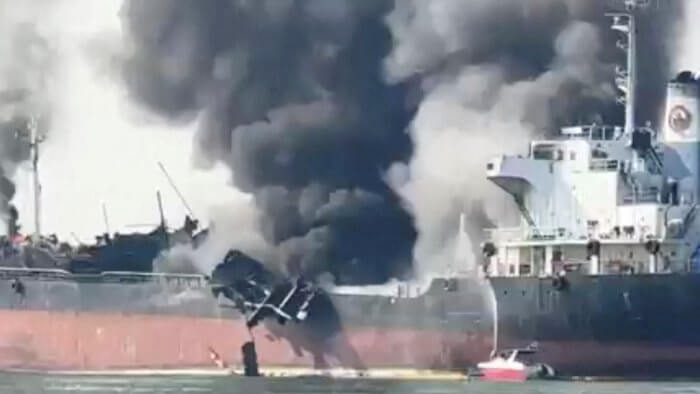
On January 17, 2023, an oil tanker exploded at a dockyard on the Mae Klong river in Thailand’s Muang district. Seven individuals are still unaccounted for, two people died, and four others suffered serious injuries. 500 metres from the vessel, parts of one of the dead were discovered. The blast was audible more than 10 kilometres distant and caused damage to surrounding homes.

Watch the Explosion Video here.

It was extremely difficult to combat the fire and seek for survivors as a result of the fire’s violent escalation and many explosions. The mobilisation of more than 10 fire engines came from several authorities.

The provincial labour protection office will question the employer and other parties to ascertain whether the Occupational Health and Safety Act was broken, according to Niyom Songkaew, chief of the Department of Labour Protection and Welfare.

Green Hydrogen Route To Be Developed Between Portugal And The Netherlands

24 December 2022

The ports of Sines and Rotterdam have signed a MoU relevant to the project H2Sines. On a unit near Sines, RDAM plans to manufacture green hydrogen, liquefy it, and ship it to Rotterdam using a special liquid hydrogen transporter. REN, Port of Sines, Port of Rotterdam, Gasunie, and ABN AMRO are supporting partners of the project in addition to ENGIE, Shell, Vopak, and Anthony Vede. The new pact comes after the governments of Portugal and the Netherlands signed an MoU in 2020 to establish vital marine hydrogen corridors.

In addition to the H2Sines.RDAM project, the ports of Sines and Rotterdam have been collaborating on the MAGPIE Project sMArt Green Ports for Integrated Efficient multimodal mobility, a call placed under the European Green Deal Horizon 2020. By 2028, the first shipment of liquid hydrogen is expected to be delivered from Sines to Rotterdam. For heavy transportation, hydrogen will be the fuel.

The port is also establishing the first green hydrogen supply network between two of Europe’s major ports, Rotterdam and Algeciras, with the Spanish energy provider Cepsa at the same time. By 2027, the trade channel is projected to be operational.

Andhra Pradesh has the ability to develop a “blue economy.”

25 December 2022

Andhra Pradesh’s maritime infrastructure is anticipated to increase quickly as a result of renewed efforts to develop the numerous seaports that dot its 974 km of coastline.

The Krishnapatnam, Kakinada deep water, and Gangavaram ports are among the smaller ports that are thriving; in contrast, the Kakinada anchoring port and the Ravva port are mostly utilised for the import and export of food grains, as well as the gathering of offshore oil from a few rigs in the Krishna-Godavari basin, respectively. The Kakinada anchoring port, which was established about a century ago, is the oldest of these minor ports in terms of their histories, while for a now Machilipatnam port was as a major trading hub for British and other European traders throughout the 18th century. Aside from all this, a spate of new ports are being constructed to boost maritime infrastructure, with the Ramayapatnam port being the first to open. Only 20 kilometres separate it from Nellore city.

The AP Maritime Board (APMB) changed its strategy for building the remaining ports, giving Bhavanapadu (Srikakulam district) and Machilipatnam immediate priority (Krishna). With the exception of a few minor land acquisition concerns that the APMB is working to resolve with the departments involved, they are in advanced stages of tendering and grounding of works. Nine fishing harbours that are now being built by the APMB in two phases have been added to the port infrastructure.

The Visakhapatnam Port Authority intends to broaden its cargo range

26 December 2022

On October 7, 1933, the SS Jaladurga, the first passenger ship, sailed into the harbour of the Visakhapatnam Port Trust (now known as the Visakhapatnam Port Authority). At the time, the harbour’s creators and engineers had no idea that it would one day grow to be one of the nation’s major ports.
At the time, it was planned to use just one or two ports in the inner harbour to accommodate an annual volume of roughly 1.3 to 1.5 lakh tonnes of goods. Nearly 69 million tonnes of cargo were transported by the multiple-berth VPA during the fiscal year 2021–2022. According to K. Rama Mohana Rao, chairman of the VPA, the forecast for this year is more than 72 million tonnes.
The British administration had intended to build a harbour in Visakhapatnam at the turn of the 20th century to link the eastern coast to the interior in central India using the city’s natural resources. Creating a technical report was the responsibility of British Admiralty Col. H. Cartwright Reid. The major issue that arose during construction, nevertheless, was how to stop the constant silting at the harbour’s mouth. The duty of building the port and the harbour was given to Bengal Nagpur Railway after several tests in which two ships, Janus and Wellesdon, were sunk at the harbour’s entrance to create a breakwater. The port’s first phase was completed between 1927 and 1933, and on December 19, 1933, Lord Willingdon, the country’s viceroy and governor general at the time, officially opened it.


Plan for growth

VPA is now preparing to diversify its cargo profile given that bulk cargo is the company’s primary focus. According to Mr. Rama Mohana Rao, “instead of the conventional coal, oil, and other bulk cargoes, we are now focusing on handling food grains and preliminary talks with investors are on to establish storage facilities with an investment of roughly $200-300 crore.” Aside from this, it is predicted that crude oil imports will increase since Hindustan Petroleum Corporation Limited (HPCL) has increased its capacity from 8 million tonnes to 15 million tonnes and is likely to increase further now that its expansion project is almost complete. In addition to mechanizing a few berths through a public-private partnership at a cost of around 288 crore, the VPA is also planning covered storage sheds to reduce dust pollution.

The renovation of the railway yard, the building of covered sheds, and the maintenance of the ORS and LPG jetties are all included in the expansion of the infrastructure. On the other hand, work is progressing on the projected Cruise-cum-Coastal cargo terminal, which is expected to cost 96.05 crore and will include other infrastructure and facilities at Channel Berth zone in Outer Harbour of VPA, in addition to providing for cargoes.

Naval drills are held in the East China Sea by Russia and China.

28 December 2022

After the Soviet Union’s fall in 1991, Russia, which had previously dominated the global Communist hierarchy, is now a junior partner to a resurgent China, which already has a significant technological edge in the twenty-first century. President Vladimir Putin and Chinese leader Xi Jinping are scheduled to interact before the end of the year.
Sources claim that from December 21 to December 27, “Maritime Interaction-2022,” naval exercises between China and Russia were performed in the East China Sea between the coasts of Zhoushan and Taizhou in China’s Zhejiang Province.
Within the framework of the bilateral naval exercise, detachments of battleships from the Russian Pacific Fleet and the People’s Liberation Army of China’s Naval Forces performed practical tasks, such as simulating the use of depth charges to capture an enemy submarine and artillery to engage a warship. Both navies hunted for a suspected enemy submarine and launched a volley of jet depth charges with the help of anti-submarine planes. A published video showing that Russian sailors speaking in Mandarin to their Chinese counterparts and Russian ships firing missiles.

UNCTAD Predicts That In 2023, The Trade Decline Will Get Worse.

14 December 2022

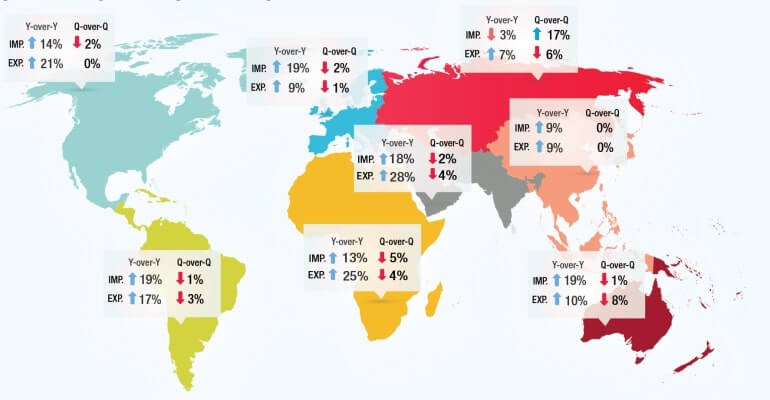
In its Global Trade Update for December 2022, the UN trade organisation observed that after a record year, global trade growth had actually decreased in the second half of 2022. According to UNCTAD, $25 trillion would be spent on products and $7 trillion on services in global commerce by 2022. According to such projections, business in goods will rise by 10% through 2021 and trade in services would rise by 15%. The first half of 2022 saw strong growth, which is partly to blame for those record levels. On the other hand, the second half of the year saw a slowdown in trade growth, according to UNCTAD. According to its data, the trade in services decreased by 1% in Q3 2022 compared to Q2 2022 while increasing by 1.3%.The value of global trade will decline in Q4 2022 for both commodities and services, according to UNCTAD’s nowcast assessment of current trade.

Although UNCTAD’s preliminary data indicates a decline in the value of goods traded, volumes increased by 3%, reflecting what it claims to be continued strength in global demand. A better logistics system, less traffic, and declining freight charges were among the other encouraging aspects mentioned in the research. A restructuring of global supply chains through sourcing diversification, re-shoring, and near-shoring, all of which are anticipated to have an impact on trade in the upcoming year, was having an impact on trade patterns. Trade patterns will also reflect the transition to a greener economy, as carbon-intensive products and fossil fuel energy become less popular. Lower economic growth and high product prices were two of the issues UNCTAD highlighted as negatives. As interest rates rise, high energy costs are lowering economic projections, while equivalent price rises in products and inputs are decreasing import demand.

According to UNCTAD, the combination of rising interest rates and record levels of global debt has led to increased worries about the sustainability of debt, particularly for highly indebted governments in a climate of tightening financial conditions. For 2023, it is anticipated that the current trade decline would get worse. Positive developments don’t seem to outweigh negative concerns, despite the fact that the future for global trade is still uncertain, according to UNCTAD.

https://www.seatrade-maritime.com/containers/trade-slowdown-worsen-2023-unctad

Seros Shipping was awarded “Trailblazer of the year in Indian Shipping” at GMU – Marex function

October 21, 2022

The GMU-MAREX International Maritime Legal Conference held today in Mumbai awarded Seros Shipping as the “Trailblazer of the year in Indian Shipping”. This will be an eye-opener for many and will assist all stakeholders to deal with arising solutions in a diligent manner.

Seros Shipping has always taken steps to encourage green shipping standards and logistics in the Indian Shipping Industry. It has been awarded and recognized by numerous news platforms for its initiatives around sustainable shipping practices.

“We are a young shipping company. We have got anchor handling tugs and barges, and we are serving the oil and gas production at Bombay High. Going forward, we are going to increase our fleet to support the ONGC. Also, we are looking to pick up a few tankers and we are on a stage to build tugs on a hybrid mode – electrohydraulic, whereby we will be reducing the carbonization by 20%. That’s the future. We are in for something green,” said Seros Shipping.

Check out the video of the award-receiving ceremony below.

About Seros:

Seros Group is a conglomerate with the purpose to provide logistics support and solutions. With operations over different services across various sectors, such as Maritime, Energy, Offshore, and Logistics, they concentrate on the core functions. The logistics network extends far and wide, delivering products to the remotest of places in the country. They work with a single objective of providing clients with an experience of hassle-free services through transparency and high-quality customized logistic solutions.

Also Read: One is still missing after four crew members fell off a cargo ship in Taiwan strait

One Is Still Missing After Four Crew Members Fell Off a Cargo Ship In The Taiwan Strait

October 20, 2022 

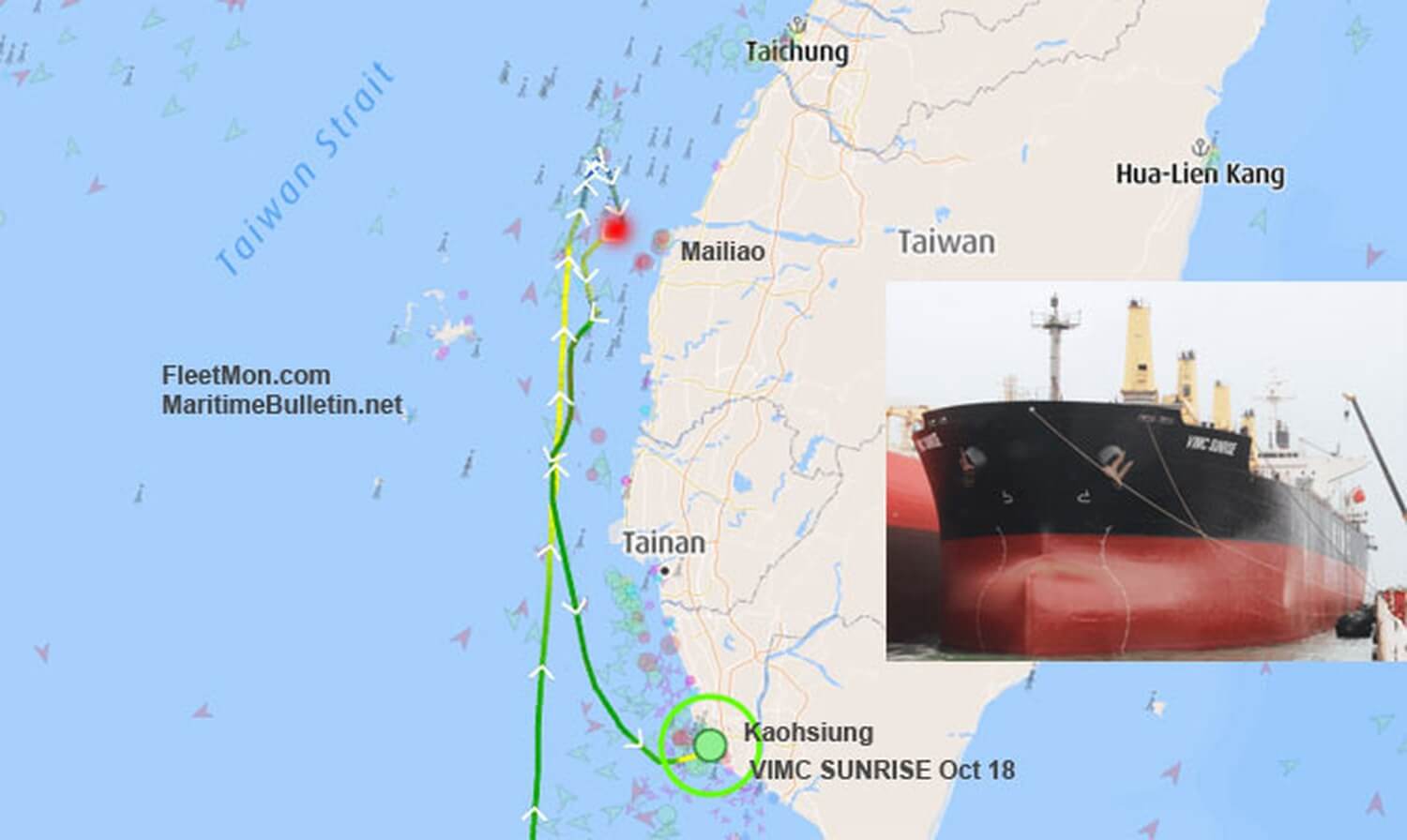
Four crew members of a 31,236-ton cargo ship that was off the coast of Yunlin County on October 17 reportedly went missing, prompting the Taiwan coast guard and the National Airborne Service Corps to launch an extensive sea and air hunt for the missing Vietnamese national.

At nearly 6:00 pm on Monday, the National Coast Guard Administration notified the Central Taiwan Maritime Affairs Center of the Maritime and Port Bureau. Around 5:30 p.m., west of Mailiao Township, the bulk carrier VIMC SUNRISE was attempting to anchor when four of its crewmen reportedly fell into the ocean.

Three crew members were reportedly hauled back into the cargo ship after some of the 22-member crew members tossed some lifebuoys into the water. According to reports, one crew member had a severely broken arm, while two crew members shattered their legs. The fourth person, the ship’s chief mate, was still unaccounted for.

The National Airborne Service Corps also sent out a chopper, while the coast guard chose to send out two patrol boats. Due to exceptionally strong winds with gusts reaching as high as 11 on the Beaufort scale, the helicopter was forced to turn around. The search mission was also impeded by several five-meter swells.

The captain of the freighter made the decision to steer the ship south in order to obtain wounded crew members’ medical treatment, and at around 5:00 am on October 18, the ship arrived at the Port of Kaohsiung.

The crew member allegedly went missing again after the air search was halted in the morning. The strong northeasterly monsoon winds and Tropical Storm Nesat in the South China Sea are currently having a negative impact on the ocean and weather patterns in the Taiwan Strait.

Also Read: Dozens of LNG=laded vessels queue off the coasts of Europe, not able to unload

Dozens Of LNG-Laden Vessels Queue Off The Coasts Of Europe, Not Able To Unload

October 18, 2022

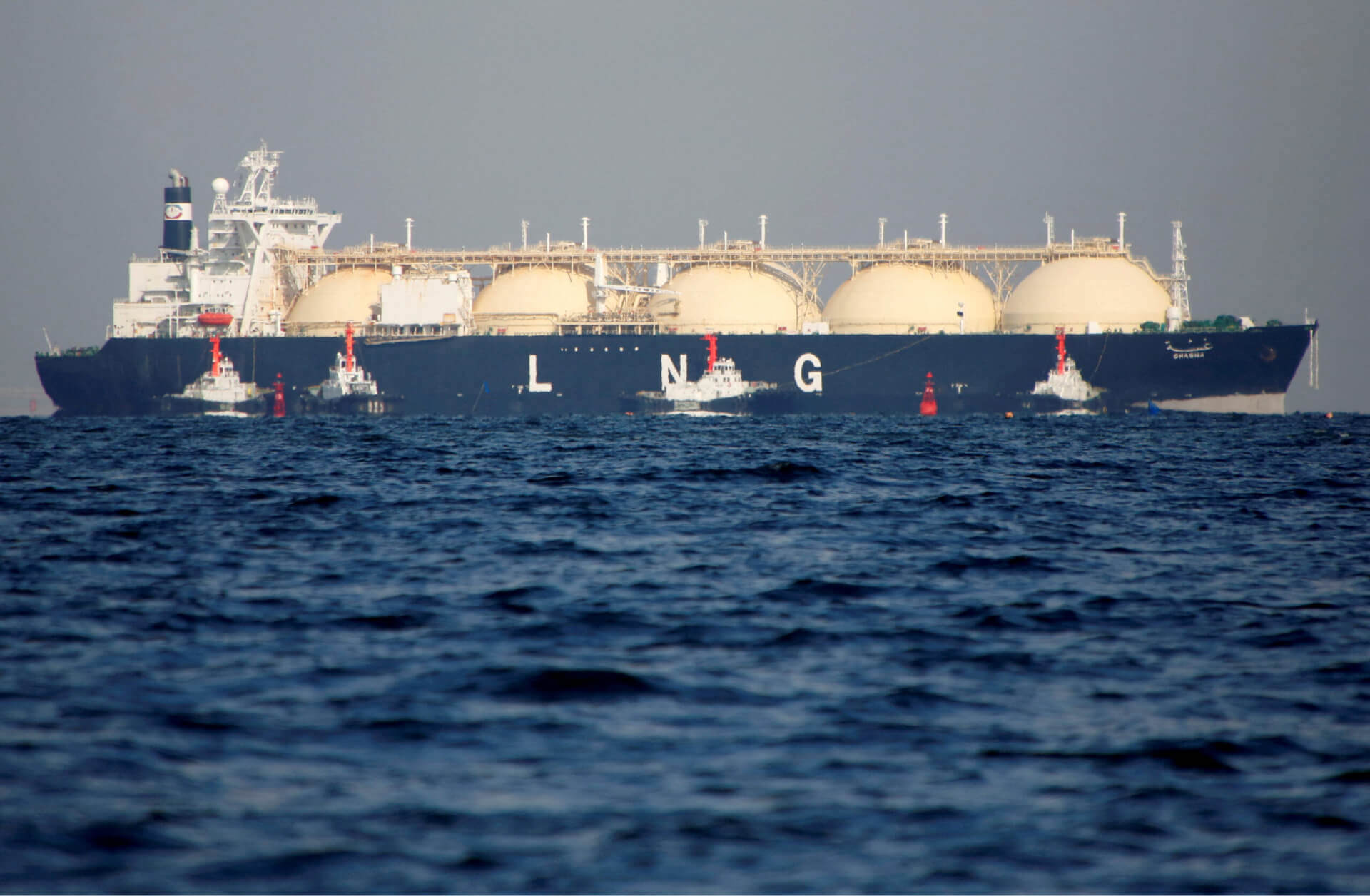
According to reports, dozens of ships carrying liquefied natural gas (LNG) are hovering around the Spanish coasts. Due to overcapacity at the factories that convert fuel from ships into gas, several European nations are unable to secure the slots required for unloading.

Due to Russia’s reduction in gas exports as a result of sanctions imposed by Western countries in reaction to the attack on Ukraine, Europe is currently experiencing a crisis in its energy supply.

The area has had to develop alternative sources of supply, such as LNG. However, it has reportedly been shown that Europe lacks “regasification” capability as a result of the influx of massive cargoes of the super-chilled fuel.

Eight ships are anchored near the Bay of Cadiz, while over 35 LNG-loaded ships are circling the Mediterranean Sea off the coast of Spain. Analysts, dealers, and sources connected to LNG plants are familiar with the situation reported on Monday.

According to reports, the cargo backlog has caused worrisome concerns about Europe’s ability to handle LNG supplies needed to make up for the shortage of Russian pipeline supply.

This week, Spain is giving six cargo slots at its regasification ports, which is less than a quarter of the number of vessels waiting in line off its coasts, according to an industry source. The nation has a total of six airports.

According to a source with knowledge of the situation, there are apparently LNG vessels anchored near to other European countries, which could mean that dozens more are on standby. The LNG floating offshore cannot be used since there aren’t enough regasification plants or pipelines connecting the nations having those facilities to other European markets.

According to Alex Froley, an expert LNG analyst at data intelligence giant ICIS, “we’ve observed many cargoes waiting offshore in southern Spain or circling in the Med, and other cargoes waiting off the UK.” The constraints were made worse by lower domestic consumption in Spain due to the warm weather and lower industrial demands as the European economy weakened.

Another factor stated by ICIS’s Froley that contributed to the congestion was the expectation of price increases. Some ships are waiting to sell cargo at a higher price in anticipation of an increase in heating demand, which might reduce the additional shipping costs paid by remaining offshore. According to Froley, the technique partially succeeds since certain businesses allow flexibility in shipping portfolios due to disruptions like the closure of the US Freeport plant. According to reports, he was alluding to the second-largest US LNG exporter, which shut down in 2022 (June) as a result of a fire and an explosion.

He added that businesses might not have been able to keep the ships waiting for so long if more cargo were produced. The ships may even examine alternate ports outside of Europe for cargo offloading if the backlog isn’t reduced fast enough.

To facilitate its supply, China halted selling LNG to international buyers on Monday. According to market participants, this action may encourage more ships to head to Asia. Spain has six facilities, which is the most in the EU and accounts for 33% of LNG capacity and 44% of storage for LNG.

According to data released by Enagas, Spain’s national gas grid operator, gas tanks in Spain are often 80% full, which is close to the technical limit. When queried about the tanks, an Enagas official responded that the data is promising in terms of ensuring the energy supply for the winter.

Since there is insufficient pipeline infrastructure, it is impossible to ship the gas to other European nations. Meetings between the presidents of France, Germany, Spain, and Portugal are planned for this week in an effort to achieve a deal on the MidCat pipeline, which could carry Spanish gas and, eventually, hydrogen, to central Europe.

By building a third gas pipeline between Spain and France, MidCat is anticipated to reduce Europe’s dependency on Russian gas, according to its main sponsors in Lisbon, Madrid, and Berlin.

Also Read: Containership reportedly sank in the red sea after catching fire
Containership Reportedly Sank in the Red Sea After Catching Fire

October 16, 2022

The container ship under the flag of Panama reportedly sank in the Red Sea about a week after a cargo hold fire.

When the TSS Pearl caught fire last Friday, October 7, the Saudi Press Agency was the first to report it. At the time, the ship was about 123 nautical miles northwest of the Port of Jizan. All 25 members of the crew jumped ship and were managed to pick up by nearby ships.

According to Japan’s NYK Line, the pure car and truck carrier Orion Leader saved eight seamen soon after midnight local time on October 6 after getting an emergency call about a burning cargo vessel. The sailors were moved by Orion Leader to the bulk ship St. Dimitrios, which was also helping with the rescue. Accident management consulting According to information provided by WK Webster today, the ship sank about 186 miles (300 km) southeast of Port Sudan, and numerous containers were floating close by.

The Instagram page @salvage_and_wreck posted the below video early in the week:


View this post on Instagram


A post shared by Salvage and wreck (@salvage_and_wreck)

Rafidain Shipping and Tehama Shipping Services, both of which have offices in Dubai, are listed as the TSS Pearl’s owners and managers in the Equasis database. The event is another addition to the sector’s never-ending effort to put out containership fires. The problem is frequently misdeclared freight.

Also Read: Coastal industry is still affected by Mississippi’s declining water level

Coastal Industry is Still Affected by Mississippi’s Declining Water Level

October 15, 2022

The Mississippi River’s water level is continuing to drop, which has a significant impact on the state’s heartland’s agriculture and business. The depth is getting close to a historically low last witnessed in 1988, which is causing barge traffic to slacken to a standstill. There is little to no relief in the forecast, and the river gauge at Memphis is currently at -8.9 feet, 3 feet less than it was over the last weekend. According to a National Weather Service forecast, the water level at Memphis might reach -10 feet by the end of the month, and the extended forecast anticipates under-precipitation throughout the Mississippi Basin for at least the next 30 days.

The Wall Street Journal was informed by Corps of Engineers official Lisa Parker that “there is no rain in sight.” The rivers have reached their lowest point. With capacity limited and per-ton freight costs reaching unbelievable highs, the shallow water has put loading limitations on the barges that transport soybeans, oil, coal, and other commodities up and down the river. From St. Louis, the tariff heading downward has increased by roughly five times since last October. Because of the daily groundings on the Mississippi’s shifting sandbanks, arrival times for traders are uncertain (and in some recent instances, temporarily shutting or restricting navigation in affected areas). In certain places, traffic is now only moving one direction at a time due to narrowing routes.

The soybean producers who are currently producing their fall crops are directly impacted by this. Siloes are filling up in farming communities along the Lower Mississippi due to a lack of barge transport capacity and the inability of rail and truck transport to handle the increased load. Farmers have often been forced to put off harvesting or storing their own produce, often by piling it on the ground and covering it with plastic.

According to Tennessee farmer John Dodson, “the majority of our stuff travels down the Mississippi River for export.” We’re at a halt if the terminal can’t handle it if the barges can’t get the grain to the ports in New Orleans, so those harvests basically get wasted. According to Tennessee farmer John Dodson, “the majority of our stuff travels across the Mississippi River for export.” “And we’re at a halt, so those crops just sit in the field,” he continued, “if the terminals cannot take it if the barges cannot convey the grain down to the seaport in New Orleans.”

Also Read: Explosives from world war II hinder investigation of a breach in the Nord stream pipeline

Shofu Maru, World’s First Cargo Vessel Equipped With ‘Wind Challenger’ Hard Sail Delivered

A coal carrier outfitted with Wind Challenger (a hard sail wind power propulsion system) was delivered and began operation on October 7, 2022, according to Mitsui O.S.K. Lines, Ltd. (MOL; President & CEO: Takeshi Hashimoto, Headquarters: Minato-ku, Tokyo) and Tohoku Electric Power Co., Inc. (President: Kojiro Higuchi; Headquarters: Sendai-shi, Miyagi Prefecture). When the ship was finished, Oshima Shipbuilding Co., Ltd. (President: Eiichi Hiraga; Headquarters: Saikai-shi, Nagasaki Prefecture) staged a naming and handover ceremony, during which the ship was given the name SHOFU MARU.

The SHOFU MARU, the first ship in the world with Wind Challenger, will transport coal for Tohoku Electric Power Co., mostly from Australia, Indonesia, and North America. In comparison to a conventional vessel of the same type, the introduction of the Wind Challenger is anticipated to reduce greenhouse gas (GHG) emissions by about 5% on a Japan-Australia voyage and by about 8% on a Japan-North America West Coast voyage and help to reduce GHG emissions during fuel transportation.

MOL and Tohoku Electric Power Co. keep up their efforts to stabilize the transportation of energy resources and lessen their negative environmental effects.

A technology called the Wind Challenger was created primarily by MOL and Oshima Shipbuilding and uses a telescoping hard sail to harness wind power to move the ship. It is possible to minimize the amount of fuel required for operation by installing the system, which is anticipated to have a positive influence on the environment and increase economic efficiency.

SHO FU translates to “pine” and “wind” (matsu and kaze, respectively). The name of the ship is taken from “Kaze no Matsubara,” black pine trees planted in Noshiro, Akita Prefecture, to prevent erosion, and “Wind from Wind Challenger,” in the expectation that the ship will function effectively even under challenging circumstances. The shipping contract was announced on December 10, 2020.

Outline of the coal carrier SHOFU MARU with the Wind Challenger:

Also Read: Gothenburg Port and North Sea Port Establish a Green Corridor

Gothenburg Port And North Sea Port Establish A Green Passage And Provide Rebates For Vessels Using Renewable Fuels

October 14, 2022

By 2025, alternative energy sources should be used by seagoing boats, according to a green corridor established by the Belgian North Sea Port and the Swedish Port of Gothenburg. When the Directors of the Gothenburg Port Authority and North Sea Port gathered in Gothenburg on October 12 for Gothenburg Port Day, the green corridor was officially unveiled.

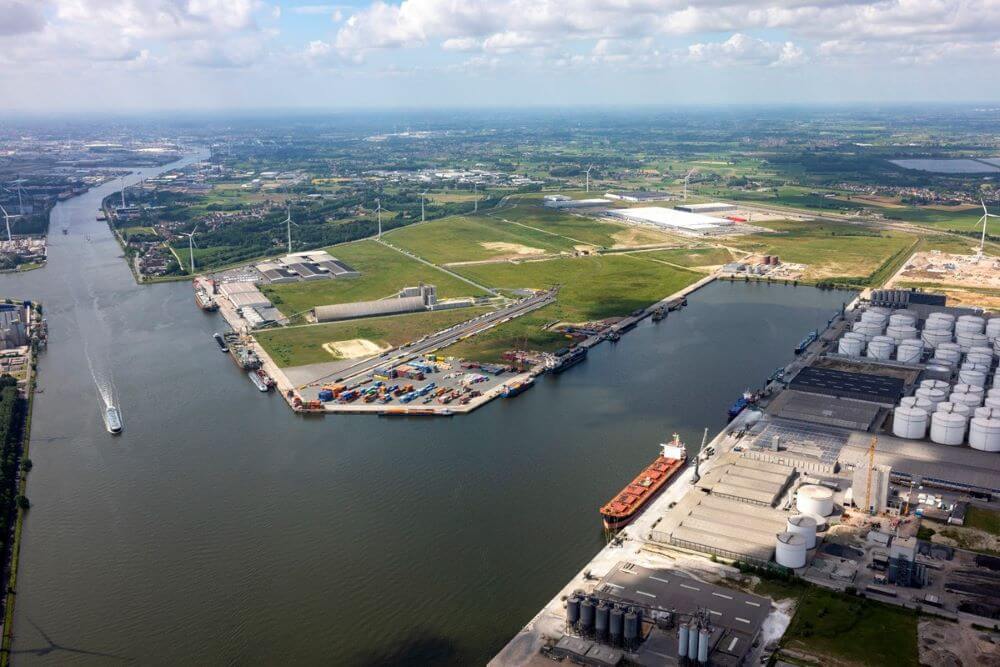
The Port of Gothenburg and North Sea Port are modifying their infrastructure to transform the area between both ports into a green corridor. These include more rebates on port fees for ships utilizing renewable fuels through their separate Environmental Discount Programmes, As Well As Bunkering Operating Rules For Renewable Fuels. Since the early 1990s, trade between Scandinavia and Central Europe has been centered on the route between Gothenburg and Ghent in the North Sea Port. According to Elvir  Dzanic, CEO of the Gothenburg Port Authority, “its significance just keeps growing; these are huge volumes of goods that will now have a significantly smaller climate footprint.

North Sea Port’s CEO, Daan Schalck, continued, “North Sea Port has indicated in its strategic plan ‘Connect 2025’ the desire to decrease CO2 emissions in the port city and to be a carbon neutral port in 2050 in partnership with the firms headquartered in the port.

“An initiative to accomplish this goal is the green corridor connecting North Sea Port and Port of Gothenburg. By providing reductions on port fees for environmentally friendly vessels, establishing a renewable fuels cost structure with existing green fuel production, import, and storage, and simplifying bunkering laws, North Sea Port is dedicated to developing this green corridor.

Additionally, the Port of Gothenburg already offers onshore electricity supply (OPS) at a number of port terminals, including for vessels that travel to Belgium. OPS allows for zero emissions by the quayside because vessels are not required to maintain their additional engines running during their stay in port.

Belgian Deputy Prime Minister and Minister of the North Sea Vincent Van Quickenborne made the following statement regarding the green corridor between the two ports: “Belgium has been playing a pioneering international role in decreasing sulphur and nitrogen emissions from ships for many years. It requires time and ambition to reduce ship emissions.

“At the COP26 in Glasgow less than a year ago, I joined Sweden and 22 other nations in signing the Clydebank Declaration. With the opening of the first green corridor in the world between the ports of Ghent on the North Sea and Gothenburg in Sweden, we have a world first today. The availability of these fuels and technology will rise as shipping shifts more and more to alternative fuels like methanol, and they will also provide options for smaller ships.”

Also Read: Hong Kong declines to enforce US sanctions on Russian megayacht

Piracy Has Declined Globally To Its Lowest In Years

October 13, 2022

The ICC International Maritime Bureau (IMB) has identified the lowest rate of international piracy and armed robbery occurrences since 1992 when reviewing the first two-thirds of this year. The first nine months of 2022 witnessed 90 incidences of pirate attacks against vessels, the fewest such cases in the past 33 years, according to the ICC IMB’s most recent international quarter pirate report.

In 95% of the recorded instances, which are degraded as 85 boats attacked, four major attacks, and one vessel abducted, the attackers were able to gain entrance to the vessels. Nearly all of the occurrences took place at night, and several of the vessels were whether at rest or underway when they were attacked.

Deny the reality that these are some of the few reports in a long time, there are still 27 crew members held to ransom, six attacked, and five intimidated. No matter how trivial or convenient the situation, there is still a serious risk to the crew.

13 of the 90 pirate attacks and armed robbery incidents reported worldwide to 27 during the identical period in 2021—have taken place in the Gulf of Guinea region, indicating a substantial and positive drop in the number of cases reported in the territory of west Africa, which has become the world’s largest piracy hotspot in recent years.

“We congratulate the actions of the coastline authority in the Gulf of Guinea,” IMB director Michael Howlett said. Although the drop is to be welcomed, the maritime officials’ initial effort and the existence of the worldwide navies are still necessary to protect seafarers and long-term regional and worldwide shipping and trade. No room exists for carelessness.

Also Read: Hong Kong declines to enforce US Sanctions on Russian Megayatch

Hong Kong Declines to Enforce U.S. Sanctions on Russian Megayacht

Despite warnings from the US Department of State, Hong Kong political leadership has rejected a request to impose US sanctions on the Russian megayacht Nord.

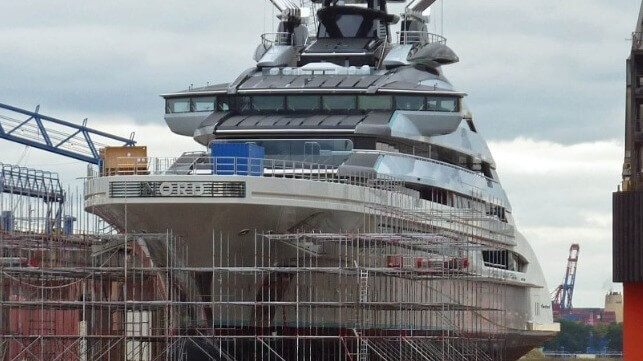
A 466-foot, 10,000 GT, $500 million megayacht named The Nord was recently delivered in Germany. She is the biggest yacht that her maker has ever sold. She includes 20 guest cabins, two helicopter landing pads, a retractable hangar, and other amenities typical of a ship of her size, including a beauty salon, elevator, stern fold-down “beach club,” and a theater.

The proprietor of the Severstal mining and metals giant in Russia, Alexei Mordashov, a sanctioned steel billionaire, is the owner of Nord. According to Forbes, his family’s wealth totals close to $30 billion, making him the richest person in Russia.

Mordashov owns stock in Rossiya Bank, which the EU refers to as the “personal bank” of Russian officials who benefited financially from their country’s 2014 invasion of Crimea. Due to this concern and his alleged connections to the Kremlin, he was included to the first EU sanctions list in late February. Additionally, the US, UK, Australia, and New Zealand have all imposed sanctions on him.

Since the beginning of the invasion, the Nord has been more active than the majority of authorized Russian vessels. She left her cruising grounds in Seychelles in mid-March and crossed the Singapore Strait before arriving in the port of Vladivostok in the Russian Far East in April. This month, she traveled south from Vladivostok to Hong Kong, taking a chance that she would experience a seizure if she had to make an emergency port stop.

As soon as the U.S. Treasury became aware of Nord’s warship-sized presence in Hong Kong’s harbor, it called the territory’s Chinese-run administration to demand its seizure. John Lee Ka-chiu, the CEO of Hong Kong and a person on the U.S. Treasury’s blacklist, stated unequivocally that Hong Kong would only execute sanctions imposed by the United Nations and not by the United States on its own.

“We cannot do anything that has no legal basis,” Lee told the AP. In response, the U.S. State Department questioned Hong Kong’s reputation. The openness of the business climate is further called into question by the potential for individuals to use Hong Kong as a safe haven to evade sanctions from several jurisdictions, a State Department official said in a statement on Monday.

Also Read: Shrinking Mississippi River Lessens US Gulf Grain Shipment