Bunker price crosses $1,000 per tonne in key ports

Low sulphur bunker costs rose by $100 per ton on Wednesday (09/03/2022), having risen by a third since the end of February to almost $1,000 per tonne, adding millions of dollars to the cost of running a ULCV on a round-trip from Asia to North Europe. As a consequence of a strong surge in oil and gas prices in the early Monday trade, VLFSO prices have reached new highs.

Brent crude reached a record high of $139 per barrel before falling back, while gas prices reached a new high of 800p per therm, well surpassing the previous high of 485p per therm. Fujairah is the first major bunkering port to cross the $1,000 mark according to figures from Ship&Bunker. 

Corresponding VLSFO prices in Singapore also surged to $981 per tonne having eased back to $892.50 on Friday. The bunker price in Singapore crossed the $1,000 per mark on Wednesday morning (09/03/2022) as the market braces for yet higher oil prices. 

With a Russian oil ban “on the table” as sanctions are ratcheted up in the aftermath of Ukraine’s invasion, traders anticipate oil will exceed $200 per barrel by the end of the month, more than double the price at the start of the year.

Scrubber-fitted vessels save close to $250 per tonne

As per Ship&Bunker statistics, the price differential between VLSFO and heavy fuel oil widened further last week, benefiting owners who installed scrubbers. The global average of VLSFO prices in 20 bunkering ports jumped by 12% to $962.50 per tonne on Monday. 

In the meantime, heavy fuel oil prices shot up to $714.50 per barrel, representing a marginal gain of less than 11% on a global basis. The average price difference between VLFSO and HFO is $248 per tonne, leading to considerable cost savings for scrubber-equipped ships.

Brent oil had fallen back to $122.50 by late afternoon London time on Tuesday (08/03/2022), while West Texas Intermediate was hovering at $117.50.

According to experts, the day’s high volatility was a clear indicator of serious concern about the global energy landscape. The widespread consensus is that prices will continue to rise, posing a significant risk to the global economy this year.

UK government bans all ships connected to Russia from calling at its ports

Britain has banned any ship with Russian ties from accessing its ports as part of measures to isolate President Vladimir Putin’s government because of its war on Ukraine. In a tweet announcing the blanket ban, British Transport Secretary Grant Shapps urged other countries to ban ships with ties to Russia from visiting their ports.

“We’ve just become the first nation to adopt laws banning any ships with any Russian link from entering British ports,” Shapps added.

UK transport secretary Grant Shapps wrote to the country’s ports on Monday instructing them not to allow the entry of any ships owned, controlled, chartered, or operated by any person connected with Russia. 

The ban is also set to apply to any ship flying the Russian flag or registered in Russia. The decision came a day after Scotland’s first minister, Nicola Sturgeon, requested Shapps to prevent a Russian tanker from landing in the Orkney Islands. 

In the midst of Russia’s increasing attack on Ukraine, UK Prime Minister Boris Johnson criticized Russian President Vladimir Putin, saying his ‘unprovoked’ actions have far-reaching consequences for other nations. The UK Prime Minister accused Putin of adopting “barbaric” and indiscriminate techniques to kill civilians in Ukraine.

Britain has banned all ships with Russian connections from visiting its ports as part of its efforts to isolate President Vladimir Putin’s government in the aftermath of its war on Ukraine.

Announcing the move in a tweet, he further appealed to other nations to follow the same. “Today I’ve written to all UK ports asking them not to provide access to any Russian flagged, registered, owned, controlled, chartered, or operated vessels. Given Putin’s action in Ukraine, I’ve made clear these vessels are NOT welcome here with prohibiting legislation to follow,” Shapps tweeted.

Today I’ve written to all UK ports asking them not to provide access to any Russian flagged, registered, owned, controlled, chartered or operated vessels.

Given Putin’s action in #Ukraine I’ve made clear these vessels are NOT welcome here with prohibiting legislation to follow. pic.twitter.com/5pKzfvcbGi

— Rt Hon Grant Shapps MP (@grantshapps) February 28, 2022

“The maritime sector is fundamental to international trade, and we must play our part in restricting Russia’s economic interests and holding the Russian government to account,” Shapps said in the open letter.

“We will seek to support UK ports in identifying Russian ships within the scope of the above and will communicate directly with relevant ports when we identify ships bound for UK ports who fall within the scope of the above. Further detailed sanctions against Russian shipping are being developed and further details will be shared shortly,” he added.

In an effort to stop the conflict in Ukraine, Western nations have slapped broad sanctions on Russian corporations, wealthy individuals, and even Putin.

Carriers urged to avoid Black Sea as Turkish Bulker gets hit by bomb off Odessa

On Thursday, the Turkish-owned bulk carrier Yasa Jupiter was struck by a missile in the Black Sea off the coast of Ukraine’s Odessa, sustaining minor damage and becoming the first verified merchant ship victim of war since Russia’s invasion of Ukraine.

The 61,078 dwt bulk carrier Yasa Jupiter was en route to Romanian waters. None of the crew members was hurt. The Turkish business Yasa Shipping’s Marshall Islands-flagged ultramax was on its approach to Romanian national seas. According to the firm, one of the hatch covers was struck when the cargo was released at Odessa, Ukraine’s largest port. There has been no recorded injury or loss of life.

“Following the information that a bomb hit the Turkish-owned Yasa Jupiter with the Marshall Islands flag off the coast of Odessa, which came to AAKKM, it was learned during the meeting that there was no request for help, that the ship was in transit to Romanian territorial waters, that there was no loss of life and that it was safe,” reported the Turkish General Directorate of Maritime Affairs in a brief statement on Twitter.

However, Recep Tayyip Erdogan, Turkey’s president, delivered a harsher statement condemning the attack on the ship and the assault. He described the strike as a breach of Ukrainian sovereignty and an illegitimate action, adding that “Turkey supports Ukraine’s effort to protect its territorial integrity.”

The Turkish Ministry of Foreign Affairs released a single photo taken from the wheelhouse of the bulker Yasa Jupiter. The 61,000 dwt bulker had apparently left the Ukrainian port of Dneprobugsky, with its AIS identifying a destination of Novorossiysk in Russia. It was claimed to have been hit by either a bomb or a missile when around 60 nautical miles outside of Odessa. The image depicts a bridge covered in shattered glass and trash.

According to reports, the ship was struck in one of its holds but remained seaworthy, with the Turkish Ministry stating that it is currently sailing towards Romanian seas. Earlier allegations of two Russian cargo ships being assaulted are yet to be confirmed. Russia’s Federal Security Service said that two of its commercial vessels were targeted by the Ukrainian military, an allegation that observers are disputing as well as Ukraine’s capacity to carry out such an attack as it battles the Russian attack.

Russia’s invasion of Ukraine has resulted in the closure of all ports of the nation, as well as suspension of all rail transportation by the government. The Ukrainian military has ordered the suspension of all commercial activity at Ukraine’s seaports.

Russia previously halted commercial ships in the Azov Sea until further notice, although Russian ports in the Black Sea remained open for navigation. Nonetheless, Dryad Global, a maritime security consultant, recommended all commercial operators to avoid any transit or activity in the Black sea within the exclusive economic zones of Ukraine or Russia.

Seafarers under threat: 2 bulk carriers detained by Russian forces

As Russia’s invasion of Ukraine takes a toll on merchant ships, there is a rising concern for the safety of thousands of seafarers, both at sea and shore. The Ukrainian government has stated that two vessels were seized yesterday in Romanian seas near Snake Island, heading towards the Crimean peninsula, in addition to the three ships being struck by the Russian military in the Black Sea.

According to the authorities, the Ukrainian flagged bulk ships Afina and Princess Nicole (pictured) were operating in Romanian seas when they got an instruction to approach a Russian warship for inspection 22 miles off Snake Island.

When both the ships reached the Russian vessels, their AIS was deactivated and communication was stopped. According to the most recent statistics, the grain-laded ships are presently 18 miles off the shore of Crimea, with a total of 50 crew members detained. Kiev condemned the incident as an act of piracy.

Many ships are still stranded in the conflict zone, with the struggle for vital ports like Odessa increasing. “The attack in the south from Mariupol is apparently proceeding more quickly, having gained the port city of Berdyansk amidst fighting also in Melitopol and Kherson, as well as Odessa,” according to a daily shipping statement from Norwegian broker Lorentzen & Co.

The shipping portal counts 109 merchant ships in Ukrainian waters, down from 157 registered at the start of the conflict. Over the weekend, Indian Maritime Organization Secretary-General Kitack Lim reiterated his call to keep seamen safe from the fighting.

Lim said, “I am deeply concerned about the consequences of Ukraine’s military activity on global shipping, logistics, and supply chains, particularly the repercussions on the delivery of commodities and food to underdeveloped countries and the influence on energy supplies.”

He also added that “Along with the people of Ukraine, innocent ships, seafarers and port workers engaged in legitimate trade should not be adversely impacted by this growing crisis. Shipping, particularly seafarers, cannot be collateral victims in a larger political and military crisis – they must be safe and secure.”

Henrik Jensen, CEO of Danica Crewing Services, a major supplier of Ukrainian crew to the global merchant fleet, has urged shipowners to enhance internet access volume and speed on vessels with Ukrainian crews on board, allowing them to better communicate with their families and keep up with news developments.

Danica has been preparing for staff to leave the country, but many have answered saying they appreciate the gesture but will remain to protect their nation. Furthermore, men between the ages of 18 and 60 are not permitted to leave the nation. “I have no words. What happens in Ukraine is insane,” Jensen said.

According to Bjorn Hojgaard, CEO of Anglo-Eastern, a ship manager with a significant presence in Odessa, said that Ukrainian crew changes have “hibernated” because no one can leave the country at the moment. “If anyone onboard wants to return home, we will assist them in every way we can.” Right now, a handful has requested it, but others wish to continue their contract in order to keep earning money for their families,” Hojgaard told.

The International Chamber of Shipping (ICS) has warned of supply chain disruption if Ukrainian and Russian mariners’ freedom of movement is restricted. According to the Seafarer Workforce Report, released in 2021 by BIMCO and ICS, there are presently 1.89 million seafarers operating over 74,000 vessels in the worldwide merchant fleet. Of this total workforce, 198,123 (10.5%) of seafarers are Russian, while Ukraine accounts for 76,442 (4%).

In other shipping-related news, Turkey’s foreign minister, Mevlut Cavusoglu, stated on Sunday that the country will limit Russia’s naval presence in the Dardanelles and Bosphorus straits, as asked by Ukraine. Meanwhile, both bp and Equinor have indicated intentions to quit the Russian market.

News Credits: Splash247

APMT Mumbai allocates $115m to boost container handling capacity

APMT Terminals Mumbai, also known as Gateway Terminals India (GTI), has planned to invest $115 million in infrastructure development in order to increase container handling capacity. This investment will be used to increase container handling capacity, allowing GTI to fulfill shifting client demands for bigger ships.

The funds will be used to buy six ship-to-shore (StS) cranes and three rail-mounted gantry (RMG) cranes. With this investment, the company aims to increase the container handling capacity by 10% to 2.18 million TEUs.

The initiative, according to GTI COO Girish Aggarwal, is a step forward in assisting the government’s goal to increase “Ease of Doing Business.” “The investment will allow us to safely and effectively serve bigger boats at our terminal.” This, in turn, would help our customers enhance operational efficiency in the Indian trade,” Aggarwal explained.

GTI is a joint venture between APMT and the Container Corporation of India (CONCOR-A Government of India business) that operates at Jawaharlal Nehru Port Trust in Nhava Sheva. The terminal has 128 acres of yard area, a 2,336-foot berth line, and sophisticated service equipment such as three rail-mounted quay cranes, 10 twin-lifting quay cranes, and 40 rubber-tire gantry cranes.

APM Terminals is also investing in Nigeria’s largest container terminal, in addition to India. According to recent estimates, APM Terminals Apapa has spent $438 million upgrading its facilities with sophisticated cargo handling technology since winning the terminal’s concession in 2006.

Robert Uggla to take over as chair at Maersk

Robert Maersk Uggla, 43, is to take over Chair of the Board of AP Moller–Maersk as Jim Hagemann Snabe stands down. Robert Mærsk Uggla is the great-great-grandson of Peter Mærsk Møller, who founded the company 118 years ago.

His mother Ane Maersk Mc-Kinney Uggla is also standing down as Vice-Chair of AP Moller–Maersk and will be replaced by board member Marc Engel. Ane Maersk Mc-Kinney Uggla has been Vice-Chair of AP Moller–Maersk since 2003 and is also chair of AP Moller Holdings.

On the changing of the guard she said: “The transformation of AP Moller – Maersk into an integrated container logistics company is well underway as a result of the efforts of the Board of Directors, the management led by Søren Skou, and the many dedicated employees. After three decades on the Board, it is time for me to pass on the responsibility to Robert, who with his seven years on the Board of Directors has been a driving force in the development of AP Moller – Maersk.”

Robert Maersk Uggla said, “I am very humbled to accept the nomination as Chair of the company. We initiated the restructuring and renewal of AP Moller–Maersk in 2016 and have come a long way on many fronts. I am grateful for Ane and Jim’s contributions to the company and their personal support also in the future. I look forward to continuing AP Moller-Maersk’s transformation in close cooperation with Marc Engel, the Board, and management.”

Mr. Engel joined the APMM board in 2019 and is also the outgoing chief supply chain officer of Unilever, and will hand over to his successor there, Reginaldo Ecclissato, after 30 years, in April.

Mr. Hagemann Snabe has served on APMM board since 2016 and has been chairman since 2017. He said: “It has been a privilege to be part of the reinvention of this unique company. The focus on the core business and the development of new capabilities within logistics, digitalization, and sustainability has been key to transforming the company.

“Robert has been involved all the way and during his time on the board has played a central role in the restructuring and transformation. The timing of a generational change is, therefore, well-chosen,” he added.

LNG Carrier Giant Nakilat Reports its Most Profitable Year Ever: $370 million

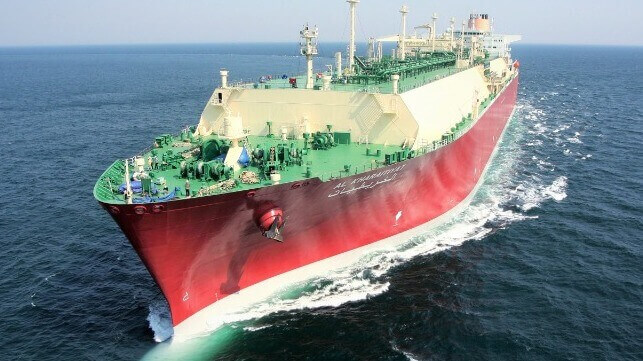
Nakilat, the world’s largest LNG carrier operator, declared on 7th February 2022 that 2021 has been its most successful year ever. Over the course of the calendar year, the Qatari firm earned $370 million in net profit, an increase of approximately 17 percent year on year.

According to Nakilat, the COVID-19 epidemic produced an “extremely hard and unpredictable” operating environment for shipping in 2021, yet it still managed to generate extraordinary profits. Reduced financing charges aided in cost reduction, enhancing the bottom line.

“Despite the company’s particular challenges, we continued to build on our operational response to the pandemic, allowing us to adjust quickly and maintain business continuation to produce value for our shareholders and customers,” stated H.E. Dr. Mohammed Bin Saleh Al Sada, chairman of the Nakilat board.

Nakilat anticipates a growing tide of LNG transportation in the next years, with a global growth rate of 5% per year projected until 2025. Much of the increased volume will come from Qatar’s own production: the country is constructing new liquefaction trains in an effort to increase output by 40% by 2026.

Nakilat now runs 74 LNG carriers, the largest fleet of its type, and serves both Qatari and international charterers. That fleet is poised to grow much more in the coming years: Qatari state gas giant Qatar Energy has initiated a multi-year newbuild drive to purchase up to 100 new LNG carriers from South Korean and Chinese yards.

MSC re-routes its ships to save endangered Mediterranean whales

Mediterranean Shipping Company (MSC), the Swiss-Italian shipping company that is now the world’s largest ocean carrier, has opted to reroute its ships on the west coast of Greece in order to lessen the chance of collision with endangered sperm whales in the Mediterranean.

It is the first major shipping line to re-route its ships in order to save the endangered species of whales. According to the firm, the decision was made after discussions with four major environmental non-governmental organizations (NGOs), and MSC is now the first major shipping line to re-route all of its container boats in this area to protect the important habitat for the whale subpopulation.

According to MSC, it was necessary to take a critical action like this in order to save and protect the remaining 200 to 300 of the population. The Hellenic Trench, to the west and south of the Peloponnese and southwest of Crete, has been identified as critical habitat for the eastern Mediterranean sperm whale population by the International Fund for Animal Welfare (IFAW), OceanCare, and WWF Greece in collaboration with the Pelagos Cetacean Research Institute.

As previously stated, deep-diving whales may be seen in the area all year and congregate around the 1000-meter depth contour — right in the path of busy shipping routes. “As a worldwide leader in container shipping and logistics, we have a duty to guarantee that our shipping operations have a positive impact, reflecting our longtime commitment to conserving and safeguarding the ocean and marine animals,” said MSC Vice President of Sustainability, Stefania Lallai.

He also added that collaboration with non-governmental organizations (NGOs) is essential for understanding and acting to conserve endangered sperm whales around the Greek coast.

Immediate action needs to be taken now

The measure is expected to make a significant impact on the survival of these at-risk whales because the above-mentioned area is currently the company’s route. The whales discovered dead on the beach with propeller marks and slashes are only the tip of the iceberg. Up to 20 times more people die offshore and their deaths go unrecorded.

“We’re also observing fewer whales in our yearly research surveys than in past years, which is a major worry,” says Alexandros Frantzis, scientific director of the Pelagos Cetacean Research Institute. We are concerned that if prompt action is not taken, deaths from ship hits may lead this already small species to become extinct very soon.

The NGO group asked other shipping firms to follow suit, since ship re-routing is now necessary to lower the danger of ship strikes to sperm whales by about 75%. MSC is also involved in global efforts to protect the ocean environment and life below water, including the protection of endangered species such as right whales (off the east coast of the United States) and blue, humpback, and fin whales (off the west coast of the United States), as well as southern resident killer whales (Canada).

In 2020 – for the third year in a row – MSC received the highest (Sapphire) Award for ‘Protecting Blue Whales and Blue Skies’ vessel speed reduction incentive program (a joint effort by Santa Barbara County Air Pollution Control District, Ventura County Air Pollution Control District and Bay Area Air Quality Management District partnering with the US NOAA’s Channel Islands, Cordell Bank and Greater Farallones National Marine Sanctuaries, the California Marine Sanctuary Foundation and the Volgenau Foundation).

MSC continues to participate in the annual ‘Haro Strait and Boundary Pass voluntary vessel slowdown’ to decrease underwater noise and aid in the recovery of endangered southern resident killer whales, as it has done in previous years.

Shell removes “Royal Dutch” from its name

Shell plc has formally changed its name from Royal Dutch Shell to Shell plc after opting to streamline its share structure, relocate its headquarters from the Netherlands to the United Kingdom, and, as a result, remove the Royal Dutch designation from its name.

The energy major confirmed on January 24, 2022 that its name had changed from Royal Dutch Shell plc to Shell plc. Shell simplified its share structure as part of an effort to speed its transformation to a net-zero corporation. As a result, the company also said it would remove the Royal designation from its name.

Since the 2005 merger of Koninklijke Nederlandsche Petroleum Maatschappij and The Shell Transport and Trading Company under a single parent company, Shell had been established in the United Kingdom with Dutch tax residency and a dual share structure.

Shell, Europe’s largest energy corporation, will benefit significantly from the move. Shell will benefit from a reduced corporation tax rate and will no longer be subject to the Netherlands’ new 15% dividend withholding tax, which went into effect in January, by shifting its tax headquarters to the United Kingdom.

“The simplification will normalize our share structure under the tax and legal jurisdictions of a single country and make us more competitive,” Shell chairman Sir Andrew Mackenzie said.

Shell is the largest public firm in the Netherlands, and the Dutch government was upset by the abrupt announcement of its withdrawal. “We are unpleasantly surprised by this. The cabinet deeply regrets this intention,” Economic Affairs Minister Stef Blok said in a statement. “We are in talks with Shell about the implications of this move for jobs, critical investment decisions and sustainability. Those are hugely important.”

Shell stated in its announcement that it “will continue to be a substantial employer with a strong presence in the Netherlands.” The true core of Shell’s day-to-day business activities will remain in the Netherlands: the company’s global upstream, integrated gas, renewable energies, and technology businesses will all remain in The Hague.

On the other side, the officials in the UK welcomed the decision. Shell’s move was praised as a “clear vote of confidence in the British economy” by UK Business Minister Kwasi Kwarteng. The decision is largely regarded as a victory for post-Brexit Britain, demonstrating sustained business interest in “Global Britain” despite the country’s exit from the EU.

Six months ago, a Dutch district court ordered Shell to reduce its global carbon emissions by 45 percent by 2030. Shell is appealing the verdict, and the relocation of the company’s corporate offices is not likely to have an impact on the result of the lawsuit.

Shell’s transition to remain dependent on society’s progress

Shell’s CEO, Ben van Beurden, talked about the upcoming year and why the company has to accelerate its transition. Van Beurden cited a judgement by a Dutch court that Shell should lower its carbon emissions quicker than expected as one of 2021’s low points.

“I was listening at home as the judge gave her verdict. It felt like a body blow,” he said.

He further added: “I found it deeply troubling that Shell as a single business should be held accountable for how the world produces and uses energy. That goes against everything I believe in when it comes to climate change, namely that this is a societal problem, not a problem for a single company to solve. It’s also worrying that the ruling was met with so much approval in some places, as if this was indeed the solution society needed.”

Shell intends to considerably increase its investment in carbon capture and storage by 2022, as well as to find out how to construct carbon-neutral liquefied natural gas and petrochemical facilities.

“But no matter how hard we work on reducing the emissions of our customers when they use our products, our progress will remain dependent on society’s progress with the energy transition. We cannot go faster than all our customers or we would have no customers to buy our products. And we would go out of business,” van Beurden said.