The ‘Spirit of Norfolk’ Passenger Cruise Catches Fire with 89 School Children

June 7, 2022

While running a field trip for elementary school pupils, a well-known excursion ship that conducts excursions in Norfolk port and along the Elizabeth River caught fire today. Local fire agencies, with the help of the US Navy and the US Coast Guard, battled the blaze and reported that all 108 persons aboard were safe, despite the fact that the fire is still burning.

The 187-foot Spirit of Norfolk caught fire at noon today, June 7, as it was docked near Naval Station Norfolk. There were 89 students on board, as well as professors and chaperones. After determining it was a larger excursion ship, fire and emergency services reacted to reports of a boat fire and swiftly phoned in the fire to local emergency dispatchers.

Passengers on board the ship said they first smelled the fire and then saw flames and thick smoke pouring from the engine room. The crew gathered all of the children and passengers on board and hastily strapped them into life jackets before escorting them to the upper deck.

As the fire became larger and fireboats were positioned nearby, onlookers gathered around the coastline and pier. The decision was taken to relocate the passengers to another excursion boat as they continued to combat the fire.

The decision was taken to relocate the passengers to another excursion boat as they continued to combat the fire. Before ferrying the people to land, they hauled the smaller Victory Rover alongside and transferred the passengers to the second craft.

Two crew members stayed on the Spirit of Norfolk to aid the firemen, and the ship was hauled to the military base’s Pier 4 shortly after. During an afternoon news conference, Naval Station Norfolk Fire Chief Tony Sickell described the fire as “extremely deep-seated, highly complex, and very tough to suppress. Right now, we’re doing all we can to cool the hull and deliver water to the source of the fire in the engine room, where we suspect it began.”

Firefighters used foam, but there was little risk of damage to individuals on the ground and just a minor risk of environmental contamination for the ship. The fire was reported to be still blazing aboard the vessel as of early evening.

The Spirit of Norfolk, which was built in 1992, is a regular sight along the local shoreline. The ship conducts excursions in Norfolk harbor, such as today’s school field trip and dinner cruises. When performing its excursions, it can carry up to roughly 500 guests and is owned by the Hornblower Group of California.

According to company executives, the safety of their passengers is always their first priority, and the ship is inspected by the US Coast Guard on a regular basis, and the crew conducts numerous safety exercises. The inquiry into the cause of the fire will be led by the United States Coast Guard.

Consumers Can Now Pay for Bunkers Using Bitcoin in Colombia

After receiving the necessary permits from the country’s authorities, Colombia-based physical provider CI Worldwide Fuels is now able to accept payments for bunkers in digital currencies such as Bitcoin and Ether. According to Jaime A Ochoa Muoz, President of CI Worldwide Fuels, the move is in response to increased demand for gas funds in the country using bitcoin.

“Our treasury division has spent a great deal of time putting together the necessary requirements for the federal government in order to accept such contributions, and I’m thrilled that this has now been completed,” he said.

“It’s a massive second,” says the narrator. We’re the first company in Colombia to accept cryptocurrency as payment for oil, and we’re also a pioneer in the bunker industry as a whole.

“This new tool will facilitate business exchange and make our company more vibrant,” he added.

Colombia has recently experienced a surge in interest in cryptocurrencies, with Bitso, the leading Latin American cryptocurrency exchange platform, releasing its app in the country last month. Colombia “is a tremendously exciting market in terms of cryptocurrency,” CEO Daniel Vogel told Reuters at the time.

Also Read: MAN Engines introduces the first hydrogen dual fuel engine for workboats

MAN Engines introduces the first hydrogen dual fuel engine for workboats

June 02, 2022

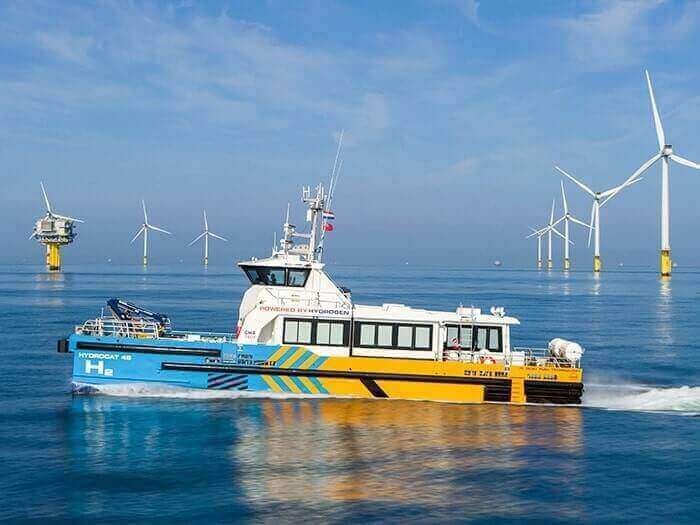
The world’s first dual-fuel hydrogen and diesel-powered crew transfer vessel (CTV) is already in service, with the cleaner fuel reducing traditional fuel use and related pollutants by up to 80%. Hydrocat 48, a 25-meter yacht operated by Windcat Workboats, a subsidiary of Compagnie Maritime Belge (CMB), is based on the Windcat MK 3.5 design but has been stretched to accommodate appropriate hydrogen storage.

In May, the vessel, which was certified by Lloyd’s Register and the United Kingdom Maritime and Coastguard Agency, finished bunkering and sea testing. It has two 12-cylinder MAN D2862 LE448 diesel engines with IMO Tier III certification and a selective catalytic reduction (SCR) exhaust gas after-treatment system.

Both V12 engines have been adapted for dual fuel operation by MAN Engines and augmented with a hydrogen injection system by CMB’s cleantech branch CMB.TECH, which was the first to create a hydrogen-powered passenger shuttle, Hydroville, in 2017.

“The applicability of this technology for a CTV is mostly due to the flexibility to use current diesel engines,” said Roy Campe, CMB.TECH’s chief technical officer. “There are no fundamental alterations to the primary engine, which means that not only will maintenance and repair be straightforward, but the engine can also be readily switched back to diesel fuel without any adjustments.”

The vessel can run on standard fuel even if hydrogen is not available, making it a very resilient and stable alternative for the offshore wind sector. “What makes our technology unique is that we employ a standard diesel engine that does not need to be modified for hydrogen,” said Werner Kübler, head of development at MAN Engines.

“Hydrogen is supplied into the charge air via an adaptor and added to the combustion cycle in a proven V12 marine engine. As a result, the combustion process is initiated using the diesel principle, which necessitates the injection of around 5% diesel fuel. For dual-fuel operation, the diesel fuel common rail injection settings have been improved.”

“MAN Engines has a long history of developing fuel-efficient and dependable diesel engines, notably those for workboats. We were also able to attain the best consumption numbers in dual-fuel operation and assure the same operating behavior as diesel running at full load, based on this experience. At the same time, we cut CO2 emissions by an average of 50 percent, and even up to 80 percent in extreme cases,” Kübler added.

Hydrocat 48 can serve as a model for additional dual-fuel, and eventually totally hydrogen-powered CTVS, according to Willem Van Der Wel, managing director of Windcat Workboats. “This vessel provides the industry with a cost-effective option for reducing emissions from service vessels that can be used to any wind farm today. This method might be thought of as the first step toward entirely hydrogen-powered CTVs. We can make hydrogen technology practical in the industry and kick-start future development of the technology, legislation, supply chain, and so on, by starting with dual fuel combustion engines,” he stated.

CMB.TECH has announced that it is collaborating with Windcat Workboats to improve engine capabilities and hydrogen utilization. The firm’s long-term strategy is to build the technology and infrastructure necessary to operate a mono-fuel internal combustion engine in the future (ICE).

While there has been a considerable movement toward hydrogen applications in the maritime sector, the hydrogen supply chain still has to expand to become freely available in additional regions, which is projected to happen in the next years.

Meanwhile, CMB.TECH and Windcat have created a hydrogen bunkering solution to be used in the early stages of the fuel’s development. CMB.TECH has created a 40-foot, 500-bar trailer for remote refueling of any systems that utilize the present technology. The Hydrocat 48 CTV is one of the many applications that may be served by a single machine.

Windcat has three further boats under construction with joint venture partners TSM and FRS that can be delivered with hydrogen technology on board, and additional CTV designs incorporating this technology are being explored.

Source: Marinelink

UK and EU agree to ban insurance on ships carrying Russian Oil

01 June, 2022

After the European Council voted to ban Russian oil imports by sea, the UK and EU agreed to a ban on insuring ships transporting Russian oil. According to the Financial Times, the insurance restriction might have far-reaching consequences for Russian exports, since the country will be forced to seek insurance in smaller, less established markets.

A senior commission official also stated that the G7 countries were working on a ban on insurance. According to the official, the restriction would not go into force for six months, after which Russia will have “a tremendous issue shipping the material around.”

According to Michel, the partial restriction on Russian oil imports affects more than two-thirds of Russia’s oil imports, cutting off a major source of funding for the country’s military machine. As per the European Council leaders, the EU has agreed to restrict 90 percent of Russian oil imports by the end of the year.

According to Ursula von der Leyen, Russian oil carried by tankers would be prohibited, with an exception established for the southern part of the Druzhba pipeline. Officials originally recommended joining the US and others in blocking Russian oil a month ago as part of the EU’s sixth package of sanctions over the country’s invasion of Ukraine, according to CNN.

Some nations, like Hungary, are particularly reliant on Russian petroleum transported by pipeline, therefore a deal has been stalled.

EU-wide ban

To punish Moscow for invading Ukraine, EU leaders declare they will ban most Russian oil imports by the end of 2022. The EU-wide ban will apply to oil imported by sea (about two-thirds of all imports), but not pipeline oil, due to Hungary’s resistance.

Poland and Germany have also agreed to halt pipeline imports, thereby blocking 90% of Russian oil. The pact, according to European Council President Charles Michel, cut off a major source of funding for Russia’s war machine.

It’s part of the sixth package of sanctions authorized during a summit in Brussels, which required unanimous approval from all 27 EU member states. Russia presently provides the EU with 27% of its imported oil and 40% of its gas. In exchange, the EU pays Russia roughly €400 billion ($430 billion, £341 billion) every year. The United Kingdom, which imports 8% of its oil from Russia, has promised to phase out Russian oil by the end of the year.

What is in the EU’s sixth set of sanctions?

  • By the end of the year, Russian seaborne oil will be banned, with a brief exemption for pipeline oil. Two-thirds of Russian oil arrives by sea.
  • Poland and Germany have agreed to cease buying pipeline oil, bringing the ban’s scope to 90% of Russian imports.
  • Sberbank, Russia’s largest bank, will be cut out from the Swift payment system. It enables for quick money transfers across borders.
  • Three more Russian state-owned broadcasters banned
  • More restrictions on “individuals responsible for war crimes in Ukraine”

Also read: Oil prices jump after EU leaders agree to ban most Russian crude imports

Oil prices jump after EU leaders agree to ban most Russian crude imports

May 31, 2022

In order to win the votes of Hungary and other countries that rely heavily on Russian petroleum, the European Council decided in principle to restrict seaborne imports of Russian oil while preserving a loophole for pipeline exports. “75% of Russian crude oil imports will be affected immediately as a result of the sanctions. By the end of the year, 90% of Russian oil imported into Europe would be prohibited, according to the European Commission”, European Council President Charles Michel stated in a statement.

Sberbank, Russia’s largest bank, was also expelled from the SWIFT financial communications system, according to the Council. It also barred Russian ships from the EU insurance market, a decision that is anticipated to significantly limit Russian shipowners’ access to P&I insurance.

After European Union leaders agreed to seek a ban that would prevent the importation of most Russian oil, global crude oil prices soared to a two-month high of nearly $122 per barrel. The measure is intended to wreak havoc on the country’s finances and prepare the way for a sixth round of sanctions to punish it and Russian President Vladimir Putin for the invasion of Ukraine.

Below are major points to know about the news:

1) Following the EU’s latest push, which came after US and UK curbs on Russian shipments, global benchmark Brent exceeded $122 a barrel, reaching a two-month high. This would immediately cover more than two-thirds of Russia’s oil imports, severing a major source of funding for the country’s war machine. The goal is to put as much pressure on Russia as possible to bring the war to a stop.

2) 75% of Russian oil imports are projected to be affected immediately by the sanctions. However, Europe’s refusal to accept the country’s supply forces barrels to travel further distances to eager purchasers in Asia, with India being the largest market for oil from western Russia.

3) In April, India’s seaborne crude oil imports exceeded 4.8 million barrels per day. For the first time in April, Russian-origin crudes accounted for 5% of India’s total seaborne imports, up from less than 1% in 2021 and Q1 2022.

4) Domestic crude oil output has been falling since 2014-15, with just 28.4 million tonnes produced in FY22.

5) The EU’s decision agreed upon during a leaders’ conference in Brussels, sent oil on its way to its longest monthly increase in more than a decade. Hungary has been resisting an embargo because it wanted assurances that its energy supply would not be impacted. Members overcome Hungary’s objections.

6) The EU sanctions would prohibit the acquisition of Russian crude oil and petroleum products transported by sea to EU member states, with a temporary exception for crude delivered by pipeline.

7) Volodymyr Zelenskiy stated in a video speech to the European Council that Russia “bets on disorder” by inflating energy costs and encouraging Europeans to oppose their governments. He encouraged policymakers to accept the sixth sanctions package, which would include limits on Russian oil.

8) Russia has threatened to restrict pipeline exports to a Dutch energy company after halting gas supplies to Poland, Bulgaria, and Finland. After refusing to accept new payment terms set by Russia, including opening a rubles account with Gazprombank, GasTerra will stop receiving supplies from Gazprom on Tuesday.

9) According to people familiar with the situation, the operator of Russia’s Sakhalin-2 liquefied natural gas facility has ceased distributing the fuel to a former Gazprom PJSC trading subsidiary seized by Germany.

10) Crude oil futures rose further in mid-morning Asian trade on May 31, adding to overnight gains of almost $2/b for ICE Brent crude after the EU agreed to prohibit Russian oil imports.

Also read: Russia-Ukraine crisis: Crude oil prices soar past $100 a barrel – Cause for worry for India

Glencore to pay $341 million fine over US fuel oil price manipulation

May 26, 2022

The United States Department of Justice announced that Glencore International A.G. (Glencore) and Glencore Ltd., both part of a multinational commodity trading and mining firm headquartered in Switzerland, pleaded guilty on Tuesday (24 May) and obliged to pay over USD 1.1 billion to resolve the government’s investigations into infringements of the Foreign Corrupt Practices Act (FCPA) and an oil price manipulation scheme.

These guilty pleas are part of a coordinated resolution by US, UK, and Brazilian criminal and civil authorities. Glencore Ltd. confessed to a multi-year plan to rig fuel oil prices at two of the country’s major commercial shipping ports.

Glencore Ltd. agreed to pay a criminal penalty of over $341 million, forfeiture of over $144 million, and employ an independent compliance monitor for three years as part of the plea agreement. The government has agreed to credit up to half of Glencore Ltd.’s criminal fine and forfeiture against penalties paid to the Commodity Futures Trading Commission (CFTC) in a related, concurrent civil prosecution. The market manipulation case will be sentenced on June 24, and the FCPA case will be sentenced on October 3rd.

Glencore’s Commodity Price Manipulation Case

Glencore Ltd., according to confessions and court documents filed in the District of Connecticut, had a worldwide commodities trading company that included trading in fuel oil. Glencore Ltd. employees plotted to manipulate two benchmark price evaluations published by S&P Global Platts (Platts) for fuel oil products, namely intermediate fuel oil 380 CST at the Port of Los Angeles and RMG 380 fuel oil at the Port of Houston, between approximately January 2011 and August 2019.

By container tonnage, the Port of Los Angeles is the busiest shipping port in the United States. Houston is the largest port on the Gulf Coast and the busiest port in the United States in terms of foreign waterborne tonnage.

Employees of Glencore Ltd. conspired to illegally benefit themselves and Glencore Ltd. by boosting earnings and lowering expenses on contracts to acquire and sell physical fuel oil, as well as certain derivative positions owned by Glencore Ltd. 

The pricing parameters of the physical contracts and derivative positions were determined by referencing daily Platts benchmark price assessments — either Los Angeles 380 CST Bunker Fuel or U.S. Gulf Coast High-Sulfur Fuel Oil — on a certain day or days plus or minus a preset premium.

During the daily trading “window” for the Platts price assessments on certain pricing days, Glencore Ltd. personnel sent orders to purchase and sell (bids and offers) to Platts with the goal of artificially pushing the price assessment up or down. If Glencore Ltd. had a contract to buy fuel oil, for example, Glencore Ltd. workers would submit proposals within the Platts “window” with the sole intent of lowering the price assessment and hence the price of the fuel oil Glencore Ltd. purchased.

The bids and offers were not submitted to Platts for any legitimate economic reason, but rather to artificially influence the relevant Platts price assessment so that the benchmark price, and thus the price of fuel oil that Glencore Ltd. bought from and sold to another party, did not reflect legitimate supply and demand forces.

Emilio Jose Heredia Collado of Lafayette, California, a former Glencore Ltd. senior fuel oil trader, pleaded guilty to one count of conspiracy to engage in commodities price manipulation in March 2021 in connection with his trading activity related to the Platts Los Angeles 380 CST Bunker Fuel price assessment. The date of Heredia’s sentence has been set on June 17, 2022.


The complete press release from the U.S. Department of Justice is available here.

Women occupy only 5% of maritime leadership roles

The proportion of male and female employees in the global shore-based workforce remained essentially steady in 2020, according to Spinnaker’s Maritime HR Association data – 56% men, 41% women, and 3% unknown. The following are some of the most important conclusions from a recent study on gender diversity in the maritime industry:

Work location

Only the UK and the Philippines employ more women than males overall in nations with a big membership presence (500+ employees), with 53% and 67% of the workforce respectively — the result of a high number of customer service and crewing roles in these regions.

Nationality

Female employees are more common in the Philippines and Singapore. Filipino women are mostly found working in crewing and finance in the Philippines. Singaporean females hold a significantly wider range of jobs, although there is still a strong focus on finance, and they are mostly found working in their native nation of Singapore.

Seniority & specialisms

Employing women at all levels of the hierarchy and across all job functions provides the benefits of diversity, and this is where the industry’s issues lie. Women hold 95% of all administrative positions, but only 5% of maritime senior leadership team positions. Women are underrepresented in occupational families that generate higher market salaries, such as technical and marine, chartering and freight trade, and shipbroking.

Gender pay gap

The gender wage gap is caused by a combination of all of the above factors. According to a high-level analysis of significant regions, Denmark has the smallest gender wage gap (at 30%). More information on the recently revealed UK marine wage gap may be found here.

“Unfortunately, the impact of Covid is anticipated to further damage the gender diversity picture – with women across all industries expected to be more likely to face redundancy or see changes in jobs or hours,” recruiting agency Spinnaker said in a statement.

Can Iraq help resolve oil supply problems and stabilize the market?

May 22, 2022

Iraq is one of the world’s most oil-dependent countries. Oil income has accounted for more than 99% of exports, 85% of the government’s budget, and 42% of GDP over the last decade. The country’s overwhelming reliance on oil exposes it to macroeconomic volatility, while budget constraints limit fiscal headroom and any countercyclical policy options.

With Russian oil flowing east, the West is exploring all options for increasing oil supplies. Iraq may be able to play a significant role in this regard. “While many members of the OPEC+ group are failing to meet their allowed output quotas, one country that has been able to do so is Iraq,” shipbroker Gibson noted in its latest weekly report.

In April, the country produced 4.43 million barrels per day (BPD), up 282 kbd from March and up 6.8% MoM. While this was only 16 kbd more than Iraq’s quota, it indicates that OPEC’s second-largest producer is continuing to increase output. The OPEC+ accord allows the country to expand output to 4.5 million BPD starting in June, and it has intentions to dramatically enhance exports in the coming years.

Demand for Iraqi crude is also moving, with European refiners increasingly considering Basrah Medium and Basrah Heavy as alternatives to Urals, and India (Iraq’s top customer) becoming one of Russia’s largest importers in the last 2.5 months.

Can Iraq help resolve oil supply problems and stabilize the market?

If heavy grades from Iran and Venezuela are permitted back on the market this year, Iraqi exports could move much more. “IEA data shows Iraqi production has been steadily climbing since July 2021, as OPEC+ decided to undo previous output cuts across the organization,” Gibson writes. Because of the Covid-19 limits, the total crude output is still 2% below January 2020 levels. 

This increased output could indicate that Iraq’s oil industry is well-positioned to benefit from improved oil demand prospects. The Iraqi oil ministry also announced intentions to increase overall crude production to 6 million barrels per day by the end of 2027, which would need an additional 1.57 million barrels per day increase from April 2022 levels.

Given that the deadline is around 6 years away, an annual increase of 314 kbd would be required until 2027, which is the current output trend. The increasing investment would not necessarily make this an unrealistic goal, but it remains optimistic considering some of its OPEC rivals’ problems to expand production.

Some western businesses have left Iraq in recent years due to worries about the country’s investment environment, highlighting some of the obstacles to increasing upstream investment in Iraq’s mature oilfields. “Another major element is Iraq’s export infrastructure,” the shipbroker continued. “The crucial Basrah Oil Terminal has been underperforming in terms of export capacity.”

With the addition of 250 kbd, the total operational capacity has increased to 3.5 million BPD. It will be critical to improve the export capacity of Southern Iraq’s deep-water ports in order to accommodate future growth in production and exports, which would necessitate more investment.

Can Iraq help resolve oil supply problems and stabilize the market?

Another alternative is to increase capacity along the Northern Kirkuk-Ceyhan pipeline so that crude can be transported to the Mediterranean. Current political tensions with Iraqi Kurdistan, however, make this improbable. Iraqi exports to China are likely to be hampered in the medium term as Covid limitations continue to affect Chinese crude demand, while the displaced Urals grow more appealing to Chinese refiners.

As the new Karbala refinery comes online and gradually raises intake up to 140 kbd to fulfill expanding domestic product demand and power generation needs, some of the additional crude may remain in Iraq. Meanwhile, another factor to ponder is whether Indian refiners’ huge purchases of Urals will have a significant impact on their demand for Iraqi grades.

However, this would leave more Iraqi barrels for refiners who avoid the Urals. While this demonstrates that there are still doubts about how much global oil flows will be altered as a result of the invasion of Ukraine, it also demonstrates how critical it is for traditional Urals consumers to find alternate supply sources.

While the Iraqi data suggest a favorable production forecast, it will still need to secure the national stability required to make its objectives a reality, and it is prudent to proceed with caution,” Gibson added.

Water and Contaminants in Marine Fuel Systems: A Coast Guard Safety Alert

May 19, 2022

The United States Coast Guard is alerting vessel owners and operators about the dangers of water and other pollutants in marine fuel systems. On Thursday, the Inspections and Compliance Directorate of the Coast Guard issued Safety Alert 06-22, which addressed the problem.

The safety notice follows a Coast Guard inquiry into a towing vessel’s loss of propulsion while operating in a pushing position on the Mississippi River three hours after going underway and 3.5 hours after collecting fuel from a shore side station. Thankfully, no serious damage or injuries were sustained as a result of the occurrence.

The vessel’s fuel tanks and supply system to the engine were significantly contaminated by water, to the point where the vessel’s engines initially lost power before shutting down completely, resulting in a total loss of propulsion, according to the study.

Vessel operators and engineers have long been aware of the dangers of tainted gasoline, but with improvements in fuel quality regulations and onboard purification and filtering systems, there have been fewer casualties. However, advances in primary engine designs have resulted in more accurate machining and reduced clearances in engine parts such as pumps, bearings, cylinders, burners, and injectors.

Keeping this in mind, pollutants such as sediment and water can have a negative effect on equipment intended to run on clean, water-free fuel. Furthermore, since fuel is constantly utilized while the vessel is working, continued monitoring in fuel procurement, as well as system operations and maintenance, is required to maintain its quality.

Water and Contaminants in Marine Fuel Systems: A Coast Guard Safety Alert

While big ships frequently have the room and power to run centrifugal purifiers, the same cannot be true for smaller vessels that solely sail on rivers or lakes. These vessels frequently have only one or two filters put directly in the fuel supply line, and those filters are not as effective at eliminating water as centrifugal purifiers.

According to the Coast Guard’s safety advisory, “the impact of water and other impurities in fuel systems can be hazardous to the operation of any vessel. From big commercial ships operating on a global scale to inland towing vessels and leisure boats, failing to assure a supply of water and contaminant-free fuel can have disastrous repercussions.”

As a result, the Coast Guard strongly advises vessel owners and operators to adopt a variety of precautions to help avoid water and pollutants in fuel. 

The fuel-check steps involve the following:

  • Check that fuel supply (bunkers) fulfill engine manufacturer specifications for critical criteria like viscosity and cetane number, as well as any compliance standards like flash point and sulphur content.
  • As part of a periodic maintenance system, include routine fuel oil samples and testing from service tanks.
  • Confirm that fuel filters have the appropriate flow rate and filtration (micron) rating and that a sufficient stock of spare filters is carried onboard.
  • Consider duplex filter systems for switching from blocked to clean filters, as well as filter differential pressure gauges for monitoring the filter element’s state and sanitation.
  • To check the water content in fuels, consider installing a water sensor in the diesel tank or filter system. 
  • These sensors can be used in conjunction with displays and alarms to determine excess water and are usually more effective than manual sampling at identifying rising water levels.
  • Verify that a means of sampling the fuel obtained during bunkering is available, usually through a valve and piping setup.
  • Prepare a plan to recover from any engine stoppage caused by water pollution in the fuel.
  • Fuel that has been heavily contaminated with water or other contaminants has the potential to harm the engine in a variety of ways, along with contamination of the lubricating oil system.

The Coast Guard’s Office of Investigations Casualty & Analysis’ Safety Alert website can be checked for the record of Safety Alert 06-22.

Netherlands jumps 5 places to become India’s 5th-largest export destination

May 18, 2022

In the fiscal year ending March 2022, the Netherlands surpassed the United Kingdom as India’s fifth-largest export destination. It’s an astounding growth considering the country was formerly India’s tenth largest export destination. India exported commodities totaling US$12.5 billion, up 94 percent over the 2020-2021 period.

India’s biggest exports to the Netherlands were $2.6 billion in aviation turbine fuel and $1.7 billion in diesel. Benzene, aluminum ingots, cellphones, prawns, and a variety of other products were also exported. This shift has been aided substantially by improved commercial connections. India and the Netherlands established diplomatic ties following independence in 1947.

President Shri Ram Nath Kovind paid a visit to the nation last month to commemorate 75 years of diplomatic relations between the two countries. “Bilateral commerce and investments between India and the Netherlands have developed tremendously over the past seven and a half decades,” Kovind remarked.

Netherlands jumps 5 places to become India's 5th-largest export destination

The Netherlands is presently India’s third-largest foreign investor. India is also becoming one of the most important investors in the Netherlands. In terms of water management and scientific knowledge, the Netherlands is a leader. Both parties are collaborating closely on a number of joint projects in this field.

Other priority areas of collaboration include agriculture, health, port and shipping, research and technology, higher education, and urban development. The Netherlands has overtaken Germany, Belgium, the United Kingdom, Hong Kong, and Singapore as India’s fifth-largest export destination.

However, it is unclear if the country will be able to maintain this position this year. Nonetheless, with roughly $76 billion in exports, the United States remained India’s biggest export destination, followed by the United Arab Emirates (UAE) at $28 billion and China at $21.3 billion.

India halts wheat export to fight soaring inflation in the country

May 16, 2022

Following a sharp increase in the price of wheat, India placed it in the “prohibited” list. The Centre endorsed the action in a Saturday announcement, saying it was being done to manage the country’s overall food security and help neighboring and vulnerable nations. 

Exports, on the other hand, will be permitted dependent on authorization provided to other nations to satisfy their food security needs and on their government’s request, according to the Centre’s message. Wheat and flour prices have increased dramatically in India as the country ramps up exports following a roughly 40% jump in worldwide rates in the aftermath of the Russia-Ukraine crisis.

Traders forecast wheat output at 95 million tonnes (mt) this year, compared to official estimates of 105 mt, implying tighter local supplies and higher prices. Wheat is currently priced at Rs 2,550 a quintal (100 kg) at Kandla port, having recently surged sharply as exporters tried to speed up shipments in anticipation of government restrictions.

Wheat procurement’s minimum support price (MSP) is Rs 2,015 per quintal. In April, retail inflation in wheat and atta increased to 9.59 percent, up from 7.77 percent in March. Because open market prices are higher than MSP, the government’s wheat purchase has decreased by roughly 55%.

India has attempted to fill the void left by the war in the Black Sea region, which accounts for roughly a fifth of global wheat commerce. Egypt, the world’s largest importer of wheat, recently authorized India as a supplier.

Last month, Food and Commerce Minister Shri Piyush Goyal stated that India aspires to become a permanent wheat exporter, shipping as much as 15 million tons this year, up from 7.2 million tons in 2021-22. According to Goyal, officials are urging the World Trade Organization to ease laws so that India can sell from its state reserves.

India put a ban on wheat export

The reason behind the ban on wheat exports

Internal considerations such as record low wheat procurement by government agencies, poor yield in key wheat-producing states owing to adverse weather conditions, increasing wheat prices, and spiraling inflation may have influenced the government’s decision to prohibit wheat export with immediate effect.

In recent months, private players acquired a substantial quantity of wheat at prices above the MSP, causing market prices to rise as farmers decided to sell their wheat on the open market. In less than two months, Indian traders are expected to export over 4 million tonnes of wheat, with approximately 1.2 million tonnes already transported abroad. Many farmers also held back their stock in anticipation of higher prices.

Heat impact on wheat production

Hundreds of acres of wheat crops were destroyed during India’s warmest March on record, potentially lowering output by up to 50% in some parts of the nation. Regardless of whether or not exports proceed, according to Franck Gbaguidi, senior analyst at political risk consultancy Eurasia Group, crop damage would limit India’s capacity to satisfy larger supply gaps.

“With the present impact of the heat waves, India’s pledge to feed the world’ by exporting wheat stockpiles – assuming the World Trade Organization grants permission – now sounds hollow,” he added. RBI Governor Shaktikanta Das said inflation pressures are growing more intense, particularly on food, in an online briefing.

Wheat retail prices were roughly 29 rupees per kilogram on May 5, up nearly 7% from a year ago. According to government data, flour prepared from the grain traded at around 33 rupees, up 8% from the previous year.

What will be the impact of the wheat export ban?

A scarcity of wheat has produced a jump in wheat flour prices in the domestic markets in recent weeks due to surging demand and higher prices given by private dealers. According to estimates, the monthly average retail price of wheat flour (atta) in India in April, 2022 was Rs 32.38 per kg, the highest since January 2010.

Wheat export restrictions will assist to stabilize market prices and bring them closer to the MSP. This might assist consumers to absorb the effects of growing inflation by lowering the price of wheat flour on the market. The Centre’s action will assist government agencies in increasing procurement from states where it has been trailing.

Private dealers will be obliged to unload stocks built up in expectation of more price increases. Wheat market prices are projected to fall as a result of this. Traders are presently holding between 1.4 and 2 million tonnes of wheat, according to sources.

However, other analysts believe that the decision is anti-farmer. Rather than imposing a blanket ban, the government might have gradually screened shipments. As per agricultural economist, Ashok Gulat of the Indian Express, a minimum export price (below which shipments cannot take place) or a tax may have been established to assist farmers to earn more while stabilizing market prices.

Government’s U-turn on the export ban

After Prime Minister Narendra Modi made a speech about “feeding the world” in the aftermath of the Russia-Ukraine war a few weeks ago, the policy shift is sure to be criticized. Food Secretary Sudhanshu Pandey said last week that there was no strategy to curb wheat exports, despite reports to the contrary.

“We expect a 60 lakh MT decrease in wheat production this year. The government is still in a surplus in terms of overall grain management. Government organizations are buying less due to rising market prices and increased private demand. Farmers are receiving a terrific deal, and they are only selling to the government what they are unable to sell on the open market. I don’t understand why exports should be restricted; just 10 lakh MT were shipped in the first quarter, and the contract for the first quarter is for 40 lakh MT,” Pandey added.

“Wheat export is already happening, there is no ban, and the government is giving exporters more market access,” Pandey asserted.

First Floating Tidal Power Delivered to Nova Scotia Grid

May 11, 2022

Sustainable Marine, a UK-based marine energy firm, has leveraged the Bay of Fundy’s massive tidal currents to supply the first floating in-stream tidal power to Nova Scotia’s grid. This is an important milestone for both Sustainable Marine and Canada’s larger marine energy objectives, according to CEO Jason Hayman.

It shows how the Bay of Fundy’s massive tidal energy resource, which includes more than four times the total flow of all freshwater rivers on the planet, can be properly utilized to provide up to 2500MW of clean, reliable electricity for Canada. “Achieving ‘first electricity’ to the grid from our new Grand Passage platform indicates a major turning moment for our company,” Hayman said. 

It is the culmination of over a decade of meticulous study, development, and testing. According to Hayman, the project has allowed Sustainable Marine to progressively gain the skills and funds needed to deliver turnkey projects, such as the Tidal Pioneer, a multipurpose construction vessel, and a suite of next-generation, remotely operated subsea installation machines that support the company’s novel Swift Anchors technology.

Nova Scotia has set aside around 30MW of capacity for developers to show the effectiveness, affordability, and environmental implications of this new kind of energy generating through demonstration licenses and berths at FORCE (Fundy Ocean Research Center for Energy).

With a legal framework in place to offer up to 300MW of installed capacity, these demonstration projects give developers a roadmap to lower costs on the way to commercial projects. It also accords with the region’s net-zero ambitions to expedite the coal-fired energy phase-out by 2030.

“Sustainable Marine achieved a first in Canadian tidal energy history, sending power from a floating platform in Grand Passage to Nova Scotia’s electrical system,” stated Tim Houston, Nova Scotia’s premier. “This and other projects are establishing Nova Scotia as a global participant in the tidal energy industry, resulting in green innovations, green employment, a better environment, and a reliable, renewable supply of electricity for Nova Scotians.”

Sustainable Marine, based in Edinburgh, is planning to deliver the world’s first floating tidal array at FORCE and is demonstrating its technology and environmental monitoring systems at Grand Passage before beginning deployments in the Minas Passage, dubbed the ‘Everest of tidal energy.’

The business has 15 patented innovations in its portfolio. Apart from tidal energy, the company’s broad offering intends to empower the ‘blue economy’ in general by delivering modular platforms, mooring, and anchoring solutions to overcome fundamental issues in the deployment of marine renewable energy and floating wind.

Dead Diver and Cocaine Found After Bulker Docks in Australia

May 10, 2022

After the body of a diver was found along the coastline and packages thought to contain cocaine were subsequently discovered in the port, Australian police and border protection agencies are examining a bulker that landed in Newcastle over the weekend. 

Authorities stated the port had been under surveillance as a possible drug smuggling hotspot, but the peculiar circumstances of this incident have led them to assume it is part of a wider smuggling operation. Detectives are looking for another 200 kg of cocaine after only finding “a part” of the cargo beside the body of the diver.

After a journey from San Lorenzo, Argentina, the 60,000 DWT bulker Areti docked in Newcastle on Sunday, May 8. The Marshall Islands-registered vessel is delivering a shipment of soybean powder and was routinely examined upon its arrival. 

Police were sent to the harbor on Monday morning after a diver was discovered unconscious along the coast. The diver was pronounced dead at the scene after attempts to revive him failed. When the guy drowned, police believe he was attempting to retrieve up to 300kg of cocaine from a bulk carrier.

They have so far recovered 50 kilograms worth A$20 million (US$13.8 million), and the hunt for the bulker, harbor, and shoreline is still underway. The police told the media that there may be a total of A$100 million (US$70 million) in cocaine involved without explaining their reasons.

Investigators have identified the individual, who is from South America, and believe he entered Australia illegally before the boat arrived. “I can confirm it appears to be a lot more than what has been retrieved from the ship,” Organised Crime Squad Commander Detective Superintendent Rob Critchlow said.

“Investigations are going very, very well — it appears that the amount we originally found was just a portion of what was actually brought in on the ship.” “We have information indicating that more drugs have been retrieved by this group and are now at large in the community,” he said.

Hunt for remainder of cocaine shipment worth $120m underway after diver's body found in Newcastle in Australia.

The man was left to die

On Monday, police were called to Heron Road on Kooragang Island after reports of an unconscious diver on the shore. Despite the efforts of bystanders and doctors, the unidentified guy died on the site. Due to the complicated nature of scuba diving, Detective Superintendent Critchlow previously stated that “evidently more people were involved than the dead guy.”

According to security footage from the harbor, two tiny boats approached the bulker overnight on Sunday, one an inflatable and the other a small aluminum boat, probably in an attempt to discover the narcotics.

“The existence of two boats suggests at least two more people,” he continued, “which is really troubling since this man has effectively been left to die.” The victim was either left to die, or when he did die these people fled.

Someone floating in the ocean was initially noticed by port personnel. It was obvious he was wearing diving gear and some highly specialized gear. It included a rebreather, which is a device that allows individuals to stay underwater for extended periods of time without producing bubbles.

On Tuesday, police divers were scheduled to return to the ship to further inspect the hull. Meanwhile, police are examining nearby diving shops and appealing for the public’s assistance in locating anybody who may have purchased this advanced diving equipment in recent days. A review of police databases yielded no results in identifying the dead.

Watch news here:

Shipping Corporation of India to be privatized

May 8, 2022

New bids in September

The long-awaited privatization of the Shipping Corporation of India (SCI) is expected to take several more months. New Delhi has been attempting to privatize India’s flagship line for the past 18 months as part of a broader privatization push that has included a tender and the selection of finalists.

The government has put the process on pause until non-core property interests are separated off, and a new date of September has been decided to seek new bids due to the company’s complicated structure.

The government is selling SCI’s Shipping House and its training college in Pune, as well as several other non-core assets, as part of the strategic sale process.

India’s Shipping Corporation is separating its real estate holdings

The government plans to segregate the real estate assets of the Shipping Corporation of India, including its corporate offices in Mumbai, from the planned privatization. “The Shipping Corporation of India (SCI) is in the process of the demerger. We’re planning to split off all of the company’s real estate. As a result, they will be excluded from the privatization process” said a top government official.

Earlier, Economic Times stated that Maharashtra’s state government was hesitant to hand up Shipping House to a private party due to security concerns because the building is just across from Maharashtra chief minister Uddhav Thackeray’s office.

Another official told that they were conscious of the state government’s worries over the building’s transfer and that it will be transferred under a different company, with no conflict as of yet. Officials claim that while this has slowed the process, the divestment is still on track, and is expected to be completed in the coming 4 to 6 months.

SCI’s 63.75 percent share in the government is being sold. The winning bidder must also submit an open offer for the remaining 26 percent of the firm held by public shareholders. After the process of demerging non-core assets is done, the government is expected to solicit financial bids for the Shipping Corporation of India by September, according to an official.

Hiving off non-core assets

Shipping corporation of india to be privatized

Last week, the board of Shipping Corporation of India Land and Assets Ltd (SCILAL) authorized an updated demerger scheme for selling off SCI’s non-core assets, including Shipping House in Mumbai and MTI (Maritime Training Institute) in Powai, to complete the process of de-merging all non-core assets to the new company SCILAL.

The value of non-core assets retained for demerger as of March 31, 2022, according to SCI’s financial statement, was Rs 2,392 crore. The SCI board of directors adopted a demerger strategy in August of last year to sell the company’s identified non-core assets, and SCILAL was created in November 2021 to retain those assets.

In April 2022, the Ministry asked SCI to speed the process up of demerger of non-core assets of SCI to SCILAL, as well as asking that the Board of SCI evaluate the demerger plan for selling non-core assets such as Shipping House in Mumbai and MTI in Powai. The government received various offers for the privatization of the Shipping Corporation of India in March last year.

In December 2020, the Department of Investment and Public Asset Management (DIPAM) requested expressions of interest (EoI) for the strategic disinvestment of its whole 63.75 percent ownership in Shipping Corp of India, as well as management transfer. The Cabinet gave in-principle agreement for the strategic disposal of Shipping Corp in November 2020.

SCI’s privatization is now expected to be completed this fiscal year. CPSE disinvestment is expected to bring in Rs 65,000 crore in the current fiscal year 2022-23. Although the government has already raised Rs 3,000 crore from the sale of minority shares in ONGC, another Rs 21,000 crore is expected to come in this month from the ongoing IPO of Life Insurance Corporation, and another Rs 211.14 crore by June from the handover of Pawan Hans management control to Star9 Mobility Pvt Ltd, a consortium of Big Charter Pvt Ltd, Maharaja Aviation Pvt Ltd, and Almas Global Opportunity Fund SPC.

India-UAE Comprehensive Economic Partnership Agreement (CEPA) enters into force

September 23, 2021

India and the United Arab Emirates (UAE) commenced discussions on the India-UAE Comprehensive Economic Partnership Agreement (CEPA). Both nations indicated a willingness to negotiate a mutually beneficial economic agreement in order to build on the progress made under the Comprehensive Strategic Partnership agreed in 2017.

What is Comprehensive Economic Partnership Agreement (CEPA)?

  • CEPA is a sort of free trade agreement that encompasses discussion on the trade in services and investment, and other areas of economic collaboration. It may even contemplate negotiating in areas like trade facilitation and customs cooperation, competitiveness, and intellectual property rights.
  • Partnership or collaboration agreements are broader than Free Trade Agreements. CEPA also investigates the regulatory component of commerce and includes a regulatory agreement. India has signed CEPAs with South Korea and Japan.
  • India-UAE CEPA: It is projected that bilateral trade in products would reach USD 100 billion within five years of the agreement’s signing, and trade in services will reach USD 15 billion, resulting in greater social and economic prospects in both countries.

May 3, 2022

India and UAE sign CEPA

The UAE’s CEPA (Comprehensive Economic Partnership Agreement) with India is now operational, with the first shipments under the new zero or decreased import tariff from India expected to arrive in the UAE after the Eid vacations. This paves the way for UAE-India trade volumes to surpass $100 billion in the next five years.

For imports to the UAE, 172 goods from India will be duty-free on Day 1, with the goal of adding 11 additional products to the zero rate by the fifth year. As per UAE and Indian business leaders, the CEPA alliance, signed in February, presents prospects for the expansion of investment flows across industries, not simply those dominated by current trade connections.

The UAE will pursue the structure of the accord in similar trade deals with Israel and Turkey. The CEPA with Israel is apparently near completion, whereas the CEPA with Turkey has only recently begun. 

There will be forthcoming trade alliances for India as well, with one with the United Kingdom to be implemented within the next few months. With the implementation of the CEPA, the investment flow between the UAE and India is expected to increase significantly. As part of the Agreement, a new council to monitor investment concerns will be constituted.

For imports to UAE, on Day 1 itself, 172 items from India will have complete import duty wavier and aims to add 11 more items to the zero rate by the fifth year.”

123 products with zero import duty

For imports from the UAE to India, 123 articles have been designated for immediate duty removal, while 33 further items will have zero tariffs by the fifth year (2027) and four more by the seventh year (2029). Tariffs would also be reduced for 35 commodities imported into India (30% to 15% in the fifth year).

“The nations have agreed to establish a technical council on investment, trade promotion, and simplification, which will seek to remove trade and investment barriers,” Menon added. “In order to boost bilateral trade and large-scale investments, the proposed council will interact with the private sector in the UAE and India.”

Century Financial’s CEO Bal Krishen Rathore believes the formation of a technical council to solve investment-related issues will be a turning point. “Now that an official organization has been established to remove any bottlenecks,” he added, “CEPA is expected to promote investments.”

“The council’s objectives, as per the agreement, are to promote and improve investment and trade cooperation and facilitation between the parties; monitor investment and trade relations, find out ways to expand investment and trade, and recognize issues related to investment and trade that may be suitable for further discussion.”

Growth in FMCG and Agriculture sector

Agriculture and food-related industries, in particular, should witness an increase in UAE investment in India. This will be part of the UAE’s attempts to address its worries about food security.

The Under-Secretary of the Ministry of Finance or an authorized representative will represent the UAE, while India will be represented by a Joint Secretary (or equivalent) from the Department for Promotion of Industry and Internal Trade.

“Creating a body with high-level representation will give it enough strength to deal with any possible problems,” Rathore added. “Because the UAE is India’s third-largest trading partner, investments should follow trade, and aggregate numbers should skyrocket in the coming years.”

UAE’s awareness campaign 

The UAE Ministry of Economy said on April 21 that a new portal has been launched to give all necessary information on the CEPA with India. It may be used as a single-source window for companies headquartered in the UAE, as well as “investors who desire to capitalize on the benefits.”

“This comprehensive knowledge base expands access to new possibilities under the scope of this Agreement for exporters, suppliers, investors, business owners, pioneers, and talents, thereby strengthening their capacity to develop specific growth strategy focused on the Indian market,” said Juma Al Kait, Assistant Under-Secretary of International Trade Affairs at the Ministry.

The CEPA contains 18 chapters that detail the procedures that firms in the UAE can use to extend their commercial relationships with India.