Singapore Bunker Contamination Reports

April 13, 2022

Singapore declares Glencore as original supplier of contaminated HSFO

According to the Maritime and Port Authority, global commodities giant Glencore was the initial supplier of tainted HSFO in Singapore that caused engine difficulties for scores of bunker in recent weeks. The MPA was initially made aware of the situation on March 14, according to an emailed statement sent on Wednesday.

Numerous testing companies have flagged the issue of chlorinated hydrocarbons being discovered in Singapore HSFO samples in recent weeks, with some drawing analogies to the 2018 Houston poisoning situation. “Preliminary MPA inquiries found that the impacted gasoline – a mixed product – was provided by Glencore Singapore Pte Ltd (Glencore)” the organization stated in a statement.

“Glencore notified MPA that, after getting complaints of its gasoline being contaminated, Glencore decided to test the fuels given by its suppliers utilized in its mixed product, and found that one of them, imported from overseas, had around 15000 ppm of chlorinated organic compounds.”

“When the testing began, Glencore had already sold a portion of the impacted fuel to PetroChina International Pte Ltd, which had in turn provided ships in the Port of Singapore.” In Singapore, Glencore and PetroChina delivered gasoline to around 200 ships. According to the MPA, around 80 of these have suffered fuel pump and engine difficulties.
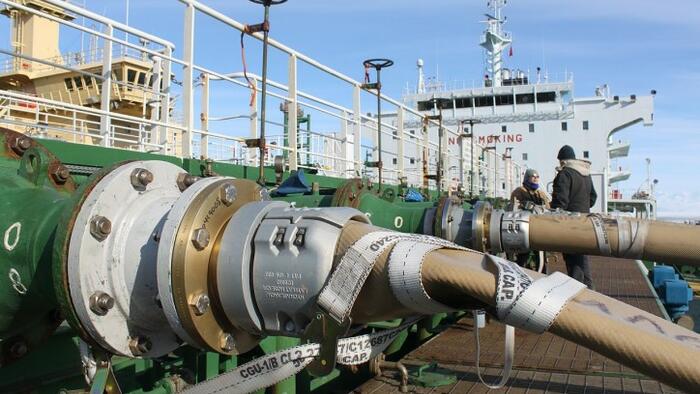
Bunker Contamination Crisis Hits Singapore As Ships Hit With "Blackouts"

April 14, 2022

Singapore HSFO contamination seen in Houston

The contamination of HSFO in Singapore had the possibility of spreading to Houston. In recent weeks, many testing firms have reported discovering chlorinated compounds in Singapore HSFO samples.

Singapore’s MPA announced on Wednesday that Glencore was the original supplier, with more deliveries than PetroChina, around 200 ships getting the gasoline in total, and approximately 80 reporting difficulties with fuel pumps and engines subsequently. This issue was discovered in Houston as well, according to the maritime news site TradeWinds on Wednesday.

According to the investigation, contaminated bunkers were provided by Glencore in Houston as well, and they were discovered on board at least one vessel. When Ship & Bunker contacted Glencore on Tuesday, a spokesman declined to comment on the story. If the contamination has extended to Houston, the situation is likely to take considerably longer to remediate than in a local emergency.

April 20, 2022

IBIA seeks to track the spread of Contaminated HSFO from Singapore

IBIA, the bunker industry association, has urged its members to assist them in tracking the possible spread of contaminated HSFO delivered in Singapore during the last two months to other marine fuel markets around the world.

Last week, Singapore’s MPA stated that over 200 ships have received HSFO including chlorinated hydrocarbons in recent weeks, with approximately 80 reporting difficulties with gasoline pumps and engines. IBIA is currently attempting to prevent the situation from escalating into a global disaster on the size of the contamination that began in Houston in 2018.

“There are two basic ways in which the chlorinated hydrocarbon issue in the bunker industry might expand; Either from the cargo carrying the contaminated HSFO being moved someplace else and mixed in an attempt to dilute the chloride concentration or from attempts to do the same with debunkered tainted fuel,” IBIA stated in an email to members on Tuesday.

“IBIA consequently requests that relevant stakeholders notify us of any ports where ships have or will debunker HSFO contaminated with chlorides, as well as if you have reason to assume cargoes carrying chloride contaminated HSFO are en route to certain ports.”
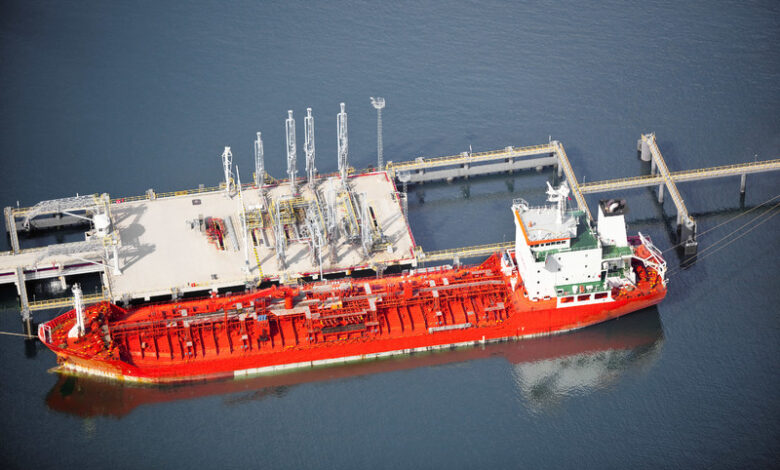
Singapore bunker contamination

April 26, 2022

Singapore bad bunkers

This year’s event in Singapore bears many similarities to the 2018 ‘bad bunker’ disaster near Houston, which damaged over 200 boats. Among the similarities is that many wrongly thought the bad gasoline fulfilled the ISO 8217 standard since it fit the ISO 8217 table criteria.

“However, the purchasers of those contaminated bunkers were allowed to lodge a claim since the fuel did not fulfill the entire text of 8217 – it was unfit for use,” Simms explained. “Today, there are still a few cases concerning the Houston 2018 situation. There will now be suits coming out of the Singapore situation. One of the questions will be about the source of the COCs,” he added.

More testing required

With the industry having had two significant contamination incidents in recent memory, the question of whether testing to 8217 criteria is sufficient inevitably arises. Many people believe it is not, and they are now asking for a more advanced study of their fuels, especially using gas chromatography mass spectrometry (GCMS) testing.

GCMS provides a significantly more complete understanding of any possible difficulties with marine fuel, and a recent survey by brokerage NSI revealed substantial industry support for making such testing compulsory.

The disadvantage is that GCMS testing takes longer and costs more than standard 8217 testings. To combat this, worldwide testing company VPS launched a chemical screening service that employs GCMS-Head Space as a detection tool.

“This strategy is quite similar to what health organizations throughout the world used when they launched quick antigen testing for COVID,” said Steve Bee, global commercial and business development director at VPS.

“This protection primarily consists of a mechanism for screening maritime fuel in a very short period of time.” If pollutants are found, further complicated testing is performed. “The pre-burn stage of testing may detect more than 70% of all chemical pollutants that may be present in the fuel.” This contains styrene, DCPD, indene, and other chemicals, as well as the chlorinated hydrocarbons recently discovered in Singapore fuels.” 

Apart from big occurrences like the one that occurred recently in Singapore, bunker purchasers should be increasingly concerned about the quality of their fuel as the price of oil rises.

India’s ONGC struggling to move Russian oil to Asia

April 27, 2022

According to sources, India’s Oil and Natural Gas Corp (ONGC) is battling to secure a vessel to transfer 700,000 barrels of petroleum from Russia’s Far East, indicating that Western sanctions are disrupting complex trades involving one of Moscow’s biggest partners. ONGC is one of several Indian corporations with investments in Russian oil and gas assets, and India has been acquiring more Russian crude since Moscow attacked Ukraine, snatching up the popular Urals crude grade, while other consumers have rejected Russian shipments.

ONGC owns a 20% stake in the Sakhalin 1 project, which provides Sokol, a Russian grade that ONGC exports via tender. Sokol is usually purchased and loaded in South Korea by North Asian customers.

But, due to worries from shippers about reputational risk and the increasing difficulty for Russian assets to secure insurance coverage, Moscow’s capacity to export that grade, which requires vessels that can break through ice, is becoming more difficult. Usually, shipments of Sokol oil are carried to South Korea using ice class tankers from the De-Kastri facility in Russia’s Far East, where they are then unloaded onto a regular tanker.

Because of the difficulty of logistics, Indian refiners rarely purchase Sokol grade crude. The global merchant fleet has a limited number of ice class vessels that can be deployed at any time. ONGC depends heavily on ice-class vessels supplied by Russia’s state-owned Sovcomflot (SCF) to carry crude to Yeosu port in South Korea, from which the Indian company exports to buyers primarily in North Asia.

India's ONGC struggling to move Russian oil to Asia

According to shipping sources, sanctions imposed on Russia by the United States, the United Kingdom, the European Union, and Canada, as well as various constraints on SCF, are making it tough for Russian ships, including SCF’s fleet, to sustain insurance and reinsurance cover for voyages.

Shipping companies are also less eager to transfer Russian oil in Asia since they are concerned about the potential reputational implications associated with charters. In the previous month, ONGC received no offers in its tender for the export of Sokol because purchasers withdrew transactions owing to Western sanctions.

As a result, ONGC sold one cargo each to Hindustan Petroleum Corp and Bharat Petroleum Corp (BPCL) of India. As per shipping sources, BPCL’s cargo was planned to be lifted early next month from South Korea’s Yeosu port, while HPCL was granted the cargo for lifting in late May.

According to the reports, BPCL inquired about chartering a vessel from the South Korean port and attempted to reserve the MV Atlantis for early May exports. The arrangement, unfortunately, failed since ONGC was unable to arrange a vessel to Yeosu port, due to challenges with obtaining insurance for the voyage.

ONGC, HPCL, and BPCL did not answer requests for comment from Reuters. This year, India has purchased more crude from Russia in the two months since its invasion of Ukraine than it did in the entire year of 2021. 

Russia’s marine sector is dealing with the discontinuation of services such as ship certification by leading overseas providers such as the United Kingdom’s LR and Norway’s DNV. According to Reuters, marine gasoline suppliers have stopped fueling vessels carrying the Russian flag at major European hubs such as Spain and Malta, giving an additional setback to Moscow’s exports.

Source: Marine Link

Everything about Felicity Ace Fire

February 17, 2022

Car Carrier Felicity Ace Abandoned After Catching Fire in Atlantic Ocean

Felicity Ace caught fire on February 17, 2022, and was abandoned in the North Atlantic near the Azores. After the vehicle carrier caught fire around 90 nautical miles southwest of the Azores island of Faial on Wednesday morning, all 22 crew members of the M/V Felicity Ace safely abandoned the ship and were picked up by a tanker. 

The owners of the Felicity Ace arranged for a tow of the burning ship. The Portuguese Navy ship NRP Setúbal remained on scene to monitor the situation. On February 10, the Felicity Ace departed Emden, Germany, and was on way to Davisville, Rhode Island, when a fire broke out in the ship’s cargo hold. According to the website ‘The Drive’, the ship was transporting a cargo of Porsches and Volkswagens.

February 18, 2022

Volkswagen Internal Email Confirms Thousands of Vehicles, Including VW, Porsche, and Audis were On Board Burning ‘Felicity Ace’

According to an internal communication from Volkswagen AG’s U.S. operations, the ship had 3,965 automobiles on board. The Volkswagen Group, based in Wolfsburg, Germany, produces automobiles under the VW, Porsche, Audi, and Lamborghini brands, all of which were in tow when the ship caught fire.

According to the email, more than 100 of those automobiles were heading for the Port of Houston in Texas, with VW GTI, Golf R, and ID.4 models all at risk. As per Luke Vandezande, a Porsche representative, the brand thinks that roughly 1,100 of its vehicles were on board Felicity Ace at the time of the incident. On social media, some customers raised their concerns. One Twitter user claimed that his specially designed Porsche Boxter Spyder was on board. The vehicle’s standard variants start at roughly $99,650.

Felicity Ace Car Carrier Continued to Burn in Mid-Atlantic

The ship continued to burn the next day and a salvage team from SMIT was en route to retrieve the abandoned M/V Felicity Ace. It was not clear if the batteries first sparked the fire. The ship was burning from one end to the other – everything was on fire about five meters above the water line.

Severe burns were visible on the bow and along the 200-meter (220-yard) side of the ship, which was constructed in 2005 and can carry 17,738 tonnes of cargo, according to images given by the Portuguese maritime authorities.

February 20, 2022

Lithium-ion Batteries From Electric Vehicles Aboard The Felicity Ace Were Keeping The Fire Alive

Along with 4000 vehicles including Porches, Audis, and Bentleys, Felicity Ace was carrying lithium-ion batteries. Firemen were struggling to put out the fire that broke on the ship. Cabeças claimed lithium-ion batteries in the electric cars on board were “keeping the fire alive,” adding that extinguishing equipment was on its way. However, it was not clear whether the batteries sparked fire or not.

February 21, 2022

Two Large Salvage Tugs Set to Join Felicity Ace Firefighting Effort

Two huge salvage tugs were anticipated to arrive at the Felicity Ace vehicle carrier, which was still floating in the Atlantic Ocean suffering a fire. So far, there were no reports of oil leakage and the vessel was stable. An initial salvage team on board a patrol boat was on-site. Two huge tugs with fire fighting equipment were expected to arrive on the scene and begin spraying water on the ship. 

The two tugs would also try to tow the Felicity Ace to keep it from drifting away. The two huge fire-fighting tugs arrived from Gibraltar on Monday, February 21, according to MOL, while an extra “salvage boat” carrying fire fighting equipment will arrive from Rotterdam on February 26, two to three days later than scheduled.

The Portuguese Navy remained on the scene providing 24-hour monitoring of the vessel. The cause of the fire was still unknown. 

About $400 Million Worth of Cars Could be Lost in Felicity Ace Fire

According to a risk analyst at Russell Group, the Felicity Ace fire could lead to a loss of at least $115 million for Volkswagen, Porsche, Audi, and Lamborghini. The vessel was carrying around 4000 vehicles – the exact number was not disclosed. 

According to a study by the Russell Group in the United Kingdom, the entire financial worth of commodities on board the ship is believed to be $438 million, with automobiles and commercial vehicles accounting for an estimated $401 million. The calculations are based on the cargo being completely lost.

“This data demonstrates the fragile nature of global supply systems once again. The incident happened at a horrible moment for global automakers, which are experiencing a supply chain difficulty sourcing semiconductors, causing further delays for new vehicles,” said Russell Group’s Managing Director Suki Basi. “An occurrence like this isn’t going to do anything to establish customer trust.” 

February 24, 2022

Felicity Ace Continues to Burn Even After a Week

Carrying 4000 vehicles, Felicity Ace continued to burn even after a week of catching fire in the Atlantic Ocean. The white smoke coming off the car carrier reduced as compared to the past days. The fire on the ship was believed to be still burning, according to MOL ship management (Singapore). 

At this point, there was no evidence of oil leaking from the ship, and its stability was unaffected. The vessel’s white smoke is still visible, although it has decreased in comparison to the previous several days, according to the report. Two large salvage tugs which arrived at the vessel on Monday from Gibraltar, continued to spray the vessel with water for hull and boundary cooling.

On Thursday, two more salvage ships with firefighting and towing capabilities are anticipated to arrive. A salvage crew is planned to board the Felicity Ace as the weather permits for a first evaluation, which will determine future salvage and firefighting operations. 

February 25, 2022

Salvage Team Begins Towing Felicity Ace

More than a week after the ship was abandoned in the Atlantic Ocean, a salvage team successfully boarded the Felicity Ace vehicle carrier and secured a tow line to keep it from drifting, according to the ship’s manager. The smoke emanating from the ship stopped and was no longer visible. 

A salvage team boarded the Felicity Ace via helicopter, and the salvage tug ‘Bear’ began dragging the ship to a safe location off the coast of the Azores. The tow was being escorted by two more tugs, ALP Guard and Dian Kingdom, as well as a big anchor handling tug called V.B. Hispanic with extra firefighting capacity. The cause of the fire was still unknown.

March 1, 2022

Felicity Ace Sinks in the Atlantic Ocean

The Felicity Ace car carrier sank in the Atlantic Ocean on March 1, 2022. The ship’s manager, MOL Ship Management (Singapore) stated that the vessel sank about 9 a.m. local time on Tuesday, roughly 220 nautical miles off the coast of the Azores Islands, according to preliminary information from the on-site recovery team. Salvage vessels stayed in the area to monitor the situation.

According to reports, several automobiles on board were electric vehicles with lithium-ion batteries, complicating firefighting attempts. We may never know what started the fire or contributed to its spread because the ship is now at the bottom of the ocean.

“Further information will be provided as it becomes available,” MOL said in its update. 

Shipowners realize that cheap solutions will do more harm than good in the long run

Ship management is a highly competitive industry. Even though there has been much consolidation in the industry, with some very big managers developed, the reality is that this is an extremely fragmented business with hundreds of enterprises selling their services to the same client.

Pricing has always played a significant role in who earns the contract, but according to those who polled for this study conducted by Splash247, the importance of pricing above all else is shifting in owners’ priorities.

According to Caroline Huot, senior vice president for ship management at Delta Corp, the ‘we can do it cheaper than you’ approach has resulted in poor vessel management, underestimating of operating costs, and fooling owners into believing that vessel operation expenses can be permanently reduced. Caroline says that because of this model, many companies have failed to develop and invest in new tools.

Mingfa Liu, general director of ship services at IMC Shipping acknowledges that “For some shipowners, saving a dollar now would mean everything, as they have a relatively short-term vision.”

Experienced Ship managers focus more on value than the price

According to Claes Eek Thorstensen, vice chairman of Thome Group, only short-term “opportunistic” ship managers have this mindset of looking for cheap solutions while investing in ships. He adds that experienced managers have always prioritized performance and efficiency.

Quality shipowners understand that cost is only one component of the equation and a knowledgeable ship manager will consider regulatory compliance, safety, seafarer training and welfare, as well as environmental concerns like decarbonization to be a critical component of running a well-rounded ship management service.

“Focusing just on expenses was never a viable and promising business strategy for taking care of high-value client assets,” says Ian Beveridge, CEO of Bernhard Schulte Shipmanagement. The CEO of Anglo-Eastern Bjorn Hojgaard agrees with this and says that the old adage of ‘price is what you pay, value is what you get’ still holds.

“Ship Managers have been effective in growing the positive gap between the value delivered to their customers and the price clients have had to pay for this value,” Hojgaard adds. Northern Marine’s ship management director, Sean McCormack, says his company has never subscribed to the idea of a low-cost business strategy. The managing director of Union Marine Management Services, Vinay Gupta, believes that a lot of good operators have finally realized that there is a limit to how low they can reduce costs without compromising quality, and that decreasing them further will only affect them in the long term.

He says that “I have observed a trend nowadays where too low a budget is not considered clever anymore”, adding that he finds it gratifying that many clients recognize these days that the cheapest option is not always the best.

Ship management software affects the cost

Shipping industry has been slower to undertake the digital transformation journey. What differentiates a manager in high quartiles is his or her ship management software with its value-added and user-friendly features.

Shipping managers can’t pool their knowledge together to offer a standardized software for a suite of functions for two main reasons: competitiveness and the fact managers all have different opinions about what a software suite of functions should entail.

Sachit Sahoonja, CEO and managing partner at Su-Nav says that, “For most of the managers their software is their USP. If that’s common, there is nothing left.”

According to Sean McCormack, ship management director at Northern Marine, the demands of clients in shipping are quite different, and attempting to produce standardized off-the-shelf software that is flexible enough to suit all of those needs would be difficult.

Environmental considerations

Environmental factors are becoming increasingly significant in most owners’ decision-making processes, and this trend will only continue with new laws beginning next year. “A badly managed ship owing to a low budget will reflect emissions when you can’t repair the engines due to financial restrictions,” cautions Sanjeev Verma, managing director of Landbridge Ship Management.

Owners, according to Verma, may begin to realize that those who provide low management dues may be unable to maintain the right emissions rating of their ships, which would subsequently reflect in a vessel’s commercial revenues.

Bunker price crosses $1,000 per tonne in key ports

Low sulphur bunker costs rose by $100 per ton on Wednesday (09/03/2022), having risen by a third since the end of February to almost $1,000 per tonne, adding millions of dollars to the cost of running a ULCV on a round-trip from Asia to North Europe. As a consequence of a strong surge in oil and gas prices in the early Monday trade, VLFSO prices have reached new highs.

Brent crude reached a record high of $139 per barrel before falling back, while gas prices reached a new high of 800p per therm, well surpassing the previous high of 485p per therm. Fujairah is the first major bunkering port to cross the $1,000 mark according to figures from Ship&Bunker. 

Corresponding VLSFO prices in Singapore also surged to $981 per tonne having eased back to $892.50 on Friday. The bunker price in Singapore crossed the $1,000 per mark on Wednesday morning (09/03/2022) as the market braces for yet higher oil prices. 

With a Russian oil ban “on the table” as sanctions are ratcheted up in the aftermath of Ukraine’s invasion, traders anticipate oil will exceed $200 per barrel by the end of the month, more than double the price at the start of the year.

Scrubber-fitted vessels save close to $250 per tonne

As per Ship&Bunker statistics, the price differential between VLSFO and heavy fuel oil widened further last week, benefiting owners who installed scrubbers. The global average of VLSFO prices in 20 bunkering ports jumped by 12% to $962.50 per tonne on Monday. 

In the meantime, heavy fuel oil prices shot up to $714.50 per barrel, representing a marginal gain of less than 11% on a global basis. The average price difference between VLFSO and HFO is $248 per tonne, leading to considerable cost savings for scrubber-equipped ships.

Brent oil had fallen back to $122.50 by late afternoon London time on Tuesday (08/03/2022), while West Texas Intermediate was hovering at $117.50.

According to experts, the day’s high volatility was a clear indicator of serious concern about the global energy landscape. The widespread consensus is that prices will continue to rise, posing a significant risk to the global economy this year.

Russia-Ukraine crisis: Crude oil prices soar past $100 a barrel – Cause for worry for India

Oil prices jumped on February 24th, with Brent surpassing $100 per barrel for the first time in eight years, as Russia initiated an attack on Ukraine, raising worries that a European conflict may disrupt energy supplies.

Brent crude oil price surged 5.4% in a day. West Texas Intermediate (WTI) crude oil price jumped 5.9% to $97.58 a barrel, the highest level since August 2014.

Following months of tensions and weeks of reports that Russia was planning an assault on Ukraine, Russia’s President Vladimir Putin launched a military strike on numerous Ukrainian cities on February 24th. In a tweet, Ukraine’s Foreign Minister, Dmytro Kuleba, said that Putin had launched a full-scale invasion of Ukraine.

He also called for immediate action from foreign governments, including putting “devastating sanctions” on Russia, the provision of weapons for Ukraine, and financial and humanitarian assistance.

The market became concerned as the situation worsened. As a consequence, Brent oil soared to as high as $103.78 per barrel, the highest since August 14, 2014, according to Reuters, and was at $103.18 per barrel at 0830 GMT, up $6.34, or 6.5 percent. Furthermore, WTI oil futures in the United States rose $5.48, or 6%, to $97.58 per barrel after reaching a high of $98.46 on August 11, 2014.

Inflationary Surge

Crude’s return to triple digits caps a remarkable turnaround that was unthinkable a year ago, as the market shifts from surplus to shortage. It depicts a global economy returning to normalcy after Covid-19 quicker than it can secure supply of all types of raw resources.

“As demand returns to pre-Covid levels, supply is really struggling,” Giovanni Serio, global head of market analysis at Vitol Group, the world’s largest independent oil trader, said. Aside from oil and gas, Russia is a significant producer of aluminum and wheat, both of which Ukraine grows.

Multiple commodity price increases are leading to a jump in inflation to the greatest level in decades, triggering a cost-of-living catastrophe for millions and prompting central banks to consider a period of monetary tightening that might stifle the recovery.

“Oil prices continue to rise and are now approaching levels that are unsettling for consumers all around the world,” Toril Bosoni, head of the International Energy Agency’s markets and industry section, said in a Bloomberg Television interview. “The oil market is quite tight.”

While it is an urgent worry for all consuming nations, the surge has been especially troublesome for US President Joe Biden, whose attempts to control increasing gasoline costs ahead of this year’s midterm elections by deploying emergency reserves have been mostly ineffective.

Concern for India

The spike in oil prices is a big source of concern for India, which relies on imports to cover 85% of its oil consumption and 55% of its natural gas requirements. India spent $62.71 billion on crude oil imports in FY21, $101.4 billion in FY20, and $111.9 billion in FY19.

Shrikant Chouhan, head of equities research (Retail), Kotak Securities Ltd, stated that rising crude oil prices will raise the cost of oil imports, resulting in a surge in inflation in the future. In a recent analysis, ratings firm ICRA also stated that the Russia-Ukraine war may have a moderate impact on India, with the disturbance resulting in a short-term increase in commodity prices, especially oil and gas.

The Mint announced on February 26 that the government is examining the growing geopolitical scenario and would consider lowering gasoline excise charge if the current increase in oil prices lasts longer than can be absorbed by state-run fuel merchants.

The government has stated that it is keeping a close eye on the situation in the aftermath of the geopolitical unrest. Given the unpredictability of global oil prices, the ministry of petroleum and natural gas stated that it is committed to “supporting proposals for Strategic Petroleum Reserve releases.”

As per the consumption pattern of 2019-20, the total capacity in the established Strategic Petroleum Reserves facilities of 5.33 Million Metric Tonnes (MMT) is estimated to provide for about 9.5 days of crude oil requirement. Analysts, on the other hand, believe that with the probability of an Iran nuclear deal, the spike in oil prices will be limited, if not reversed, in the coming days.

Iran is the world’s ninth-largest oil producer, but economic sanctions have resulted in decreased output relative to potential.

UK government bans all ships connected to Russia from calling at its ports

Britain has banned any ship with Russian ties from accessing its ports as part of measures to isolate President Vladimir Putin’s government because of its war on Ukraine. In a tweet announcing the blanket ban, British Transport Secretary Grant Shapps urged other countries to ban ships with ties to Russia from visiting their ports.

“We’ve just become the first nation to adopt laws banning any ships with any Russian link from entering British ports,” Shapps added.

UK transport secretary Grant Shapps wrote to the country’s ports on Monday instructing them not to allow the entry of any ships owned, controlled, chartered, or operated by any person connected with Russia. 

The ban is also set to apply to any ship flying the Russian flag or registered in Russia. The decision came a day after Scotland’s first minister, Nicola Sturgeon, requested Shapps to prevent a Russian tanker from landing in the Orkney Islands. 

In the midst of Russia’s increasing attack on Ukraine, UK Prime Minister Boris Johnson criticized Russian President Vladimir Putin, saying his ‘unprovoked’ actions have far-reaching consequences for other nations. The UK Prime Minister accused Putin of adopting “barbaric” and indiscriminate techniques to kill civilians in Ukraine.

Britain has banned all ships with Russian connections from visiting its ports as part of its efforts to isolate President Vladimir Putin’s government in the aftermath of its war on Ukraine.

Announcing the move in a tweet, he further appealed to other nations to follow the same. “Today I’ve written to all UK ports asking them not to provide access to any Russian flagged, registered, owned, controlled, chartered, or operated vessels. Given Putin’s action in Ukraine, I’ve made clear these vessels are NOT welcome here with prohibiting legislation to follow,” Shapps tweeted.

Today I’ve written to all UK ports asking them not to provide access to any Russian flagged, registered, owned, controlled, chartered or operated vessels.

Given Putin’s action in #Ukraine I’ve made clear these vessels are NOT welcome here with prohibiting legislation to follow. pic.twitter.com/5pKzfvcbGi

— Rt Hon Grant Shapps MP (@grantshapps) February 28, 2022

“The maritime sector is fundamental to international trade, and we must play our part in restricting Russia’s economic interests and holding the Russian government to account,” Shapps said in the open letter.

“We will seek to support UK ports in identifying Russian ships within the scope of the above and will communicate directly with relevant ports when we identify ships bound for UK ports who fall within the scope of the above. Further detailed sanctions against Russian shipping are being developed and further details will be shared shortly,” he added.

In an effort to stop the conflict in Ukraine, Western nations have slapped broad sanctions on Russian corporations, wealthy individuals, and even Putin.

Carriers urged to avoid Black Sea as Turkish Bulker gets hit by bomb off Odessa

On Thursday, the Turkish-owned bulk carrier Yasa Jupiter was struck by a missile in the Black Sea off the coast of Ukraine’s Odessa, sustaining minor damage and becoming the first verified merchant ship victim of war since Russia’s invasion of Ukraine.

The 61,078 dwt bulk carrier Yasa Jupiter was en route to Romanian waters. None of the crew members was hurt. The Turkish business Yasa Shipping’s Marshall Islands-flagged ultramax was on its approach to Romanian national seas. According to the firm, one of the hatch covers was struck when the cargo was released at Odessa, Ukraine’s largest port. There has been no recorded injury or loss of life.

“Following the information that a bomb hit the Turkish-owned Yasa Jupiter with the Marshall Islands flag off the coast of Odessa, which came to AAKKM, it was learned during the meeting that there was no request for help, that the ship was in transit to Romanian territorial waters, that there was no loss of life and that it was safe,” reported the Turkish General Directorate of Maritime Affairs in a brief statement on Twitter.

However, Recep Tayyip Erdogan, Turkey’s president, delivered a harsher statement condemning the attack on the ship and the assault. He described the strike as a breach of Ukrainian sovereignty and an illegitimate action, adding that “Turkey supports Ukraine’s effort to protect its territorial integrity.”

The Turkish Ministry of Foreign Affairs released a single photo taken from the wheelhouse of the bulker Yasa Jupiter. The 61,000 dwt bulker had apparently left the Ukrainian port of Dneprobugsky, with its AIS identifying a destination of Novorossiysk in Russia. It was claimed to have been hit by either a bomb or a missile when around 60 nautical miles outside of Odessa. The image depicts a bridge covered in shattered glass and trash.

According to reports, the ship was struck in one of its holds but remained seaworthy, with the Turkish Ministry stating that it is currently sailing towards Romanian seas. Earlier allegations of two Russian cargo ships being assaulted are yet to be confirmed. Russia’s Federal Security Service said that two of its commercial vessels were targeted by the Ukrainian military, an allegation that observers are disputing as well as Ukraine’s capacity to carry out such an attack as it battles the Russian attack.

Russia’s invasion of Ukraine has resulted in the closure of all ports of the nation, as well as suspension of all rail transportation by the government. The Ukrainian military has ordered the suspension of all commercial activity at Ukraine’s seaports.

Russia previously halted commercial ships in the Azov Sea until further notice, although Russian ports in the Black Sea remained open for navigation. Nonetheless, Dryad Global, a maritime security consultant, recommended all commercial operators to avoid any transit or activity in the Black sea within the exclusive economic zones of Ukraine or Russia.

Seafarers under threat: 2 bulk carriers detained by Russian forces

As Russia’s invasion of Ukraine takes a toll on merchant ships, there is a rising concern for the safety of thousands of seafarers, both at sea and shore. The Ukrainian government has stated that two vessels were seized yesterday in Romanian seas near Snake Island, heading towards the Crimean peninsula, in addition to the three ships being struck by the Russian military in the Black Sea.

According to the authorities, the Ukrainian flagged bulk ships Afina and Princess Nicole (pictured) were operating in Romanian seas when they got an instruction to approach a Russian warship for inspection 22 miles off Snake Island.

When both the ships reached the Russian vessels, their AIS was deactivated and communication was stopped. According to the most recent statistics, the grain-laded ships are presently 18 miles off the shore of Crimea, with a total of 50 crew members detained. Kiev condemned the incident as an act of piracy.

Many ships are still stranded in the conflict zone, with the struggle for vital ports like Odessa increasing. “The attack in the south from Mariupol is apparently proceeding more quickly, having gained the port city of Berdyansk amidst fighting also in Melitopol and Kherson, as well as Odessa,” according to a daily shipping statement from Norwegian broker Lorentzen & Co.

The shipping portal counts 109 merchant ships in Ukrainian waters, down from 157 registered at the start of the conflict. Over the weekend, Indian Maritime Organization Secretary-General Kitack Lim reiterated his call to keep seamen safe from the fighting.

Lim said, “I am deeply concerned about the consequences of Ukraine’s military activity on global shipping, logistics, and supply chains, particularly the repercussions on the delivery of commodities and food to underdeveloped countries and the influence on energy supplies.”

He also added that “Along with the people of Ukraine, innocent ships, seafarers and port workers engaged in legitimate trade should not be adversely impacted by this growing crisis. Shipping, particularly seafarers, cannot be collateral victims in a larger political and military crisis – they must be safe and secure.”

Henrik Jensen, CEO of Danica Crewing Services, a major supplier of Ukrainian crew to the global merchant fleet, has urged shipowners to enhance internet access volume and speed on vessels with Ukrainian crews on board, allowing them to better communicate with their families and keep up with news developments.

Danica has been preparing for staff to leave the country, but many have answered saying they appreciate the gesture but will remain to protect their nation. Furthermore, men between the ages of 18 and 60 are not permitted to leave the nation. “I have no words. What happens in Ukraine is insane,” Jensen said.

According to Bjorn Hojgaard, CEO of Anglo-Eastern, a ship manager with a significant presence in Odessa, said that Ukrainian crew changes have “hibernated” because no one can leave the country at the moment. “If anyone onboard wants to return home, we will assist them in every way we can.” Right now, a handful has requested it, but others wish to continue their contract in order to keep earning money for their families,” Hojgaard told.

The International Chamber of Shipping (ICS) has warned of supply chain disruption if Ukrainian and Russian mariners’ freedom of movement is restricted. According to the Seafarer Workforce Report, released in 2021 by BIMCO and ICS, there are presently 1.89 million seafarers operating over 74,000 vessels in the worldwide merchant fleet. Of this total workforce, 198,123 (10.5%) of seafarers are Russian, while Ukraine accounts for 76,442 (4%).

In other shipping-related news, Turkey’s foreign minister, Mevlut Cavusoglu, stated on Sunday that the country will limit Russia’s naval presence in the Dardanelles and Bosphorus straits, as asked by Ukraine. Meanwhile, both bp and Equinor have indicated intentions to quit the Russian market.

News Credits: Splash247

India’s largest container port JNPT hit by a cyber attack

A cyber attack has reportedly targeted a state-run container terminal at Jawaharlal Nehru Port Trust (JNPT), India’s main container port. JNPT officials said that “operations were normal and there was no impact on trade.”

However, sources confirmed that the cyber attack was so severe that all automated operations are down at the moment, and everything is back to the paper-and-pen scenario. The security breaking of the management information system has prompted JNPT to reroute one ship to other terminals.

Among India’s main ports, Jawaharlal Nehru Port handles over half of the entire containerized freight volume. In addition to JNPCT, the port contains four privately-run terminals, two of which are operated by DP World and the other two by APM Terminals (Gateway Terminals India) and PSA International, respectively.

“The initial impact on Indian organizations is not known yet as very few organizations in India have reported the attack to officials. It is important for companies to report such incidents to CERT-in, the emergency response team of the government,” an industry executive said.

This is the second such attack in the last few weeks after the Wannacry ransomware rattled scores of countries. The attackers released data that they had encrypted only on paying a ransom in the form of bitcoins.

APMT Mumbai allocates $115m to boost container handling capacity

APMT Terminals Mumbai, also known as Gateway Terminals India (GTI), has planned to invest $115 million in infrastructure development in order to increase container handling capacity. This investment will be used to increase container handling capacity, allowing GTI to fulfill shifting client demands for bigger ships.

The funds will be used to buy six ship-to-shore (StS) cranes and three rail-mounted gantry (RMG) cranes. With this investment, the company aims to increase the container handling capacity by 10% to 2.18 million TEUs.

The initiative, according to GTI COO Girish Aggarwal, is a step forward in assisting the government’s goal to increase “Ease of Doing Business.” “The investment will allow us to safely and effectively serve bigger boats at our terminal.” This, in turn, would help our customers enhance operational efficiency in the Indian trade,” Aggarwal explained.

GTI is a joint venture between APMT and the Container Corporation of India (CONCOR-A Government of India business) that operates at Jawaharlal Nehru Port Trust in Nhava Sheva. The terminal has 128 acres of yard area, a 2,336-foot berth line, and sophisticated service equipment such as three rail-mounted quay cranes, 10 twin-lifting quay cranes, and 40 rubber-tire gantry cranes.

APM Terminals is also investing in Nigeria’s largest container terminal, in addition to India. According to recent estimates, APM Terminals Apapa has spent $438 million upgrading its facilities with sophisticated cargo handling technology since winning the terminal’s concession in 2006.

Robert Uggla to take over as chair at Maersk

Robert Maersk Uggla, 43, is to take over Chair of the Board of AP Moller–Maersk as Jim Hagemann Snabe stands down. Robert Mærsk Uggla is the great-great-grandson of Peter Mærsk Møller, who founded the company 118 years ago.

His mother Ane Maersk Mc-Kinney Uggla is also standing down as Vice-Chair of AP Moller–Maersk and will be replaced by board member Marc Engel. Ane Maersk Mc-Kinney Uggla has been Vice-Chair of AP Moller–Maersk since 2003 and is also chair of AP Moller Holdings.

On the changing of the guard she said: “The transformation of AP Moller – Maersk into an integrated container logistics company is well underway as a result of the efforts of the Board of Directors, the management led by Søren Skou, and the many dedicated employees. After three decades on the Board, it is time for me to pass on the responsibility to Robert, who with his seven years on the Board of Directors has been a driving force in the development of AP Moller – Maersk.”

Robert Maersk Uggla said, “I am very humbled to accept the nomination as Chair of the company. We initiated the restructuring and renewal of AP Moller–Maersk in 2016 and have come a long way on many fronts. I am grateful for Ane and Jim’s contributions to the company and their personal support also in the future. I look forward to continuing AP Moller-Maersk’s transformation in close cooperation with Marc Engel, the Board, and management.”

Mr. Engel joined the APMM board in 2019 and is also the outgoing chief supply chain officer of Unilever, and will hand over to his successor there, Reginaldo Ecclissato, after 30 years, in April.

Mr. Hagemann Snabe has served on APMM board since 2016 and has been chairman since 2017. He said: “It has been a privilege to be part of the reinvention of this unique company. The focus on the core business and the development of new capabilities within logistics, digitalization, and sustainability has been key to transforming the company.

“Robert has been involved all the way and during his time on the board has played a central role in the restructuring and transformation. The timing of a generational change is, therefore, well-chosen,” he added.

LNG Carrier Giant Nakilat Reports its Most Profitable Year Ever: $370 million

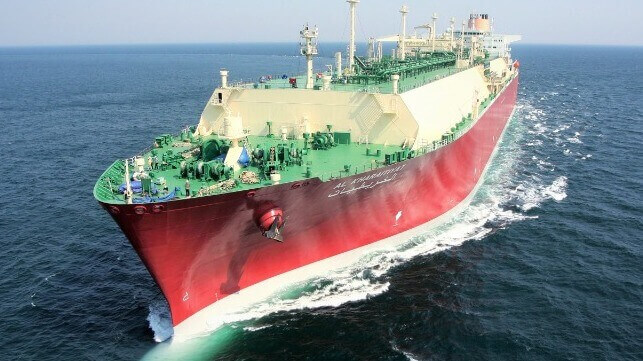
Nakilat, the world’s largest LNG carrier operator, declared on 7th February 2022 that 2021 has been its most successful year ever. Over the course of the calendar year, the Qatari firm earned $370 million in net profit, an increase of approximately 17 percent year on year.

According to Nakilat, the COVID-19 epidemic produced an “extremely hard and unpredictable” operating environment for shipping in 2021, yet it still managed to generate extraordinary profits. Reduced financing charges aided in cost reduction, enhancing the bottom line.

“Despite the company’s particular challenges, we continued to build on our operational response to the pandemic, allowing us to adjust quickly and maintain business continuation to produce value for our shareholders and customers,” stated H.E. Dr. Mohammed Bin Saleh Al Sada, chairman of the Nakilat board.

Nakilat anticipates a growing tide of LNG transportation in the next years, with a global growth rate of 5% per year projected until 2025. Much of the increased volume will come from Qatar’s own production: the country is constructing new liquefaction trains in an effort to increase output by 40% by 2026.

Nakilat now runs 74 LNG carriers, the largest fleet of its type, and serves both Qatari and international charterers. That fleet is poised to grow much more in the coming years: Qatari state gas giant Qatar Energy has initiated a multi-year newbuild drive to purchase up to 100 new LNG carriers from South Korean and Chinese yards.

World’s first ammonia-ready vessel delivered to Avin International

Avin International, a Greek shipowner, has taken delivery of Kriti Future, the world’s first ammonia-fuel equipped vessel. The 274-meter-long tanker’s delivery ceremony was conducted on January 10, 2022, at New Times Shipbuilding.

This Suezmax tanker has been classed by American Bureau of Shipping (ABS) and will operate under the Greek Flag. China-based New Times Shipbuilding (NTS) was responsible for the construction of the 274m long ship.

The vessel is now conventionally fuelled, although it meets the ABS Ammonia Ready Level 1 standards, suggesting that it is meant to be converted to run on ammonia in the future. In addition, the vessel satisfies the ABS LNG Fuel Ready Level 1 criteria.

“This vessel marks a significant milestone in the evolution of the maritime sector and a step forward in the readiness to use alternative marine fuels,” said Filippos Nikolatsopoulos, ABS Manager, Greece Business Development. According to ABS, Ammonia Fuel Ready Level 1 means the vessel meets the standards established in the ABS Guide for Gas and Other Low-Flashpoint Fuel Ready Vessels.

ABS’ alternative fuel ready package of advice and qualification programs is designed to provide owners with the flexibility they require while also preparing them for a future in which alternative fuels, such as ammonia, play a larger role.

ABS, SDTR Marine, and the Shanghai Merchant Ship Design & Research Institute (SDARI) collaborated in January 2022 to create a methanol-fueled bulk carrier design.

Denmark lifts all virus restrictions from Feb 2022: Says Covid is no longer a threat to society

Denmark is the first European Union country to lift all domestic Covid-19 restrictions, including the use of face masks. The Scandinavian country no longer considers Covid-19 “a socially critical disease”.

“We say goodbye to the restrictions and welcome the life we knew before” the pandemic, Frederiksen said. “As of Feb. 1, Denmark will be open.”

Late-night sales of alcohol have resumed and night clubs have reopened. The local Danish coronavirus app is also no longer needed in order to enter into venues. Despite of the increasing cases, the country has decided to lift all the restrictions in an attempt to go back to normal life. That is due to the country’s high vaccination rate, experts say.

Other European countries took a variety of approaches, with some easing virus restrictions while others tightening them.

Officials believe the Danish approach is motivated by the fact that, while the omicron variant is on the rise in the country, it is not putting a strain on the health system, and Denmark has a high vaccination rate. In Denmark, more than 80% of the population over the age of 5 has been vaccinated with both doses with 60% of the population been given the third booster dose.

Denmark, a country of 5.8 million people, has witnessed more than 50,000 new cases each day in recent weeks, but the proportion of Covid-19 patients in hospital ICUs has decreased. “The pandemic is still here but with what we know, we now dare to believe that we are through the critical phase,” Frederiksen said, calling the development “a milestone.”

Denmark’s decision to reclassify the virus substantially advances a viewpoint that has lately arisen throughout Europe: it’s time to start thinking about Covid as an endemic rather than a pandemic.

Some other nations were moving in the same direction as Denmark. 

England abolished practically all domestic restrictions last week: masks are no longer necessary everywhere, immunization permits are no longer required for any place, and individuals are no longer encouraged to work from home. After a positive Covid test, the sole legal necessity is to self-isolate.

Ireland has relaxed most of its prohibitions, and the Netherlands has eased its limitations as well, but Dutch pubs and restaurants must still close at 10 PM.

France is also planning to lift some restrictions, even though it is still reporting the continent’s highest cases. It plans on changing notably outdoor mask rules in Paris, a part-time work-from-home order, and limits on crowd sizes. However, face masks are still mandatory in indoor places, night clubs are closed, and no eating or drinking is allowed in cinemas or in public transport.

Italy, on the other hand, has been tightening its restrictions during the omicron surge. Italy requires at least a negative test within the previous 48 hours to enter banks and post offices, and anyone over 50 who has not been vaccinated risks a one-time 100-euro ($112) fine.

In Denmark, Some rare restrictions will remain in place – for example, for unvaccinated travelers attempting to cross the border from outside Denmark’s free travel zone, or the use of face masks in hospitals and care homes.