India’s First Automated Mooring System – A Big Step for JN Port

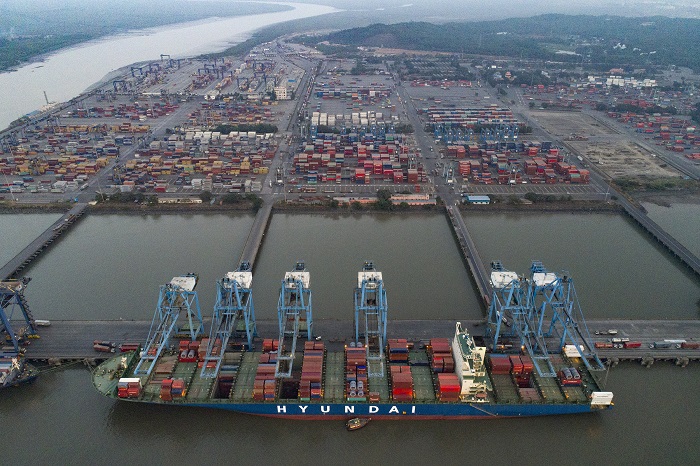
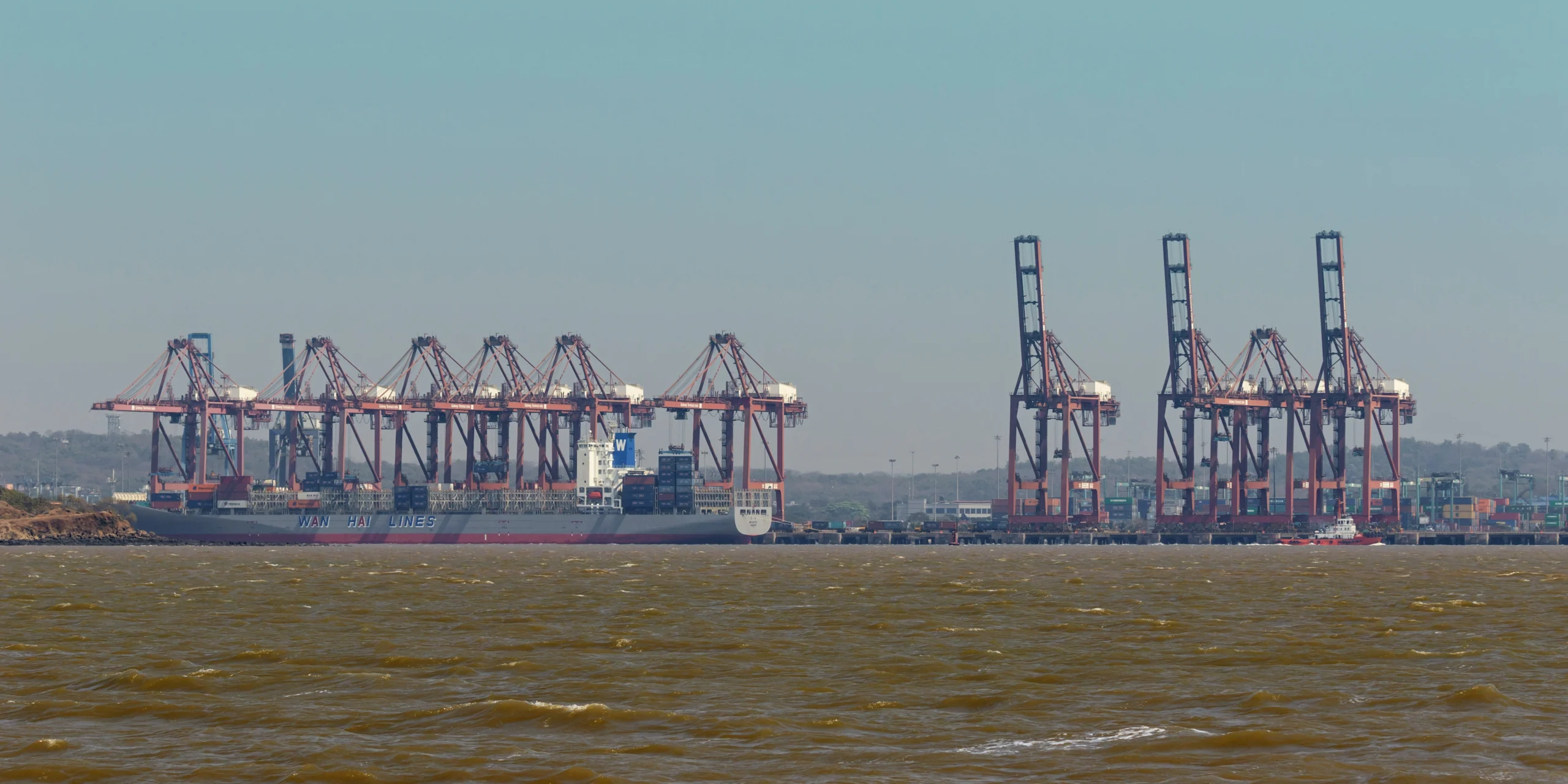
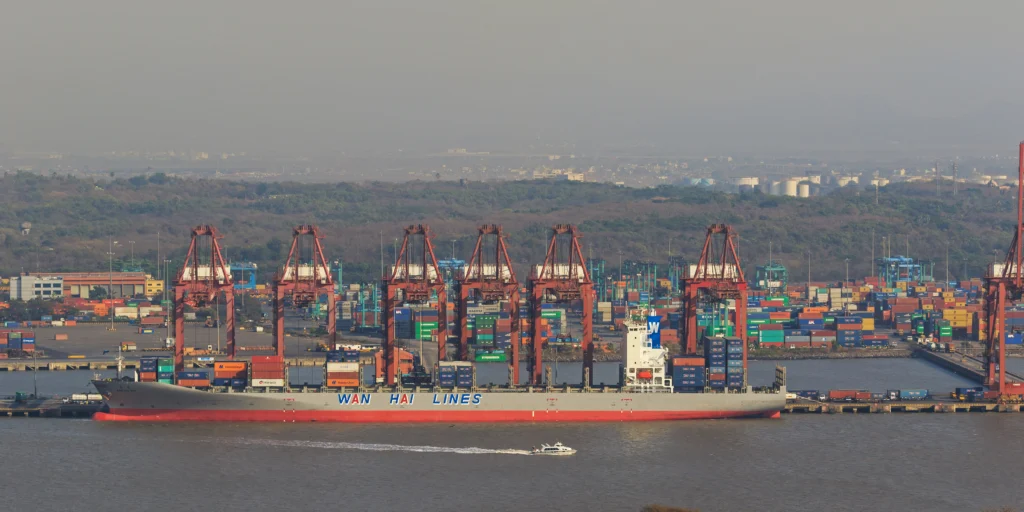
The JN Port, India’s largest state-owned container gateway, is preparing for a major technological shift with the introduction of the country’s first Automated Mooring System (AMS). This new initiative represents a big leap forward in Port Automation, safety, and vessel-handling operations. The project will be tested at Gateway Terminals India (GTI) as a pilot showing how modern equipment can improve Terminal Efficiency and help ports handle ships faster and safer.

The port authority has already begun the process by releasing a tender to find a supplier that will install and operate the Automated Mooring System. Once installed, this will be the first such system in any Indian port putting JN Port on the map alongside global ports that already use advanced Port Automation for safer and quicker mooring operations.

Understanding Mooring – A High-Risk but Essential Process

Mooring is the process of securing a ship to a berth using heavy ropes or wires. When a vessel reaches the jetty, the onboard crew throws strong mooring lines to port workers standing on the dock. These workers then take the ropes and secure them onto bollards fixed on the quay.

This sounds simple, but in reality, it is extremely risky. Every rope tightly holding a vessel stores massive energy. If a rope snaps or slips under tension, it can recoil with deadly force.
Experts at JN Port revealed that mooring operations are the most dangerous part of vessel handling, responsible for the only fatal accidents inside ports.

This is where the Automated Mooring System comes in as a lifesaver.
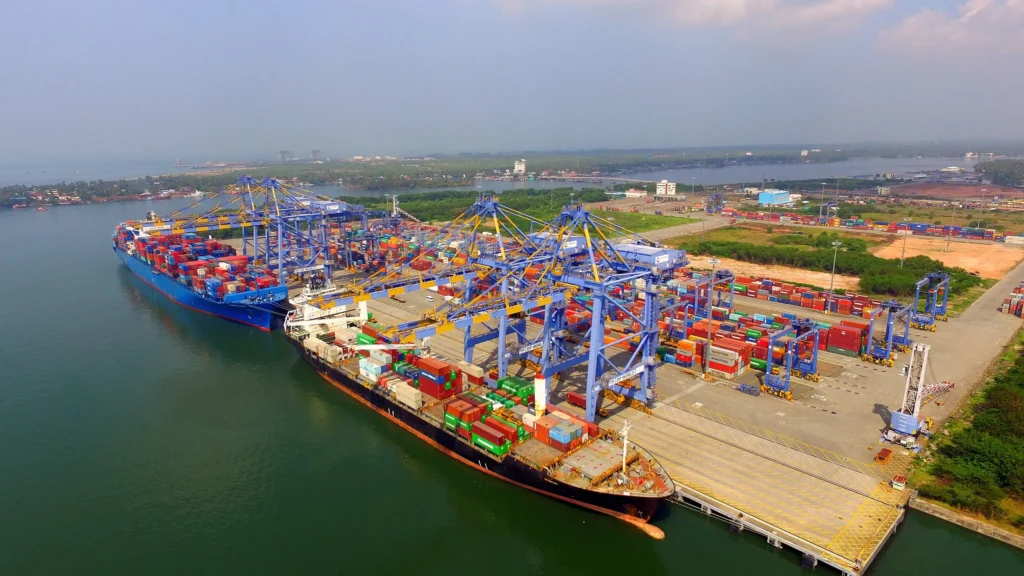
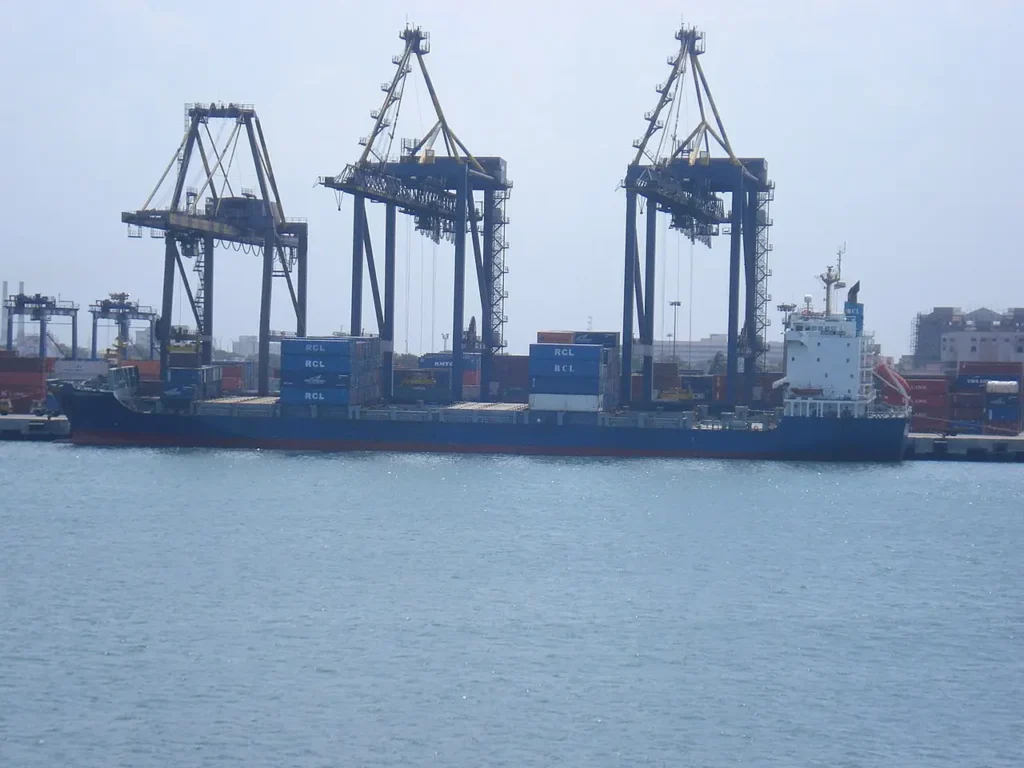
JN Port
Source: Wikipedia

Why JN Port Wants an Automated Mooring System

According to Sunay Mukerjee, COO of Gateway Terminals India, replacing manual mooring with an advanced Automated Mooring System will bring three big advantages:

1. Dramatically Improved Safety

Workers no longer need to hold heavy ropes or go near the vessel’s edge.
The Automated Mooring System uses equipment usually vacuum pads that attach directly to the ship’s hull. This eliminates the risk of a mooring line snapping and harming workers.

Unmesh Wagh, Deputy Chairman of JN Port, said it clearly:
“You cannot put a price on safety. Automating the mooring system removes the biggest risk inside a port.”

By removing ropes and physical contact, the AMS ensures a safer working environment and reduces the chance of deadly accidents.

2. Faster Arrivals and Departures

Every minute counts inside a port. Ships can only begin operations once they are moored and stable. After mooring, the gangway must be fixed, crane lashing operations must start, and only then can container loading or unloading begin.

With manual ropes, all of this takes time.

But with Port Automation, the Automated Mooring System can moor a vessel in 120 seconds or less and unmoor it in 60 seconds. This is a huge improvement and directly boosts Terminal Efficiency.

Shorter arrival and departure times mean:

  • Faster turnaround
  • More ships per day
  • Better use of cranes
  • Higher terminal productivity

3. More Stable Berthing = Better Crane Performance

Ports like JN Port face tidal movements. During monsoon and non-monsoon seasons, ships rise and fall with the tide, making cranes pause operations while adjusting their equipment.

The AMS holds ships more firmly, reducing up-and-down motions. This allows crane operators to work smoothly without constant interruptions.

Better stability improves:

  • Crane cycle speed
  • Safety of crane operations
  • Overall Terminal Efficiency

This contributes directly to the port’s productivity.

Boosting Terminal Capacity Without Physical Expansion

One of the biggest challenges at JN Port is space. Gateway Terminals India has a 712-metre berth. It cannot be extended further, and terminal operators must leave 15–25 metres of space between ships because of crossing mooring lines.

This space is wasted capacity.

However, with the Automated Mooring System, ships will no longer use traditional lines. This means vessels can be berthed closer to each other, safely and efficiently.

Sunay Mukerjee explains:

  • Today: A 368m ship + gap = difficult to accommodate another 300m ship
  • With AMS: The gap can be reduced
  • Result: Larger ships can be accommodated simultaneously

This effectively creates artificial berth expansion without constructing new infrastructure.

Such smart Port Automation gives:

  • Better vessel planning
  • More berthing windows
  • Higher revenue for the terminal
  • Greater container handling capacity

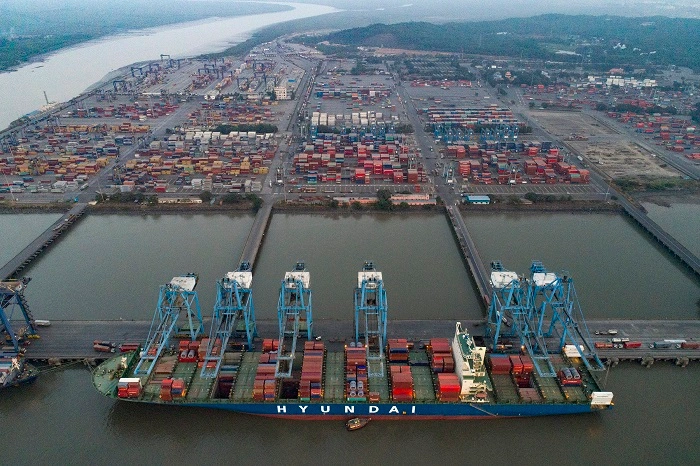
APM Terminals already uses similar systems in global ports like Salalah, Tangier Med, and several European terminals, all showing strong efficiency results.
Source: Wikipedia

Technical Requirements Set by JN Port

JN Port’s tender document clearly outlines what the new system must be capable of. The Automated Mooring System must:

  • Moor a vessel in 120 seconds
  • Unmoor in 60 seconds
  • Handle ships from 150m LOA / 10,000 DWT
  • Up to 400m LOA / 200,000 DWT

This means the system must work for a wide range of container ships from small feeders to some of the largest vessels calling Indian shores.

The equipment will use strong vacuum pads or similar technology that attaches directly to the vessel’s side. This provides a secure and constant hold, even in tidal conditions.

What This Means for India’s Maritime Future

The pilot project at GTI has national importance. If successful, the Automated Mooring System could:

  • Become standard in all major Indian ports
  • Set new benchmarks in Port Automation
  • Reduce fatal accidents
  • Cut vessel turnaround time
  • Improve India’s position in global logistics rankings
  • Attract more shipping lines due to faster operations

This move shows that JN Port is ready to lead India’s transition into modern, technology-driven port operations. The AMS aligns with India’s maritime vision for safer, smarter, and more efficient terminals.

Also read: UP’s Biggest Push Toward Modern Inland Waterways

Conclusion

The introduction of the Automated Mooring System is more than just a new machine it is a transformation in how Indian ports operate. By combining safety, speed, and stability, AMS brings world-class Port Automation to India for the first time.

For JN Port, this pilot project marks the beginning of a new era in Terminal Efficiency, promising faster vessel handling, better productivity, and safer workplaces. If successful, it could completely change how mooring is handled across India.

The future of India’s port sector is becoming smarter, safer, and more advanced one automated innovation at a time.

Source: shippingtribune.com
UP’s Biggest Push Toward Modern Inland Waterways

Uttar Pradesh is stepping into a new era of Inland Waterways development, with major agreements worth over ₹6,000 crores signed during India Maritime Week 2025. These MoUs, led by the Inland Waterways Authority of India (IWAI), aim to transform the Ganga NW1 corridor into a strong route for cargo transport, tourism, clean-energy mobility, and maritime services.

This massive expansion will bring new UP Water Transport opportunities, more jobs, greener travel options, and a stronger logistics network for the state.

₹6,000+ Crores MoUs Signed for Ganga (NW1)

IWAI, under the Ministry of Ports, Shipping & Waterways (MoPSW), announced multiple collaborations focusing on:

  1. River Cruise Tourism
  2. Cargo Movement Expansion
  3. Ship Repair Infrastructure
  4. Green Energy Transport
  5. Multimodal Connectivity

Together, these commitments will greatly strengthen the Inland Waterways system in Uttar Pradesh and support long-term economic growth.

₹1,350 Crore Investment Boost for UP

Out of the total MoUs signed at IMW 2025, IWAI announced that ₹1,350 crores will directly support the upgrade of Ganga NW1, especially in Varanasi. This includes terminals, cruise infrastructure, vessel services, and clean-energy systems all shaping UP into a fast-growing UP Water Transport hub.

Cruise Tourism Set to Grow Strongly

To expand River Cruise Tourism along the Ganga, IWAI signed key MoUs with:

1. Heritage River Journeys Pvt. Ltd.

  1. Develop new cruise vessels
  2. Launch new circuits
  3. Expand operations across Ganga NW1
  4. Investment: Part of ₹800 crores earmarked for cruise tourism

2. Alaknanda Cruises

  1. Strengthening premium cruise experiences
  2. Enhancing heritage routes in Varanasi
  3. Supporting smooth vessel operations on Ganga NW1

These partnerships will boost River Cruise Tourism, create local jobs, and attract domestic and international travellers to Varanasi.

New Cruise Terminals to Be Built in Varanasi

Two new cruise terminals, costing ₹200 crores, will be developed in Varanasi. These terminals will:

  1. Improve passenger comfort
  2. Support rising tourist traffic
  3. Provide modern amenities
  4. Improve vessel handling capacity

With this upgrade, Varanasi is set to become one of India’s most vibrant Inland Waterways tourism hubs.

Ship Repair Facility: A Major Maritime Win for UP

One of the most important MoUs includes the development of a new ship repair facility in Varanasi.

  1. Investment: ₹350 crores
  2. Led by: IWAI & UP Government

This facility will provide:

  1. Maintenance and repair services for vessels
  2. Quick turnaround times for cargo and cruise ships
  3. Local employment opportunities
  4. Growth of maritime-related technical skills

The project strengthens UP’s position as a regional maritime services hub and boosts long-term IWAI Projects.

Inland Waterways
Source: PIB

Green Mobility Push: Electric Charging Infrastructure

A dedicated ₹100 crore MoU will create electric charging stations for vessels along Ganga NW1.

This supports:

  1. India’s National Green Shipping Mission
  2. Low-emission vessel movement
  3. Clean and sustainable UP Water Transport systems

The vision is to make river transport cleaner, future-ready, and environment-friendly.

Modern Cargo Movement: Tug-Barge Induction with Rhenus

A major MoU worth ₹1,000 crores was signed with Rhenus Logistics to induct modern tug-barges for cargo movement on:

  1. Ganga NW1
  2. Brahmaputra NW2

This will:

  1. Improve cargo capacity
  2. Lower logistics costs
  3. Connect India’s East and Northeast regions
  4. Strengthen multimodal transport routes

This MoU is expected to be a gamechanger for Inland Waterways logistics.

Skill Development: Regional Centre of Excellence (RCoE)

A new Regional Centre of Excellence will be set up in Varanasi with an investment of ₹200 crores. Its purpose:

  1. Train professionals in vessel operations
  2. Promote research on green technologies
  3. Develop river navigation skills
  4. Support innovation in IWAI Projects

The centre will help students, marine officers, and industry innovators, making UP a talent hub for the Inland Waterways sector.

Dredging & Connectivity: Strengthening the Backbon

1. Dredging Works Supervision

  1. IWAI + NTCPWC of IIT Madras
  2. Investment: ₹1,500 crores
  3. Purpose: Ensure smooth depth and navigation on Ganga NW1

2. Rail Connectivity for Terminals

An MoU with IPRCL will prepare DPRs and PMC services for rail links at:

  1. Varanasi
  2. Sahibganj
  3. Haldia

Investment: ₹1,500 crores

Better rail connectivity will help create a seamless cargo corridor across India.

Also read: India Pushes Shipbuilding Growth – New Global Call at Samudra Utkarsh

Strong Political Push Behind the Vision

Union Minister Sarbananda Sonowal said the MoUs show India’s strong push to modernize river systems. He highlighted that these agreements:

  1. Support tourism and growth
  2. Strengthen regional integration
  3. Align with India’s maritime future

MoS Shantanu Thakur added that these IWAI Projects reflect the transformation of inland waterways under PM Modi’s vision, empowering UP to become a major river-based logistics centre.

Officials from MoPSW and IWAI also emphasized that these partnerships will build a resilient, sustainable maritime ecosystem across the state.

UP’s Role in National Maritime Vision

With these MoUs, Uttar Pradesh becomes a central player in:

  1. Sagarmala
  2. Maritime India Vision 2030
  3. Maritime Amrit Kaal Vision 2047

As Ganga NW1 expands, UP’s role in multimodal logistics, tourism, green mobility, and skill development will grow rapidly.

Conclusion

The large-scale investments signed during India Maritime Week 2025 represent a turning point for Uttar Pradesh’s Inland Waterways development. With new cruise terminals, ship repair facilities, electric charging stations, dredging, multimodal connectivity, and cargo expansion projects the state is ready to build a modern, sustainable, and globally competitive water transport ecosystem.

UP’s strengthening ties with national maritime programs ensure long-term growth, job creation, and better connectivity making the Ganga NW1 corridor a true engine of progress.

Source: PIB

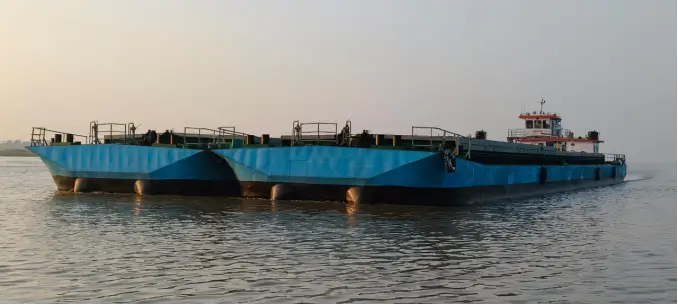
India Pushes Shipbuilding Growth – New Global Call at Samudra Utkarsh

Introduction

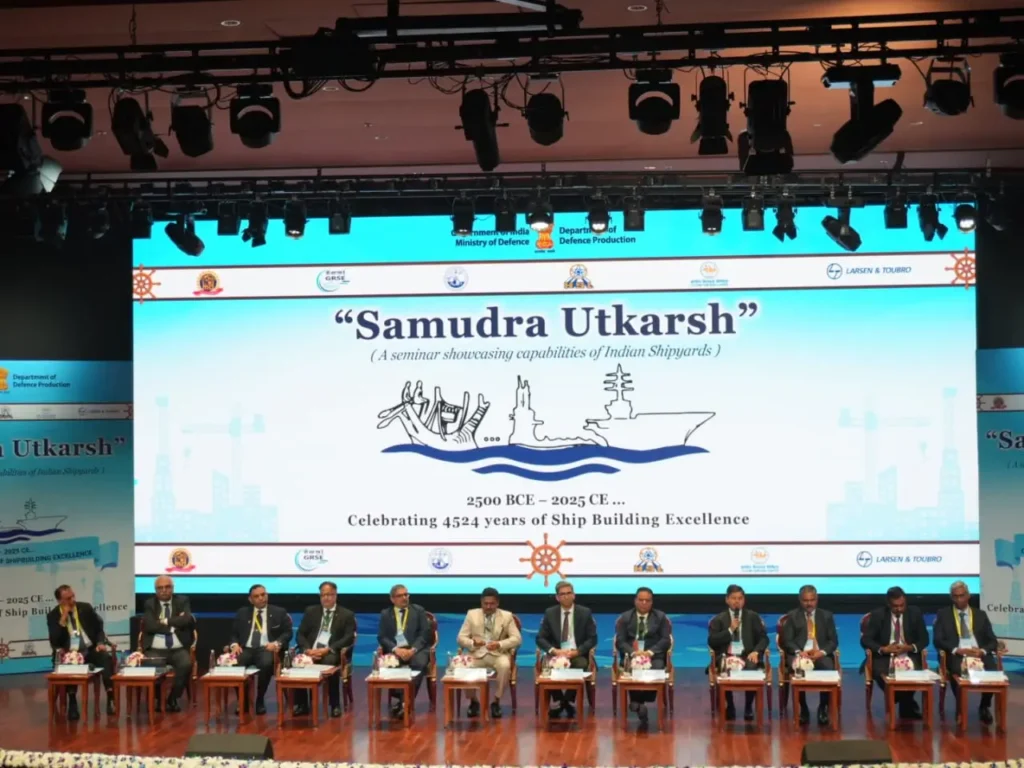
At the Samudra Utkarsh seminar, the Government of India made a strong call to global partners to collaborate with the country’s rapidly growing shipbuilding sector. Rajnath Singh, the Raksha Mantri, highlighted India’s transformation into a capable, confident, and innovation-driven maritime nation.

This event showcased India’s rising capacity to design, build, maintain, and export a wide range of vessels from advanced warships to commercial ships and scientific research platforms. The broader message was clear: India is ready to become a global maritime hub.

What is Samudra Utkarsh and Why It Matters

Samudra Utkarsh is a seminar organised by the Department of Defence Production to highlight India’s achievements and future goals in shipbuilding. Stakeholders from defence, commercial shipping, private shipyards, scientific institutions, and international industries came together to explore new opportunities. The government used this platform to convey that India’s shipbuilding ecosystem is strong, scalable, and prepared for global collaboration both in defence and commercial sectors.

Strength and Scope of the Indian Shipbuilding Industry

Complete Shipbuilding Ecosystem

Indian shipyards today offer end-to-end capabilities, including:

  1. Concept design
  2. Modular construction
  3. Outfitting and integration
  4. Repairs, refits, and upgrades
  5. Life-cycle support

A wide network of MSMEs supports the industry by supplying steel, propulsion systems, sensors, electronics, cables, and other ship components. This integrated ecosystem reduces dependence on imports and strengthens India’s industrial base.

Proven Success Across Multiple Segments

India has built:

  1. Indigenous aircraft carriers
  2. Advanced submarines
  3. Stealth frigates and destroyers
  4. High-end commercial vessels
  5. Research ships and survey vessels
  6. Pollution control vessels
  7. Deep-sea support ships
  8. High-speed ferries and coastal crafts

Private shipyards have added capabilities like LNG carriers, Ro-Ro vessels, green-fuel ships, and globally competitive commercial vessels. This clearly shows that India’s shipyards can design and build a wide range of platforms for multiple industries.

Growing Self-Reliance and Indigenous Content

A major highlight is that every warship and Coast Guard vessel currently under construction in India is being built domestically. Over 260+ indigenous design and development projects are already in advanced stages. Many shipyards aim to reach nearly 100% indigenous content within this decade. This marks a major shift toward self-reliance, supply-chain stability, and national security.

shipbuilding
Source: Twitter

Why India Wants Global Collaboration

India invited international partners to collaborate on next-generation shipbuilding.
The goal is to combine:

  1. India’s expanding infrastructure
  2. Global innovation
  3. Green maritime technologies
  4. Joint manufacturing opportunities
  5. Shared R&D and digital shipbuilding

The collaboration extends beyond defence into:

  1. Commercial vessels
  2. Green-fuel ships
  3. Scientific research platforms
  4. Pollution-control vessels
  5. Dual-use maritime technologies

This opens possibilities for technology transfer, export partnerships, co-development, and global-standard production.

India’s Role in the Emerging Blue Economy

India’s push in shipbuilding supports the country’s larger Blue Economy vision.

How shipbuilding contributes:

  1. Boosts coastal shipping, trade, and connectivity
  2. Strengthens marine research through advanced vessels
  3. Supports sustainable ocean resource exploration
  4. Expands coastal and offshore employment
  5. Ensures environmental protection through green and pollution-control vessels

Shipbuilding becomes a major pillar of economic growth, innovation, and sustainability.

Also read: Gujarat Unveils Six New Maritime Policies to Strengthen Ports & Coast

Significance for Key Stakeholders

Defence & Security

  1. Indigenous vessels enhance strategic independence
  2. Large pipeline of naval and Coast Guard projects
  3. Strengthened readiness and maritime domain awareness
  4. Reduced dependence on foreign suppliers

Commercial Maritime Sector

  1. India is becoming cost-competitive for global ship orders
  2. Shipyards adopt digital processes and automation
  3. Improved capacity for repairs, retrofits, and maintenance
  4. Growth of green-fuel and LNG-ready vessels

Environment & Scientific Research

  1. More research ships improve ocean study and climate monitoring
  2. Pollution-control ships enhance coastal environmental protection
  3. Green vessels promote sustainable marine operations

MSMEs, Workforce & Innovation

  1. Thousands of MSMEs benefit from rising ship production
  2. New opportunities in robotics, AI, automation, and marine tech
  3. Increased demand for skilled workforce in manufacturing, design, and R&D
  4. Boost to entrepreneurship in marine equipment and digital shipyard tools

Challenges & What Lies Ahead

India’s growth path includes challenges such as:

  1. Building long-term global partnerships
  2. Meeting international classification standards
  3. Ensuring environmental compliance
  4. Strengthening supply chains and raw material sourcing
  5. Expanding skilled manpower and training

However, with strong political support, new reforms, and long-term planning, India is moving steadily toward becoming a major maritime powerhouse.

Conclusion

The message from Samudra Utkarsh signals a new era for Indian shipbuilding. India is no longer just a buyer of ships it is an emerging builder of world-class maritime platforms. With strong infrastructure, self-reliance, innovation, and a vibrant ecosystem of public and private shipyards, the country is ready to take centre stage in global shipbuilding.

Source: PIB

Gujarat Unveils Six New Maritime Policies to Strengthen Ports & Coast

Introduction

The government of Gujarat Maritime Board (GMB) has just secured approval for a sweeping set of six new maritime policies aimed at transforming the state’s ports and coastal infrastructure. This major regulatory overhaul reflects Gujarat’s ambition to cement its place as a top maritime hub in India improving port governance, enabling modern shipbuilding, managing coastal land efficiently, and ensuring safer navigation. In this article, we dive into the details of these new policies and what they mean for marine professionals, businesses, students, and stakeholders.

What is the change about?

The newly approved policy package comprises six sector-specific regulations and rulebooks.
These cover:

  1. A shipbuilding and ship-repair policy
  2. A unified land-management policy
  3. A land-reclamation policy
  4. A new Vessel Traffic Management System (VTMS) framework for the Gulf of Khambhat
  5. Two sets of regulations under the Gujarat Inland Vessels Act one for Category A & B vessels, the other for Category C (including leisure/pleasure crafts under 10 metres)

Together, these policies mark one of the biggest regulatory overhauls in Gujarat’s maritime sector in recent years. Officials say the move aims to modernise port operations, boost infrastructure investment, improve safety, and strengthen regulatory clarity.

What Each Policy Means

Shipbuilding and Repair Policy

This is perhaps the headline measure. The new shipbuilding policy is designed to attract investments into:

  1. New shipyards and dry-dock facilities
  2. Fabrication units and marine component manufacturing clusters
  3. Supporting infrastructure such as repair facilities and ancillary services

For a state that already hosts major shipbuilding pockets such as Pipavav, Bhavnagar, and Hazira this policy could significantly scale up capacity and bring in new-age marine engineering capabilities.

In practical terms, shipbuilders, repair yards, and marine service providers may get a clearer policy framework, easier approvals, and possibly better investment confidence all conducive to expansion and modernization.

Unified Land-Management Policy

Earlier, land under GMB’s control whether vested, acquired, reclaimed or procured was managed under multiple circulars, guidelines, and legacy practices. The new land-management policy consolidates all of those into a single comprehensive regulation.

This brings clarity and consistency for land use across the maritime infrastructure sector. For investors, port operators, developers or even businesses seeking to lease or operate on GMB-controlled land the unified policy helps reduce confusion and improves regulatory transparency.

Land-Reclamation Policy

As Gujarat expands port capacity and builds infrastructure along its long 1,600-km coastline, reclaimed land has become more relevant. The land-reclamation policy establishes a formal and structured approach to manage this. It will cover:

  1. Rules to allocate, lease, regulate, and monitor reclaimed coastal land
  2. Guidelines for usage, development and oversight of such reclaimed zones

This is a key enabler for future port expansions, coastal infrastructure, and related developments ensuring reclaimed land is managed sustainably and legally.

VTMS (Vessel Traffic Management System) Policy for Gulf of Khambhat

One of the most sensitive and strategically important parts of Gujarat’s coastline is the Gulf of Khambhat. To manage vessel movements there, the new VTMS policy provides a regulatory framework around:

  1. Ownership of the traffic-management system
  2. Operational protocols and maintenance standards
  3. Staffing norms and responsibilities for vessel monitoring

This will help ensure safer, more efficient navigation, reduce collision or accident risks, and support environmental and maritime security especially in a region with heavy maritime traffic.

Inland Vessels Regulations (Category-based under Gujarat Inland Vessels Act)

Under the Gujarat Inland Vessels Act, new rulebooks will cover two broad categories of vessels:

  1. Category A & B: larger inland or coastal commercial vessels
  2. Category C: including smaller crafts, especially leisure or pleasure boats below 10 metres in length

These rules will standardize procedures for:

  1. Vessel surveys and registration
  2. Safety certification and compliance
  3. Detention protocols, when necessary
  4. Pollution-control measures and environmental compliance

The regulations aim to align with national standards while also addressing Gujarat’s specific coastal and inland waterway conditions.

Why This Matters, Strategic Significance

Taken together, these policies put Gujarat on a stronger footing for several reasons:

  1. Boost for Shipbuilding & Marine Industry: With dedicated policy support, maritime-engineering firms, shipyards, and repair facilities are likely to see more clarity, enabling growth and investments. This can generate jobs, attract private capital, and elevate Gujarat’s standing among India’s maritime states.
  2. Port Governance & Land Clarity: Consolidated land-management and land-reclamation regulations reduce administrative confusion helpful for developers, port operators, and regulatory authorities alike.
  3. Enhanced Safety & Navigation: The VTMS framework for Gulf of Khambhat can dramatically improve vessel monitoring, reduce accidents, and ensure safer maritime operations essential for a busy coastal state.
  4. Environmental & Regulatory Compliance: The inland vessel norms and pollution control measures will ensure that maritime expansion does not come at the cost of environmental degradation.
  5. Investor Confidence: A well-defined legal/regulatory framework tends to attract investors local and international making future port projects, shipyards, and coastal infrastructure more bankable.

In short, Gujarat is not merely expanding it’s building a robust, regulation-driven maritime ecosystem.

Context: Gujarat’s Maritime Ambitions

This is not happening in isolation. The broader national and state-level push for maritime growth provides strong context:

  1. The Indian government recently passed the Indian Ports Act, 2025, replacing the colonial-era law from 1908. This overhaul aims to modernize port governance across the country and ensure environmental, safety, and administrative compliance.
  2. The state government of Gujarat has laid out ambitious plans to scale up capacity at both major and non-major ports, targeting a throughput of 3,000 MMTPA by 2047.
  3. Gujarat’s coastline, deep-water ports, shipbuilding legacy and strategic location make it a natural contender for becoming India’s maritime powerhouse — and these new policies reinforce that trajectory.

Also read: India Boosts Maritime Sector with New Funding and Advanced Skill Programmes

What Stakeholders Should Watch For

For marine-industry professionals, businesses, students studying maritime courses, port-related investors here are some key things to keep an eye on:

  1. Announcement of detailed notification dates for each new policy/regulation. As of now, state officials say the policies will be officially released soon.
  2. Opportunities for new shipyard proposals, marine-component manufacturing units, dry-dock expansion, repairs and related infrastructure.
  3. Leasing or allocation of reclaimed land potential for industrial, commercial or port-related developments.
  4. Implementation of VTMS in Gulf of Khambhat updates on equipment, staffing, operations, which could affect shipping schedules, port traffic, and safety protocols.
  5. Compliance requirements under new inland-vessel regulations especially for operators of commercial craft or pleasure boats.
  6. Investment interest: with better regulatory clarity, private investors (domestic or foreign) may begin showing interest in port or marine-industry projects in Gujarat.

Conclusion

With the approval of six new maritime policies, Gujarat is taking a bold, comprehensive step toward creating a modern, regulated, and investor-friendly maritime ecosystem. From boosting shipbuilding capacity to streamlining land governance, enabling land reclamation, regulating inland vessels, and ensuring safer navigation through VTMS the reforms address multiple dimensions of port and coastal development.

For marine professionals, port operators, investors, and students, this is a moment of opportunity. Gujarat’s coastline could well become a hub not just for cargo and ships but for growth, innovation, and sustainable maritime infrastructure.

Source: indiashippingnews.com

India Boosts Maritime Sector with New Funding and Advanced Skill Programmes

Introduction

In the wake of India’s ambitious maritime agenda, two important developments have emerged that highlight how the country is gearing up for rapid growth in the blue economy. On one hand, the Sagarmala Finance Corporation Limited (SMFCL) has approved a major borrowing plan to fuel investment across maritime infrastructure. On the other, the Indian Institute of Technology Guwahati (IIT Guwahati) in collaboration with the Indian Register of Shipping (IRS) has inaugurated advanced skill- and technology-programmes in underwater welding, offshore repair and additive manufacturing. Together, these two announcements reflect a dual-track strategy: build infrastructure and build human capital. This article walks you through both developments in detail, explains their significance for the maritime sector, and examines what they mean for students, maritime professionals, and industry watchers.

Financing the Maritime Infrastructure: SMFCL’s Big Move

What’s happening?

At its Annual General Meeting, SMFCL (a Mini-Ratna CPSE under the Ministry of Ports, Shipping and Waterways) approved an overall borrowing limit of ₹25,000 crore, out of which ₹8,000 crore is earmarked for the current financial year.

The funds will be mobilised through leading banks, financial institutions and bond issuances. SMFCL is also in discussions with major rating agencies, aiming for an apex scale rating to boost investor confidence and lower interest costs.

Why is this important for the maritime sector?

This is not just about lots of money, it signifies a structural push to strengthen the financing ecosystem of the maritime sector. SMFCL’s expanded role will cover:

  • Ports and port-connectivity projects.
  • Port-led industrialisation.
  • Coastal community development.
  • Coastal shipping and inland waterways.
  • Particularly, vessel financing and shipbuilding.

This means the maritime infrastructure push is not just “more docks and berths” but encompasses upstream (industry), mid-chain (connectivity) and downstream (vessel / shipbuilding) components.

Source: Twitter

What are the implications for students and professionals?

  • For those aiming at careers in maritime infrastructure, civil-engineering firms, shipping logistics, or inland waterways: the financing boost signals more projects, more procurement and more employment opportunities.
  • For professionals in ship-building, vessel financing, maritime consultancy or port connectivity: this opens pathways for custom loan products (short-term, medium-term, long-term) as SMFCL intends to support these.
  • For academia and researchers: the availability of institutional financing can spur applied research, project partnerships and curriculum aligned to port-connectivity, ship-finance and vessel design.

Key takeaways

  • The borrowing limit of ₹25,000 crore is a strong indicator of priority and scale.
  • The strategic vision covers entire value-chain in maritime infrastructure, not just isolated segments.
  • Aiming for apex credit rating implies SMFCL wants to operate with institutional financial discipline and credibility.
  • The focus on vessel financing and ship-building suggests India is serious about expanding its domestic ship-building capabilities.

Skill & Technology Drive: IIT Guwahati Launches Advanced Maritime Programmes

What’s happening?

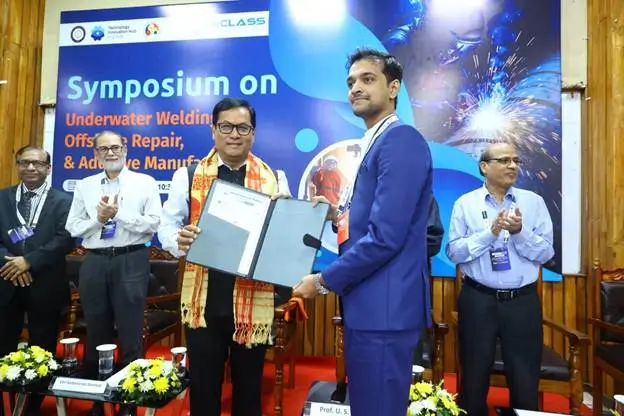
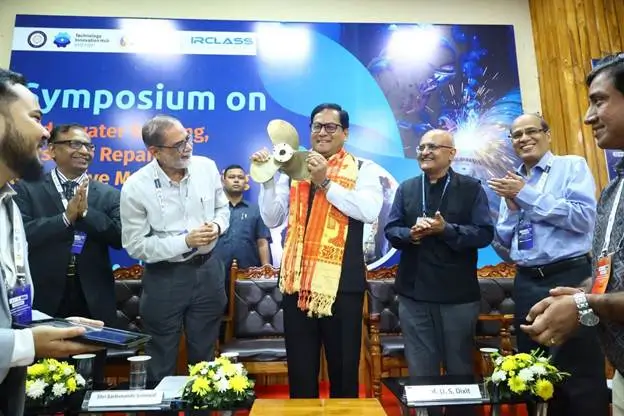
At an inaugural event on 22 November 2025, Sarbananda Sonowal, the Union Minister for Ports, Shipping & Waterways, launched a new initiative at the Technology Innovation Hub (TIH) of IIT Guwahati: programmes in underwater welding, offshore repair and additive manufacturing (3D printing) for maritime applications.

Seven youths completed the Underwater Welding Certification Programme supported by IRS and IIT Guwahati. A live demonstration of 3D metal-printing-based repair of a marine propeller was showcased.

Why is this significant for the maritime skills ecosystem?

  • Underwater welding and offshore repair are highly specialised, in-demand skills in maritime operations, especially as India pushes ship-repair, offshore services and inland-water maritime infrastructure.
  • Additive manufacturing (3D printing) of maritime components, such as a propeller repair, signals a move away from import-dependence and towards rapid, cost-effective in-house repair and retrofitting. The Minister noted that reliance on dry docking and imported components increased cost and delays; these technologies aim to reduce that.
  • The choice of IIT Guwahati and focus on the Northeast highlights a geographic diversification of the maritime skills ecosystem, leveraging the region’s natural waterways and strategic potential.
Maritime Growth
Source: PIB

What does it mean for students and professionals?

  • Students interested in maritime engineering, offshore welding, additive manufacturing have a clear new pathway via IIT Guwahati’s TIH hub.
  • Professionals in ship-yards, marine repair services, inland waterways can look to collaborate with the TIH, up-skill in underwater welding, repair technologies and 3D metal printing.
  • Maritime industry employers should note the potential pipeline of certified skilled workers coming out of such programmes, which can reduce training lead-time and cost.
  • For the region (the Northeast), this sets a precedent for regional hubs of maritime skills, which may lead to regional employment clusters and new maritime ecosystem development.

Key takeaways

  • The inauguration signals the government’s focus on skills plus technology in the maritime sector, not just infrastructure.
  • The partnership between academia (IIT Guwahati) and industry/standards body (IRS) is crucial: certification, live demos, applicability.
  • The geographic emphasis on the Northeast indicates that maritime growth is not just the coast-west/east mainstream ports: inland waterways, regional hubs matter.
  • The technologies (underwater welding + additive manufacturing) are forward-looking and align with global trends for maritime repair & maintenance.

Connecting Both Strands: Infrastructure + Skills = Maritime Momentum

Putting together the two developments gives a clear broader picture for India’s maritime sector:

  1. Massive financing (through SMFCL) ensures that the needed capital for ports, connectivity, vessel financing, ship-building is available.
  2. Advanced skills and technology (through IIT Guwahati and partners) ensure that the human‐resource and technology side of the equation keeps pace.
  3. The synergy means: when port-connectivity projects are being rolled out, there will be both funding and skilled workforce / technology available to execute efficiently.
  4. For the maritime sector (ports, shipping, ship‐building, inland waterways), this marks a maturation: moving from the “build‐something somewhere” mode to “financed + skilled + regionally dispersed” mode.
  5. For students and maritime professionals, the dual message is loud: now is a good time to align skills and careers in this sector – because both funding and technology are being ramped.

Also read: DG Shipping Introduces New Form-1 for Uniform Verification at Immigration Points

What to Watch & What to Do

What to watch

  • The rollout of the ₹8,000 crore tranche in the current financial year by SMFCL: which projects will get financed, in which states, with what structure.
  • The credit‐rating outcome of SMFCL: if it secures apex scale rating, cost of capital will reduce and more Maritime infrastructure players may tap into SMFCL.
  • The further expansion of programmes at IIT Guwahati TIH: how many more youth are certified, what new technology interventions are added (for example sensors, robotics in underwater repair, AI in additive manufacturing).
  • Whether other regional hubs beyond the Northeast will emerge, leveraging this model.
  • The impact on ship-building in India: does the vessel financing support translate into new ship‐yards or retrofit hubs.

What to do if you’re a student or maritime professional

  • If you’re a student: consider specialisation in underwater welding, additive manufacturing, marine repair technology – particularly if you are studying engineering, maritime studies or related fields.
  • If you’re a professional in maritime infrastructure, shipping logistics, inland waterways: keep an eye on SMFCL’s loan product announcements – there might be financing opportunities or partner opportunities.
  • If you’re in a company offering maritime services: explore collaboration with IIT Guwahati TIH or IRS to up-skill your workforce; being ahead of the technology curve (3D printing of maritime parts, advanced underwater repair) will give competitive edge.
  • If you are in a regional cluster (especially in the Northeast): understand the geographic push – waterways, offshore repair capabilities might bring jobs and investments to your region.

Conclusion

The maritime sector in India is at an inflection point. With major financial engines being turned on (via SMFCL) and cutting-edge skill/technology programmes being launched (via IIT Guwahati & IRS), we are seeing a shift from incremental growth to systemic capacity building. For students, maritime professionals, academics and industry players, this means the moment is ripe: the infrastructure will be there, the funding will be there, and the skilled workforce is being nurtured. Aligning with this momentum could lead to rewarding careers and business opportunities in port connectivity, ship‐building, vessel repair, inland waterways and maritime manufacturing.

The dual focus on maritime infrastructure and maritime skills suggests that India is not just building for today but building for the next generation of its blue economy and that’s something worth watching closely.

Source: PIB

DG Shipping Introduces New Form-1 for Uniform Verification at Immigration Points

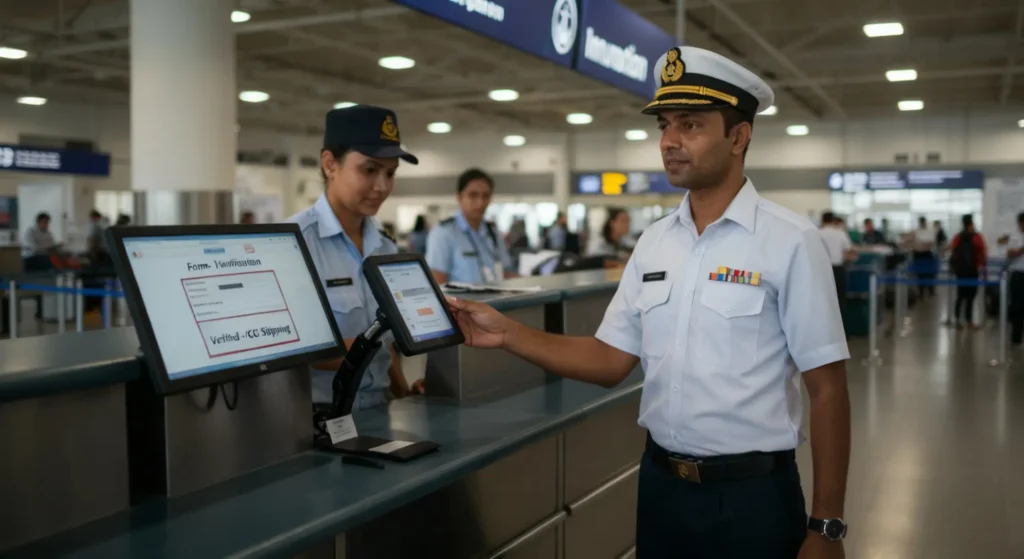
Indian seafarers have faced long-standing issues at airports, including repeated questioning, document doubts, and even denial of boarding. These challenges became more common at major airports over the past year, especially in New Delhi, Mumbai, and Varanasi. To address this growing problem, the Directorate General of Shipping has officially introduced a new secure format of Form-1, Form-1A, and Form-1B.

This step aims to ensure uniform verification at immigration points, providing safer and smoother airport clearance for all Indian seafarers and marine-support staff. The new forms also strengthen the authenticity of travel documents linked with the official e-Migrate system.

DDG (Crew) Capt. P.C. Meena explained that this major change was urgently needed because airlines and immigration officers frequently doubted the old Form-1, which was editable and prone to misuse. Even when seafarers carried all valid documents, visas, OKTB, CDC, employment letters, and e-Migrate system ARN records, airline staff often questioned the authenticity of their Form-1 due to its editable nature.

This created unnecessary stress moments before boarding and sometimes resulted in the heartbreaking situation of a crew member being denied boarding despite having a valid job assignment abroad.

The new forms provide a complete solution.

Why the New Form-1 System Was Necessary

The older version of Form-1 was not secure. It could be edited, modified, or altered in common software. Because of this, airlines became suspicious of whether the document was real or not. This caused doubt and slowed the movement of Indian seafarers, directly affecting ship-joining schedules and international crew changes.

Airports officially reported multiple cases to DG Shipping, which highlighted the need for a secure document for smooth airport clearance. The final decision was made after observing repeated issues across different airports.

To remove these obstacles permanently, DG Shipping redesigned the system to make the documents tamper-proof and directly traceable through the e-Migrate system.

Form-1
Source: Freepik

Categories of New Forms: Who Needs Which Form?

The new circular clearly explains which professionals must use which form. This ensures uniform documentation and easier airport clearance.

1. Form-1 — For Indian Seafarers on Foreign-Flag Vessels

Every Indian joining a foreign-registered vessel must carry this new secure version of Form-1. This category includes officers and ratings sailing on cargo ships, tankers, offshore vessels, bulk carriers, cruise ships, and other foreign-flag operations.

2. Form-1A — For Indian Seafarers on Indian-Flag Vessels

This document is strictly for seafarers joining vessels registered under the Indian flag. Even if a company operates international routes, the form depends on vessel flag, not voyage area.

3. Form-1B — For Non-Seafarer Marine Support Staff

This form covers those who are not seafarers but still travel internationally for maritime work. This includes:

  • Technicians
  • Marine engineers on temporary duty
  • Surveyors
  • OEM specialists
  • Hotel crew for cruise ships
  • Ship repair teams
  • Maritime trainers travelling to vessels
  • Other marine professionals on short-term tasks

All older forms are now invalid. No editable version or older template of Form-1 is accepted at any immigration checkpoint.

Read here: DG Shipping circular on : Introduction of Revised Form–1 , Form–1A and Form–1B for Uniform Verification at Immigration Check-Posts – reg

Security Features Added to the New Forms

The newly introduced forms come with strong built-in security features to ensure that no one can alter or misuse them. This also gives airlines and immigration officers confidence during the verification process.

✔ Non-Editable PDF Format

The new Form-1 cannot be edited. Once generated through the official portal, it stays locked. This resolves the biggest issue with the earlier form.

✔ DGS Logo Watermark

The embedded watermark ensures authenticity and confirms direct issuance from DG Shipping.

✔ e-Migrate ARN Watermark

Each form is tied to the traveller’s e-Migrate system ARN number. This links the form to the official recruitment and approval process.

✔ Auto-Generated Serial Number

Every form is issued with a unique system-generated ID. This helps in real-time verification and prevents duplicate or fake documents.

These features provide a reliable foundation for uniform checking at immigration desks and speed up airport clearance for Indian seafarers.

Strict Directions to All Airlines and Immigration Authorities

To avoid any future harassment or confusion, DG Shipping has issued strict instructions to:

  • Airlines
  • Immigration officers
  • Ground handling teams
  • Airport security staff
  • Seaport immigration checkpoints

They have been told to immediately start accepting the updated Form-1, Form-1A, and Form-1B as official documents. Airlines cannot hold back any Indian seafarers due to documentation doubts as long as the new forms and standard travel papers are carried.

Capt. Meena has clearly stated that no seafarer should be delayed or stopped merely because an officer is unfamiliar with the new format. All relevant agencies must update their internal procedures to align with the new standard.

Indian Seafarers Recognised as Key Workers

Under the Merchant Shipping Act 2025, Indian seafarers have been officially recognised as Key Workers. This recognition ensures smooth movement at all times and protects their rights during:

  • Joining a vessel
  • Signing off from ships
  • Emergency travel
  • Medical evacuation
  • Shore leave

The key-worker status reinforces the responsibility of airlines and immigration authorities to support hassle-free movement.

Responsibilities of RPSL and Non-RPSL Companies

All companies involved in the recruitment and placement of seafarers must:

  • Issue the correct type of form
  • Generate documents only from the DG Shipping online portal
  • Ensure all security features are present
  • Provide full travel documentation including ticket, visa, CDC, OKTB, and e-Migrate system records

This ensures the seafarer faces no hurdles at airports.

Also read: Cochin Port to Lease 140 Acres and Tamil Nadu Plans ₹1.2 Lakh Crore Port Expansion

24×7 Helpline for Immediate Support

If any seafarer faces an issue despite holding the new secure forms, they may contact DG Shipping directly:

📧 support.dgs@gov.in
📧 crews-dgs@gov.in
📞 9004048406
📞 8657549760

The helpline is available 24×7 for urgent assistance.

Effective Date of the New Circular

The new secure Form-1 system becomes effective from 1 December 2025.
From this date onwards, only the new forms will be accepted during airport clearance at all immigration points.

Cochin Port to Lease 140 Acres and Tamil Nadu Plans ₹1.2 Lakh Crore Port Expansion

Introduction

Two significant developments in India’s maritime sector signal fresh momentum for port-led growth. On one hand, the Cochin Port Authority in Kerala has moved to monetise around 140 acres of land for commercial and hospitality activities, aiming to raise over ₹500 crore upfront. On the other, the state government of Tamil Nadu has unveiled a massive port infrastructure plan worth approximately ₹1.2 lakh crore (₹1.2 trillion) to modernise multiple major ports and strengthen its role in global maritime trade.

1. Cochin Port’s Land Lease Plan

1.1 Scope & Purpose

The Cochin Port Authority is offering two separate land parcels for long-term lease: one of about 22.38 hectares (55.30 acres) along the south side of NH-966B (linking Willingdon Island to NH-66 at Kundannoor Junction), and another parcel of around 85 acres to be tendered shortly. These lands are in areas where typical port operations can’t be carried out, making them suitable for commercial/hospitality development (hotels, convention centres, office complexes, stadiums, educational institutes, hospitals, public spaces).

1.2 Financials & Terms

  • For the 22.38 ha parcel, a reserve annual lease rent of ₹12,70,26,495 per hectare (excluding GST) has been set.
  • The lease term: initially 30 years, with an option for renewal for up to another 30 years (total possible 60 years).
  • Bidders must quote above the reserve price; the highest bid becomes the floor price for an e-auction, and the land gets allotted to the highest bidder.

1.3 Strategic Rationale

According to officials, about 60% of Cochin Port’s traffic comprises oil cargo handled by state-run oil marketing companies, 30% is container cargo via the International Container Transhipment Terminal (run by DP World) and the remaining 10% is mostly cement. Since the berths handling oil cargo cannot easily be privatised (private stake would reduce port revenue), monetising the non-core land parcels becomes a strategic route for unlocking value without interfering with core operations.

In short: the port is tapping into real estate asset monetisation (a PPP-style lease model) to raise non-cargo related revenue.

Cochin Port
Source: wikipedia

2. Tamil Nadu’s ₹1.2 Lakh Crore Port Expansion

2.1 What the Plan Covers

The Tamil Nadu government has announced a comprehensive investment plan worth ₹1.2 lakh crore (₹1.2 trillion) aimed at upgrading both public and private major ports in the state. Key components include:

  • Modernising existing berths and adding new ones
  • Deepening draughts to handle larger vessels
  • Expanding container handling zones and cargo yards
  • Strengthening last-mile multimodal links (road & rail)
  • Deploying digital systems for faster vessel turnaround and logistics flows

2.2 Strategic Importance

For Tamil Nadu a state with significant manufacturing, automotive, textiles, electronics and aerospace industries efficient port connectivity is vital. By expanding port capacity, the state aims to attract global manufacturers, increase exports, and plug infrastructure bottlenecks that hamper trade competitiveness.

2.3 Illustrative Projects & MoUs

  • At the Chennai Port Authority and V. O. Chidambaranar Port Authority (Tuticorin), MoUs worth over ₹1.2 lakh crore were signed during the India Maritime Week 2025.
  • For example, Chennai Port signed agreements worth about ₹42,000 crore including a planned outer harbour project (reclamation over ~90 hectares) while V.O. Chidambaranar Port signed MoUs around ₹80,000 crore including ship-repair facilities.
Tamil Nadu
Source: wikipedia

3. Implications for the Maritime Sector & Stakeholders

3.1 For Ports

  • Monetisation of non-core assets (Cochin) means ports can unlock value without relying solely on cargo growth.
  • Infrastructure upgrades (Tamil Nadu) mean ports can handle larger vessels, more cargo, and provide faster turnaround – essential for competitiveness in global supply chains.

3.2 For Industry & Trade

  • More capacity and better connectivity will reduce logistics costs, vessel idle time and bottlenecks, making trade smoother and cheaper.
  • Improved ports will support industrial exports (automobiles, textiles, electronics) and help states like Tamil Nadu become stronger maritime hubs.

3.3 For the Local Economy

  • Commercial and hospitality development in port zones (as with Cochin) can create real estate, jobs, tourism, and spill-over urban growth.
  • Expansion in ports leads to construction jobs, equipment manufacturing, warehousing, transport services and allied industries.

3.4 For Marine & Seafarer Careers

  • Larger ports and new terminals may require more port operations staff, logistics managers, marine engineers and deck crew engaged in loading/unloading, berth management, vessel servicing.
  • As ports deepen draughts and expand terminals, interest may grow in specialised maritime training for large vessel operations and new technology adoption (automation, digital systems).

4. Challenges & Considerations

  • Leasing land for 30–60 years (Cochin) means long term commitment – ensuring the investor delivers is vital.
  • Deep-water port expansions cost large sums, need long gestation, and must be matched by cargo demand growth, or risk under-utilisation.
  • Last-mile connectivity (rail, road) often lags port development; without it the capacity cannot be fully realised.
  • Land acquisition and environmental clearances can stall progress — ports must ensure these are addressed early.
  • For local communities, commercial development needs to be balanced with public impact (traffic, infrastructure, environment).

Also read: Indian Register of Shipping (IRS) and Neptunus Introduce India’s First CBM Marine Engine Monitoring Technology

Conclusion

In sum, the twin announcements from Cochin and Tamil Nadu reflect India’s evolving maritime strategy: unlocking value in existing port assets and building ambitious expansion plans to become a global maritime powerhouse. For students, professionals and industry watchers in the maritime ecosystem, these developments hint at shifts in where opportunities will emerge beyond traditional cargo handling to land-development, hospitality, logistics management and state-of-the-art infrastructural operations.

The Cochin Port lease is about optimising non-core land and tapping new revenue streams. The Tamil Nadu expansion is about capacity, connectivity and competitiveness. Together they show a holistic view: ports aren’t just places where ships dock they are hubs of trade, investment, jobs and urban development.

Source: www.shippingtribune.com

Indian Register of Shipping (IRS) and Neptunus Introduce India’s First CBM Marine Engine Monitoring Technology

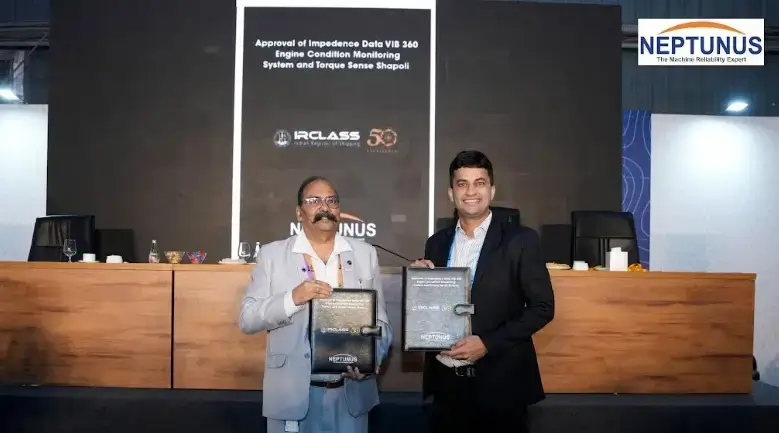
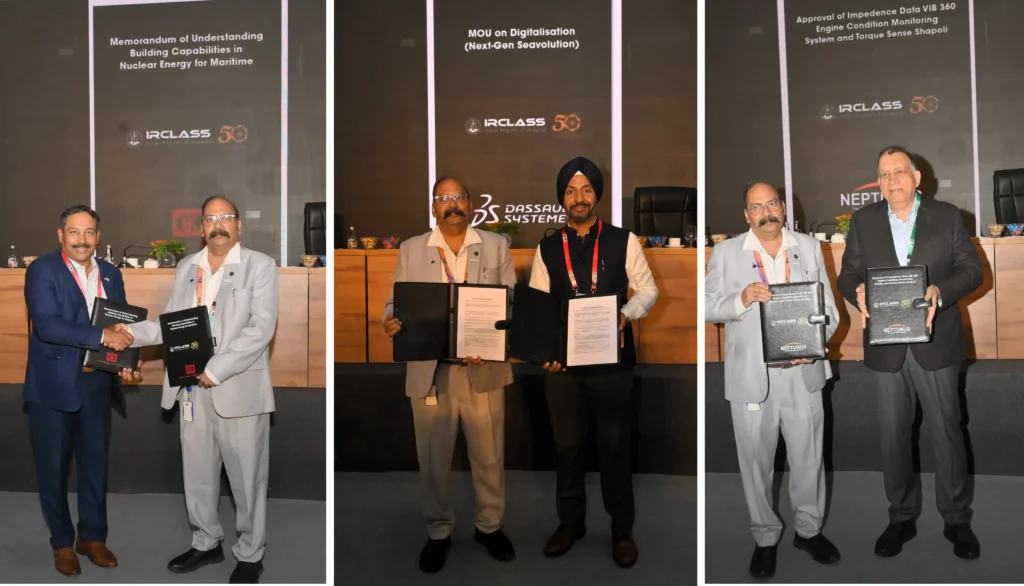
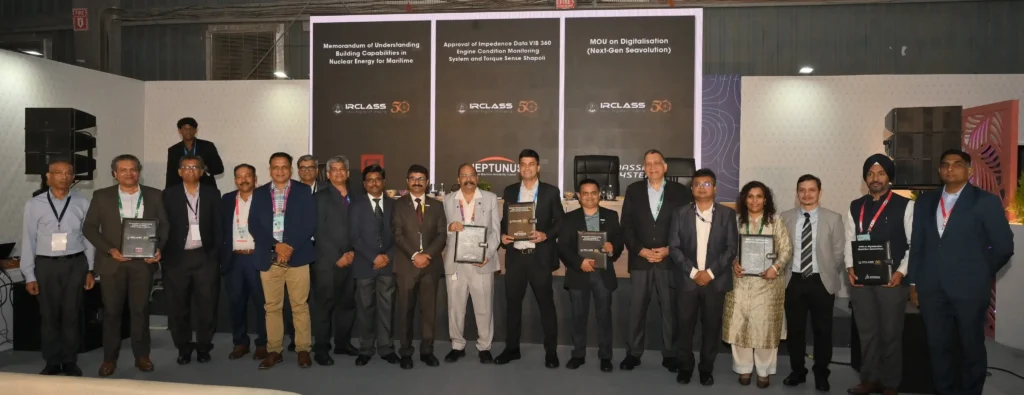
Mumbai — In a landmark development for India’s maritime ecosystem and a major stride toward Atmanirbhar Bharat and Viksit Bharat, Neptunus Power Plant Services Pvt. Ltd. has partnered with the Indian Register of Shipping (IRS) to introduce India’s first Condition-Based Maintenance (CBM) driven marine engine monitoring technology. The collaboration was formalized through a Memorandum of Understanding (MoU) signed at India Maritime Week 2025, in the presence of the Hon’ble Prime Minister of India, Shri Narendra Modi.

This collaboration represents a significant shift in how India approaches ship maintenance, operational reliability, and maritime technology innovation. It brings together Indian research, manufacturing, regulatory certification, and digital diagnostics to build systems that are globally competitive and export-ready.

IRS Grants Type Approval for India’s First Indigenous Marine Engine Monitoring Systems

As part of the partnership, the Indian Register of Shipping has awarded Type Approval Certification to Neptunus for two landmark technologies:

  1. VIB 360 – an Engine Condition Monitoring System
  2. Torque Sense SHAPOLI – a propulsion system diagnostic and torque monitoring solution

This certification is the world’s first instance of a classification society approving fully indigenous, data-driven, marine engine monitoring technologies designed, manufactured, and validated in India.

The approval confirms that Neptunus Power Plant Services has built maritime engineering solutions that meet global technical safety, reliability, and compliance standards.

IRS
Source: x.com/irclass

A Shift from Traditional Maintenance to Condition-Based Maintenance (CBM)

Traditionally, ship maintenance has relied on fixed OEM schedules—a time-based, conservative approach that often results in:

  1. Unplanned downtime
  2. Higher operational costs
  3. Inefficient fuel usage
  4. Delayed repairs

With VIB 360, fleets can adopt Condition-Based Maintenance, where engines are maintained based on real-time performance data rather than preset service intervals.

This approach offers major benefits:

Maintenance ImpactImprovement Achieved
DowntimeReduced significantly through early diagnostics
ReliabilityImproved operational safety and predictable engine behavior
Cost EfficiencyMaintenance costs reduced by up to 30%
Fuel EfficiencyOptimization through precise performance data
EmissionsLowered due to efficient combustion and reduced load stress

The shift to CBM aligns directly with India’s Digital Maritime Vision, promoting technologically advanced, environmentally responsible shipping operations.

MoU to Build Future-Ready Maritime Standards

Under the MoU, the Indian Register of Shipping and Neptunus will jointly create operational frameworks and maintenance standards for Condition-Based Maintenance across India’s maritime sector. This includes:

  1. Creating CBM compliance guidelines for Indian fleets
  2. Training marine engineers in data-driven diagnostics
  3. Developing digital monitoring infrastructure at shipyards and fleet operations
  4. Supporting shipowners in transitioning from traditional to CBM maintenance practices

This collaboration strengthens India’s capability to produce Made in India maritime systems ready for deployment across global fleets.

Industry Leaders Speak on the Partnership

Mr. Uday Purohit, MD & CEO, Neptunus Power Plant Services, said:

“This MoU with the Indian Register of Shipping reinforces our belief that Indian engineering can shape the global maritime future. The Type Approval validates India’s capability to build data-led maritime technologies that meet world-class standards.”

Mr. Akshay Purohit, Director & COO, added:

“This is a step toward making Condition-Based Maintenance a mainstream practice in India’s maritime sector. By combining local innovation with data-based insights, we are creating systems that reduce downtime, increase efficiency, and extend engine life.”

IRS
Source: x.com/irclass

Why This Collaboration Matters for India and the World

This milestone:

  1. Positions India among the few nations producing certified marine diagnostics tech
  2. Enables the global maritime sector to shift from preventive to predictive maintenance
  3. Supports India’s ambition to lead in green and digital shipping innovation

The collaboration also reflects how rapidly India Maritime Week 2025 is influencing strategic reforms across port infrastructure, fleet operations, and maritime workforce capability.

About Neptunus Power Plant Services Pvt. Ltd.

Headquartered in Navi Mumbai, Neptunus Power Plant Services is one of India’s leading companies in reliability engineering, asset optimization, and marine engine services. With over 28 years of experience and projects in 30+ countries, Neptunus is recognized as India’s Top Innovative MSME (Medium Category) by ET Awards 2023.

The company has strong indigenous R&D capabilities and works extensively across the marine, oil & gas, and defense sectors in regions including Africa, South America, the Middle East, and Southeast Asia.

Also read: Japanese Delegation and DGS Strengthen Collaboration in India’s Maritime Sector

Conclusion

The partnership between Indian Register of Shipping and Neptunus Power Plant Services marks a transformative moment in India’s maritime sector. By advancing marine engine monitoring and Condition-Based Maintenance, India is not just following global trends — it is setting them.

This collaboration strengthens India’s position as a global maritime innovation hub, driven by indigenous engineering, digital intelligence, and future-ready sustainability standards.

Source: indiashippingnews.com

Japanese Delegation and DGS Strengthen Collaboration in India’s Maritime Sector

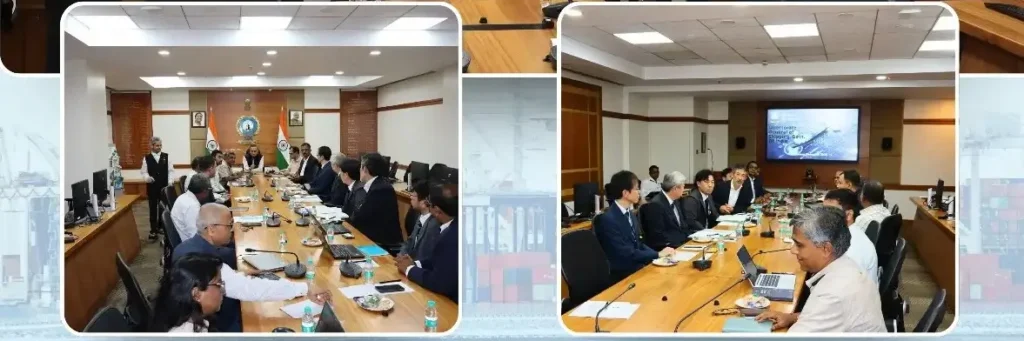
Mumbai — A high-level Japanese delegation from Japan’s Ministry of Land, Infrastructure, Transport and Tourism (MLIT) visited the Directorate General of Shipping (DGS) in Mumbai to discuss expanding cooperation in India’s maritime sector. The visit focused on understanding India’s maritime education system, training standards, and the strong professional ecosystem that supports skilled and disciplined seafarers.

The discussions were aimed at creating long-term collaboration pathways in maritime training, workforce development, and sustainable shipping standards. Both sides emphasized shared interests in safety, skill development, and enhancing employment opportunities for Indian maritime professionals in Japan’s global shipping industry.

Delegation Studies India’s Maritime Training and Certification System

During the visit, the Japanese delegation held detailed discussions with senior officials of the Directorate General of Shipping. A key focus was understanding India’s Examination System for maritime qualifications, which plays a major role in maintaining skilled manpower in India’s maritime sector.

The team also reviewed the Maritime Training Courses offered by institutes across India. These courses include certification, advanced simulation-based learning, navigational training, and specialized operational skill-building designed to meet international maritime safety and performance norms.

Another major area of discussion was the Comprehensive Inspection Programme (CIP). This programme ensures the quality, compliance, and safety standards of maritime training institutes nationwide. The Japanese representatives appreciated how CIP helps maintain uniform training quality and upholds global norms.

Recognition of India’s Skilled Seafarers

The Japanese delegation expressed interest in India’s seafarers, who are widely recognized for their discipline, technical proficiency, and adaptability. India remains one of the world’s largest suppliers of maritime workforce for global shipping companies.

Japan, facing an aging workforce and rising demand in maritime manpower, has been exploring ways to engage more Indian seafarers in its shipping sector. The visit highlighted Japan’s confidence in India’s ability to supply well-trained and reliable marine talent.

India’s seafarer competency framework respected globally was also reviewed. Japan acknowledged India’s strong reputation in producing competitive maritime professionals who can work onboard domestic and international fleets.

Source : x.com/dgshipping_IN

Identifying New Collaboration Avenues

A key objective of the visit was to identify Indian maritime training institutes that could serve as partners for training cooperation, exchange programs, and curriculum alignment.

The Japanese delegation expressed interest in:

  1. Joint certification programs
  2. Student and instructor exchange
  3. Co-development of new training modules
  4. Safety and compliance benchmarking

This collaboration would allow maritime training institutes in both countries to learn from each other, adopt best practices, and prepare seafarers for evolving technologies in global shipping.

Focus on Safety and Sustainable Shipping Practices

Both India and Japan share an interest in improving safety standards and enabling greener shipping practices. Discussions emphasized:

  1. Maritime safety protocols
  2. Environmental compliance norms
  3. Sustainable shipping technologies
  4. Transition toward low-emission vessels

Japan has been promoting advanced maritime technologies, while India is expanding capacity in training, certification, and port operations. Collaboration in these areas can contribute significantly to the modernization of India’s maritime sector.

Strengthening Human Resource Development

India has long been recognized as a major hub for maritime talent. The Japanese delegation acknowledged that India’s strength lies not only in numbers but in the quality and discipline of its seafarers.

This visit highlighted the importance of human resource development as a bridge between the two nations. Both sides agreed that sustained cooperation will help:

  1. Create more employment opportunities for Indian maritime professionals
  2. Support Japan’s manpower requirements
  3. Expand global competitiveness in shipping fleets
  4. Encourage innovation in maritime training

Also read: IWAI Advances Jal Marg Vikas Project with Kalughat and Haldia Terminal Operations

India’s Growing Maritime Presence

India continues to strengthen its role in global maritime trade. The visit reaffirmed India’s image as a hub for skilled maritime manpower and as a country committed to excellence, safety, and innovation.

The Directorate General of Shipping emphasized that India is dedicated to developing an inclusive, globally competitive, and technology-ready maritime training ecosystem. This aligns with India’s larger national agenda of improving logistics efficiency, shipping sustainability, and international maritime cooperation.

Conclusion

The meeting between the Japanese delegation and the Directorate General of Shipping marks another milestone in the long-standing maritime relationship between India and Japan. The discussions reflect a shared commitment to strengthening cooperation in India’s maritime sector, especially in maritime training, safety standards, and workforce development.

With continued collaboration, both countries aim to build a future-ready maritime workforce, expand opportunities for Indian seafarers, and promote sustainable innovation in international shipping.

Source: indiashippingnews.com

IWAI Advances Jal Marg Vikas Project with Kalughat and Haldia Terminal Operations

The Inland Waterways Authority of India (IWAI) under the Ministry of Ports, Shipping and Waterways has taken two major steps forward in strengthening India’s inland water transport network. As part of the Jal Marg Vikas Project, the Kalughat Intermodal Terminal in Bihar has officially been handed over to a private operator under the public-private partnership (PPP) model. At the same time, cargo operations have begun at the Haldia Multi-Modal Terminal in West Bengal. Both developments mark progress in modernizing infrastructure and improving cargo connectivity along the National Waterway-1.

Kalughat Intermodal Terminal Handed Over Under PPP Model

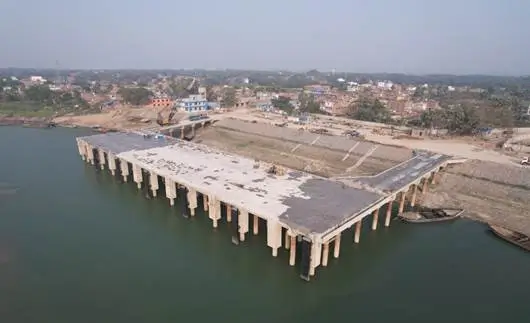
The Kalughat Intermodal Terminal is located in the Saran district of Bihar and has been developed by the Inland Waterways Authority of India with financial and technical support from the World Bank. The terminal is designed to handle a range of cargo and improve trade access in the region.

The terminal has now been handed over to SAPL – Summit Alliance Port East Gateway (India) Pvt. Ltd. for operations and maintenance. The agreement operates on a revenue-sharing basis, where IWAI will receive 38.30% of the gross revenue generated by terminal operations. This PPP model is expected to ensure efficient management, professional handling of cargo, and a financially sustainable operation over the long term.

By involving private operators, the Jal Marg Vikas Project aims to enhance operational performance while maintaining public interest. The collaboration supports long-term growth of inland water transport and encourages wider participation from logistics and shipping stakeholders.

Cargo Operations Begin at Haldia Multi-Modal Terminal

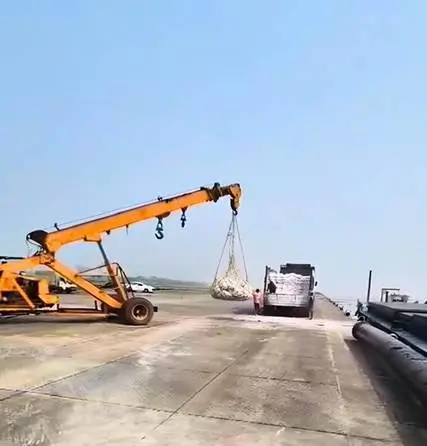
At the downstream end of National Waterway-1, the Haldia Multi-Modal Terminal in West Bengal has begun cargo movement. The terminal is operated by IRC Natural Resources Pvt. Ltd., and its first consignment included Granulated Blast Furnace Slag (GBFS) shipped from Tata Steel. The cargo is being transported to Pandu in Guwahati, Assam.

The Haldia Multi-Modal Terminal has a handling capacity of 3.08 million metric tonnes per annum (MMTPA). This makes it an important asset for connecting eastern India with the northeast through inland water transport. Transportation via waterways is cost-effective, fuel-efficient, and more environmentally sustainable compared to road-based logistics. The terminal’s operationalization supports the goal of reducing logistics costs and carbon emissions across India’s freight network.

IWAI
Source: PIB

Strengthening National Waterway-1 and Regional Trade

Both the Kalughat Intermodal Terminal and the Haldia Multi-Modal Terminal are key components of the Jal Marg Vikas Project, which focuses on developing the 1,390 km stretch of National Waterway-1. This waterway passes through Uttar Pradesh, Bihar, Jharkhand, and West Bengal, linking major industrial and trade centers across these states.

Under the project, IWAI has taken up:

  1. Fairway development to ensure adequate water depth for vessel movement
  2. Construction of multi-modal and intermodal terminals
  3. Deployment of modern navigation systems
  4. Installation of more than 60 community jetties to support local river-based livelihoods

These steps aim to make inland water transport an essential part of India’s logistics ecosystem.

Government Vision: Efficient, Sustainable and Integrated Logistics

The Government of India is promoting inland water transport as a cleaner and more efficient freight movement alternative. By shifting freight from highways to waterways, the government seeks to:

  1. Lower transportation costs
  2. Reduce carbon emissions
  3. Improve port connectivity
  4. Strengthen the sustainable logistics framework

Chairman In-charge of IWAI, Shri Sunil Kumar Singh, noted that handing over the Kalughat Intermodal Terminal and operationalizing the Haldia Multi-Modal Terminal reflect a major leap toward achieving integrated logistics along National Waterway-1. He highlighted that these developments will create new opportunities for trade, business expansion, and economic growth across river-connected regions.

Also read: India Maritime Week 2025 Highlights India’s Push for Global Maritime Leadership

A Step Toward a Green and Connected Inland Water Network

The transition of both terminals to PPP-based operations represents the continued commitment of the Inland Waterways Authority of India to professional management and efficient asset use. The Jal Marg Vikas Project is also designed to support environmental sustainability by promoting low-emission freight transport.

With infrastructure now in place and operations underway, industries in eastern and northeastern India can increasingly look toward waterways as a primary freight transportation route. This shift will support faster, greener, and more economical logistics nationwide.

Conclusion

The operationalization of the Kalughat Intermodal Terminal and the commencement of cargo movement at the Haldia Multi-Modal Terminal are major steps in India’s transition toward a modern, efficient, and environmentally responsible inland water transport network. These milestones under the Jal Marg Vikas Project strengthen national connectivity, promote sustainable freight operations, and revive historic river routes as major trade corridors.

Source: Ministry of Ports, Shipping and Waterways ( PIB )

India Maritime Week 2025 Highlights India’s Push for Global Maritime Leadership

Mumbai — The India maritime sector marked a significant milestone as Maritime Week 2025 concluded in Mumbai from October 27 to 31. The event, themed “Uniting Oceans, One Maritime Vision,” brought together policymakers, global delegates, and industry experts from 85+ countries, 1 lakh+ attendees, and 500+ exhibitors. The discussions and agreements throughout the event highlighted India’s growing ambition to strengthen its role in global trade, sustainability, innovation, and the blue economy.

Reviving Maritime Heritage While Shaping the Future

The government emphasized the importance of connecting India’s maritime future with its ancient past. The National Maritime Heritage Complex at Lothal, currently under development, was highlighted as a key cultural and educational centerpiece. The complex aims to celebrate India’s ancient maritime trade connections and serve as a museum, research centre, and heritage tourism site.

This effort aligns with India’s broader maritime strategy under the Maritime Vision 2047, which seeks to enhance global maritime presence while ensuring cooperation, economic growth, and environmental responsibility.

Sustainability and Green Transition in Focus

Sustainability remained one of the strongest themes throughout Maritime Week 2025. India has committed to reducing carbon emissions in shipping. The goal is to cut carbon emissions per ton of cargo by 30% by 2030 and 70% by 2047, supporting India’s Net Zero 2070 declaration.

Key steps announced include:

  • Development of green shipping corridors
  • Hydrogen bunkering infrastructure at major ports
  • Expansion of methanol-powered vessels
  • Implementation of energy-efficient port technologies

A notable achievement under this initiative is the launch of India’s first megawatt-scale green hydrogen facility at Kandla Port, signaling a major step in energy transition within the India maritime sector and blue economy.

Maritime Week 2025
Source: wiki/Jawaharlal_Nehru_Port

Infrastructure Growth and Improved Logistics

The event showcased clear progress in India’s logistics and shipping performance. The World Bank Logistics Performance Index (LPI) shows India improving from 54th in 2014 to 38th in 2022.

Further progress is seen in port capacity development. India’s port capacity has almost doubled, increasing from 1,400 MMTPA in 2013–14 to 2,762 MMTPA in 2024–25. This expansion enables India to handle larger trade volumes while reducing congestion.

Additionally, India has seen a 200% rise in the number of seafarers, reaching 3.2 lakh, supporting employment growth in the blue economy.

The newly operational Vizhinjam Port in Kerala hosted the world’s largest container vessel, MSC IRINA, marking India’s readiness to operate ultra-large shipping vessels.

Coastal Shipping Bill
Source : Vizhinjam International Seaport

Strategic Investments and Global Partnerships

More than 600 MoUs were signed during Maritime Week 2025, reflecting confidence in the India maritime sector. This marked a 41% increase in partnerships compared to the Global Maritime India Summit in 2023.

Prime Minister Narendra Modi announced a ₹70,000 crore investment dedicated to boosting port modernization and shipbuilding. Long-term investment plans under Maritime Vision 2047 include ₹80 lakh crore to improve port connectivity, inland waterways, coastal shipping, and maritime digital systems.

Flagship programs highlighted include:

  • Sagarmala
  • Maritime India Vision (MIV) 2030
  • Jalvahak inland waterway initiative
  • Cruise Bharat mission
  • National Logistics Portal – Marine, a digital single-window logistics platform

These initiatives aim to reduce transportation costs and support the blue economy through job creation and maritime tourism.

India’s Maritime Scale and Economic Importance

The India maritime sector remains central to national economic growth:

  • 95% of India’s trade by volume and 70% by value moves through maritime routes.
  • India has 11,000 km of coastline and 13 coastal states.
  • Its Exclusive Economic Zone covers 23.7 lakh sq. km.
  • Coastal states contribute 60% of India’s GDP, supporting the livelihoods of 800+ million people.

With such vast coastal and ocean resources, expanding the blue economy is considered vital for India’s long-term economic development.

Also read: European Delegation Visits Green Hydrogen Plant at Kandla Port

Conclusion

The outcomes of Maritime Week 2025 reflect India’s shift from being a regional maritime player to an emerging global maritime power. With strong port capacity expansion, sustainability commitments, international cooperation, and strategic investment under Maritime Vision 2047, the India maritime sector is set to play a crucial role in future global trade networks.

However, experts emphasize that achieving targets will require consistent policy execution, private sector involvement, and international collaboration. The direction is clear, India is preparing to lead at sea.

European Delegation Visits Green Hydrogen Plant at Kandla Port

Gandhidham, Gujarat — A high-level European delegation recently visited the green hydrogen plant at Kandla Port, marking a significant step in international cooperation on sustainable port infrastructure and clean energy. The visit reflects Europe’s growing interest in India’s initiatives to expand the sustainable maritime sector and integrate renewable energy solutions into port operations.

The delegation included representatives from European diplomatic missions, energy researchers, and maritime development agencies. Their objective was to understand how India is positioning Kandla Port as a hub for alternative fuel adoption and environmentally responsible maritime operations.

Kandla Port’s Green Hydrogen Vision

The green hydrogen plant at Kandla Port is one of India’s first large-scale initiatives aimed at producing hydrogen through renewable energy sources instead of fossil fuels. The project aligns with the national strategy to promote green fuels across transport and logistics networks.

The Ministry of Ports, Shipping and Waterways has outlined a roadmap in which major Indian ports will help drive the shift toward clean fuels. Kandla Port is among the first to implement this direction by hosting a green hydrogen plant focused on production, storage, and future bunkering supply for ships.

The delegation was briefed on:

  1. Production method using renewable energy
  2. Storage and handling technology
  3. Safety protocols for hydrogen operations
  4. Future supply possibilities for domestic and international ships

Officials highlighted that green hydrogen can significantly reduce carbon emissions in maritime transport, which is currently one of the highest carbon-intensive global industries.

Understanding India’s Clean Energy Push

During the visit, the European delegation held detailed discussions with port officials, engineers, and energy sector partners collaborating on the project. The delegation expressed strong appreciation for India’s commitment to building a sustainable maritime sector powered by clean technologies.

India aims to reduce carbon emissions per ton of cargo movement in ports and shipping, in line with its Net Zero 2070 pledge. Green hydrogen is expected to play a central role in this transition, especially for long-distance cargo ships, port vehicles, and industrial fuel use.

The delegation noted that Kandla’s green hydrogen initiative demonstrates:

  1. Practical application of climate-friendly fuel production
  2. Potential for large-scale industry adoption
  3. Opportunities for India-Europe technology exchange
Kandla
Source: x.com/Deendayal_Port

Strategic Importance of Kandla Port

Located on the western coast of India, Kandla Port (also known as Deendayal Port) is one of the country’s busiest and most strategically located maritime gateways. It handles a large share of crude oil, coal, and bulk cargo shipments.

The introduction of a green hydrogen plant adds a new dimension to the port’s role — shifting from economic gateway to a center for renewable energy innovation.

Port authorities shared plans to further:

  1. Scale up green hydrogen production capacity
  2. Introduce hydrogen bunkering facilities
  3. Support hydrogen-powered industrial clusters nearby

The European delegation recognized that such developments could make Kandla Port a model for other ports aiming to transition toward low-emission operations.

Kandla
Source: x.com/Deendayal_Port

International Collaboration Opportunities

The visit also opened conversations about partnerships in research, manufacturing, workforce training, and joint pilot projects. European nations have been early adopters of hydrogen-based maritime fuel systems, offering valuable knowledge on regulations, supply chains, and industrial safety standards.

The delegation suggested that collaboration could support:

  1. Technology transfer
  2. Joint demonstrations for hydrogen-fueled vessels
  3. Maritime academic exchanges
  4. Shared climate financing frameworks

Indian officials welcomed the possibility of exploring European funding support for future renewable energy expansion in ports.

Kandla
Source: x.com/Deendayal_Port

Green Hydrogen and India’s Maritime Future

The establishment of the green hydrogen plant at Kandla Port is part of India’s broader plan to build a decarbonized supply chain across shipping, trade, and logistics. The plan aligns with national missions such as:

  1. Maritime India Vision 2030
  2. Maritime Amrit Kaal Vision 2047
  3. National Green Hydrogen Mission

By showcasing progress to the European delegation, India demonstrated readiness to collaborate globally on clean fuel adoption.

Officials emphasized that the sustainable maritime sector is not only an environmental priority but also a major opportunity for new jobs, industrial growth, and technological leadership.

Also read: India’s Maritime Sector Strengthens as MSC Flags 12 Vessels Under Indian Registry

Conclusion

The visit of the European delegation to the green hydrogen plant at Kandla Port highlighted India’s steady movement toward a renewable energy-powered maritime future. With strong cooperation, shared technology, and long-term vision, India is emerging as an important voice in global climate action and sustainable shipping innovation.

The plant at Kandla Port stands as a practical example of how ports can transform into clean energy ecosystems and as a symbol of India’s commitment to building a sustainable maritime sector for decades to come.

Source: indiashippingnews.com

India’s Maritime Sector Strengthens as MSC Flags 12 Vessels Under Indian Registry

India’s maritime sector is moving into a new era of expansion and global relevance. In a significant development, MSC Mediterranean Shipping Company—one of the largest global shipping companies—has confirmed its commitment to register and operate 12 of its vessels as Indian flag vessels. This announcement followed discussions during the Global Maritime CEO Roundtable held in Mumbai as part of India Maritime Week 2025.

The announcement was made by MSC CEO Soren Toft, who stated that MSC is deepening its long-term strategic partnership with India. He highlighted that the India maritime sector is growing strongly across shipping, ports, and logistics, and MSC intends to support this growth through concrete investment and operational integration. This decision places India more prominently on the world maritime map, reinforcing the country’s position as a rising global maritime hub.

Growing Confidence from Global Shipping Companies

MSC is not the only major player reinforcing its commitment to the India maritime sector. Recently, A.P. Moller – Maersk also announced a substantial development plan. Maersk is set to invest $2 billion in expanding APM Terminals Pipavav, in collaboration with the Gujarat Maritime Board. Additionally, the company has flagged two of its vessels, Maersk Vigo and Maersk Vilnius, as Indian flag vessels. This signifies that global shipping companies are recognizing India not just as a major cargo market, but also as a maritime base worth long-term investment.

Similarly, DP World has pledged $5 billion toward the enhancement of maritime infrastructure in India. DP World has already invested $3 billion over the past three decades, and its renewed commitment shows strong confidence in India’s port development and logistics environment. These efforts contribute toward improving efficiency, capacity, and international competitiveness across Indian ports.

MSC
Source : wikipedia

India’s Shipbuilding Boost Gains Momentum

A notable milestone in shipbuilding emerged when CMA CGM signed a letter of intent with Cochin Shipyard Limited. The agreement involves building six dual-fuel LNG containerships in India. These vessels will be the first LNG-powered ships constructed for a major international shipping line in an Indian shipyard. The ships will also sail as Indian flag vessels, with delivery planned between 2029 and 2031.

This is a breakthrough for the India maritime sector, as it enhances India’s capabilities in advanced vessel manufacturing. It also strengthens self-reliance in maritime infrastructure, aligning with the broader goal of increasing the national fleet under the Indian registry. This indicates growing technical expertise and capacity within Indian shipyards, enabling them to take on more sophisticated construction projects in the future.

Government Initiatives Supporting Maritime Growth

The government has also introduced significant policies to support the Maritime India Vision 2030 framework. One of the key steps is the creation of a maritime development fund worth 250 billion rupees (approximately $2.9 billion). Finance Minister Nirmala Sitharaman confirmed that 49% of the funding will come from the government, while the remaining portion will be contributed by ports and private stakeholders. This fund is expected to support shipbuilding, ship repair, and future capacity expansion.

Maritime India Vision 2030 outlines more than 150 strategic initiatives aimed at modernizing ports, improving connectivity, expanding coastal shipping, and increasing the number of Indian flag vessels. The plan includes new port development, modern cargo handling systems, inland waterway expansion, and digital optimization of port operations. Nearly 95% of India’s trade by volume and 70% by value moves through the maritime route, making investment in maritime infrastructure essential.

MSC
Source : safety4sea.com

Why Reflagging Matters for India

The India maritime sector has grown significantly in cargo volume, especially in energy imports and refined petroleum product exports. However, the number of Indian flag vessels has not grown at the same pace. This means much of India’s own trade is carried by foreign-registered vessels. Increasing the share of domestically flagged ships improves strategic autonomy, economic benefits, job creation, and maritime security.

When global shipping companies such as MSC and Maersk reflag their vessels under the Indian registry, the country gains advantages such as:

  • Higher maritime employment for Indian seafarers
  • Increased revenue from port and flag administration services
  • Strengthened national presence in international shipping lanes
  • Greater resilience in supply chains

The move also supports domestic shipping companies, who can collaborate more effectively with international partners.

Also read: DP World & Cochin Port Sign MoU to Boost Kerala’s Maritime Growth

Looking Ahead

The combined impact of MSC’s commitment, Maersk’s investments, DP World’s long-term funding, and CMA CGM’s shipbuilding initiative represents a powerful vote of confidence in the India maritime sector. These steps reinforce the government’s strategic maritime vision and its long-term plan to expand capacity, sustainability, and competitiveness.

As Maritime India Vision 2030 continues to guide expansion, the registration of more Indian flag vessels will enhance India’s maritime strength globally. The strengthening of maritime infrastructure, shipbuilding, port expansion, and deeper collaboration with global shipping companies will accelerate growth for decades to come.

India is not only emerging as a major maritime trade nation, but also as a reliable logistics and shipping partner for the world.

Source : gcaptain.com

DP World & Cochin Port Sign MoU to Boost Kerala’s Maritime Growth

Introduction

Cochin Port has long been one of India’s most strategically important maritime gateways, connecting the country to international shipping routes across the Arabian Sea. The port is crucial not only for regional trade but also for India’s broader ambitions to strengthen its coastal economy and global maritime presence. In a recent development, Cochin Port Authority and DP World, a leading global logistics and port operation company, signed a Memorandum of Understanding (MoU) aimed at improving maritime infrastructure, port efficiency, and overall cargo handling capabilities in Kerala. This partnership marks a significant push toward making Cochin a stronger logistics hub in South India.

The MoU forms part of a larger national vision to promote port-led development under frameworks such as Sagarmala and PM Gati Shakti. Through coordinated planning, capacity expansion, and modern logistics solutions, the collaboration aims to scale Cochin’s profile in global shipping and attract more trade flows.

Background: Why Cochin Port Matters

Strategic Location in Maritime Trade

Cochin Port is strategically positioned near international sea shipping lanes. This location allows direct maritime connectivity to the Middle East, Africa, Europe, and South Asia. Its natural harbor also provides deep-water access suitable for large international vessels, enabling it to handle container traffic, bulk cargo, and cruise operations.

Role in Kerala’s Economic Growth

The port directly supports Kerala’s:

  • Export industries (seafood, spices, rubber, coir, machinery)
  • Import-based industries (energy, petroleum, textiles, chemicals)
  • Employment and skill development across logistics and maritime sectors

Enhancing maritime infrastructure at Cochin Port directly impacts state revenue and national economic output.

Cochin Port
Source : cochinshipyard.in

DP World’s Role in Indian Maritime Sector

DP World is one of the world’s leading supply chain and port terminal operators, with a strong presence across India. It manages terminals, rail freight corridors, inland container depots, and logistics parks. The company focuses on seamless cargo movement, technology-driven port operations, and improving maritime efficiency.

In Cochin, DP World already operates the International Container Transshipment Terminal (ICTT) at Vallarpadam, India’s first dedicated transshipment container terminal. The new MoU aims to further enhance performance and competitiveness at the port.

What the MoU Aims to Achieve

The MoU between DP World and Cochin Port Authority focuses on collaborative development in multiple operational and infrastructure areas. Key objectives include:

1. Improving Maritime Infrastructure

The agreement supports:

  • Infrastructure modernization
  • Upgradation of berths and terminals
  • Enhancing container handling facilities
  • Increasing cargo capacity

Strengthening maritime infrastructure is crucial for handling larger vessels and increasing trade volume.

2. Streamlining Logistics Operations

DP World will bring its global expertise in:

  • Port management
  • Integrated logistics networks
  • Technology-enabled cargo tracking systems

The aim is to reduce turnaround time, improve cargo movement efficiency, and build seamless multimodal logistics pathways.

3. Supporting Kerala’s Vision of Becoming a Logistics Hub

Kerala has the potential to become a major gateway for South India’s export-import trade. The development focuses on:

  • Increasing trade competitiveness
  • Enhancing coastal connectivity
  • Integrating road, rail, and sea networks

4. Encouraging Private Investment

The collaboration is expected to attract:

  • New investors
  • Domestic manufacturing ventures
  • Marine services and offshore logistics companies

This supports the larger goal of Kerala port development under national maritime growth policies.

Also read : MISW 2025 Boosts Maritime Coordination in the Indian Ocean

Impact on Trade and Industry

Enhanced Trade Connectivity

With improved container handling and transshipment, Cochin can strengthen maritime links with:

  • Colombo
  • Jebel Ali
  • Singapore
  • African and European ports

This will enhance India’s share in global shipping routes.

Boost for Export Sectors

Industries likely to benefit include:

  • Seafood and marine products
  • Agricultural produce and spices
  • Rubber and coir industries
  • Manufactured goods

Lower Supply Chain Costs

Efficient port logistics reduce:

  • Cargo dwell time
  • Shipping delays
  • Transport costs

This makes Indian exports more competitive globally.

Alignment with National Maritime Policy

This MoU complements several national initiatives:

Government InitiativeObjectiveRelevance to MoU
Sagarmala ProgrammeCoastal economic developmentEnhances port-led industrialization
PM Gati ShaktiIntegrated logistics network planningEncourages seamless cargo movement
Blue Economy FrameworkSustainable ocean resource usePromotes maritime industry growth

Cochin Port plays a key role in India’s maritime diplomacy and Indian Ocean regional engagement.

Opportunities for Future Expansion

Coastal Cargo Movement

Opportunities exist to expand short-sea shipping to:

  • Goa
  • Gujarat
  • Tamil Nadu
  • Andaman-Nicobar routes

Cruise Tourism

Cochin already serves as a major cruise terminal; upgraded facilities can further attract international cruise liners.

Ship Repair and Marine Services

The port has potential to host:

  • Offshore support services
  • Bunkering operations
  • Ship maintenance facilities

Conclusion

The MoU between DP World and Cochin Port Authority marks a meaningful step toward transforming Cochin into a leading logistics hub and maritime gateway. By enhancing maritime infrastructure, improving operational efficiency, and supporting Kerala’s trade ambitions, the partnership strengthens India’s maritime competitiveness on a global scale. As the collaboration progresses, it is expected to generate economic growth, create employment opportunities, and improve global connectivity for India.

Cochin is poised to become not just a port, but a central link in the international supply chain—boosting trade, industry, and regional development for the long term.

Source: indiashippingnews

MISW 2025 Boosts Maritime Coordination in the Indian Ocean

The Indian Ocean is one of the world’s most essential maritime routes, connecting major economies and supporting global trade. Ensuring the safety and security of this vast region is a shared responsibility that requires cooperation, real-time data exchange, and trusted partnerships. In this spirit, the Maritime Information Sharing Workshop (MISW 2025) is being hosted from 03 to 05 November 2025 by the Information Fusion Centre – Indian Ocean Region (IFC-IOR) in Gurugram, India.

This gathering brings together maritime security professionals, regional bodies, and global stakeholders. The theme for this year, “Enhancing Real-Time Coordination and Information Sharing Across the Indian Ocean Region,” clearly emphasizes the importance of collaborative action in countering emerging maritime threats.

 Why Maritime Information Sharing Matters

The Indian Ocean Region acts as a maritime corridor through which a major portion of global oil, energy products, and container shipments move daily. It connects countries, cultures, and economies. However, the same waters are vulnerable to a range of security challenges such as:

  • Piracy and armed robbery at sea
  • Drug trafficking and arms smuggling
  • Irregular human migration
  • Illegal fishing and maritime environmental incidents

These challenges do not remain limited to one nation’s jurisdiction. They impact trade, human safety, and geopolitical stability. Therefore, Maritime Information Sharing and coordinated maritime surveillance play a key role in maintaining Maritime Security.

This is where IFC-IOR and MISW 2025 become significant.

The Role of IFC-IOR in Strengthening Maritime Security

The Information Fusion Centre – Indian Ocean Region (IFC-IOR) was inaugurated on 22 December 2018. Its mission is to enhance maritime safety and maintain peace across the Indian Ocean Region. IFC-IOR functions as a collaborative hub, where different countries share maritime data, coordinate efforts, and respond to threats more effectively.

Key Points About IFC-IOR:

  • Headed currently by Captain Sachin Kumar Singh
  • Hosts International Liaison Officers (ILOs) from 15 countries
  • Actively collaborates with 57 maritime security constructs and 25 partner nations
  • Focuses on creating a cohesive maritime information network

Its vision is aligned with India’s broader diplomatic and maritime security philosophy called MAHASAGAR: Mutual and Holistic Advancement for Security and Growth Across Regions.

Maritime Information Sharing
Source : ( PIB )

Evolution of MISW – From 2019 to 2025

The Maritime Information Sharing Workshop began in 2019. Since then, it has grown into a vital platform where security professionals learn, collaborate, and build practical solutions. Unlike typical conferences that focus only on discussions, the MISW format emphasizes:

  • Operational learning
  • Best practice sharing
  • Real-time problem-solving
  • Building trust among regional partners

MISW 2025 represents the third edition of this flagship workshop, demonstrating its growing relevance and expanding international participation.

MISW 2025 – Theme and Objectives

The central theme of MISW 2025, “Enhancing Real-Time Coordination and Information Sharing Across the Indian Ocean Region,” captures the collective ambition of participating nations. The idea is to move from dialogue to direct operational application, ensuring that maritime information is not just collected but used effectively.

Key Objectives:

  1. Improve Maritime Information Sharing between regional countries
  2. Strengthen the Maritime Security network in the Indian Ocean Region
  3. Promote collaboration among partner nations, organizations, and navies
  4. Utilize technology for real-time situational awareness
  5. Conduct practical exercises to simulate real-world maritime threats
  6.  

Participation and Inaugural Leadership

MISW 2025 is bringing together maritime security practitioners from 30 countries belonging to major regional organizations:

  • Indian Ocean Rim Association (IORA)
  • Djibouti Code of Conduct / Jeddah Amendment (DCoC/JA)
  • Bay of Bengal Initiative for Multi-Sectoral Technical and Economic Cooperation (BIMSTEC)

The workshop will be inaugurated by Vice Admiral Tarun Sobti, Deputy Chief of Naval Staff, Indian Navy.
Additionally, a keynote address will be delivered by Mr. Sushil Mansing Khopde, IPS, Additional Director General of DG Shipping.

Their presence highlights India’s commitment to enabling leadership and partnership in the Indian Ocean Region’s Maritime Security architecture.

Thematic Sessions and Collaborative Dialogues

MISW 2025 includes tailored sessions for:

  • BIMSTEC nations
  • IORA member states
  • DCoC/JA countries

International and regional organizations contributing to discussions include:

  • UNODC
  • ReCAAP ISC
  • Regional Maritime Information Fusion Centre (RMIFC)
  • IFC Singapore
  • RCoC
  • Leading global shipping companies

These sessions aim to develop operational strategies, share experiences, and build mechanisms for faster and more reliable maritime intelligence exchange.

Maritime Information Sharing
Source : raksha-anirveda.com

National Maritime Information Sharing Centres (NMISCs)

One of the highlights of the workshop is India’s effort towards establishing National Maritime Information Sharing Centres (NMISCs). These centers are crucial nodes that help monitor, analyze, and distribute maritime data efficiently.

NMISCs strengthen the larger network of Maritime Information Sharing, ensuring that maritime risks are identified early and responses are coordinated.

Table Top Exercise (TTX): From Planning to Action

The workshop concludes with a high-fidelity Table Top Exercise (TTX) held at the IFC-IOR.

This simulation will:

  • Present real-world maritime threat scenarios
  • Engage delegates in collaborative decision-making
  • Encourage syndicate-based contingency planning
  • Reinforce the value of shared situational awareness

This step ensures that participants not only discuss Maritime Security but practice how to respond collectively and efficiently.

Also read : India Maritime Week 2025 Secures ₹12 Lakh Crore Investment, Strengthening India’s Blue Economy and Maritime Leadership

Significance of the Indian Ocean Region

The Indian Ocean Region is more than a trade route. It is:

  • A link between Asia, Africa, and the Middle East
  • A zone of thriving commercial activity
  • A strategic region with geopolitical importance

Maintaining stability here is vital to global economic stability. The Maritime Information Sharing Workshop (MISW 2025) is therefore not just an event — it is a strategic investment in the shared future of the region.

A Step Towards Safer Seas

MISW 2025 reflects the IFC-IOR’s commitment to building a maritime security ecosystem that is transparent, cooperative, and resilient. The workshop is expected to make a significant contribution to shaping long-term strategies for Maritime Information Sharing and coordinated responses in the Indian Ocean Region.

In a world where maritime threats continue to evolve, collaboration remains the strongest tool. MISW 2025 is a step toward ensuring that the Indian Ocean remains secure, stable, and prosperous for all.

Source: Ministry of Defence ( PIB )