Failure to Read Charted Warnings Leads to Train-Barge Collision

September 16, 2022:

The towboat’s crew was unaware that they had temporarily berthed the bow of a barge over a rail line, according to the findings of the NTSB’s inquiry into the collision between a moving train and the towboat Baxter Southern on the Upper Mississippi in late 2021.

The towboat Baxter Southern was traveling downstream on the Mississippi on November 13, 2021, pulling four empty barges into Louisiana. Around 2200, the wind increased with gusts as high as 35 knots, making it challenging for the 700-foot-long empty barge tow to navigate.

According to the forecast, the winds will last all night. The master discussed the options with the pilot and decided against trying to turn around and travel back upriver or continue on to the next lock. Instead, they made the decision to wait for better weather by pushing the barges up against a bank.

They chose a place with a magenta dashed line around it that had no trees or other obvious obstacles using a non-ECDIS electronic chart system. They knew there was a rail line nearby, but they didn’t think it posed a serious threat. No lookout was positioned on the bow as they approached the shore due to the bad weather.

The master stepped off the bridge at 23:36 when the bow rake of the barge tow was jammed up against the bank. To make sure the bow wasn’t obstructing the track, three crew men were sent forward. The lights of an incoming train could be seen by the deckhands 2,000 feet to the north before they arrived at the head of the tow.

The conductor and engineer noticed the barge tow and the towboat at at 23:42 but were unconcerned because barges were frequently pressed up against the bank in this area. As per protocol, they sped along a straight portion of the track in the direction of the barge.

The engineer noticed that the barge’s bow was encroaching on the rail bed a minute later, when the locomotive was just 300 feet away from collision, and he applied the emergency stop. The towboat’s pilot, who was still on the bridge, noticed what was happening and tried to back off the bank by putting the throttles in reverse, but it was too late.
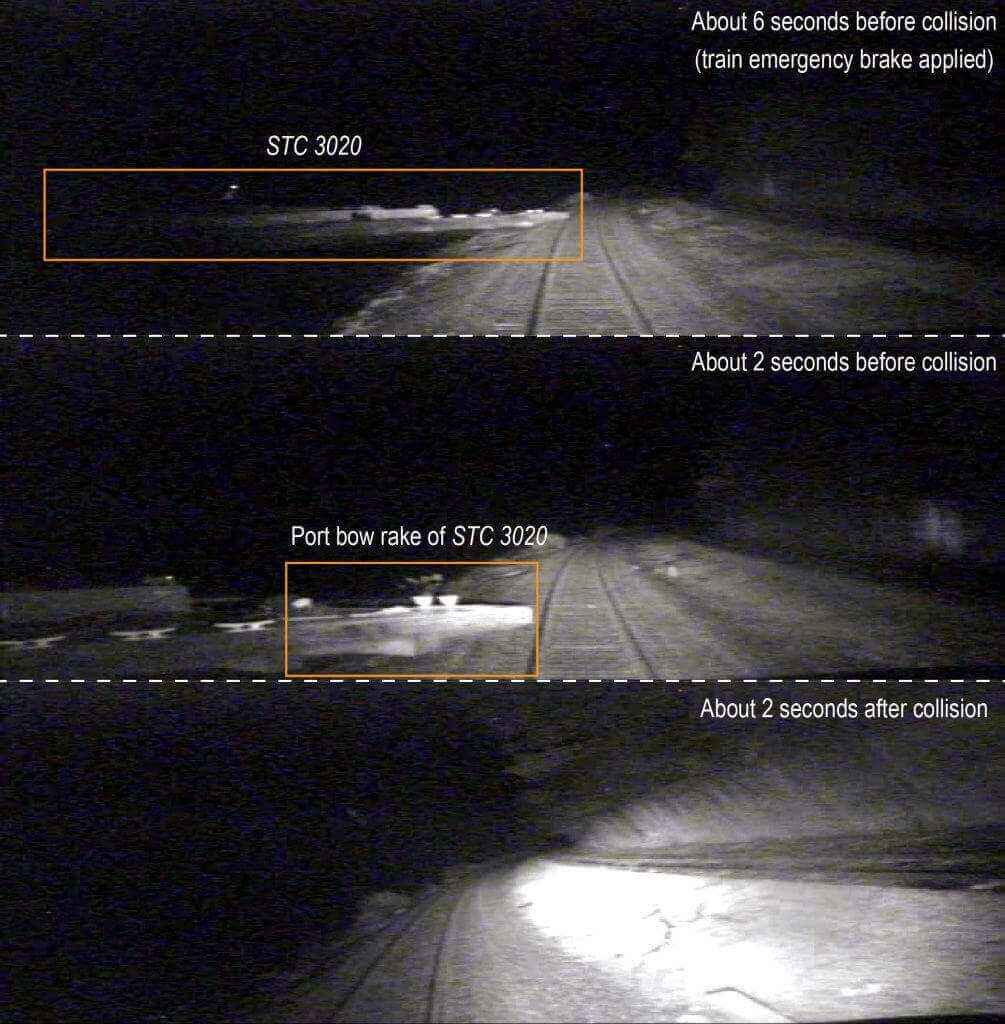
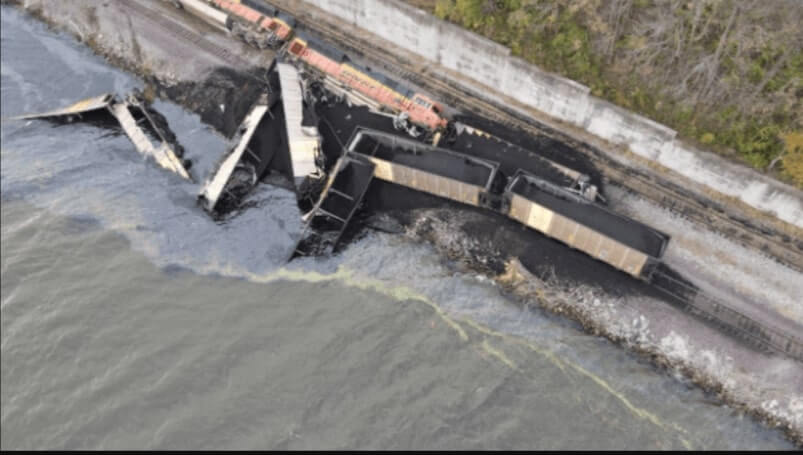
Nine seconds later, the lead locomotive’s left side collided with the bow of the barge and derailed. Following the first locomotive were ten hopper cars, six of which submerged in the river, then the second locomotive. No one on board the Baxter Southern crew was hurt; the engineer and conductor only suffered minor wounds and managed to free themselves from the locomotive.

After the incident, the Baxter Southern’s skipper moved upriver to another berthing spot, backed off the bank, and called the Coast Guard. The lead barge received slight scraping and denting, but nothing that would compromise its structural integrity.

The master and pilot, who together had roughly 30 years of experience in the towing business, admitted to the investigators that they had not noticed the exclamation point chart symbol on their ECS chart covering the bank area. If they had clicked on the symbol, they would have been alerted to a “Barge/Rail Collision Risk” at the location.

The pilot reported that he had previously berthed barges in the same position “maybe half a dozen times,” and earlier AIS data appeared to indicate that other operators had also done so. The tow’s pilot and captain “failed to appropriately identify a danger region on the electronic chart,” according to the NTSB‘s conclusion, and it recommended mariners and owners to ensure proficiency in the use of electronic chart systems.

Also Read: Greenpeace Stops Russian LNG Tanker at Swedish Port
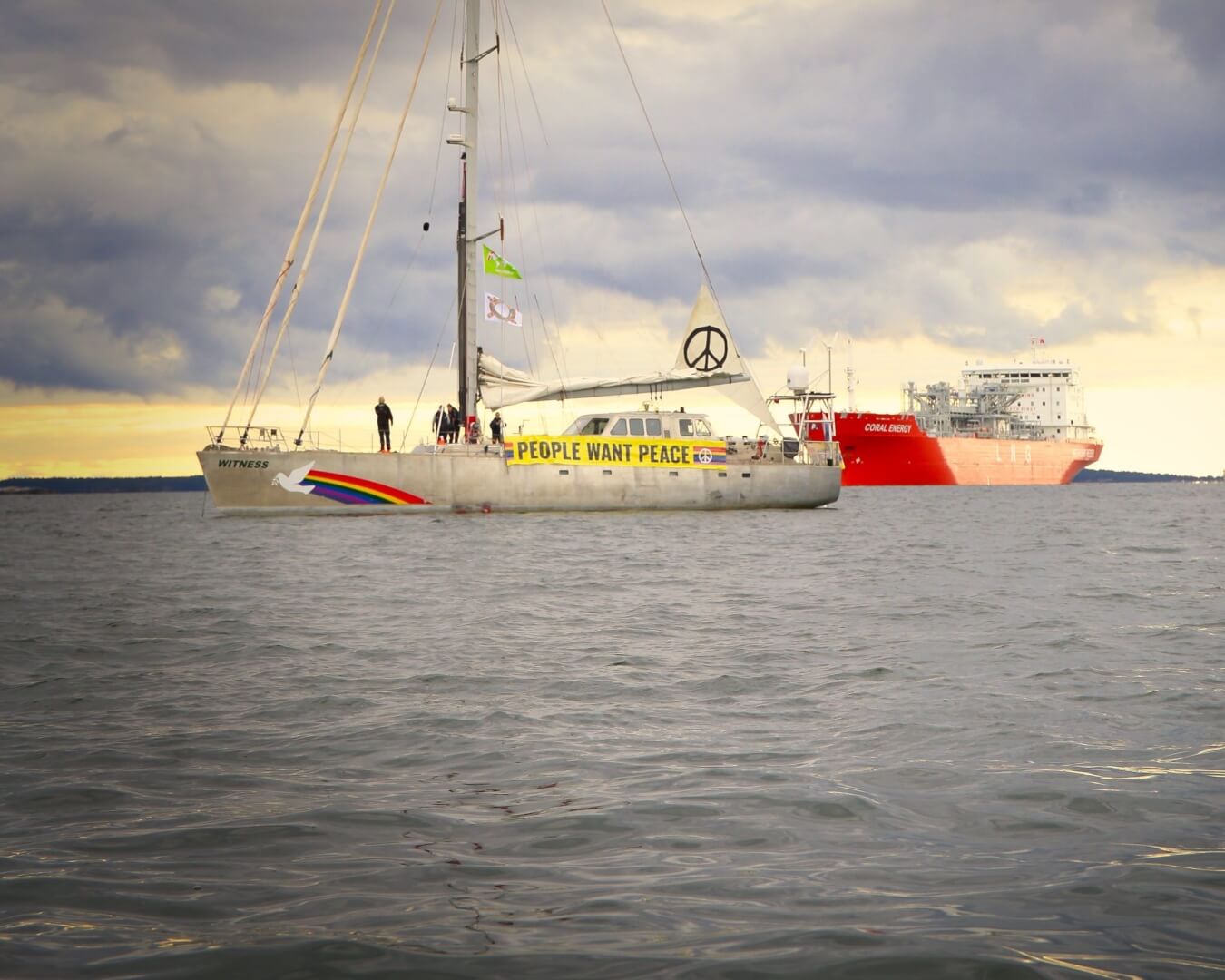
Greenpeace Stops Russian LNG Tanker ‘Coral Energy’ At Swedish Port

September 9, 2022

Today, Greenpeace prevented the LNG tanker Coral Energy from delivering Russian natural gas to the Gasum port, which is run by the Finnish government, near Nynashamn, on the east coast of Sweden. The Swedish government was urged by the environmental advocacy network to immediately halt the purchase of Russian LNG.

At an LNG facility near Nynäshamn, Sweden, south of Stockholm, activists from Greenpeace Nordic prevented the ship Coral Energy from discharging its cargo of Russian natural gas. The cranes that unload the gas from the ship are now manned by climbers. Kayak activists and the Greenpeace sailing ship SY Witness worked to stop the ship from docking.

According to Greenpeace Nordic, the Swedish government must immediately halt the import of Russian fossil gas. More than six months after Putin started his invasion of Ukraine, the fact that Russian fossil gas is still permitted to flow into Sweden is intolerable, according to Karolina Carlsson, campaign coordinator for Greenpeace Nordic.

“The Swedish government has a strong mandate from Parliament to halt all imports of Russian energy. Magdalena Andersson, the prime minister, must take action. According to AIS ship data, the tanker made an early Thursday approach to the Nynashamn terminal before turning around and departing once more around 8:00 GMT. On September 4th, it loaded a shipment in the Russian port of Vysotsk.

“The ship is still there, ready to arrive at the port without incident. The situation is being handled by the local police, she stated. According to Greenpeace, the oligarch-owned Novatek in Russian Vysotsk and the Russian Gazprom often export portions of its gas to Sweden and Finland. Sometimes using a more direct method, but more lately through a more complex system where the gas is first transferred to other seagoing boats.

Nadia Shevchenko, a Ukrainian journalist aboard the Greenpeace sailing vessel Witness, expressed her gratitude for all of Sweden’s assistance to Ukraine during these trying times for her nation. “Nevertheless, it is puzzling to me how Sweden’s government can support Ukraine on the one hand while funding Putin’s invasion and treatment of the Ukrainian people on the other by permitting these imports of Russian gas to continue,” Nadia said.

Also Read: Solomon Islands block all US Navy Ships – Exempts NZ and Australia

Solomon Islands Blocks All US Navy Ships – Exempts NZ and Australia

As ties between Washington and the Pacific country continue to deteriorate, the Solomon Islands has momentarily suspended all US naval visits. According to a representative of the US Embassy in Canberra, the Solomon Islands informed the US government on Monday of a “moratorium on all naval visits, pending revisions in protocol procedures,” and that officials will continue to “watch the situation.”

The news comes after a US Coast Guard cutter asked permission to halt and refuel in the Pacific island on August 23 but got no answer from Solomons authorities. The visit by the cutter was a “regular” call, according to National Security Council spokesperson John Kirby, and the ship ultimately made a diversion to Papua New Guinea. Although the government was unhappy by this choice, Kirby continued, it was anticipated that US ships will receive approvals in the future.

The Solomon Islands’ prime minister informed parliament on Monday that the country’s temporary prohibition on foreign ships visiting its ports will not apply to Australian and New Zealand navy ships.

According to Prime Minister Manesseh Sogavare, foreign military vessels assisting the government of the Solomon Islands would likewise be excluded. The United States, Australia, and New Zealand expressed worry about China’s expanding influence after the Solomon Islands inked a security agreement with China in April that, according to a draught that was leaked, permits the Chinese navy to resupply in Honiara.

Following events in which a U.S. coast guard vessel and a British navy vessel on patrol for illegal fishing were unable to refuel in Honiara, Sogavare last week declared a ban on foreign navy ships entering port.

When asked about the moratorium by opposition lawmakers, Sogavare responded that military ships sent out as part of the SIIAF—a pact that allows Australia, New Zealand, and Fiji to collaborate with the Solomon Islands police—would be exempt. Therefore, he added, “Military vessels deployed under SIIAF are exempt during the moratorium.”

The United States, which intends to establish an embassy in Honiara, claimed to have learned of the ban on all foreign navy vessels on August 29. In an effort to counter China’s expanding influence, the United States pledged a month earlier to enhance funding and step up surveillance of illegal fishing in the Pacific.

According to Sogavare, the cabinet made the decision to impose the military vessel ban after considering “the benefits and risks to the Solomon Islands of any visits by any military vessels.” He added that the moratorium was not directed against the United States.

He stated that his agency needed additional information about the incoming vessels because the United States, Australia, New Zealand, and Britain have joined the illegal fishing patrols. For an exemption, he said, the Forum Fisheries Agency, which is based in Honiara and represents Pacific Island countries with abundant tuna stocks, would need to inform his office of which naval boats are participating in monitoring missions.

As modifications to the constitution that would postpone a general election are anticipated to be approved by parliament this week, tensions are high in the Solomon Islands.

Also Read: Dock workers of Liverpool prepared to strike in September over payment issues

Dock workers of Liverpool are all prepared to strike in September over payment issues

As a result of the below inflation payment, more than 560 workers of Liverpool port will be on strike. The port is one of the largest British ports. The strike will be for two weeks from September 19 to October 3. Unite the union blames Mersea Docks and Harbour Company (M.D.H.C.) for offering a lower pay rise of 7%. While the current inflation rate is around 12.3%.

Moreover, M.D.H.C. is also indicted for failing to assess the remuneration on a daily basis as well as not ameliorating the shift rotations. M.D.H.C. made a statement that they gave dockworkers an offer of 8.3% along with improvements in sick pay, pensions as well as shifts.

M.D.H.C. is owned by Peel Ports, whose Chief Operating  Officer David Huck said that their offer was above the national average. Also, the pay is finalized keeping in mind the stagnation in the container market, the global economy as well as the Ukraine conflict. He also added that they will continue to plead with the union to come to a settlement, otherwise the industry and many families would have to suffer the consequences for a long period.

According to Unite, M.D.H.C. made a profit of £30m in 2021, and they could have paid generously. Unite secretary told that workers across the country are suffering due to the deteriorating pay condition and on the other hand big officials are filling their pockets by making profits without sharing them with the workforce aptly.

Unite lead officer for freeports, Steven Gerrard has warned M.D.H.C. of the future disruption which will occur by their current actions. The strike will not only affect the sea transport but also roadways. He also said that M.D.H.C. has not fulfilled its past promises of the previous year to its staff. According to the statement of M.D.H.C., they have recruited 150 workers in 12 months with improved work conditions. Industry experienced a similar disagreement in UK’s largest container port Felixstowe in late august also.

Also Read: CMA CGM raises $1.5 billion fund to expedite decarbonization

Non-IMU-CET Candidates Can Now Take Admission in Merchant Navy Courses

According to a circular recently released by D.G shipping, there are major changes in how non IMU-CET candidates can take admission in graduate merchant navy courses, including BTech in Marine Engineering, BSc in Nautical Science, and DNS leading to BSc in Nautical Science.

In order to get admission into Merchant Navy Courses, DG Shipping has set certain new criteria. The eligibility criteria also include clearing IMU CET examinations apart from educational qualifications.

The IMU-CET exam is conducted to get admission in the following courses:

  1. BTech in Marine Engineering
  2. BSc in Nautical Science
  3. Diploma in Nautical Science

However, in the academic year 2021-22, due to Covid-19, DG Shipping informed that IMU-CET and online counseling shall not be applicable to take admissions into the above marine courses. Also, Marine Training Institutes (MTIs) were allowed to follow their own admission process and counseling methodology for the year 2021-22.

For the academic year 2022-23, DG Shipping released a circular informing MTIs to conduct the common entrance test and released a merit list of all qualified candidates according to the exam results. 

But, the Directorate General of shipping received numerous requests from candidates saying that the IMU-CET exam was conducted when they were having their CBSE 12th board exams, which is why they were not able to appear for the examination.

These candidates were interested in joining the Merchant Navy but were not able to appear for the IMU-CET because of their board exams. Additionally, DG Shipping also received multiple requests from MTIs (not affiliated to IMU but approved by DGS) that they were not able to give admissions to aspiring candidates due to numerous reasons that included the following:

  • Candidates were not aware of the IMU-CET 2022 examination
  •  The exam was conducted during 12th final boards
  • The IMU published a list of IMU affiliated MTIs on its website whereas MTIs not affiliated to IMU were left out
  • The IMU published a merit list on its website. But MTIs were not having details of the candidates through which they can contact them for admission

Thus, DG Shipping has examined the matter and decided to exempt IMU-CET qualification for admission into pre-sea courses for the academic year 2022-23.

Therefore, all MTIs are now allowed to give admission to non IMU-CET qualified candidates along with the qualified ones. Preference will be given to IMU-CET qualified candidates wherever applicable. 

This exemption is only allowed for the academic year 2022-23 for the above-mentioned 3 pre-sea courses. 

Refer to the circular here.

To expedite the group’s decarbonization, CMA CGM raises a $1.5 billion fund

CMA CGM is creating a reserve for energies of around $1.5 billion. The reason behind the creation is to hasten its energy transition and to achieve decarbonization completely by 2050. Moreover, they are aiming to save renewable energy by investing in projects which support the same.

They are also searching for corporations that share the same vision. The fund will have a dedicated management team and will be unveiled on October 2022. The reserve will focus on the creation of new fuels, low-emission transportation ideas across the land, air, or water and its port as well as offices.

They are also motivating their employees to come up with innovative ideas. Rodolphe Saadé, Chairman and CEO of the CMA CGM Group said that they want to decarbonize their business and this fund will help them to achieve their goal as they have already allocated the resources. CMA CGM group is also concentrating on LNG- fueled ships and encouraging businesses that are manufacturing alternative fuel options.

Fund’s mission is to promote the development of large-scale manufacturing facilities for biofuels, biomethane, e-methane, carbon-free methanol, and other alternative fuels. Salamander projects have a target of producing 11000 tons of biomethane per year from 2026. The fund is also a way of involvement of CMA CGM group with Salamander due to its production of renewable energies.

Their partnership with Engie is targeting to generate 200,000 tons of renewable gas per year by 2028 for CMA CGM and the whole industry. Their collaboration with Titan will be focused on the liquefication project and biomethane production. The group is also planning to participate in Jupiter 1000 project in France which is also sharing the same vision.

Along with the shipping fleet, the fund will work to hasten the decarbonization of CMA CGM’s truck fleets, warehouses, and port terminals. The group is all set to provide transatlantic routes by the end of 2024 with Neoline as they have acquired a stake in the company.

The fund will also boost research and development projects.  Chairman of CMA CGM also predicted the decline in consumer spending, which was quite foreseeable will cause a decline in shipping demand and return to more typical global trade circumstances in the second half.

Also Read: Oil Tanker Affinity-V gets stuck at Suez Canal for Five Hours

Oil Tanker Affinity-V gets Stuck at Suez Canal for Five Hours

September 05, 2022

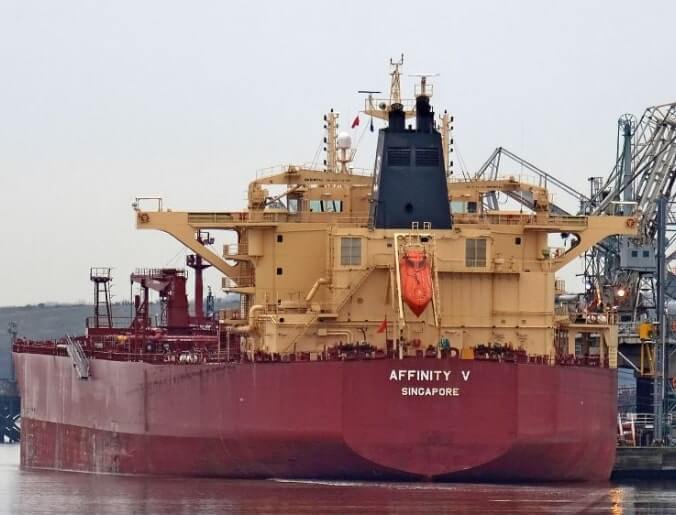
Singaporean-flagged Affinity V vessel got stuck in shallow water on Wednesday at around 7.15 p.m. local time. The oil tanker blocked traffic in the global waterway for around 5 hours. The Suez Canal Authority’s head Osama Rabie said in a statement that five authority’s tug boats were able to handle the situation in a systematic manner, by which the vessel refloated.

Due to the technical failure of the steering system, the ship got aground.  The ship was a part of the convoy, which was heading towards the red sea. Two convoys pass through the Suez canal every day; one approaching the Mediterranean and the other towards the south to the red sea.

The Suez canal is a major link for the transportation of oil, natural gas, and cargo. This waterway divides continental Africa from the Sinai Peninsula.  Affinity V vessel was built in 2016 with 252 meters long and 45 meters broad. According to a spokesman, the oil tanker was traveling to the Saudi Arabian Red Sea port of Yanbu, from Portugal.

Well, this is not the first time a vessel is blocked in the Suez canal. Earlier in March 2021 also, a colossal container ship Panama-flagged Ever Given smashed onto the banks of the canal, as a result of a sand storm. Ever Given blocked the canal for around six days.

By a fleet of tug boats, the vessel got released. Many supply chains got strained due to traffic jam. Moreover, in September 2021 also a large vessel touched the grounds for a few hours. Canal authorities started working on enlarging the canal’s path after this incident.

The Suez canal is a very important source of foreign currency for Egypt. Approximately around 10% of the world trade passes through the canal.

Also Read: The Ever Given Incident may Cost $2Bn in Claims

Iran Busted Trying To Steal U.S. Navy Sea Drone

September 02, 2022

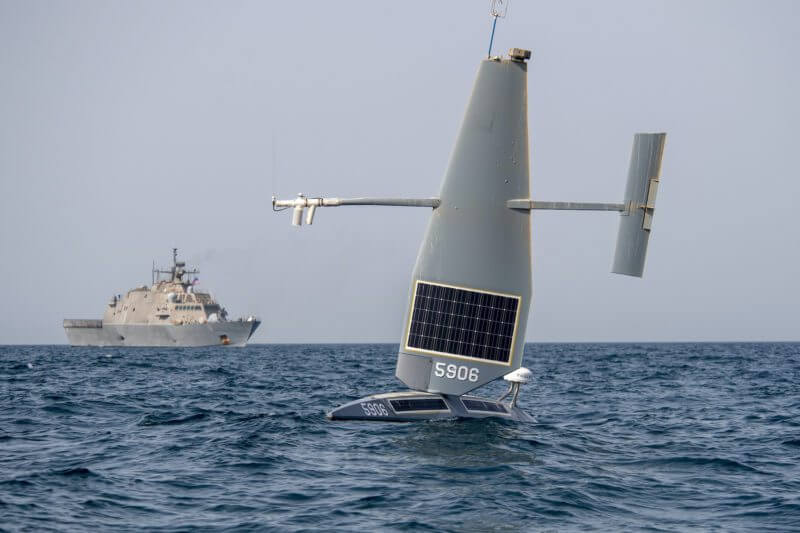
The paramilitary Revolutionary Guard of Iran tried to capture an American sea drone and made an attempt of towing it away, but have to release it as U.S. Navy coastal patrol boat and MH-60 Seahawk helicopter was approaching. Through radio Navy communicated with Shahid Baziar to inform them about drone ownership.

The commander told the Associated Press that their response was clear about their own property and they have the intention to take action if necessary. This is the first time Iran has targeted the fifth fleet’s new drone. The incident happened on August 29 at around 11 p.m. local time.

Though the incident was over after four hours as the Iranians unhooked the tow line to the drone, still the tension between Washington and Tehran remains high due to the frazzled condition of the nuclear deal with the world powers involved.

Sensors, radars, and cameras are attached to the Saildrone Explorer USVs. Such technology is available in the market, so there is no potential threat of theft or misuse of potential information. According to the statement of Vice Adm. Brad Cooper, commander of U.S. Naval Forces Central Command, IRGCN’s actions are offensive as well as unwarranted.

U.S. Navy has started remaining vigilant and will continue its operations in accordance with the law. On the contrary, Iran’s state-run Nour news called the whole incident a “False Hollywood Narrative”.  And further added that the whole point of towing the sea drone was to ensure the safety of the route and to avoid possible hazardous incidents. No clarification was given by Nour news pertaining to the source by which they got the information. IRGC did not even acknowledge the incident.”

Also Read: Starlink and Royal Caribbean Sign High-Speed Internet Deal

Starlink And Royal Caribbean Sign High-Speed Internet Deal

The first cruise industry client has been acquired by Elon Musk’s Starlink.

On Tuesday, Royal Caribbean made a proposal to employ Starlink internet on all of its upcoming new builds and more than 60 cruise ships in its global fleet. The SpaceX-operated Starlink satellite internet constellation offers fast speed and minimal latency.

According to SpaceX Vice President of Starlink Sales Jonathan Hofeller, Royal Caribbean Group’s decision to use Starlink to provide high-speed, low-latency internet throughout their fleet will make their clients’ vacations even more opulent. “We are beyond thrilled to collaborate with Royal Caribbean Group to guarantee that passengers at sea can maintain connectivity with a fantastic internet experience,” he said.

The Starlink service, which will be installed aboard all Royal Caribbean International, Celebrity Cruises, and Silversea Cruises ships as well as all newbuild boats, will be accessible to both guests and crew from anywhere in the world, according to Royal Caribbean. That amounts to around 64 ships overall and ten new builds.

The 3,600-passenger Freedom of the Seas has already had a successful trial, according to Royal Caribbean, and deployment will start right away. Starlink is only now accessible in a few regions around the world, but it is quickly growing to include more areas and eventually provide global coverage.

According to Royal Caribbean Group President and CEO Jason Liberty, “Our company’s purpose is to responsibly provide the best vacation experiences to our customers, and this new offering, which is the largest public deployment of Starlink’s high-speed internet in the travel industry to date, demonstrates our dedication to that purpose.”

“This innovation will bring revolutionary internet connectivity to our ships, increasing the cruise experience for both passengers and staff. It will enhance and make high-bandwidth activities like video streaming and video calls more feasible. Our continuous commitment to innovation and excellence for our guests, our crew, the communities we visit, and our shareholders is demonstrated through our use of Starlink,” he added.

Also Read: Black sea grain corridor moved 1.5 tonnes of grain in its first month

Black Sea Grain Corridor moved 1.5 million tonnes of Food in First Month

August 31, 2022

Since the beginning of the Russian invasion, the UN World Food Program has hired a vessel to transport food aid from Ukraine to its final destination. One tiny but significant portion of the 1.5 million tonnes of grain supplied from Ukraine utilizing the new Black Sea channel was delivered by the bulk carrier Brave Commander on Tuesday when it berthed at the port of Djibouti. The bulker carried 23,000 tonnes of wheat for Ethiopian consumers.

The Ukrainian government gave shipping of humanitarian supplies top priority, accelerating the process of loading food relief vessels. So far, two ships have loaded cargo in the Odesa region; one was bound for Ethiopia, the other for Yemen, and both left using the certified safe passage through the Black Sea.

“We make sure that the procedure for receiving, loading, and shipping these vessels is as quick and effective as possible. Unquestionably, such transportation is a top priority for us” Oleksandr Kubrakov, Ukraine’s minister of infrastructure stated. “To boost the amount of food aid, we continue to collaborate with the UN World Food Program. I appreciate the cooperation of our partners.”

The bulker Karteria, the second UN food relief vessel, loaded at Pivdennyi on Tuesday and sailed toward Yemen with 38,000 tonnes of wheat. She was one of six ships using the transit route Tuesday that were leaving Ukraine.

61 vessels and 1.5 million tonnes of agricultural products have left Ukraine in the first month of the Black Sea transit agreement’s operation. Although Ukraine and the UN would both want to see considerably more vessel traffic, this makes a major dent in the 20 million tonne stockpile that Ukraine had on hand at the time of the Russian invasion and naval blockade in February.

“The world cannot afford for food and fertilizer to be held up by anything.” Every shipment that passes through this channel contributes to stabilizing markets, increasing food supplies, and maintaining agricultural output, according to Amir Abdulla, the UN’s coordinator for the Black Sea Grain Initiative.

Also Read: The Great Lakes are Overflowed with Grain This Year

The Great Lakes are Overflowed With Grain This Year

August 30, 2022

Between March 22 and the end of July this year, the St. Lawrence Seaway moved 514,000 tonnes of grain out of the Great Lakes. Comparing this to the same time last year, there has been a 37% increase.

Deputy administrator for the Great Lakes St. Lawrence Seaway Development Craig H. Middlebrook stated that the Great Lakes-St. Lawrence Seaway System “continues to provide shippers a stable route for a varied variety of commodities flowing in and out of the US heartland as the season develops.”

Thanks to the port employees and seafarers who maintain the efficient flow of necessary goods like grain and steel through the Seaway’s marine supply chain, cargo volumes continue to increase.

According to the August study from the Great Lakes Seaway Partnership, the increase in US grain exports will help allay concerns about food security throughout the world following the conflict in Ukraine. During the month of July, at least 27 countries have received grain from the US Great Lakes, up from 26 in June.

VP of Business Development for the Toledo-Lucas County Port Authority Joseph Cappel remarked, “We are also seeing some new grain products and bulk goods in our mix this season. Our plan of acquiring machinery and building facilities with many uses has been successful. We are capable of handling almost any kind of freight.”

The amount of money invested in infrastructure and equipment at Great Lakes ports is likewise rising. Increased grain exports, congested roads, rising energy prices, and a breakdown in the supply chain are responsible for this.

“We are now witnessing the effects of a boom in the maritime industry, which was previously Oswego’s defining feature. According to William W. Scriber, executive director of the Port of Oswego, “our ongoing expenditures of over $26 million include upgrades to our facilities to make the port once again a leader on the lakes.”

“We’re especially delighted that our revenue, without relying on government dollars, not only supports our operations but also local jobs and companies.”

What Is The St. Lawrence Seaway?

Located in both Canada and the United States, the St. Lawrence Seaway is a network of locks, canals, and channels that allows oceangoing ships to pass from the Atlantic Ocean to the Great Lakes of North America. 

The Saint Lawrence River, which originates in Lake Ontario and empties into the Atlantic Ocean, bears the name of the Seaway. On the river, it is projected that around 160 million metric tonnes of commercial cargo are handled annually.

Eight U.S. states and two Canadian provinces are part of the Great Lakes-Seaway System’s service area. With a GDP of $5.5 trillion, the region would have the third-largest economy in the world, surpassing that of countries like Japan, Germany, Brazil, and the United Kingdom.

With 107 million residents, the region is home to about 40% of all cross-border trade between the United States and Canada.

Also Read: Bulk carrier struck offshore platform missing from NOAA navigation charts

Bulk Carrier Struck Offshore Platform Missing from NOAA Navigation Charts, NTSB Finds

The National Transportation Safety Board stated on Tuesday that the collision between a bulk carrier and an oil and gas platform in the Gulf of Mexico off the coast of Louisiana last year could be attributed to ineffective resource management for bridges.

The platform appeared to be depicted on the British Admiralty paper chart that the mate on watch was using, but it was absent from the electronic navigation chart that NOAA provided and was visible on the ship’s ECDIS.

On January 7, 2021, the dry bulk carrier Ocean Princess was operating 24 miles south of Pilottown, Louisiana, when it collided with the unmanned and inoperable oil and gas production platform SP-83A. On Tuesday, the NTSB released a report on the event.

No pollutants or accidents were recorded, however, the platform and ship sustained damage that is believed to be worth $1.5 million. The NTSB discovered that the Ocean Princess’ 24-person crew spent the previous night floating in the Gulf of Mexico before traveling to New Orleans to load a grain cargo. With the engine on a 15-minute standby, the master intended to drift throughout the night while avoiding traffic and platforms.

The master planned himself to be on the bridge with the mate on watch to give the crewmen some rest after they had spent the day cleaning cargo holds. The master claimed he noticed a faint yellow light and examined the radar after starting the engine to steer the carrier.

After investigating the light, the master and the second officer on duty concluded that it was originating from an oil platform about 5 to 6 miles distant. The Ocean Princess struck station SP-83A around ten minutes later.

The NTSB’s investigators were told by the master and second officer that they have never seen SP-83A on the radar. Following the contact, both parties noted that SP-83A was absent from the electronic chart display and information system, even though the platform appeared on the paper chart used on the bridge by the mate on watch (ECDIS).

The official U.S. National Oceanic and Atmospheric Administration (NOAA) electronic or print navigation charts that gave the chart data to the ECDIS aboard the Ocean Princess did not contain a chart for platform SP-83A, according to the NTSB. On the British Admiralty paper map, which the mate on watch was using at the time of the accident, the platform was, nevertheless, visible.

The platform had been visible on NOAA charts since 1990, according to the NTSB report, but for whatever reason, it was removed from two larger-scale U.S. paper charts starting in 2010. Then, for nearly 11 years—until the accident—it stayed off the two paper charts and the electronic navigation charts (ENCs).

The Ocean Princess collided with platform SP-83A, killing one person, and the NTSB determined that poor resource management on the bridge prevented the crew from identifying the platform and recognizing the danger it posed to their safe navigation, despite having seen its lights about 10 minutes earlier. Platform SP-83A was not displayed on the ship’s electronic chart display and information system as a result of a charting error, which contributed.

After the event, NOAA revised and fixed the paper and electronic charts that had mistakenly missed platform SP-83A. The assessment stated that a bridge team’s efficient use of all tools at their disposal, including paper charts, electronic charts, and radars, increased collective situational awareness and helped ensure a secure navigation watch.

“When identifying dangers, bridge personnel should communicate identified concerns with other watchstanders and double-check information with other bridge resources that are available. Technology, such an ECDIS, can lead to operator overconfidence and overreliance, which weakens safe navigation procedures and impairs situational awareness.

Also Read: Bar harbor adopts limits on cruise ships to reduce overcrowding

Bar Harbor Adopts Limits on Cruise Ships to Reduce Overcrowding

The town council in Bar Harbor, Maine, backed a plan after much discussion and community polling that will both shorten the season for cruise ships and, in some situations, cut the number of daily cruise guests in the well-liked location by up to a third. A formal agreement between the cruise lines and Bar Harbor will be created after discussions with the cruise industry and approval of its new boundaries.

The town council was attempting to find a middle ground between locals who complained that the little hamlet was getting overcrowded owing to the size of the ships and businesses that rely on travelers during a relatively brief tourism season.

While calling for limits or an outright ban on cruise ships in a survey conducted by the local government, residents have been agitating for the additional restrictions and threatening to sue the town council.

A special committee informed the town council that after researching the problem, it discovered a few unexpected problems. They claimed that the problem was not just related to how big the cruise liner was.

They cited an instance where 10 buses were needed since a cruise ship with fewer than 500 passengers included the cost of a tour to the neighboring Acadia National Park, whereas a larger ship with about 2,300 passengers offered the tour as an extra cost only needed two buses.

The financial impact of cruise passengers vs land-based tourists was another strongly contested topic, in addition to the controversy about congested streets and traffic. Many in the community felt that cruise visitors have a negative impact on land-based tourists since they stay in the area hotels longer and spend more money than cruise visitors who are only ashore for a short while.

Additionally, Portland and Eastport in Maine were noted as two additional Class A ports nearby that might also accommodate cruise ships. The plan was adopted in many motions, each of which was passed by a vote of 5 to 2. In April and November, which are regarded as the shoulder months for cruises, Bar Harbor will no longer take any cruise ships at all. In the past, there haven’t been many cruise ships that visit the port in these off-peak months beyond the main travel season.

Additionally, there will be daily restrictions on the total number of travelers allowed into Bar Harbor. Bar Harbor sets a daily passenger cap of 3,800 during the spring months of May and June, as well as at its utmost busiest in the fall months of September and October.

It is further limited to 3,500 people each day in July and August, which occasionally might just be one cruise ship. There is a daily cap of three cruises in the town.

Bar Harbor will also have monthly limits of 30,000 passengers in May and June, 40,000 in July and August, and a maximum of 65,000 in the busiest months of September and October, in addition to the daily restrictions. All smaller coastal cruise ships with fewer than 200 lower berths and cruise ships flying the flag of the United States with less than 200 passengers are free from the limits, albeit the harbor master has the option to exceed them by a minor number.

The goal of the proposal, according to the town council, is to decrease the impact that the cruise industry has on the community by using smaller, fewer ships, and days without cruise ships. According to their predictions for 2022, cruise reservations may bring in 90,000 passengers per month in September and October, a number that would be reduced by 30% under the proposed limitations. They said that if there had been no limitations, the number of cruise passengers may have surpassed 160,000 every month in the spring and fall.

If the town council is legally permitted to impose these limitations was a concern raised. The town council decided to give the town manager specific instructions to create a written agreement with the cruise companies in order to avoid any legal issues.

The town council made this decision in an effort to avoid more stringent restrictions that were suggested in a citizen’s petition that called for a daily cap of 1,000 cruise passengers. In order for the locals to vote on the idea in the approaching general election, the citizen group presented it.

The town council thinks it has achieved a just balance that can serve as a guide for how other groups might tackle issues of a similar nature. According to reports, Portland, Maine, a nearby city, has started to think about setting its own restrictions on cruise ships.

Also Read: Princess cruise cancels 11 trips citing labor shortages

Princess Cruises Cancels 11 Trips Citing Labor Shortages

Princess Cruises, a division of Carnival Corp., has postponed 11 voyages on board the Diamond Princess due to staffing concerns, which have been prevalent in the cruise business this year. According to a statement from the firm, the cruise line has had “labor problems” as customers have rushed back to vacations and as ship capacity has increased as sailings have restarted.

In order to give the cruise line “additional time needed to overcome its labor difficulties,” the Diamond Princess’ roundtrip San Diego itineraries from September through November 13 will be canceled.

The affected passengers have three options: rebook a different voyage with additional onboard spending credit, obtain future cruise credit, or receive a complete refund.

Princess is not the only cruise operator that has experienced difficulties filling positions. Cruise lines like Royal Caribbean International, Norwegian Cruise Line, and Carnival Cruise Line disclosed similar challenges prior to the summer vacation boom that led to the cancellation of itineraries, reduced guest capacity, and closure of onboard food establishments.

The COVID-19 outbreak that the cruise ship hosted in February 2020, which resulted in over 700 illnesses and more than a dozen fatalities, was the event that first brought attention to the Diamond Princess.

Also Read: Maersk quits ICS board over climate change stance

Fire at Cuban Petroleum Terminal – All Updates

August 7, 2022

A large tank fire at the Matanzas petroleum complex has claimed at least one life and left 17 people missing. Cuba has appealed to its neighbors for assistance in putting out the fire. The Matanzas Supertanker Base, an import station for fuel located about 50 miles to the east of Havana, is where the fire started on Friday after lightning struck a tank there.

Firefighting units arrived on the scene and started working to extinguish the fire. But early Saturday morning, it spread to a nearby tank, causing an explosion. According to Cuba’s health ministry, 17 firefighters “who were in the nearest area trying to prevent the spread” remain missing, and 121 people were hurt, including five with life-threatening injuries. The location of one unidentified body has been made.

Liván Arronte Cruz, the minister of energy for Cuba, is reportedly one of the injured workers.

Cuba’s president, Miguel Diaz-Canel, expressed gratitude for the U.S.’s willingness to provide technical assistance in combating the fire in a brief statement. For their “solidarity and material aid,” he thanked the governments of Mexico, Venezuela, Russia, Nicaragua, Argentina, and Chile.

To aid with the containment attempt, petroleum firefighting teams have been sent from both Mexico and Venezuela. The U.S. Embassy in Havana stressed in a brief statement that “We want to make clear that U.S. law enables U.S. entities and organizations to offer disaster aid and response in Cuba.”

Satellite data reveals that the end of the smoke and flame plume carried downwind as far as Havana as a result of the fire. Locals reported smelling sulphur, which is typical of the heavy fuel oil in the tank farm.

For Cuba’s oil-fired power plants, fuel oil is stored at the Matanzas facility. Rolling blackouts have become routine in Cuba, where the country’s electrical grid is already stressed from years of underinvestment. This is causing growing unrest among the public. Despite the fact that six tanks are still intact, the incident has caused some uncertainty over the supply chain.

Fire Expands to Fourth Fuel Tank

August 8, 2022

There are now four enormous storage tanks involved in the fire at Cuba’s Matanzas tank farm, making the firefighting effort more difficult and complex. After roughly 40 hours of burning, the second tank fell late on Sunday night, causing a sudden discharge of fuel and an accelerated pace of combustion. According to images on social media, the explosion’s light could be seen all the way from the Havana boardwalk.

Another enormous explosion happened early on Monday morning when the fire spread to a third tank. Smoke initially hid the tank and made assessment challenging, but Cuban officials later acknowledged the incident.

A portable fire pump with a flow rate of 5,000 GPM has been sent by the Venezuelan government to aid in the operation. It will be put up and utilized to spray foam firefighting on the tank fire. Additionally, workers are constructing earthen berms to catch fuel spillage and stop the fire from spreading. In the meantime, Cuban authorities have sent crop-dusting helicopters and aircraft to drop water over the fire in limited amounts.

Also read: Russia finds a new route to oil market via a tiny Egyptian port