India Makes History with COLP48 – Oceans Law & Policy Conference in New Delhi

New Delhi, India – September 10, 2025 – India has broken new ground by hosting, for the first time in nearly five decades, the 48th Annual Conference on Oceans Law & Policy (COLP48)—an authoritative international forum on oceans governance. The event is organized by Gujarat Maritime University (GMU) in partnership with the World Maritime University (WMU) and the U.S. Naval War College and supported by the Ministry of Earth Sciences (MoES).

Themed “Developing World Approaches to Ocean Governance: Perspectives from the Indian Ocean Rim”, COLP48 spotlights the region’s leadership in crafting inclusive, sustainable ocean governance rooted in Global South priorities.

Historic Debut in the Indian Subcontinent

From September 9–12, 2025, delegates gathered at The Ashok Hotel in New Delhi, marking a milestone: the first COLP edition hosted in the Indian subcontinent.The four-day program included a BBNJ (High Seas) clinic, keynote speeches, technical sessions, and a cultural field visit.

COLP48
Source: PIB

Distinguished Voices and Key Themes

Keynote speakers represented a global spectrum of expertise:

  • Dr. M. Ravichandran, Secretary of MoES, emphasized the Indian Ocean’s vital role in climate regulation, biodiversity, livelihoods, and trade—and highlighted emerging threats like marine heatwaves and acidification.
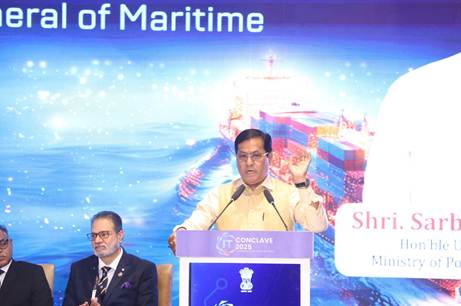
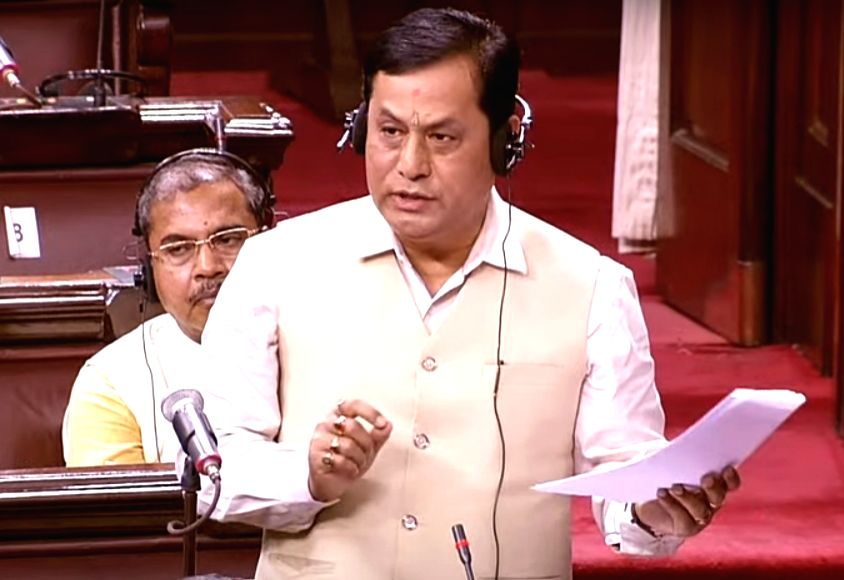
  • Hon’ble Union Minister Shri Sarbananda Sonowal presided as Chief Guest on September 11, underscoring India’s maritime aspirations.
  • Other featured voices included Judge Neeru Chadha (International Tribunal for the Law of the Sea), Dr. Kilaparti Ramakrishna (WHOI), Amb. Arif Havas Oegroseno (Indonesia), Prof. James Kraska (U.S. Naval War College), and Cdr. Chris Hutton (U.S. Navy).

GMU leaders such as Shri Pankaj Joshi (President, GMU) and Prof. (Dr.) S. Shanthakumar (Provost, GMU) also played prominent roles. Global academic leaders like Prof. Maximo Q. Mejia (WMU President) and Prof. Ronán Long (Director, WMU-Sasakawa Global Ocean Institute) rounded out the lineup.

Focused Agenda: Ocean Governance from the Global South

Sessions addressed pivotal concerns:

  • Marine security, seabed resource governance, climate action, pollution control
  • Integration of AI and digital tools into ocean governance
  • Dispute settlement and the unique perspectives of Indian Ocean Rim and small island developing states (SIDS).

Dr. Ravichandran further outlined five priority areas shaping a developing-world approach to ocean governance:

  1. Food and livelihood security via sustainable fisheries and mariculture
  2. Strengthening regional cooperation rooted in South-South solidarity
  3. Blending traditional knowledge with modern science for participatory governance
  4. Promoting climate resilience via ecosystem-based conservation
  5. Catalyzing innovative financing, technology, and capacity building for ocean research and governance.

He also warned that marine heatwave days in the Indian Ocean could escalate from 20 to 220 annually by century’s end posing grave threats to coral reefs, fisheries, and coastal communities.

Also Read : India Maritime Week 2025 – Green Initiatives, Brahmaputra Cruises, and ₹1 Trillion Maritime Investment

Toward an Inclusive, Technology-Driven Blue Economy

COLP48 prioritizes practitioner-led panels and clinics aimed at actionable outcomes from maritime domain awareness to policy tools for AI-enabled high seas monitoring. The conference calls for enhanced engagement of Indian Ocean states in global frameworks like UNCLOS, the International Seabed Authority, and the BBNJ Agreement.

A Global Success Rooted in the Indian Ocean Rim

COLP48’s New Delhi edition not only amplifies the Indian Ocean Rim’s strategic significance but also cements India’s leadership in inclusive, sustainable ocean governance. It pioneers a shift toward equitable blue economy frameworks through ocean governance, maritime security, and Indian Ocean Rim–focused policy dialogue.

Source: (Press Information Bureau)

India Maritime Week 2025 – Green Initiatives, Brahmaputra Cruises, and ₹1 Trillion Maritime Investment

India is self-assured for a maritime transformation as Prime Minister Narendra Modi is set to deliver the keynote address at the Global Maritime CEO Forum during India Maritime Week 2025, scheduled for 27–31 October in Mumbai. This landmark event will unveil nearly ₹1 trillion maritime investment across shipbuilding, port connectivity, eco-logistics, and coastal community development.

A Global Maritime Showcase

Announced by Union Minister of Ports, Shipping and Waterways, Sarbananda Sonowal, the India Maritime Week 2025 promises participation from over 100 countries and more than 100,000 stakeholders, making it “a historic opportunity to showcase India’s maritime strength to the world.”

This event is more than a confluence of ideas it’s “a confluence of confidence,” Sonowal said, positioning India as a trusted global maritime partner. PM Modi’s leadership, has elevated India to being seen as a rising maritime power, inspiring global investors to engage with India’s growth journey, he added.

India Maritime Week 2025
Source: Press Information Bureau

Brahmaputra Cruise Ships: A ₹250 Crore Tourism Boost

In a nod to Northeast India’s potential, Sonowal unveiled that two luxury cruise ships are under construction at the Hooghly Cochin Shipyard in Kolkata, backed by a ₹250 crore investment. Scheduled for deployment on the Brahmaputra River by 2027, these vessels are part of the Cruise Bharat Mission, aimed at reviving Assam’s river tourism.

Maritime Ecosystem Transformation: From 2014 to Now

India’s maritime resurgence under PM Modi’s leadership has been nothing short of transformative. Key initiatives like Sagarmala, Maritime India Vision 2030, and Maritime Amrit Kaal Vision 2047 have driven remarkable progress:

  • Port capacity nearly doubled, with cargo handling reaching 1,600 MMT and turnaround time reduced to 22 hours.
  • Operational waterways have expanded from 5 in 2014 to 30 today, and inland cargo movement soared from 18 MMT in 2013–14 to 145 MMT.
Source: Press Information Bureau

Green Initiatives & Incentives

Green maritime is another pillar of this evolution. The Harit Sagar policy and Harit Nauka initiative promote clean fuels, renewables, and eco-friendly vessels. Meanwhile, the newly launched Jalvahak Scheme (December 2024) incentivizes cargo transport over 300 km on National Waterways (1, 2, & 16) via the Indo-Bangladesh Protocol, offering up to 35% operational cost reimbursement.

“These programs don’t just move cargo—they move confidence,” Sonowal emphasized, highlighting how scheduled sailings and cost predictability support sustainable logistics.

Northeast Infrastructure: Empowering Regional Growth

The Northeast is central to India’s maritime vision:

  • Over ₹1,000 crore invested in inland waterways infrastructure; ₹300 crore completed, rest in progress.
  • A ₹239 crore ship repair facility at Pandu—the region’s first—is expected to be ready by 2026.
  • A ₹180 crore approach road linking NH-27 to Pandu Port will be operational by September 2025.
  • To spark river tourism, ₹299 crore is allocated for new jetties at Guijan, Neamati, Bishwanath Ghat, and Silghat.
  • In Dibrugarh, a ₹188 crore Regional Centre of Excellence is underway to train 5,000 maritime professionals, empowering local youth.

Sonowal called the Brahmaputra “not just a river, but our lifeline” and underscored the importance of building cruise terminals, repair yards, and skill hubs to unlock its potential.

Cruise Bharat Mission & Tourism Expansion

Launched in 2024, the Cruise Bharat Mission aims to develop 100 river cruise terminals, 10 sea cruise terminals, and 5 marinas, while doubling passenger numbers by 2029. Currently, 25 river cruise vessels are in operation, including 14 on the Brahmaputra. Sonowal noted that Forbes ranked the Ganga river cruise among the world’s top 10, positioning Assam to emerge as a leading global river cruise destination.

Also Read : Lok Sabha & Rajya Sabha Pass Indian Ports Bill, 2025 — India Moves Beyond Colonial-Era Law to Modernise Ports

Vision 2047: Expanding India’s Maritime Horizons

India Maritime Week 2025 is poised to catalyze “the decade of maritime resurgence for India.” By 2047, targets includes –

  • Handling 10,000 MMT of EXIM cargo and 500 MMT via inland waterways.
  • Rising to top-five in global shipbuilding.
  • Capturing 20% of the global ship-recycling share.

Stakeholder Call to Action

Speaking at the Water Voyage Northeast 2025 conference in Guwahati, organised by the Inland Waterways Authority of India (IWAI) and the Indian Ports Association (IPA), Sonowal urged stakeholders to rally behind this momentum. With over 240 participants, including cruise and cargo operators, the event was a clarion call to engage, collaborate, and join India’s voyage toward a globally competitive, digitally advanced, eco-sustainable, and inclusive maritime future.

In Summary

India Maritime Week 2025, with PM Modi’s keynote, signals a bold leap forward for the maritime sector. From ₹1 trillion investment opportunities and luxury Brahmaputra cruises, to green policies, Northeast infrastructure, and 2030–2047 milestones, India is charting a course to maritime leadership.

Source: Press Information Bureau

Lok Sabha & Rajya Sabha Pass Indian Ports Bill, 2025 — India Moves Beyond Colonial-Era Law to Modernise Ports

New Delhi, August 2025 In a landmark stride towards transforming India’s maritime infrastructure, both houses of Parliament have passed the Indian Ports Bill, 2025, signalling the end of over a century of colonial-era regulation under the Indian Ports Act, 1908. This decisive reform aligns with Prime Minister Narendra Modi’s vision of a globally competitive, self-reliant maritime sector.

From Lok Sabha to Rajya Sabha: A Unified Push for Modernisation

On August 12, 2025, the Lok Sabha approved the new legislation, marking a pivotal moment for India’s maritime future. The Bill promises to modernise port governance, streamline trade, and accelerate India’s ascent as a global leader in port operations.

Just six days later, on August 18, 2025, the Rajya Sabha gave its nod, endorsing the Bill as a bold move out of colonial legal frameworks into a modern, future-oriented port ecosystem. Together, these approvals clear the way for Presidential assent, bringing the Indian Ports Bill, 2025 one step closer to becoming law.

Indian Ports Bill
Source: indiashippingnews

Key Provisions of the Indian Ports Bill, 2025

1. Cooperative Federalism Through MSDC & State Maritime Boards

The Bill establishes the Maritime State Development Council (MSDC)—a statutory body to harmonise planning between the Centre and coastal States. Under this framework, States can form State Maritime Boards, enabling uniform governance across India’s 12 major and over 200 non-major ports.

2. Digitalisation & Seamless Operations

With an emphasis on ease of doing business, the Bill mandates digital tools like a Maritime Single Window and advanced vessel traffic systems. These innovations aim to eliminate red tape, reduce logistics costs, and improve efficiency.

3. Sustainability & Disaster Readiness

Recognising the environmental footprint of port activities, the Bill enforces anti-pollution standards and compliance with global conventions such as MARPOL and the Ballast Water Management convention. Ports must also equip themselves with emergency preparedness protocols, green infrastructure like shore power systems, and waste reception facilities.

4. Investment & Tariff Transparency

Ports are granted autonomy to set transparent tariffs, pursue public–private partnerships (PPPs), and attract foreign investment. These provisions aim to bolster competitiveness and pave the way for long-term infrastructure development.

5. Redressal Mechanisms

To resolve disputes efficiently, the Bill establishes Dispute Resolution Committees, ensuring timely resolution between ports, service providers, and users.

Also read : DG Shipping Confirms No Ban on Foreign Seafarers’ Certificates, 30-Day Validation Window Announced

What This Means for India’s Maritime Future

Accelerated Growth & Trade Efficiency

The Bill builds on a decade of steady improvements—cargo handling at major ports soared from 581 million tonnes in FY 2014–15 to 855 million tonnes in FY 2024–25, while port capacity grew nearly 87%, and average ship turnaround time halved to 48 hours.

Sustainability as a Pillar of Development

By embedding green norms, pollution management, and disaster protocols into law, the Bill ensures environmental preservation is not an afterthought but a fundamental requirement.

Jobs & MSME Support

Streamlined procedures and enhanced infrastructure unlock employment opportunities in port operations, logistics, warehousing, and allied sectors, benefiting exporters and MSMEs with smoother, more efficient access to markets.

Towards Viksit Bharat by 2047

Every aspect of the Indian Ports Bill, 2025—from modernisation and federal cooperation to sustainability and digital integration—reflects India’s strategic ambition to emerge as a global maritime leader by 2047, aligned with the Modi government’s ‘Amrit Kaal’ agenda and the country’s long-term growth vision.

Final Takeaway

The Indian Ports Bill, 2025 marks a historic shift—transforming ports from relics of colonial regulation into dynamic, resilient engines of global trade. As India positions itself for the future, this legislation sets the stage for enhanced efficiency, sustainability, and cooperative governance across the maritime ecosystem.

Source: (Press Information Bureau)

DG Shipping Confirms No Ban on Foreign Seafarers’ Certificates, 30-Day Validation Window Announced

MUMBAI, August 23, 2025 – In a crucial clarification, the Directorate General of Shipping (DG Shipping) has firmly dismissed rumors suggesting a ban on foreign seafarers’ certificates (CoCs), assuring the maritime community that genuine certificate holders remain fully eligible to sail. The regulator has also introduced a 30-day validation window to streamline verification and uphold maritime safety, employing a rule-based approach that protects seafarers’ careers and preserves industry integrity.

No Ban on Foreign Seafarers’ Certificates, DG Shipping Clarifies

Responding to rising concerns stirred by social media speculation and misinterpretation of circulars, DG Shipping emphasizes that there is no ban on foreign Certificates of Competency (CoCs), provided the credentials are genuine and compliant with STCW standards.

DG Shipping
Source : marineobserver

What Is the 30-Day Validation Window?

DG Shipping has established a 30-day validation window, during which seafarers with foreign CoCs must submit their relevant documents via their Registered Recruitment and Placement Service Licence (RPSL) agencies by September 4, 2025.

Upon verification, seafarers may continue sailing without restrictions. The submission process covers original training and certification records, CoCs/CoPs from non-recognized foreign administrations, STCW modular course certificates, competency course records, and sea service documentation including Continuous Discharge Certificate (CDC). In addition, a notarised affidavit verifying authenticity is required. A committee appointed by DG Shipping will complete the verification process.

Protecting Genuine Seafarers While Combating Fraud

The validation framework is a transparent, institutionally backed mechanism that aims to distinguish genuine seafarers from fraudulent applicants. DG Shipping reiterates that legitimate professionals will continue their maritime careers unhampered, while fraudulent documentation will trigger strict consequences—including reporting to foreign authorities, disqualification, criminal proceedings, and industry blacklisting.

Also read: Baltimore Port Shipping Channel Closed After Bulker Explosion on W-Sapphire

Why This Matters

  • Safeguarding Careers: Validation ensures a reliable record of legitimate qualifications and supports employment opportunities.
  • Upholding Standards: Alignment with STCW and international norms reinforces trust among employers and flag states.
  • Maritime Integrity: By filtering fraudulent certificates, DG Shipping safeguards India’s reputation in the global shipping industry.

The clarification reaffirms DG Shipping’s commitment to fair, rule-based regulation, one that protects seafarers’ livelihoods while maintaining safety and compliance across the maritime domain. For clarification or help.

seafarers can contact DG Shipping via dedicated email: nt-stcw@gov.in (for deck officers) or engg-stcw@gov.in (for marine engineers).

Source: (India Shipping News)

Baltimore Port Shipping Channel Closed After Bulker Explosion on W-Sapphire

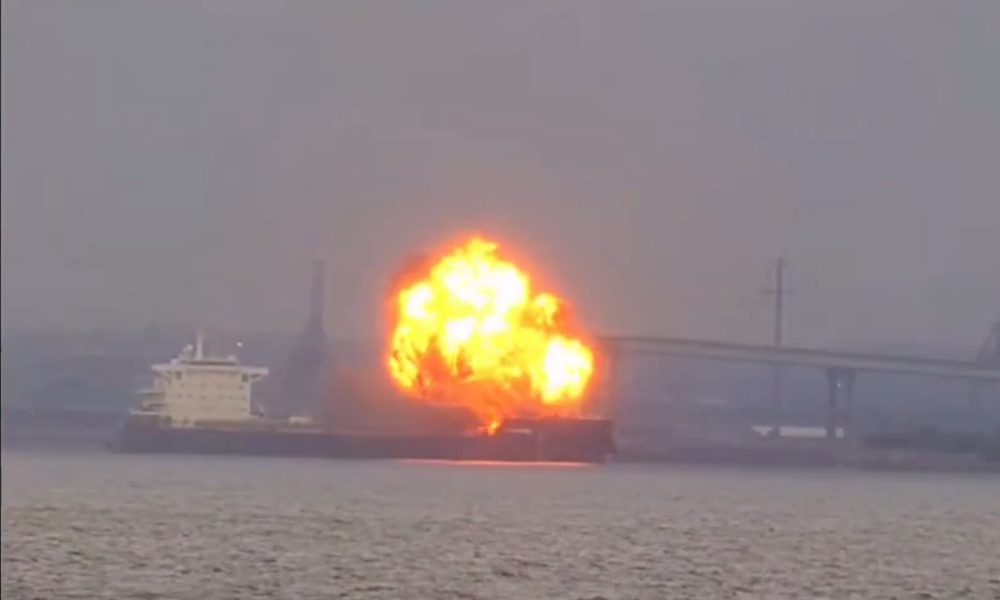
The Baltimore Port shipping channel was temporarily shut following a dramatic bulker explosion aboard the Liberia-flagged W-Sapphire, a 751-foot bulk carrier departing Baltimore Harbor on Monday, August 18, 2025 (local time). Initial reports indicate the vessel, carrying a cargo of coal, suffered an onboard blast that blew a hatch cover into the water, prompting a rapid, multi-agency response and the closure of the Fort McHenry Federal Channel—the main artery for deep-draft traffic into and out of the Port of Baltimore. Officials later confirmed the main channel’s-controlled reopening on Tuesday after debris recovery and safety checks.

According to maritime authorities, there were no injuries among the 23 crew members and two pilots on board the W-Sapphire. Firefighting and response crews reported visible damage consistent with fire and explosion but no impacts beyond the ship itself. The Port of Baltimore closure began as a precaution while responders established a safety zone and worked to identify and retrieve the dislodged hatch cover from the channel, a critical step before allowing vessel traffic to resume through the Fort McHenry Federal Channel.

Baltimore Port
Source: maritime-executive

The incident unfolded near the site of the 2024 Francis Scott Key Bridge collapse, adding sensitivity to any navigation restrictions in the area. The U.S. Coast Guard set a safety perimeter—reported as up to 2,000 yards—to secure the scene for inspections, firefighting below decks, and debris recovery operations. Video shared by local media and maritime outlets showed intense flames and a plume of smoke as the bulker explosion occurred during the ship’s outbound transit. As part of the response, multiple tugs, pilots, and port partners coordinated to stabilize the situation and prevent secondary hazards while traffic was halted.

By late Tuesday, authorities announced the Fort McHenry Federal Channel had reopened, easing pressure on Baltimore’s maritime flow. The W-Sapphire was subsequently anchored in the Chesapeake region for further inspection pending regulatory and safety reviews. The swift reopening helped limit the duration of the Port of Baltimore closure, which had the potential to ripple across regional supply chains still mindful of the disruptions that followed last year’s bridge disaster.

Also read: DG Shipping’s “Ocean Sentinel” Marks 75 Years, Boosting Maritime Safety, Security and Green Ship Recycling

Maritime incident data highlighted that the W-Sapphire (81,681 dwt), built in 2012 and registered in Liberia, is managed from Greece. Trade press noted the vessel had previously drawn inspection findings this year—information now likely to be examined closely as investigators piece together the technical cause of the bulker explosion. While it is premature to assign causation, the nature of coal cargoes and their handling will be part of routine lines of inquiry for marine safety officials, alongside checks on onboard systems and operational procedures followed during departure.

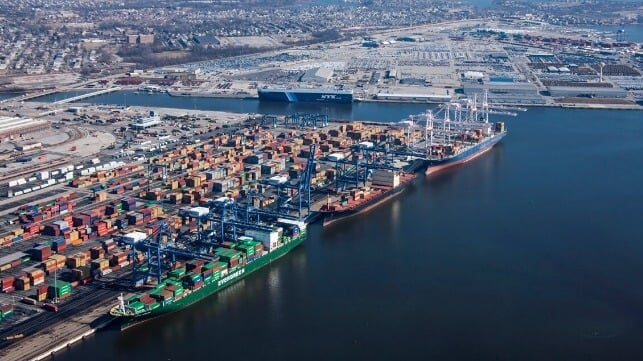
The Baltimore Port shipping channel is a vital gateway for autos, bulk commodities, and containerized cargo. Even a brief Port of Baltimore closure can create backlogs, forcing pilots and ship operators to re-sequence transits and tug resources. On Tuesday’s reopening, port authorities thanked pilots, tugs, and industry stakeholders for expediting safe restoration of traffic. The incident underscores how quickly a single shipboard emergency can cascade into broader navigational restrictions, and why fast, coordinated responses are essential to protecting both mariners and maritime commerce.

As investigations proceed, stakeholders will watch for updates on the condition of the W-Sapphire, any temporary operating limits at the Fort McHenry Federal Channel, and potential advisories for vessels carrying combustible bulk cargoes. For now, trade flows through Baltimore are resuming, with harbour pilots and Coast Guard teams continuing to monitor the channel, ensuring the waterway remains safe following the bulker explosion that briefly shuttered the Baltimore Port shipping channel.

Source: (gCaptain) (Maritime Executive)

DG Shipping’s “Ocean Sentinel” Marks 75 Years, Boosting Maritime Safety, Security and Green Ship Recycling

The Directorate General of Shipping (DG Shipping) has launched a two-pronged push to strengthen India’s maritime future — celebrating its 75th anniversary with the high-profile “Ocean Sentinel: Maritime Safety & Security in the 21st Century” conference while simultaneously steering policy dialogue on safer, greener ship recycling. The twin initiatives underline DG Shipping’s twin focus on maritime safety and maritime security as well as sustainable industry transformation.

Ocean Sentinel: safety, security and collaboration
Held in Mumbai on August 11, 2025, the Ocean Sentinel conference brought together senior policymakers, maritime leaders and industry stakeholders to assess emerging threats and opportunities at sea and to share best practices for preserving safe and secure waters. With a guiding motto of “Jalasya Rakṣā, Janasya Surakṣā” — Protection of the Seas, Safety of the People — the DG Shipping event emphasized modern risk management, information-sharing frameworks, technology adoption and cooperative regional security arrangements as pillars of national maritime security.

Speakers and panels at Ocean Sentinel highlighted how maritime safety must now be viewed through a systems lens: ports, coastal surveillance, ship standards, seafarer training and cybersecurity must align to reduce accidents, illegal activity and environmental harm. Repeatedly, delegates stressed that maritime safety and maritime security are complementary objectives — safeguarding lives and cargo while strengthening the resilience of trade and national interests.

DG Shipping
Source: (India Shipping News)

Green ship recycling: a roadmap for Alang and worker welfare
Parallel to the Ocean Sentinel commemoration, DG Shipping convened a high-level meeting on August 5 to reshape ship recycling in India, with a razor focus on green ship recycling and worker safety. The dialogue included international and domestic stakeholders: representatives from the ILO, diplomatic missions, and members of the Alang ship recycling associations joined to chart reforms. Key priorities identified were implementation of the Hong Kong Convention in line with ISO standards, modernization of Alang’s infrastructure, upgraded occupational health & safety (OSH) frameworks, and targeted worker training programs.

Participants agreed on a programmatic five-year roadmap to transition from commercially driven dismantling to responsible, safe recycling aligned with global norms. Concrete measures discussed included leveraging the Ferrous Scrap Development Fund (FSDF) to finance facility upgrades, establishing standard operating procedures (SOPs) to meet global benchmarks, increasing availability of life-saving appliances and technical safety equipment, and instituting structured OSH training for yard workers.

International cooperation and knowledge-sharing
DG Shipping signaled that international cooperation will be central to the green ship recycling push. The ministry is preparing for a Norway–India Occupational Safety & Health (OSH) workshop in Bhavnagar scheduled for August 21–22, aimed at transferring best practices and technical assistance to help Indian yards meet global compliance standards. The meeting also proposed setting up a Maritime Knowledge Centre (MKC) in collaboration with Ganpat University to serve as a focal point for research, training and information dissemination on safe and green ship recycling.

Also read: Union Minister Sonowal Launches e-Samudra as DG Shipping Unveils Maritime Digital Transformation

Why this matters — safety, security and sustainability converge
Taken together, the Ocean Sentinel conference and the ship recycling dialogue demonstrate a strategic shift: DG Shipping is connecting maritime safety and maritime security agendas with environmental stewardship and worker welfare. Strengthening port and coastal security reduces risk to commerce; modernizing ship recycling reduces environmental and public health hazards while improving the livelihoods of thousands employed in dismantling yards. The effort to adopt the Hong Kong Convention and ISO-aligned standards signals India’s intent to make ship recycling in India both competitive and compliant with global expectations.

Next steps and expected outcomes
The short-term agenda includes operationalizing the five-year roadmap, mobilizing FSDF resources for upgrades, launching targeted training modules for yard workers, and finalizing international technical cooperation plans around the Bhavnagar workshop. Over the medium term, DG Shipping aims to raise the safety and environmental standards of ship recycling in India to attract responsibly-minded owners and yards, strengthen maritime safety across the coast, and enhance India’s reputation as a safe, secure and sustainable maritime nation.

As DG Shipping marks its 75th year, the combined thrust on maritime safety, maritime security and green ship recycling frames a clear national message: India intends not just to protect its seas and people, but to lead the transition to safer, greener maritime practices that benefit commerce, communities and the environment.

Source: (India Shipping News)

Union Minister Sonowal Launches e-Samudra as DG Shipping Unveils Maritime Digital Transformation

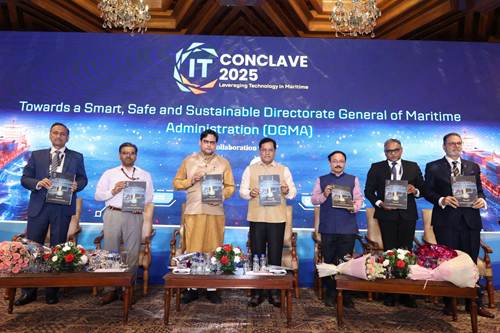
In a major push for a digitised blue economy, Union Minister for Ports, Shipping and Waterways Sarbananda Sonowal on August 7 inaugurated the “IT Conclave 2025 – Leveraging Technology in Maritime” where the Directorate General of Shipping (DG Shipping) unveiled a suite of digital initiatives led by the cloud-native e-Samudra platform and a comprehensive digital transformation vision document. The conclave, jointly organised with the Company of Master Mariners of India (CMMI), is intended to accelerate maritime digital transformation and modernise maritime governance across India’s shipping ecosystem.

At the event, the revamped DG Shipping website — now compliant with GIGW 3.0 and optimised for multilingual, mobile-responsive access — was launched to make maritime services more accessible to seafarers, shipowners, training institutes and other stakeholders. The website redesign is a visible first step in DG Shipping’s commitment to improve user experience and regulatory transparency through maritime technology.

The headline launch was the Phase-1 rollout of e-Samudra, described by officials as a cloud-native platform that will progressively unify more than 60 maritime services under one digital roof. The initial modules released include chartering permissions and licences to streamline vessel approvals; the Ship Building Financial Assistance (SBFA) module to facilitate access to support for shipbuilding; a Multi-Modal Transport Operator (MTO) module to enable digital registration and regulatory compliance; and a Visitor Access Management System to secure and automate access to DG Shipping offices. These modules are crafted to reduce paperwork, speed approvals and raise ease of doing business in India’s maritime sector.

e-Samudra
Source: (Press Information Bureau)

Complementing e-Samudra, DG Shipping also released a detailed digital transformation vision document outlining strategic priorities for maritime governance. The roadmap includes deployment of Learning Management Systems (LMS) and web-based simulation tools aligned with STCW standards for seafarer training, digital archival solutions for maritime records, ERP systems for the Seafarers’ Provident Fund Organization (SPFO) and Seafarers’ Welfare Fund Society (SWFS), and plans for an Integrated Command & Control Centre for real-time monitoring and situational awareness. The document further maps cybersecurity and data protection measures in line with the Digital Personal Data Protection Act.

Technology pilots rolled out at the conclave underline the practical thrust behind the vision: a pilot AI-based digital examination system has been launched at the Mercantile Marine Department (MMD) Noida, signalling DG Shipping’s intent to leverage AI for assessment, certification and competency assurance of maritime personnel. Officials stressed that such pilots will be scaled cautiously and integrated with internationally recognised standards.

e-Samudra
Source: (Press Information Bureau)

Ministers framing the rollout repeatedly tied the programmes to national priorities. Union Minister Sonowal described the initiatives as a “paradigm shift in maritime governance,” saying they align with Digital India, Maritime India Vision 2030 and Amrit Kaal Vision 2047 objectives to position India as a globally competitive, technology-enabled maritime hub. Union Minister of State Shantanu Thakur noted that e-Samudra and related platforms will boost ease of doing business while enhancing service delivery for maritime stakeholders.

Looking forward, the DG Shipping roadmap signals ambitions to adopt emerging technologies such as IoT, blockchain, geospatial tools and advanced analytics to enable autonomous operations, predictive maintenance and next-generation maritime services by 2030 and beyond. Officials said the integration of these technologies would be paced to ensure regulatory compliance, data security and interoperability with international systems.

Also read: Parliament Clears Coastal Shipping Bill, 2025 — A Major Push to Boost Coastal Cargo to 230 MT by 2030

Industry stakeholders welcomed the move but cautioned on implementation challenges. Experts say the success of maritime digital transformation will depend on digitisation of legacy records, capacity building among seafarers and port staff, robust cybersecurity measures, and close coordination with state maritime administrations and private operators. If effectively executed, DG Shipping’s combined push — from e-Samudra’s service consolidation to AI pilots and command-and-control architecture — could materially improve regulatory transparency, operational efficiency and India’s competitiveness in global shipping.

For maritime businesses and seafarers, the near-term benefits should include faster approvals for chartering, easier access to shipbuilding incentives, streamlined MTO registration and simplified administrative interactions with DG Shipping. Over the medium term, the rollouts aim to create a resilient digital backbone for India’s blue economy — a system capable of supporting trade growth while prioritising cybersecurity and personnel training aligned with international norms.

Source: (Press Information Bureau)

Parliament Clears Coastal Shipping Bill, 2025 — A Major Push to Boost Coastal Cargo to 230 MT by 2030

In a landmark move to unlock the economic potential of India’s coastline, Parliament has passed the Coastal Shipping Bill, 2025, a legislative overhaul designed to modernise coastal shipping, simplify rules and dramatically expand the share of coastal cargo moved by Indian vessels. The Rajya Sabha approval on August 7 follows earlier Lok Sabha clearance and marks a decisive step toward an integrated coastal and inland shipping ecosystem.

The Coastal Shipping Bill 2025 replaces Part XIV of the Merchant Shipping Act, 1958, and is being billed as a future-ready legal framework aligned with global cabotage norms. Union Minister for Ports, Shipping & Waterways Sarbananda Sonowal said the Act aims to increase coastal cargo throughput to 230 million metric tonnes by 2030, strengthen supply-chain security and promote an Atmanirbhar maritime sector. The government says the new law will reduce regulatory burdens and boost the competitiveness of Indian vessels engaged in domestic trade.

Source: (Press Information Bureau)

Structurally, the Coastal Shipping Bill, 2025 is concise but strategic — comprising six chapters and 42 clauses that introduce a simplified licensing regime for coastal operations and a framework for regulating foreign vessels involved in coasting trade. Crucially, the Bill mandates the formulation of a National Coastal and Inland Shipping Strategic Plan, which will serve as a roadmap for future infrastructure development, investment, policy priorities and inter-modal linkages. Officials view the plan as the central policy instrument to drive coordinated growth of coastal and inland shipping.

A central plank of the legislation is institutional transparency: the Act provides for the creation of a National Database for Coastal Shipping. This database is intended to deliver real-time, authentic and regularly updated information for investors, shipowners and policymakers — boosting investor confidence and improving planning across ports, logistics and coastal industries. By centralising data, the government expects smoother coordination between states, private operators and central agencies, which is critical to scale up coastal cargo movement.

Policy analysts say the Coastal Shipping Bill 2025 is designed to accomplish several strategic objectives simultaneously: reduce dependence on foreign tonnage for domestic coastal routes (thereby curbing foreign exchange outflows), catalyse coastal industrial and port-led development, and create jobs across coastal regions. By simplifying licensing and regulatory compliance, the law aims to make coastal shipping an attractive commercial choice for cargo owners and logistics companies, shifting modal share from road and rail to cost-effective coastal routes.

Also read: MSC Sues to Limit Liability to $14.2 Million for Loss of MSC Elsa 3

The passage of this Bill also completes a legislative package the Ministry has pursued this year. With the Merchant Shipping Bill, the Carriage of Goods by Sea Bill and now the Coastal Shipping Act all approved by Parliament, the ministry argues India has a modernised legal foundation to support a “future-ready” maritime ecosystem that can better integrate coastal and inland shipping services with national objectives such as Viksit Bharat and Atmanirbhar Bharat.

Implementation will determine impact. Experts note that while the Coastal Shipping Bill 2025 provides the legal scaffolding, realizing the 230 MT target by 2030 will require coordinated investment in feeder vessels, coastal terminals, last-mile multimodal connectivity, simplified port procedures, and incentives to shift cargo from land routes to coastal corridors. Capacity-building for regulators and streamlined state-federal coordination will be essential to translate licensing reforms into higher volumes of coastal cargo.

Industry reaction has been broadly positive. Shipowners and logistics firms welcomed the move as a long-awaited modernization of the coastal shipping regime that should improve ease of doing business and attract private investment into coastal shipping assets and infrastructure. Coastal states and port operators will be watching the rollout of the National Coastal and Inland Shipping Strategic Plan closely, since its investment priorities and regulatory details will heavily influence project pipelines and financing.

The coastal shipping reform sits amid a wider maritime vision: a digitally enabled, interoperable maritime sector that supports trade resilience and port-led industrial growth. If implemented effectively, the Coastal Shipping Bill, 2025 could help shift significant cargo volumes to coastal routes, reduce logistics costs, create jobs in coastal communities and strengthen India’s stature as a competitive maritime nation.

Source: (Press Information Bureau)

MSC Sues to Limit Liability to $14.2 Million for Loss of MSC Elsa 3

In a crucial legal move, the owners, charterers, and operators of the ill-fated container ship MSC Elsa 3 have approached the Kerala High Court seeking to limit their liability to approximately USD 14.2 million following the vessel’s sinking off the Kerala coast.

Under Part XA of the Merchant Shipping Act, 1958, and the Merchant Shipping (Limitation of Liability for Maritime Claims) Rules, 2015, the respondents Elsa 3 Maritime Inc. (owner), Multi Container Management SA (bareboat charterer), and MSC Mediterranean Shipping Co. SA (operator) claim the right to cap financial responsibility for all maritime claims. The calculation of the liability amount is based on the ship’s tonnage, translating to an estimated $14,293,233.79 at current exchange rates. The court has been asked to allow them to deposit this limitation fund with the Registrar General of the High Court and grant a permanent injunction against ongoing or future claims arising out of the sinking.

Ocean of Claims: ₹9,531 Crore Compensation Demand

The legal tussle is driven by mounting claims against MSC. The Kerala government has already filed an admiralty suit seeking compensation to the tune of ₹9,531.11 crore (~USD 1.1 billion). These claims are broken down as follows:

  • ₹8,626 crore for pollution damage
  • ₹378 crore for environmental restoration
  • ₹526 crore for economic losses suffered by the fishing community

In response, the High Court has already issued orders for the conditional arrest of sister ships including MSC Akiteta II, MSC Manasa F, and MSC Polo II, to preserve the state’s claim rights.

MSC Elsa 3
Source: economictimes

Legal Framework & Maritime Convention Underpinnings

MSC’s lawsuit is backed by domestic statutes and international norms, notably India’s Maritime Shipping Act, 1958 and the Merchant Shipping Rules, 2015, both reflecting India’s obligations under the International Convention on Limitation of Liability for Maritime Claims.

Limiting liability is a globally recognized maritime principle, allowing shipowners to cap their financial exposure in line with vessel-specific parameters, ensuring predictability and equitable distribution of recovery among claimants.

High-Stakes Legal Chessboard & Wider Consequences

The situation has unfolded into complex litigation:

  1. The Kerala government cites environmental and livelihood fallout.
  2. MSC is countering with jurisdictional limitations arguing the ship sank just beyond state waters and only central government can enact marine environmental measures and contests the extent of environmental damage.

Also read : India’s Parliament Passes Carriage of Goods by Sea Bill 2025, Repeals 1925 Act to Modernize Maritime Law

Meanwhile, the staggering contrast $14 million liability cap vs. nearly ₹10,000 crore in claims is fueling intense scrutiny. Critics point to a legal gap that permits owners to shield assets while communities bear most losses. The case’s outcome could have precedent-setting implications for maritime liability and environmental accountability in India.

What’s Next?

The High Court now faces a nuanced decision: whether to accept MSC’s limitation claim and allow the USD 14.2 million fund to be constituted or to acknowledge the magnitude of the state’s claims and allow broader judicial discretion in assessing equitable compensation.

Source: (The Times of India)

India’s Parliament Passes Carriage of Goods by Sea Bill 2025, Repeals 1925 Act to Modernize Maritime Law

In a landmark move to overhaul India’s maritime legal framework, Parliament has passed the Carriage of Goods by Sea Bill, 2025, repealing the outdated 1925 Act and ushering in laws designed for a modern, globally aligned shipping sector.

Repealing Colonial-Era Law & Embracing Global Norms

The new Carriage of Goods by Sea Bill 2025 formally replaces the nearly century-old Indian Carriage of Goods by Sea Act, 1925, which had long guided India’s maritime cargo regulations under colonial remnants.

With this reform, India joins international peers in adopting the Hague‑Visby Rules—a globally accepted maritime standard that ensures clearer responsibilities and liabilities for goods transported by sea. This move is expected to enhance transparency, reduce litigation, and streamline cargo operations.

Carriage of Goods by Sea Bill 2025
Source: nimapak.org

Legislative Journey & Parliamentary Debate

  • In the Lok Sabha, the bill was passed in March 2025; later, the Rajya Sabha approved it on August 6, 2025, through a voice vote amid Opposition protests related to the Special Intensive Revision (SIR) of electoral rolls.
  • Parliament witnessed a rare moment when both the Carriage of Goods by Sea Bill 2025 and the Merchant Shipping Bill 2025 were passed on the same day—both under the Ministry of Ports, Shipping & Waterways—signifying a dual endorsement of Prime Minister Modi’s maritime modernization vision.

Key Provisions of the New Bill

  1. Modernizes Legal Language & Structure
    The legislation retains essential provisions of the 1925 Act—like establishing responsibilities, liabilities, rights, and immunities in maritime carriage—but reframes them in contemporary, stakeholder-friendly language.
  2. Central Government Powers
    The Bill empowers the government to:
    • Issue directions to implement its provisions.
    • Amend the schedule items—such as rules for bills of lading—via notifications, without needing fresh legislation .
  3. Bill of Lading Clarity
    The Bill clarifies legal aspects of the Bill of Lading, a vital document that serves as receipt, contract, and title in international shipping—defining liability, rights, and documentation norms clearly for shippers and carriers.

Also read: Maharashtra Cabinet Approves Startup Policy & 105 km Freight Corridor Linking Vadhavan Port to Samruddhi Expressway

Broader Impacts & Strategic Significance

  • Ease of Doing Business: The overhaul substitutes complex, archaic rules with clarity and fairness, simplifying engagement for exporters, importers, and logistics stakeholders.
  • Global Alignment: Adopting Hague‑Visby Rules brings India in line with global maritime conventions, including trade pacts like CETA with the UK.
  • Political Consensus & Opposition Concerns: Despite orderly passage, concerns were raised about process transparency—especially the central government’s wide rule-making powers without robust oversight.

Looking Ahead

This bill marks a pivotal step in positioning India as a forward-looking maritime economy. Stakeholders now await the operational rollout, effective implementation of Hague‑Visby aligned rules, and the government’s directives to ensure the law eases trade without unintended drawbacks.

Source: (Press Information Bureau)
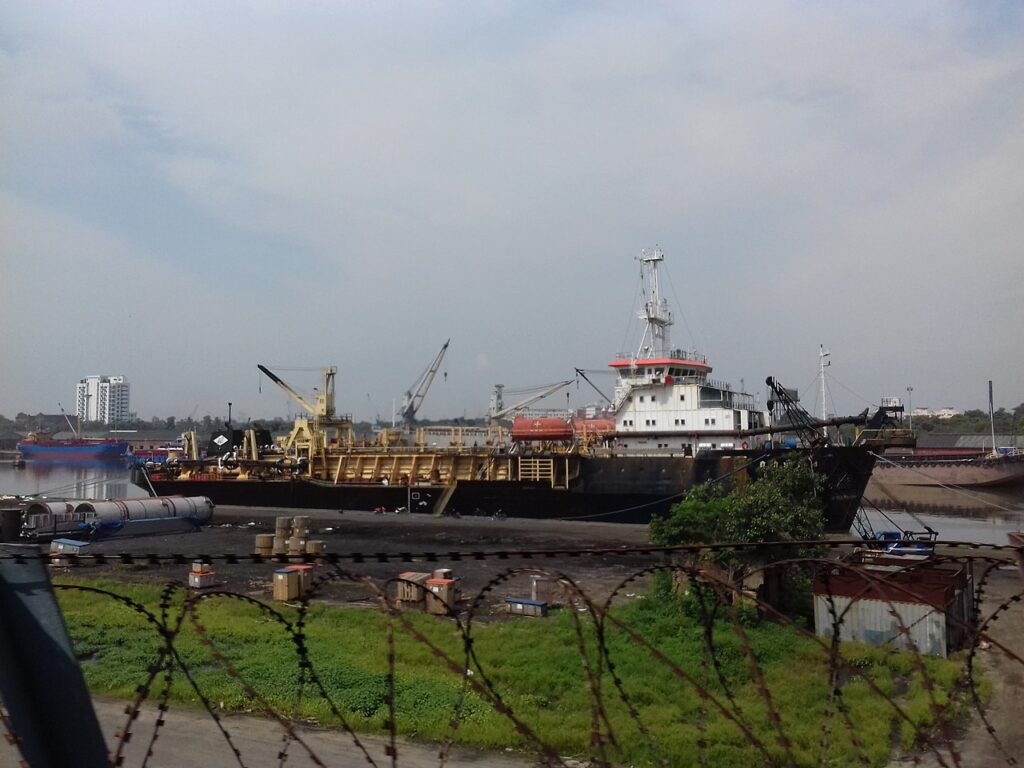
Maharashtra Cabinet Approves Startup Policy & 105 km Freight Corridor Linking Vadhavan Port to Samruddhi Expressway

The Maharashtra Cabinet, led by Chief Minister Devendra Fadnavis, on August 5, 2025, green‑lit two landmark initiatives a comprehensive startup policy and a strategic freight corridor aimed at positioning the state as an innovation powerhouse and logistics hub.

Maharashtra Startup Policy 2025

Under the Maharashtra Startup, Entrepreneurship and Innovation Policy 2025, the state has set an ambitious five‑year goal: enabling 1.25 lakh entrepreneurs and recognizing 50,000 new startups by 2030. With over 29,000 startups already registered, Maharashtra currently leads India in the startup space.

Key components include:

  • A ₹500 crore “Maha‑Fund” to support 25,000 selected early‑stage entrepreneurs through a rigorous three‑stage process—providing loans, mentoring, incubation and financial support.
  • Launch of a 300‑acre Maharashtra Innovation City near Navi Mumbai airport, housing startups, corporates, academia and government with dedicated clusters in AI, deeptech, biotech, fintech, spacetech and smart infrastructure.
  • Decentralized innovation ecosystem with micro‑incubators in ITIs and educational institutions, and regional hubs across all administrative divisions.
  • Government departments will allocate 0.5% of their budgets toward innovation initiatives, and startups selected through Maharashtra Startup Week will be eligible for pilot work orders up to ₹25 lakh.
  • Additional support includes reimbursements for patents and certifications, global exhibition participation, and loan facilitation for startups with public‑sector contracts.

This Maharashtra startup policy marks a concerted effort to deliver inclusive economic growth and social empowerment through entrepreneurship, with special emphasis on women‑led and youth‑led ventures.

freight corridor
Source: daijiworld.com

Strategic Freight Corridor Project

Simultaneously, the cabinet approved a 105 km freight corridor linking the upcoming Vadhavan Port in Palghar district to the Hindu Hriday Samrat Balasaheb Thackeray Maharashtra Samruddhi Mahamarg at Bharvir, Nashik district.

Key highlights:

  • The corridor will be executed by MSRDC and financed via a ₹1,500 crore HUDCO loan along with ₹2,529 crore from Maharashtra state budget—a total investment of approx. ₹2,528.9 crore.
  • Once completed in three years, the corridor will reduce cargo travel distance from ~183 km to around 105 km, cutting travel time from 4–5 hours to just 1–1.5 hours.
  • The route traverses Dahanu, Vikramgad, Jawhar, Mokhada, Trimbakeshwar, and Igatpuri—linking Vadhavan to central and eastern Maharashtra industrial zones.

This corridor boosts logistics infrastructure and cargo efficiency, complementing the national Sagarmala initiative which aims to fast‑track port connectivity and coastal economic activity.

Also read: Houthis Track Shipping Routes Through Egypt, Turkey and Israel; Expand Red Sea Threat to All Israel‑Linked Carriers

Broader Policy Package & Economic Impact

Beyond these two flagship approvals, the Cabinet also endorsed:

  • A land‑disposal policy for unviable government land—small, inaccessible or land‑locked parcels—to enable better asset utilization.
  • A revised leasing policy allowing MSRTC to monetize surplus land via 98‑year lease terms, enhancing public‑private partnerships and reviving the ailing transport corporation’s finances.
  • A ₹50 crore grant to benefit 1,124 workers of the Nagpur Weavers’ Cooperative Spinning Mill, funded through land sale proceeds.
  • Raising monthly NGO grants for leprosy care from ₹2,000 to ₹6,000 to support social welfare initiatives.

What It Means for Maharashtra

Together, the new startup policy and freight corridor represent dual engines for growth:

  • The innovation ecosystem is expected to drive tech adoption, create thousands of new jobs, and attract global investment.
  • Improved logistics and port connectivity will significantly lower transportation costs, expedite exports, and integrate regional markets into national and global supply chains.

Furthermore, regional development in under‑served districts like Palghar and Nashik will receive fresh impetus, with enhanced access for agriculture, industrial ventures, educational institutions, and MSMEs.

According to government sources, these initiatives together underscore a commitment to making Maharashtra a trillion‑dollar economy and innovation capital of India.

Source: (The Indian Express)

Houthis Track Shipping Routes Through Egypt, Turkey and Israel; Expand Red Sea Threat to All Israel‑Linked Carriers

Yemen’s Houthi militants have significantly escalated their maritime operations in the Red Sea and surrounding seas. In a recent public statement, the Houthis disclosed they are actively tracking commercial shipping routes between Israel, Egypt, and Turkey—using AIS data to monitor vessels that may call on Israeli ports. They specifically named major shipping lines, including Maersk and MSC, as being within their scrutiny.

This tracking disclosure accompanies a major policy shift: the Houthis have declared they will target any merchant ship belonging to companies that do business with Israeli ports, regardless of the vessel’s nationality. This marks the onset of a new “fourth phase” of their naval campaign, aiming to impose a de facto blockade in defense of Gaza.

Fatal Attacks Raise Red Sea Risk

The heightened threat environment turned lethal in early July 2025 with two dramatic attacks. The Liberian-flagged bulk carrier Eternity C was struck by sea drones, rocket-propelled grenades, and unmanned surface vessels, resulting in its sinking, four confirmed deaths, and many crew members kidnapped—several shown in a released propaganda video. In a separate incident, the Magic Seas, also Liberia-flagged and Greek-owned, was attacked and sunk, although its crew were rescued.

These incidents mark the first fatalities from Houthi operations since June 2024, underscoring the escalating maritime violence and mounting red sea risk for global shipping.

Houthis
Source: financial times

Tracking Ships & Broader Intent

The Houthis’ acknowledgment that they’re «tracking shipping routes» reveals an effort to systematically identify vessels linked to Israel via calls to Turkish or Egyptian ports en route to Israeli destinations. Their targets now include all carriers whose parent companies have any involvement with Israeli ports like Haifa—even if a specific ship does not directly sail there.

According to analysts, this shift represents a strategic “sea change,” broadening the scope of threat and compelling shipping companies to rethink their risk exposure.

Impact on Shipping and Global Trade

The intensifying Red Sea risk is prompting insurers and shipping firms to reroute vessels. Many carriers are avoiding traditional routes through Bab el‑Mandeb and the Suez Canal, opting instead for the longer and more expensive journey around the Cape of Good Hope. This has increased shipping times, insurance costs, and operational complexity.

In early 2024, more than 2,000 vessels diverted from the Red Sea, causing a measurable drop in global trade volumes. Over 50% of dry bulk and nearly half of oil tankers now sail around Africa to avoid the danger zone.

Military Responses and Diplomatic Fallout

In response, the U.S. and a multinational coalition launched Operation Prosperity Guardian in December 2023 to escort shipping through the Red Sea and Gulf of Aden. Although limited ceasefire agreements briefly reduced attacks, the Houthis have maintained that Israel-linked ships remain valid targets, irrespective of international pressure.

Israel has retaliated with airstrikes on Houthi-controlled ports and infrastructure in Yemen, alleging the attacks were used to transfer Iranian weapons and conduct maritime surveillance. The strikes followed the sinking of Magic Seas and Eternity C and were described as part of a broader security escalation.

Also Read: Evergreen’s Ever Lunar Loses – 50 Containers Overboard off Callao Bay

Outlook: Maritime Security in Jeopardy

Experts warn that shipping companies face an uncertain future. Although there are diplomatic overtures and discussions with the U.S., the Houthis’ stated intent to expand targeting criteria means that even neutral vessels linked to Israeli-associated carriers now face risk. Shipping firms like Hapag‑Lloyd, ONE, Yang Ming, and CMA CGM are all explicitly in the crosshairs, regardless of vessel nationality or route.

Until a durable ceasefire or diplomatic resolution emerges in the Israel‑Gaza conflict, including guaranteed protection for transit, Red Sea risk remains elevated. Maritime security analysts suggest that the threat could expand unpredictably, requiring heightened vigilance and possibly naval escorts for safe passage.

Source: (gcaptain,maritime-executive)

Evergreen’s Ever Lunar Loses – 50 Containers Overboard off Callao Bay

Callao, Peru, August 3–4, 2025 — A significant maritime incident occurred on August 1, 2025, when the Ever Lunar, an 8,500 TEU container ship operated by Evergreen Marine, lost approximately 50 containers overboard while anchored in Callao Bay, Peru.

Key Points at a Glance

DetailInformation
Date/TimeAugust 1, 2025, ~9:40–10:00 a.m.
VesselEver Lunar (8,500 TEU; approx. 7,000 containers onboard)
Containers Lost~50 from stern stacks
CauseSevere rolling at anchor—possible tsunami effects, sea conditions
CasualtiesNone—crew safe; non-hazardous cargo
ResponsePort closed until 4 p.m.; Coast Guard & salvage teams deployed
Broader contextIncident comes days after Ever Feat stack collapse in South Atlantic

The vessel was awaiting entry to the Port of Callao at around 9:40–10:00 a.m. local time, when it experienced a sudden and severe rolling motion. This caused the aft container stacks to collapse, plunging dozens of containers into the sea. The Ever Lunar was reportedly carrying around 7,000 containers, according to the port authority.

In response, the Peruvian National Port Authority (ANP) temporarily closed Callao Bay to maritime traffic around 10:00 a.m., citing low visibility due to fog and the hazard posed by floating containers. Vessel traffic was resumed by 4:00 p.m., with commercial operations recommencing that afternoon.

Recovery efforts began shortly after the incident. Coast Guard patrol vessels—Costa Sama and Río Chira—alongside tugboats Ram Vigo and Tiamat were deployed to secure the affected area. Floating containers were moved to a safe zone for recovery via crane-equipped barges, coordinated by salvage firms in partnership with port authorities.

ever lunar
Source: www.worldcargonews.com

Evergreen Marine released a statement affirming that no crew members were harmed, and that the containers in question did not carry hazardous materials—reportedly containing plastic products—thus minimizing pollution risk. The company also suggested that the rolling might have been influenced by after‑effects of a tsunami in Russia, combined with winter sea conditions in the South Pacific and wave surges.

This incident closely follows another recent mishap involving Evergreen’s Ever Feat, which suffered a container stack collapse in rough seas off Brazil on July 29, 2025, damaging or losing around 30–40 containers while en route to Montevideo.

Container shipping expert Lars Jensen commented that although such losses attract media attention, they remain statistically rare. According to data from the World Shipping Council, in 2024 a total of 576 containers were lost globally—well below the ten‑year average of 1,274 and higher than the record-low 221 in 2023. The recent double incidents involving Evergreen stand out in an otherwise improving trend.

Also read: India Faces Tariff Hike over Russian Oil Imports Amid EU Sanctions

Local port officials have launched an investigation into the causes behind the event, focusing on potential loading procedures, stability calculations, and the role of sea and weather conditions. General average claims may also arise, obliging cargo interests to provide security before cargo release at destination.

The temporary closure disrupted port operations for several hours, likely delayed cargo deliveries, and prompted regulatory scrutiny as salvage efforts continue. The incident may also impact insurance claims and prompt industry reviews of stowage practices under exaggerated sea conditions.

( Source: www.marinetraffic.com )

India Accelerates Maritime Growth – Shipbuilding, Waterways, and Ports Modernization to Achieve Viksit Bharat 2047

India’s maritime sector is witnessing a historic transformation as the Union Government under Prime Minister Narendra Modi pushes for a Viksit Bharat 2047, with a strong focus on shipbuilding, inland waterways, and port modernization. Union Minister of Ports, Shipping, and Waterways Sarbananda Sonowal emphasized the government’s comprehensive strategy, combining policy reforms, financial incentives, and infrastructure development to position India as a global maritime hub.

Driving Self-Reliance and Global Competitiveness

Responding to a question in the Lok Sabha, Sarbananda Sonowal highlighted that the Indian shipbuilding industry is undergoing a transformational shift. The Union Budget 2025 has allocated significant resources to boost the competitiveness of Indian shipyards under the Maritime India Vision 2030, aligned with the Amrit Kaal roadmap.

  1. Revamped Shipbuilding Financial Assistance Policy to offset cost disadvantages.
  2. Credit notes for ship-breaking to promote a circular maritime economy.
  3. ₹25,000 crore Maritime Development Fund, with 49% government contribution, to attract private and port-led investments.
  4. Infrastructure status for large ships, enabling long-term, low-interest financing.
  5. Tax exemptions on raw materials and components for shipbuilding extended for 10 more years.

Additionally, the Right of First Refusal (ROFR) has been extended to Indian shipyards for public sector contracts, reinforcing the Make in India initiative. The government also released five standardized tug designs to streamline procurement and promote efficiency in domestic shipbuilding. On the ship repair front, Cochin Shipyard Limited (CSL) inaugurated a ₹970 crore International Ship Repair Facility (ISRF) in Kochi, reducing India’s dependence on foreign repair docks and creating a regional maintenance hub.

Sonowal underlined that shipbuilding capability is vital not only for economic growth but also for strategic security, stating “India is not just building ships; we are building a resilient future. These reforms will unlock opportunities for investment, innovation, and global collaboration in the maritime sector.”

shipbuilding

Strengthening India’s Eastern Maritime Corridor

The Maritime India Vision 2030 identifies Chennai-Kamarajar-Cuddalore as a mega port cluster on the eastern coast, targeting 300 MTPA cargo handling capacity by 2047. Under the Sagarmala Programme, the government has launched 234 port modernization projects worth ₹2.91 lakh crore. Of these:

  1. 104 projects worth ₹32,654 crore have been completed.
  2. 55 projects worth ₹74,725 crore are under active implementation.

Modernization efforts are particularly focused on Chennai, Ennore (Kamarajar), and Tuticorin (VO Chidambaranar) ports, alongside enhanced rail and road connectivity to integrate ports with the PM Gati Shakti National Master Plan. Additionally, the government has issued Harit Sagar (Green Port) Guidelines, emphasizing carbon reduction and sustainable practices to align Indian ports with global environmental standards.

Unlocking Alternate Transport

A key pillar of India’s maritime growth is the inland water transport (IWT) sector, which promises cost-effective, eco-friendly cargo movement. The government sanctioned ₹6,833.46 crore in the last five years to enhance infrastructure along national waterways, with landmark projects including:

  1. Jal Marg Vikas Project (JMVP I & II) on NW-1 (Varanasi-Haldia) with ₹5,061 crore investment.
  2. Comprehensive development of NW-2 (River Brahmaputra) in Assam.
  3. Eight hybrid electric catamarans and one hydrogen-fueled vessel by Cochin Shipyard Limited.
  4. Construction of 60 community jetties to benefit farmers, fishermen, and local traders.

According to World Bank studies, inland water transport costs ₹1.2 per ton-km, making it highly competitive. In FY 2024-25, 4,229 vessels navigated NW-1, creating 1.3 lakh direct and indirect jobs and energizing the local economy along the Ganga-Bhagirathi-Hooghly river system.

Also read: Evergreen’s Ever Lunar Loses – 50 Containers Overboard off Callao Bay

Sagarmala Projects and Coastal Community Development

The Sagarmala Scheme continues to drive port-led development by leveraging India’s 7,500 km coastline and 14,500 km of navigable waterways.

  1. 121 projects worth ₹9,415 crore have been partially funded under Sagarmala.
  2. 77 projects have already been completed, ranging from fishing harbors to Ro-Pax ferry services, coastal berth projects, and skill development initiatives.
  3. Coastal community development and cruise terminal projects are opening new avenues for tourism and employment.

The Ministry has also adopted a third-party impact assessment mechanism, ensuring efficiency and accountability in project execution.

India’s Maritime Vision for Viksit Bharat 2047

By integrating shipbuilding, waterways, and ports modernization, India is strategically positioning itself to:

  1. Enhance export competitiveness through efficient logistics.
  2. Reduce transport costs via multimodal connectivity.
  3. Generate large-scale employment in shipbuilding, river transport, and coastal tourism.
  4. Achieve self-reliance in maritime assets, supporting both commercial and strategic interests.

As India accelerates its maritime journey, Sarbananda Sonowal reiterated that the maritime sector is central to Viksit Bharat 2047, stating that a robust ecosystem will “unlock investment, innovation, and sustainable economic growth for the nation.”

Source: (pib.gov.in)

India Faces Tariff Hike over Russian Oil Imports Amid EU Sanctions

Since Russia’s full-scale invasion of Ukraine in early 2022, Western powers have layered on sanctions designed to cut off revenue streams to the Kremlin. Two recent developments an India tariff hike threat over Russian oil imports by the U.S., and fresh EU sanctions that are roiling Nayara Energy contracts are now colliding to crush India’s energy security and maritime trade.

U.S. Threatens India Tariff Hike on Russian Oil Imports

On July 30, 2025, President Trump announced a 25 percent tariff rate plus an additional surcharge on Indian exports to the U.S., openly targeting New Delhi’s purchases of Russian arms and energy. This marks the first time a U.S. president has directly threatened an India tariff hike linked to its status as the world’s second-largest buyer of Russian crude.

As of June 2025, Indian refineries processed roughly 38 percent of Russia’s seaborne oil exports about $220 million per day in Russian state revenue. A Senate bill under consideration would impose crippling 500 percent tariffs on any country buying Russian oil, but Trump is pushing for an unlimited presidential waiver authority instead of a single 180-day waiver.

Beyond tariffs, the U.S. Treasury also sanctioned Iranian tanker operator Mohammad Hossein Shamkhani, who controls around 50 “shadow fleet” vessels frequently used for carrying Russian crude. This move tightens the noose on alternative shipping channels for Russian oil imports.

Russian oil imports
Source: offshore-energy

EU Sanctions Disrupt Nayara Energy Contracts and Shipping

On July 18, 2025, the European Union unveiled its latest sanctions package targeting Russia’s energy sector. Though aimed at Russian exporters, the measures have sent shockwaves through Indian refiners tied to Moscow most notably Nayara Energy, majority-owned by Rosneft and other Russian entities.

Owners of three clean-products tankers chartered to Nayara medium-range vessels Bourbon and Courage (via Seven Islands Shipping Ltd.) and the LR-1 tanker Jag Pooja (via Great Eastern Shipping Co.) have formally asked to end their shipping contracts. They cite secondary-sanctions risk and insurance hurdles.

Nayara’s 400,000-barrels-per-day refinery at Vadinar has cut throughput to manage fuel storage constraints and insurance gaps, forcing some vessels to divert cargos or wait offshore.

In the wake of these disruptions, Nayara’s CEO resigned, and the company even sued Microsoft in an Indian court after the software giant suspended services under pressure from sanctions compliance.

Also Read: Russia Kamchatka 8.8 Earthquake Triggers Massive Pacific Tsunami Alerts

Ripple Effects on India’s Energy Security

India’s drive to secure cheap crude has been the backbone of its refining gains over the past three years. But now any slowdown in Russian oil imports could push India toward more expensive Middle Eastern crude, eroding refining margins. Tankers willing to carry sanctioned cargoes face steep insurance premiums or bare-boat charters, shrinking the pool of available vessels. New Delhi must deploy its strategic partnership with Russia against the risk of punitive measures by the U.S. and EU, even as it forges closer ties with Western capitals.

What’s Next for Shipping Contracts and Trade Flows?

As EU sanctions bite and the U.S. prepares potential tariff hikes, Indian charterers and refiners are exploring workarounds, some are turning to Russian or Asian underwriters less concerned with EU rules, despite higher costs. Ships may load at secondary hubs to avoid European waters and surveillance. Buyers like Hindustan Petroleum (HPCL) are already diverting tankers like the Sanmar Songbird to alternative suppliers with cleaner paper trails.

India’s seaborne crude imports surpassed 80 million tonnes in 2024, with nearly half sourced from Russia, placing the nation’s energy and maritime sectors at the center of global geopolitical shifts. Intensifying U.S. tariff threats and EU sanctions targeting Russian-linked entities such as Nayara Energy are now testing India’s oil import strategies, potentially reshaping global energy flows and redefining its maritime logistics and tanker contracts.

Source: (India Shipping News),(Maritime Executive).