India to Launch ‘Made in India’ Cruise Ships: Nitin Gadkari Commends Cochin Shipyard

Report: India to Launch Indigenous Cruise Ships: Nitin Gadkari Lauds Cochin Shipyard

New Delhi, December 14, 2024: Union Minister for Road Transport and Highways, Nitin Gadkari, has expressed optimism about India’s potential to become a global hub for cruise ship manufacturing. Speaking at the CNBC-TV18 Green Bharat Summit, Gadkari commended the Cochin Shipyard for its significant contribution to the maritime sector and encouraged the shipyard to take the lead in building ‘Made in India’ cruise ships.

A Boost to India’s Maritime Industry

Gadkari’s statement signifies a major step forward for India’s maritime industry. The country has been actively promoting domestic shipbuilding and ship repair capabilities. By manufacturing cruise ships domestically, India can not only reduce its reliance on imports but also create new job opportunities and stimulate economic growth.

Cochin Shipyard: A Pioneer in Shipbuilding

Cochin Shipyard, a leading shipbuilding and repair yard in India, has a proven track record of delivering high-quality vessels. The shipyard has successfully built a wide range of ships, including warships, tankers, and cargo vessels. By venturing into cruise ship manufacturing, the shipyard can further enhance its reputation and contribute to India’s maritime prowess.

Government Support for the Maritime Sector

The Indian government has been taking several initiatives to promote the growth of the maritime sector. These initiatives include infrastructure development, policy reforms, and financial incentives. The government’s focus on ‘Make in India’ has also provided a significant boost to the shipbuilding industry.

Also Read: GAIL (India) inks long-term charter with K Line on LNG newbuilding

Challenges and Opportunities

While India has the potential to become a major player in the global cruise ship manufacturing market, there are several challenges that need to be addressed. These include the high cost of shipbuilding, lack of skilled manpower, and stringent regulatory requirements. However, with the right policies and investments, India can overcome these challenges and emerge as a global leader in the maritime sector.

Conclusion

India’s ambitious plan to manufacture cruise ships domestically is a testament to the country’s growing economic and industrial prowess. By leveraging its skilled workforce, advanced infrastructure, and government support, India can position itself as a major player in the global cruise industry. The successful implementation of this initiative will not only boost the country’s economy but also enhance its maritime capabilities.

Also Read: Synergy Marine Group is utilizing AI-powered technology to cultivate fresh vegetables onboard its vessels.

GMB Launches New Inland Vessels Rules for 2024

Report: GMB Tightens Boating Regulations for 2024

Gandhinagar, December 12, 2024 – The Gujarat Maritime Board (GMB) has introduced the “Gujarat Inland Vessels Rules, 2024”, aimed at enhancing safety standards for boating activities across the state. These comprehensive guidelines cover registration, survey, and operational permissions for pleasure crafts and boats operating on inland waterways.

Key Provisions of the New Rules

  • Mandatory Registration: All owners of pleasure crafts and boats in Gujarat must register their vessels with the office of the respective District Collector.
  • Compulsory Survey: Registered vessels will undergo a thorough survey conducted by a surveyor appointed by the Gujarat Maritime Board.
  • Operational Permissions: The rules outline specific requirements for obtaining operational permits, including safety equipment checks and crew qualifications.
  • Safety Standards: The guidelines emphasize adherence to strict safety standards, such as life jackets, fire extinguishers, and navigation lights.
  • Regular Inspections: District-level water safety committees will conduct regular inspections of water sports activities and boat operations.
  • Penalties for Violations: Non-compliance with the new rules will result in penalties, including fines and suspension of permits.

Rationale Behind the New Rules

The Gujarat Maritime Board has taken this initiative in response to several boating accidents that have occurred in recent years, highlighting the need for stricter regulations. The new rules are designed to prevent accidents, minimize casualties, and promote responsible boating practices.

Also Read: Adani Group Withdraws from US Loan Deal for Colombo Port Project

Impact on the Boating Industry

The implementation of these rules is expected to have a significant impact on the boating industry in Gujarat. While some stakeholders may face additional regulatory burdens, the overall goal is to create a safer environment for both recreational and commercial boating activities.

Conclusion

The Gujarat Maritime Board’s introduction of the “Gujarat Inland Vessels Rules, 2024” represents a significant step towards enhancing boating safety in the state. By mandating registration, surveys, and operational permissions, the GMB aims to create a more regulated and secure environment for water sports enthusiasts and boat operators alike.

Also Read: Gujarat Leads India in Cargo Handling: A Maritime Milestone

Adani Group Withdraws from US Loan Deal for Colombo Port Project

Report: Adani Group Pulls Out of US Loan Deal for Colombo Port.

Billionaire Gautam Adani’s embattled Adani Group has decided to pull out of a loan deal with the US International Development Finance Corporation (DFC) for the West Container Terminal (WCT) project at the Colombo Port in Sri Lanka. This move comes after US authorities indicted Adani and two of his associates on charges of stock price manipulation and accounting fraud.

The DFC loan, valued at $553 million, was seen as a crucial part of India’s strategy to counter China’s growing influence in the Indian Ocean region. The WCT project was expected to enhance India’s strategic and economic interests in the region.

In a regulatory filing, Adani Ports and Special Economic Zone (APSEZ) stated that it has withdrawn its request for financing from the DFC. The company will now fund the WCT project through its internal accruals and capital management plan.

The withdrawal of the US loan deal is a significant setback for the Adani Group and India’s strategic ambitions in the region. It also raises questions about the future of the WCT project and its impact on Sri Lanka’s economy.

The US indictment against Adani has had a significant impact on the Adani Group’s business operations. Several international investors have pulled out of the group’s companies, and the group’s market capitalization has plummeted.

The withdrawal of the DFC loan also highlights the challenges faced by India in countering China’s growing influence in the Indian Ocean region. China has been investing heavily in infrastructure projects in the region, including the development of ports and maritime facilities.

Also Read: Gujarat Leads India in Cargo Handling: A Maritime Milestone

India has been trying to counter China’s influence by investing in infrastructure projects in the region and by strengthening its military presence. The withdrawal of the DFC loan is a setback for India’s efforts to achieve these goals.

The future of the WCT project is now uncertain. It remains to be seen whether APSEZ will be able to fund the project through its internal resources. If the project is delayed or canceled, it could have a negative impact on Sri Lanka’s economy.

The withdrawal of the US loan deal also raises questions about the future of India-US cooperation in the Indo-Pacific region. The US has been a key partner for India in countering China’s influence. However, the recent developments have strained the relationship between the two countries.

Conclusion:

The withdrawal of the US loan deal for the Colombo Port project is a significant setback for India’s efforts to counter China’s growing influence in the Indian Ocean region. It also raises questions about the future of the Adani Group and its ability to finance its ambitious infrastructure projects. The US indictment against Adani has had a significant impact on the group’s business operations, and it remains to be seen how the group will recover from this crisis.

Also Read: Synergy Marine Group is utilizing AI-powered technology to cultivate fresh vegetables onboard its vessels.

Synergy Marine Group is utilizing AI-powered technology to cultivate fresh vegetables onboard its vessels.

Report: Synergy Marine Group is using AI to grow fresh food on its ships.

Synergy Marine Group, a leading global ship management company, has embarked on a groundbreaking initiative to cultivate fresh vegetables onboard its vessels using advanced artificial intelligence (AI) technology. This innovative approach aims to enhance the nutritional well-being of seafarers, reduce food waste, and promote a more sustainable maritime industry.

The pilot project, launched in September 2024, involves the deployment of AI-directed cultivation devices developed by Agwa, an Israeli agritech company. These compact, self-contained units, similar in size to standard refrigerators, utilize AI algorithms to precisely control environmental factors such as light, temperature, humidity, and nutrient levels, ensuring optimal plant growth.

By harnessing the power of AI, these devices enable the cultivation of a variety of fresh vegetables, including lettuce, herbs, and microgreens, even in the challenging conditions of a maritime environment. The AI system continuously monitors plant growth and adjusts parameters in real-time to maximize yield and quality.

www.business-standard.com

The benefits of this initiative are far-reaching. For seafarers, it provides access to fresh, nutritious produce, improving their overall health and well-being. The availability of fresh vegetables can also help alleviate the monotony of shipboard meals, boosting morale and reducing the reliance on processed and preserved foods.

Also Read: Gujarat Leads India in Cargo Handling: A Maritime Milestone

From a sustainability perspective, this technology offers several advantages. By reducing the need to transport fresh produce long distances, it minimizes the associated carbon footprint. Additionally, it helps reduce food waste, as vegetables can be harvested as needed, eliminating the risk of spoilage.

The successful implementation of this pilot project has the potential to revolutionize the way food is sourced and consumed onboard ships. Synergy Marine Group plans to expand the use of AI-powered cultivation devices across its fleet, further enhancing the quality of life for seafarers and contributing to a more sustainable maritime industry.

In conclusion, Synergy Marine Group’s pioneering initiative demonstrates the power of AI to transform traditional practices and address pressing challenges in the maritime sector. By embracing innovative technologies like AI-powered agriculture, the shipping industry can become more sustainable, efficient, and crew-friendly.

Also Read: India Urges Seafarers and Owners to Avoid Syria

Gujarat Leads India in Cargo Handling: A Maritime Milestone

Report: Gujarat leads India’s maritime trade.

New Delhi, December 9, 2024: Gujarat, the western Indian state, has solidified its position as a maritime powerhouse, surpassing other states in cargo handling across major and non-major ports during the fiscal year 2023-24. The state’s strategic location, coupled with significant investments in port infrastructure, has propelled it to the forefront of India’s maritime trade.

A Record-Breaking Year

Gujarat’s ports collectively handled an impressive 581.63 million metric tonnes (MMT) of cargo during the fiscal year, marking a significant achievement. This substantial increase can be attributed to several factors, including:

  • Strategic Location: Gujarat’s coastline offers easy access to major international shipping routes, making it a preferred destination for both domestic and international trade.
  • Port Infrastructure Development: The state government has invested heavily in modernizing and expanding its port infrastructure. This includes the development of deep-water berths, container terminals, and logistics facilities.
  • Government Initiatives: The proactive policies and initiatives of the Gujarat government have created a conducive environment for businesses, attracting investments and driving growth in the maritime sector.
  • Diversified Cargo Handling: Gujarat’s ports handle a diverse range of cargo, including crude oil, petroleum products, containers, bulk commodities, and automobiles.

Key Ports Driving Growth

Several key ports in Gujarat have played a pivotal role in the state’s maritime success:

  • Kandla Port: One of India’s largest ports, Kandla has consistently maintained its position as a major transshipment hub.
  • Mundra Port: A deep-water port, Mundra has emerged as a significant player in container handling and bulk cargo operations.
  • Pipavav Port: This port has witnessed substantial growth in recent years, especially in container handling and liquid cargo.

Also Read: Gujarat’s Non-Major Ports Steer Towards Remarkable Cargo Volumes in 2023-24

The Road Ahead

Gujarat’s maritime sector is poised for further growth and development. The state government is actively pursuing projects to enhance port infrastructure, improve connectivity, and attract more investments. Additionally, the focus on digitalization and automation is expected to streamline operations and boost efficiency.

As India continues to strengthen its position as a global trade hub, Gujarat’s ports are well-positioned to play a crucial role in facilitating the country’s economic growth and development.

Conclusion

Gujarat’s exceptional performance in cargo handling underscores its strategic importance as a maritime gateway for India. The state’s commitment to infrastructure development, coupled with its strategic location, has enabled it to capitalize on the growing global trade. As the maritime industry evolves, Gujarat is well-prepared to meet the challenges and opportunities of the future.

Also Read: Indian Ministry Of Ports Unveils Ambitious Next-Gen Container Terminal Project at Tuna Tekra, Gujarat

India Urges Seafarers and Owners to Avoid Syria

Report: India warns seafarers and ship owners to stay away from Syria

New Delhi, December 9, 2024 – The Indian government has issued a stern warning to its seafarers and shipping companies to steer clear of Syria due to the ongoing conflict and volatile security situation in the region. The advisory, issued by the Directorate General of Shipping (DGS), emphasizes the potential risks to the safety and well-being of seafarers operating in Syrian waters.

Safety Concerns Prevail

The DGS cited the ongoing civil war and the presence of various militant groups as primary reasons for the advisory. The agency highlighted the unpredictable nature of the conflict, which could lead to unforeseen circumstances, such as attacks on vessels, piracy, and hostage-taking. Additionally, the lack of adequate port security and infrastructure in Syria further exacerbates the risks faced by seafarers.

Call to Re-evaluate Operations

The advisory urges shipping companies to immediately re-evaluate any existing commitments or obligations related to crew changes or vessel operations in Syria. It recommends that companies should explore alternative options, such as rescheduling crew changes or diverting vessels to safer ports.

Enhanced Security Measures

The DGS has also advised shipping companies to implement stringent security measures on board their vessels operating in the region. These measures include conducting regular security drills, training crew members on emergency procedures, and maintaining constant communication with relevant authorities.

english.metrovaartha.com

Governmental Support and Assistance

The Indian government has assured its citizens that it is closely monitoring the situation in Syria and is ready to provide consular assistance to any Indian seafarer facing difficulties. The Ministry of External Affairs (MEA) has urged Indian nationals in Syria to exercise extreme caution and consider leaving the country at the earliest opportunity.

Also Read: ICG Rescues 12 Indian Crew Members from Sunken Ship in a Joint Operation with Pakistan

Impact on Global Shipping

The Indian government’s advisory is likely to have a significant impact on global shipping, as India is one of the largest maritime nations in the world. The decision to avoid Syrian ports could disrupt trade routes and increase shipping costs. However, the priority remains the safety and security of Indian seafarers.

International Cooperation

The Indian government has called upon the international community to work together to address the security challenges in the region. It has urged maritime organizations and governments to share information and coordinate efforts to ensure the safety of seafarers.

Conclusion

The Indian government’s decision to issue a strong advisory against operations in Syria underscores the grave risks faced by seafarers in the region. By taking proactive measures and urging caution, the government aims to safeguard the lives of Indian seafarers and protect the interests of the Indian shipping industry.

Also Read: 22nd National Maritime Search and Rescue Board Meeting: A Focus on Enhancing Maritime Safety and SAR Operations

ICG Rescues 12 Indian Crew Members from Sunken Ship in a Joint Operation with Pakistan

Report: ICG and PMSA Jointly Rescue 12 Indian Seafarers

In a remarkable display of international cooperation, the Indian Coast Guard (ICG) successfully rescued 12 Indian crew members from the sunken vessel MSV Al Piranpir in the North Arabian Sea on December1 4, 2024. The operation was carried out in coordination with the Pakistan Maritime Security Agency (PMSA), highlighting the importance of cross-border collaboration in maritime emergencies.

The Incident

The mechanized sailing vessel (dhow) Al Piranpir, which had departed from Porbandar, Gujarat, India, and was en route to Bandar Abbas, Iran, encountered severe distress in the rough seas of the North Arabian Sea. The vessel, carrying a crew of 12 Indian nationals, eventually sank, leaving the crew stranded in the turbulent waters.

The Rescue Operation

The Indian Coast Guard, alerted to the distress situation, immediately initiated a search and rescue operation. The ICG’s Maritime Rescue Coordination Centre (MRCC) in Mumbai closely monitored the situation and coordinated with the Pakistan Maritime Security Agency’s MRCC to ensure a swift and effective response.

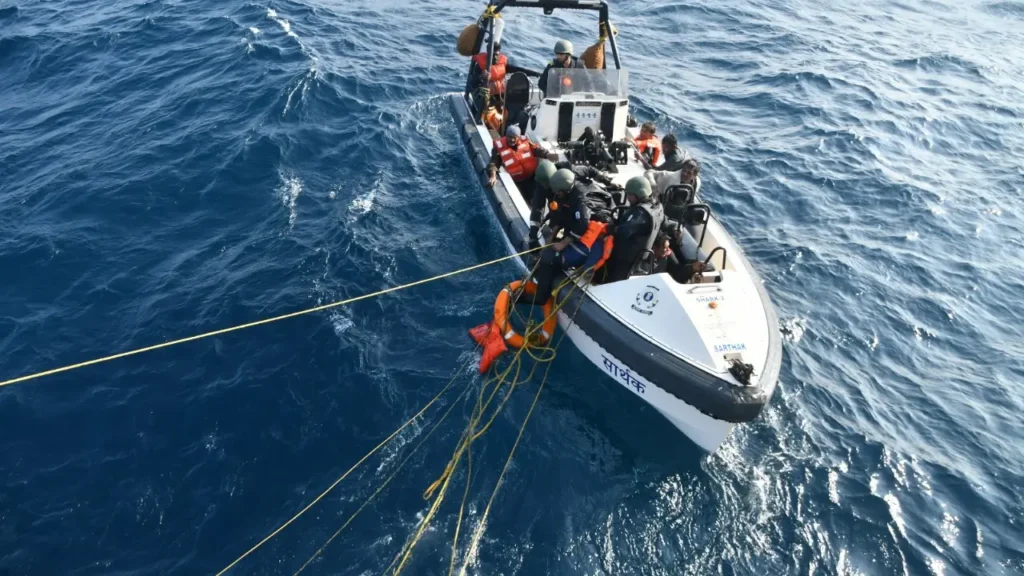
The joint operation involved the deployment of various assets, including aircraft and ships, from both the Indian and Pakistani sides. The Indian Coast Guard ship, ICGS Sarthak, played a crucial role in the rescue effort. The ship’s crew, equipped with advanced search and rescue equipment, scanned the vast expanse of the Arabian Sea to locate the distressed crew members.

timesofindia.indiatimes.com

The Pakistani Maritime Security Agency also contributed significantly to the operation by providing valuable assistance in the form of aerial surveillance and communication support. The joint effort between the two countries underscored the importance of regional cooperation in maritime security and humanitarian assistance.

The Rescue

After hours of intense search and rescue efforts, the Indian Coast Guard ship ICGS Sarthak successfully located the 12 crew members of the sunken vessel. The crew members, who had abandoned ship due to the severe weather conditions, were found clinging to life rafts and debris.

Also Read: Indian Navy Day: Guardians of the Seas

The ICG ship’s crew swiftly deployed rescue boats to bring the survivors aboard. Once on board, the rescued crew members were provided with medical attention and essential supplies. They were also offered psychological counseling to help them cope with the traumatic experience.

A Testament to International Cooperation

The successful rescue operation is a testament to the strong cooperation between the Indian and Pakistani maritime agencies. The joint effort not only saved the lives of 12 Indian sailors but also demonstrated the importance of international collaboration in addressing maritime challenges.

The incident also highlights the risks faced by seafarers, particularly those operating in challenging weather conditions. It underscores the need for robust safety measures and emergency response protocols to minimize the impact of maritime accidents.

Conclusion

The Indian Coast Guard’s successful rescue of 12 Indian crew members from the sunken vessel Al Piranpir is a remarkable achievement. The operation, carried out in coordination with the Pakistan Maritime Security Agency, showcased the power of international cooperation in saving lives at sea. This incident serves as a reminder of the importance of maritime safety and the need for preparedness to respond to emergencies effectively.

Also Read: GAIL (India) inks long-term charter with K Line on LNG newbuilding

Indian Navy Day: Guardians of the Seas

Report: Celebrating Our Naval Might: Indian Navy Day

Every year, on December 4th, India celebrates Navy Day, a day to honor the brave men and women of the Indian Navy who safeguard the nation’s maritime borders. This year, as the nation commemorates another Navy Day, it’s an opportune moment to reflect on the Indian Navy’s journey, its evolving role, and its unwavering commitment to national security.

A Glimpse into History

The Indian Navy traces its origins to the East India Company’s Marine. However, it wasn’t until after India’s independence in 1947 that the Indian Navy was formally established. Over the decades, the Indian Navy has grown exponentially, both in terms of size and capability. Today, it stands as a formidable force, equipped with a diverse range of warships, submarines, aircraft, and other assets.

Guardians of the Seas

The Indian Navy’s primary role is to protect India’s maritime interests. This includes safeguarding vital sea lanes, preventing illegal activities like piracy and smuggling, and responding to natural disasters. In recent years, the Indian Navy has also played a crucial role in humanitarian missions, such as providing relief during cyclones and tsunamis.

Modernization and Indigenous Development

Recognizing the importance of a modern and technologically advanced navy, India has embarked on a significant modernization program. This includes the acquisition of state-of-the-art warships, submarines, and aircraft. Additionally, the Indian Navy has placed a strong emphasis on indigenous development, with a focus on building warships and submarines domestically.

Also Read: GAIL (India) inks long-term charter with K Line on LNG newbuilding

Challenges and Opportunities

While the Indian Navy has made significant strides, it continues to face a number of challenges. These include the increasing threat of piracy, the need to maintain a high level of operational readiness, and the rising costs of modernization. However, the Indian Navy also has a number of opportunities. The increasing importance of the Indian Ocean region, coupled with India’s growing economic and strategic clout, has elevated the Navy’s role in regional and global affairs.

The Future of the Indian Navy

As India continues to rise as a global power, the Indian Navy is poised to play an even more critical role. The Navy is focused on enhancing its capabilities, particularly in areas such as anti-submarine warfare, maritime surveillance, and amphibious operations. Additionally, the Navy is also working to strengthen its international partnerships and collaborations to ensure maritime security and stability in the region.

Conclusion

Indian Navy Day is a reminder of the sacrifices and contributions of the brave men and women of the Indian Navy. As the guardians of India’s maritime interests, they play a vital role in safeguarding the nation’s security and prosperity. As India continues to grow and evolve, the Indian Navy will remain at the forefront, ensuring a secure and prosperous future for the nation.

Short Conclusion

Indian Navy Day celebrates the courage and dedication of the Indian Navy. As guardians of the seas, they safeguard India’s maritime interests and contribute to global maritime security. The Navy’s modernization and indigenous development efforts ensure its continued relevance in the 21st century.

Also Read: 22nd National Maritime Search and Rescue Board Meeting: A Focus on Enhancing Maritime Safety and SAR Operations

GAIL (India) inks long-term charter with K Line on LNG newbuilding

Report: GAIL charters LNG carrier from K Line.

New Delhi: GAIL (India) Ltd, India’s leading natural gas transmission and marketing company, has signed a long-term time charter contract with Kawasaki Kisen Kaisha, Ltd. (“K” Line) for the charter hire of a newly built LNG carrier. The pact was signed through the ship-owning company established in Singapore.

The LNG carrier, a modern two-stroke vessel with a tank capacity of 1,74,000 cubic meters, is being built by Samsung Heavy Industries Co., Ltd., Korea. The shipbuilding contract has been concluded by the ship-owning company with Samsung Heavy Industries.

This is the first long-term time charter contract between GAIL and “K” Line involving a newly built vessel. The LNG carrier is expected to be engaged in the transportation of Liquified Natural Gas (LNG) for GAIL starting from 2027.

Also Read: 22nd National Maritime Search and Rescue Board Meeting: A Focus on Enhancing Maritime Safety and SAR Operations

GAIL currently owns and operates a fleet of four LNG carriers, namely GAIL Bhuwan, GAIL Urja, Grace Emilia, and Maran Gas Pericles. Additionally, two more LNG carriers are expected to join the fleet next year, including the newly built vessel on long-term charter.

GAIL has a diversified sourcing portfolio for over 15 MMTPA of LNG, which includes supply sources from various geographies on both FOB and DES basis. The addition of this new LNG carrier will further strengthen GAIL’s LNG transportation capabilities and contribute to its long-term growth strategy.

The long-term charter agreement with “K” Line signifies GAIL’s commitment to securing reliable and efficient LNG transportation solutions. It also underscores the growing importance of LNG in India’s energy mix and the country’s efforts to transition towards cleaner and more sustainable energy sources.

Conclusion:

The long-term charter agreement between GAIL (India) and K Line marks a significant milestone in India’s LNG sector. It strengthens GAIL’s LNG transportation capabilities and solidifies its position as a key player in the global LNG market. This partnership will contribute to India’s energy security and its transition towards a cleaner energy future.

Also Read: BEML and Mazagon Dock Join Forces for Marine Technology Advancement

22nd National Maritime Search and Rescue Board Meeting: A Focus on Enhancing Maritime Safety and SAR Operations

Report: 22nd NMSAR Board Meeting: Strengthening Maritime Safety and SAR

22nd National Maritime Search and Rescue Board Meeting: A Focus on Enhancing Maritime Safety and SAR Operations

Kochi, November 28, 2024: The Indian Coast Guard (ICG) successfully organized the 22nd National Maritime Search and Rescue (NMSAR) Board meeting in Kochi, Kerala. The event also marked the commencement of the 11th edition of National Maritime Search and Rescue Exercise (SAREX-24), off the Kochi Coast on November1 29, 2024.

The NMSAR Board meeting, chaired by Director General ICG & Chairperson of the NMSAR Board DG Paramesh Sivamani, brought together key stakeholders from various government agencies, maritime organizations, and international partners to discuss and deliberate on critical aspects of maritime search and rescue (SAR) operations in India.

Key Highlights of the NMSAR Board Meeting:

  • Review of National Search and Rescue Plan (NSRP): The Board reviewed the current NSRP and discussed strategies to further enhance its effectiveness in addressing emerging challenges in the maritime domain.
  • Strengthening Coordination and Collaboration: The meeting emphasized the importance of seamless coordination and collaboration among all stakeholders involved in SAR operations, including the ICG, Indian Navy, Customs, Fisheries, State Maritime Boards, and other relevant agencies.
  • Enhancing SAR Capabilities: The Board deliberated on measures to further strengthen India’s SAR capabilities, including the acquisition of advanced equipment, training of personnel, and development of robust communication systems.
  • Promoting International Cooperation: The meeting recognized the significance of international cooperation in SAR operations and discussed opportunities for collaboration with neighboring countries and regional organizations.
  • Recognizing Excellence: National SAR Awards: The National SAR Awards for 2023-24 were presented during the meeting to individuals and organizations who have made outstanding contributions to maritime safety and SAR operations.

Also Read: BEML and Mazagon Dock Join Forces for Marine Technology Advancement

SAREX-24: A Showcase of India’s SAR Preparedness

The 11th edition of SAREX-24, conducted off the Kochi coast, demonstrated India’s commitment to enhancing its SAR capabilities and preparedness. The exercise involved a wide range of assets, including ships, aircraft, helicopters, and divers, from the ICG, Indian Navy, Coast Guard Auxiliary, and other agencies. The exercise focused on various SAR scenarios, such as search and rescue of distressed vessels, medical evacuations, and oil spill response.

SAREX-24 provided an excellent platform for participating agencies to refine their coordination and operational procedures, test their equipment and personnel, and learn from each other’s experiences.

Conclusion

The 22nd NMSAR Board meeting and SAREX-24 underscore India’s unwavering commitment to ensuring maritime safety and safeguarding lives at sea. The discussions and exercises held during these events will undoubtedly contribute to further enhancing India’s SAR capabilities and preparedness, making our seas safer for all.

The Indian Coast Guard, as the nodal agency for SAR operations in India, continues to play a pivotal role in safeguarding lives and property at sea. Through its dedicated efforts and collaborative approach, the ICG is striving to make India’s maritime domain a safer and more secure space.

Also Read: APM Terminals Pipavav Partners with CleanMax for a Sustainable Future

BEML and Mazagon Dock Join Forces for Marine Technology Advancement

Report: BEML and MDL are partners for marine tech.

Bengaluru, India: Bharat Earth Movers Limited (BEML) and Mazagon Dock Shipbuilders Limited (MDL) have entered into a strategic Memorandum of Understanding (MoU) to collaborate on research and development of advanced marine technologies. This partnership aims to bolster India’s indigenous capabilities in the defense and maritime sectors.

A Synergistic Collaboration

The collaboration between BEML and MDL brings together two industry leaders with complementary expertise. BEML, known for its engineering prowess, will leverage its capabilities to provide technical guidance for the design and manufacturing of strategic equipment tailored for marine applications. MDL, a renowned shipbuilding company, will contribute its extensive experience in shipbuilding and naval engineering.

Key Objectives of the Partnership

  • Technological Advancement: The partnership aims to foster innovation and develop cutting-edge marine technologies, reducing India’s reliance on foreign imports.
  • Indigenous Manufacturing: By collaborating on research and development, both companies aim to strengthen indigenous manufacturing capabilities, boosting domestic production.
  • Self-Reliance: The partnership aligns with India’s ‘Atmanirbhar Bharat’ initiative, emphasizing self-reliance in defense and maritime sectors.
  • Enhanced Capabilities: By combining their strengths, BEML and MDL aim to enhance their capabilities in areas such as underwater systems, marine electronics, and propulsion systems.
Marine
www.thehindubusinessline.com

A Significant Step Towards Atmanirbhar Bharat

The MoU between BEML and MDL marks a significant step towards India’s goal of self-reliance in the defense and maritime sectors. By fostering innovation and technological advancements, this partnership will contribute to India’s growing maritime prowess and strengthen its position as a global naval power.

Conclusion

The collaboration between BEML and Mazagon Dock is a testament to India’s commitment to technological self-reliance. By joining forces, these two industry leaders aim to develop cutting-edge marine technologies, reduce import dependency, and enhance India’s capabilities in the maritime domain. This partnership holds the potential to transform India’s shipbuilding industry and strengthen its position in the global maritime market.

Also Read: Decarbonizing Transport: A Global Imperative

APM Terminals Pipavav Partners with CleanMax for a Sustainable Future

Report: APM Terminals Pipavav partners with CleanMax for green energy

APM Terminals Pipavav, a leading port in Western India, has taken a significant step towards sustainability by signing a 25-year Power Purchase Agreement (PPA) with CleanMax, a leading renewable energy provider. This strategic partnership will enable the port to source clean, renewable energy from a hybrid wind-solar power project in Gujarat.

A Step Towards Net-Zero

This collaboration aligns with APM Terminals Pipavav’s ambitious goal of achieving net-zero emissions by 2040. By sourcing renewable energy, the port aims to significantly reduce its carbon footprint and contribute to a greener future. The hybrid power project, comprising 3.50 MW of wind and 1.06 MWp of solar capacity, will supply approximately 54 lakh kWh of electricity annually to the port. This will not only reduce the port’s reliance on fossil fuels but also help mitigate climate change.

Terminals
www.devdiscourse.com

Benefits of the Partnership

  • Reduced Carbon Emissions: By switching to renewable energy, APM Terminals Pipavav will significantly reduce its greenhouse gas emissions, contributing to a cleaner environment.
  • Cost Savings: Leveraging renewable energy can help the port achieve long-term cost savings by reducing its dependence on traditional energy sources.
  • Enhanced Reputation: This partnership will enhance APM Terminals Pipavav’s reputation as a sustainable and environmentally responsible company.
  • Supporting Local Economy: The development of renewable energy projects can create jobs and stimulate economic growth in the region.

Also Read: Decarbonizing Transport: A Global Imperative

A Model for the Industry

APM Terminals Pipavav’s commitment to sustainability sets a strong example for the entire shipping and logistics industry. By embracing renewable energy, the port demonstrates that it is possible to balance economic growth with environmental responsibility. This partnership could inspire other ports and industries to adopt similar initiatives and contribute to a more sustainable future.

Conclusion

The partnership between APM Terminals Pipavav and CleanMax is a significant milestone in the journey towards a greener future. By embracing renewable energy, the port is taking proactive steps to reduce its carbon footprint and contribute to a more sustainable world. This collaboration highlights the growing importance of sustainable practices in the shipping and logistics industry and sets a positive example for others to follow.

Also Read: Natural Gas: India’s Energy Transition Catalyst

Decarbonizing Transport: A Global Imperative

Report: Cleaner Transport: A Global Need

The transportation sector is a major contributor to global greenhouse gas emissions. As the world grapples with the urgent need to mitigate climate change, the decarbonization of transport has emerged as a critical challenge. This transition requires a multi-faceted approach, involving technological innovation, policy changes, and behavioral shifts.

The Need for Decarbonization

The transportation sector, encompassing road, rail, air, and maritime transport, is responsible for a significant portion of global greenhouse gas emissions. The burning of fossil fuels for powering vehicles and ships releases carbon dioxide and other pollutants into the atmosphere, contributing to climate change and air pollution.

The Road to Decarbonization

To achieve a sustainable and low-carbon future, the transportation sector must undergo a radical transformation. Here are some key strategies to decarbonize transport:

  1. Electrification:
    • Electric Vehicles (EVs): The rapid advancement of battery technology has made EVs a viable option for passenger cars and light commercial vehicles. Governments and automakers are investing heavily in EV infrastructure and production.
    • Electric Buses and Trucks: Electrifying heavy-duty vehicles can significantly reduce emissions in urban areas and long-haul transportation.
  2. Renewable Fuels:
    • Biofuels: Derived from plant-based materials, biofuels can reduce emissions when blended with conventional fuels.
    • Hydrogen Fuel Cell Vehicles: Hydrogen fuel cell vehicles produce electricity through a chemical reaction, emitting only water vapor.
  3. Improved Efficiency:
    • Lightweight Materials: Using lighter materials in vehicle construction can improve fuel efficiency.
    • Aerodynamic Design: Optimizing vehicle design can reduce drag and improve fuel economy.
    • Advanced Engine Technologies: Developing more efficient internal combustion engines can help reduce emissions.
  4. Smart Mobility Solutions:
    • Public Transportation: Investing in efficient and affordable public transportation systems can reduce reliance on private vehicles.
    • Shared Mobility: Car-sharing, bike-sharing, and ride-sharing services can reduce the number of vehicles on the road.
    • Autonomous Vehicles: Self-driving cars have the potential to improve traffic flow and reduce accidents.
  5. Policy and Regulatory Framework:
    • Incentives and Subsidies: Governments can encourage the adoption of clean technologies through tax breaks, subsidies, and other incentives.
    • Emission Standards: Stricter emission standards can drive innovation and force manufacturers to develop cleaner vehicles.
    • Infrastructure Investment: Investing in charging infrastructure for EVs and hydrogen fueling stations is crucial.

Also Read: Indian Coast Guard Makes Record Drug Bust in Andaman Waters

Global Collaboration

Decarbonizing the transportation sector is a global challenge that requires international cooperation. Countries around the world must work together to develop and implement policies, share best practices, and coordinate investments. International organizations, such as the United Nations Framework Convention on Climate Change (UNFCCC), play a vital role in facilitating global efforts to reduce emissions from the transportation sector.

Conclusion

The decarbonization of transport is a complex but essential task. By embracing a combination of technological advancements, policy changes, and behavioral shifts, we can reduce emissions, improve air quality, and create a more sustainable future. As the world transitions to a low-carbon economy, the transportation sector must lead the way.

Also Read: Natural Gas: India’s Energy Transition Catalyst

Natural Gas: India’s Energy Transition Catalyst

Report: Natural Gas Fuels India’s Energy Shift

India, a nation striving to balance its energy needs with environmental concerns, is increasingly turning to natural gas as a cleaner and more efficient fuel source. This shift towards natural gas is a pivotal step in India’s energy transition, aimed at reducing reliance on traditional fossil fuels and mitigating greenhouse gas emissions.

A Cleaner Alternative

Natural gas, primarily composed of methane, burns cleaner than coal and oil, emitting significantly fewer pollutants such as sulfur dioxide, nitrogen oxides, and particulate matter. This makes it a more environmentally friendly option for power generation, industrial processes, and domestic use.

Domestic Production and Imports

India has been actively exploring and developing its domestic natural gas reserves. However, to meet the growing demand, the country also relies on imports, primarily in the form of liquefied natural gas (LNG). LNG is natural gas cooled to a liquid state for efficient transportation. India has established several LNG terminals along its coastline to facilitate the import of this crucial energy resource.

Key Advantages of Natural Gas

  • Reduced Emissions: Natural gas emits fewer greenhouse gases compared to coal and oil, contributing to a cleaner environment.
  • Enhanced Energy Security: By diversifying its energy sources, India can reduce its dependence on imported oil and enhance its energy security.
  • Versatile Fuel: Natural gas can be used for various applications, including power generation, industrial processes, transportation, and cooking.
  • Economic Benefits: The development of natural gas infrastructure can create jobs and stimulate economic growth.

Also Read: Shipping Industry Struggles with Soaring Fuel Costs

Government Initiatives

The Indian government has implemented several initiatives to promote the use of natural gas:

  • City Gas Distribution (CGD) Networks: The government has accelerated the development of CGD networks to provide natural gas to households and industries in urban and rural areas.
  • Pradhan Mantri Urja Ganga Pipeline Project: This ambitious project aims to transport natural gas to various regions of India, expanding access to cleaner fuel.
  • Promotion of Compressed Natural Gas (CNG) and Liquefied Natural Gas (LNG) for Transportation: The government is encouraging the use of CNG and LNG as fuels for vehicles, reducing air pollution in cities.

Challenges and Opportunities

While natural gas offers significant advantages, there are challenges to overcome:

  • Infrastructure Development: Expanding the natural gas infrastructure, including pipelines and storage facilities, requires substantial investment.
  • Price Volatility: Global natural gas prices can fluctuate, impacting the cost of this fuel.
  • Safety Concerns: Proper handling and transportation of natural gas are essential to ensure safety.

Despite these challenges, the potential benefits of natural gas are immense. By investing in natural gas infrastructure, promoting its use, and addressing safety concerns, India can accelerate its energy transition and build a more sustainable future.

Conclusion

Natural gas is emerging as a crucial component of India’s energy mix. Its cleaner emissions, versatility, and potential to enhance energy security make it a compelling choice. As India continues to prioritize sustainable development, natural gas will play a pivotal role in shaping the country’s energy landscape.

Also Read: Indian Coast Guard Makes Record Drug Bust in Andaman Waters

Shipping Industry Struggles with Soaring Fuel Costs

Report: Shipping industry faces fuel price surge.

The global shipping industry, the lifeblood of international trade, is currently grappling with one of its most significant challenges in recent years: skyrocketing fuel costs. This surge in fuel prices is not only impacting the bottom line of shipping companies but also rippling through the entire supply chain, affecting the cost of goods and services worldwide.

The Fuel Factor

Fuel is a major expenditure for the shipping industry, accounting for a substantial portion of operating costs. The recent sharp increase in fuel prices, driven by a confluence of factors including geopolitical tensions, increased global demand, and supply chain disruptions, has placed immense pressure on shipping companies.

Impact on the Industry

The rising fuel costs have far-reaching consequences for the shipping industry:

  • Increased Freight Costs: Shipping companies are compelled to pass on the increased fuel costs to their customers, resulting in higher freight rates for importers and exporters. This, in turn, can lead to increased costs for consumers.
  • Reduced Profit Margins: The higher fuel costs erode the profit margins of shipping companies, making it challenging for them to maintain profitability and invest in new technologies and infrastructure.
  • Delayed Shipments: Some shipping companies may opt to slow down their vessels to reduce fuel consumption, leading to longer transit times and potential delays in the delivery of goods.
  • Supply Chain Disruptions: Fuel price volatility can create uncertainty and disruptions in the supply chain, making it difficult for businesses to plan and execute their logistics operations effectively.
Fuel Costs
lngprime.com

Navigating the Storm

To mitigate the impact of rising fuel costs, shipping companies are exploring various strategies:

  • Fuel Efficiency: Investing in fuel-efficient vessels and technologies can help reduce fuel consumption and lower operating costs.
  • Alternative Fuels: Exploring alternative fuels like liquefied natural gas (LNG) and biofuels can provide a cleaner and more cost-effective solution.

Also Read: Indian Coast Guard Makes Record Drug Bust in Andaman Waters

  • Route Optimization: Optimizing shipping routes to minimize fuel consumption and transit times can help reduce costs.
  • Digitalization: Adopting digital technologies can streamline operations, improve efficiency, and reduce costs.
  • Risk Management: Implementing robust risk management strategies can help mitigate the impact of fuel price volatility and other external factors.

The Broader Impact

The impact of rising fuel costs extends beyond the shipping industry. It affects various sectors, including manufacturing, retail, and agriculture, which rely heavily on shipping for the movement of goods. Higher transportation costs can lead to inflation, impacting consumer prices and economic growth.

Conclusion

The shipping industry’s struggle with rising fuel costs underscores the complex interplay between energy, logistics, and global trade. As the world grapples with energy security and environmental concerns, the industry must find innovative solutions to reduce its reliance on fossil fuels and minimize its carbon footprint. The future of shipping will depend on its ability to adapt to these challenges and embrace a sustainable approach to global trade.

Also Read: 4 Crew Members Charged in Singapore’s Worst Oil Spill in a Decade