Tanker Explosion Off Kandla Port Sparks 21 Crew Evacuation and Pollution Alert

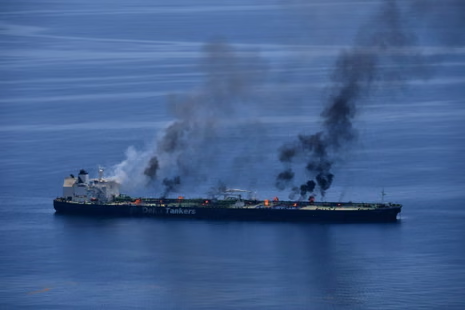
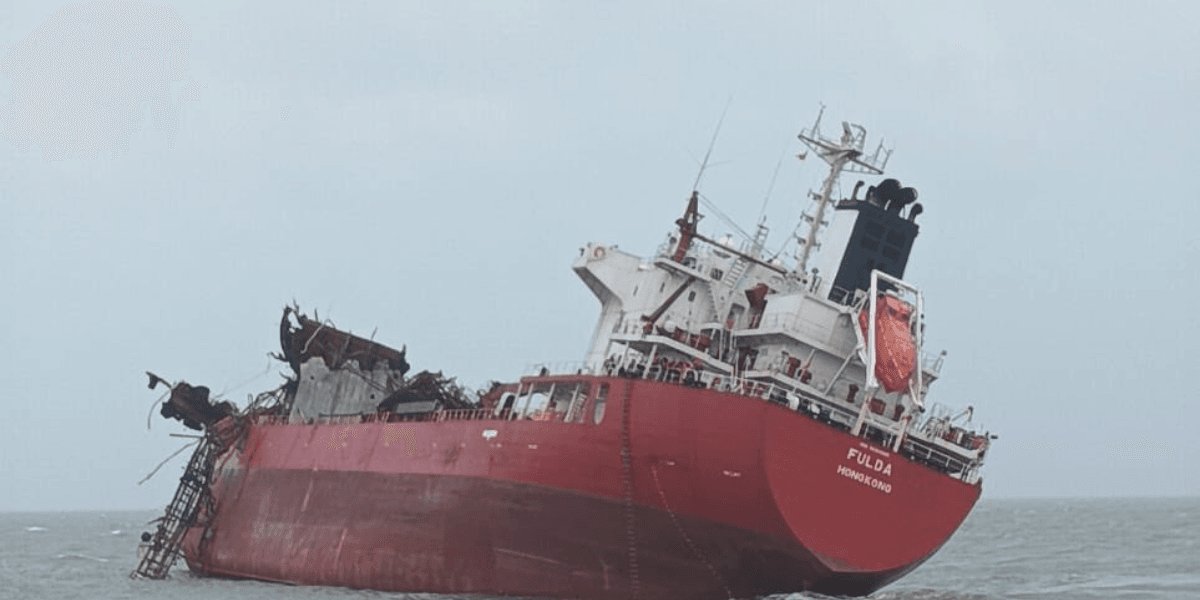
On Sunday, July 6, 2025, at approximately 13:05 IST, an explosion ripped through the Hong Kong-flagged product tanker Fulda as she conducted routine gas-freeing operations off the port of Kandla on India’s west coast. Gas-freeing the process of ventilating tanks of residual volatile vapours before maintenance or the loading of new cargo is an everyday procedure in tanker operations, but one that carries significant risks if not executed with reliable care.

Built in 1999 and boasting a deadweight tonnage of 19,477 DWT, the 26-year-old Fulda had departed Kandla at 11:00 IST that morning, bound for Port Sohar in Oman with a cargo of methanol and residual fuel amounting to some 384.17 metric tons. Within two hours, responding to reports from the nearby anchor-handler Team Focus, the vessel’s crew discovered a sudden 22° list to starboard, swiftly corrected to port as emergency measures were taken onboard.

By 19:00 IST, with the situation worsening due to structural damage and the ongoing risk of fire or secondary blasts, the master of the Fulda formally requested an immediate evacuation. In a well-coordinated operation overseen by India’s Directorate General of Shipping, all 21 crewmembers comprising 11 Chinese, 2 Bangladeshi, 1 Indonesian, and 7 Myanmar’s nationals were safely transferred to the tug Orchid Star, which had been dispatched from Kandla to effect rescue. No injuries were reported.

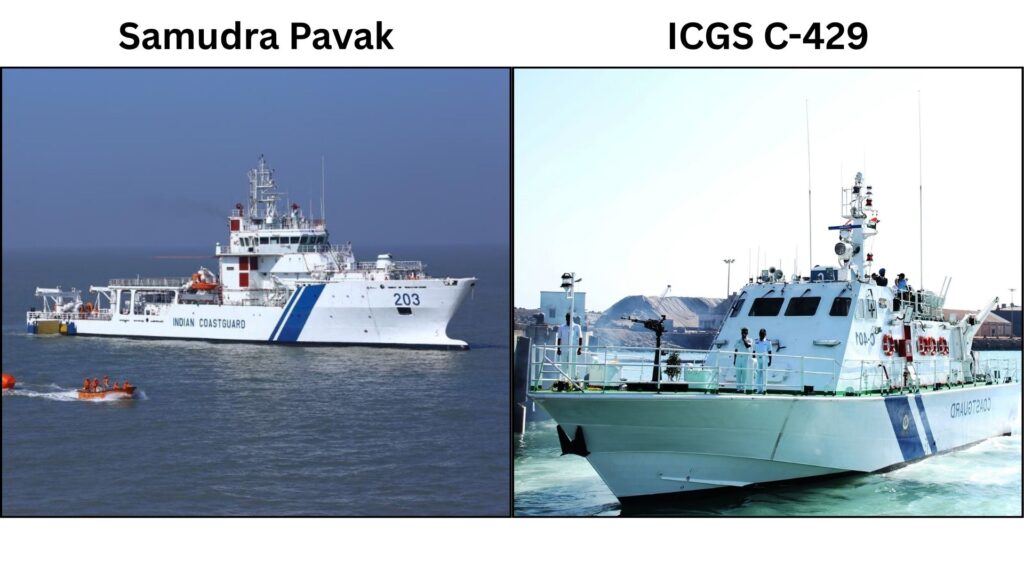
Indian authorities rapidly mobilized a multi-pronged response. Two additional harbour tugs joined Orchid Star, while the Indian Coast Guard deployed the inlet patrol vessel ICGS C-429 and the Pollution Control Vessel Samudra Pavak to the scene. As a precaution against potential oil slicks, interceptor boats C-401 and C-402 were kept on station to monitor sea conditions and water sampling, though to date no evidence of hydrocarbon pollution has been confirmed.

ICGS
SOURCE: INDIAN COASTGUARD

Early technical assessments suggest that the blast originated from an build-up of flammable vapour within Fulda’s cargo tanks. Investigators point to inadequate flushing and purging during the gas-freeing sequence, allowing a vapour–air mixture to form. In the absence of proper grounding and bonding of equipment, static electrical discharge may have ignited the cloud, triggering the significant explosion. Similar incidents in tanker operations have historically underscored the critical importance of rigorous inerting and strict observance to safety checklists before tank entry or maintenance.

The owner, Hong Kong-based Fulda Industrial, has pledged full cooperation with the Indian Directorate General of Shipping’s formal inquiry. Preliminary investigation teams have already begun inspecting the vessel’s tank-cleaning logs, equipment maintenance records, and crew training certifications to establish a timeline of events prior to the detonation.

Despite the severity of the blast, the Fulda remains afloat with no detectable ingress of seawater into her lower hull compartments. The structural integrity of cargo tanks and adjacent decks, however, is compromised, and rescue specialists are on standby should further reinforcement or a tow to protected waters become necessary. All nearby merchant and fishing vessels have been issued safety advisories to maintain a minimum five-nautical-mile exclusion zone until the danger of secondary ruptures has passed.

Environmental agencies have noted that even in the absence of a visible slick, trace hydrocarbon residues can pose long-term risks to marine life and coastal habitats. The Coast Guard’s Pollution Control Vessel is equipped with booms, skimmers, and dispersant kits, ready to deploy at a moment’s notice. Continuous aerial and underwater surveillance is being conducted to detect minute oil sheen or subsurface droplets.

Also read : Cochin Shipyard & HD Korea Shipbuilding Sign Strategic MoU for Maritime Collaboration

Maritime safety experts describe the Fulda incident as a stark reminder that gas-freeing, though routine, remains one of the most hazardous activities aboard tankers. “Even marginal lapses in equipment inspection or procedural compliance can allow vapour pockets to accumulate,” noted Captain Suresh Nair, a veteran tanker master and safety auditor. “Strict atmospheric testing, inert-gas blanketing, and regular maintenance of electrical bonding circuits are non-negotiable to prevent such catastrophic failures”.

Looking ahead, the Directorate General of Shipping is expected to issue fresh circulars reinforcing mandatory safety protocols for gas-freeing and tank-entry procedures, potentially raising requirements for independent third-party monitoring on older vessels. The incident may also prompt insurers and classification societies to revisit survey standards and upgrade conditions for vessels trading hazardous cargoes in regional waters.

For now, the immediate priority remains ensuring the Fulda’s seaworthiness, preventing any pollution, and safeguarding rescue crews. Port authorities at Kandla have confirmed that normal operations at adjacent jetties continue uninterrupted, albeit under heightened scrutiny and with traffic management protocols in place to avoid congestion near the incident site.

As the investigation unfolds, stakeholders across the maritime sector will be watching closely. The Fulda explosion shows that even well-regulated ports require strict vigilance and strong safety practices to avoid accidents, environmental harm, and costly disruptions.

Source : (splash247.com)

Cochin Shipyard & HD Korea Shipbuilding Sign Strategic MoU for Maritime Collaboration

Cochin Shipyard Limited (CSL), India’s premier public sector shipyard, has signed a strategic Memorandum of Understanding (MoU) with South Korea’s HD Korea Shipbuilding & Offshore Engineering Co. Ltd. (KSOE), embedding a framework for sustained collaboration across shipbuilding, workforce development, and global maritime innovation.

The MoU was formalised on July 4, 2025 during a signing ceremony in Kochi. It aims to leverage the complementary strengths of CSL and HD KSOE, aligning with India’s wider ambitions to become a global maritime powerhouse.

Partners at a Glance

Cochin Shipyard Limited (CSL)
Established in 1972 and headquartered in Kochi, CSL is India’s largest public-sector shipbuilder, capable of constructing vessels up to 110,000 DWT and repairing ships up to 125,000 DWT. It has landmark achievements under its belt, including India’s first indigenous aircraft carrier (INS Vikrant) and over 47 high-end vessels delivered to international clients.

HD Korea Shipbuilding & Offshore Engineering (KSOE)
A subsidiary of HD Hyundai, KSOE is a global marine engineering juggernaut overseeing Hyundai Heavy Industries, Hyundai Mipo Dockyard, and Hyundai Samho Heavy Industries.

HD Korea Shipbuilding
SOURCE : WIKIPEDIA

Strategic Focus of the MoU

The MoU encapsulates cooperation across five core pillars:

  1. Exploration of newbuilding projects – Joint bidding and development efforts in India and international markets.
  2. Technical and design expertise exchange – Upscaling CSL to global shipbuilding standards.
  3. Operational productivity and capacity optimisation – Streamlining processes and resource utilisation.
  4. Workforce upskilling programmes – Cross-training engineers, designers, and technicians.
  5. Exploration of new maritime ventures – Including offshore facilities, defense platforms, and specialized vessels.
cochin shipyard
SOURCE : x.com

National Maritime Strategy & Policy Context

This MoU is perfectly aligned with two flagship government blueprints:

1. Maritime India Vision 2030: A roadmap to elevate India as a global maritime hub through infrastructure investment, innovation, and international partnerships.

    2. Maritime Amrit Kaal Vision 2047: A long-term vision to build self-reliance and strategic strength in maritime capabilities.

    Moreover, it complements the ₹25,000‑crore Maritime Development Fund, which is fueling large-scale projects like new shipyards, hull innovation, and port modernisation.

    Also Read : India Acquires Colombo Dockyard, Expanding Influence in Indian Ocean

    Why It Matters

    Technology Infusion: Access to South Korean expertise in naval architecture and design practices will elevate India’s shipbuilding standards.

    Operational Efficiency Gains: Leveraging KSOE’s optimized production systems could improve turnaround time and cost-efficiency for CSL-built vessels.

    Employment and Skill Enrichment: Workforce will benefit from joint training initiatives, enhancing India’s talent pool in high-tech maritime sectors.

    Strategic Capacity Building: Strengthens domestic shipbuilding for commercial, defense, and offshore needs—supporting import substitution and firms moving up the value chain.

    Regional Development: Reinforces Kochi’s rise as a maritime hub, dovetailing with other state-level shipyard proposals in Tamil Nadu, Gujarat, and Andhra Pradesh—including a planned ₹10,000‑crore mega shipyard in Thoothukudi.

    Outlook & Next Steps

    Feasibility & Pilot Projects: Likely to begin later this year, covering vessels ranging from merchant fleets to military platforms.

    Training & Talent Exchange: Technical delegation visits anticipated; CSL engineers to train at Korean facilities and vice versa.

    Joint Ventures & Facility Expansion: Potential to co-develop advanced shipbuilding units—not just in Kochi, but in newly identified maritime clusters across coastal states.

    Market & Industry Impact

    CSL’s shares rose ~2 percent in Friday trade, closing at ₹2,057.25, reflecting investor optimism spurred by the MoU. Analysts highlight that this trial is a bellwether for deeper industrial ties, market expansion, and capacity uptake in the shipbuilding sector.

    CSL’s Performance Highlights

    In Q4 FY 2024–25, CSL posted a commanding 10 percent YoY net profit growth, earning ₹287 crore, with revenues rising ~37 percent to ₹1,758 crore. The company manages a robust order book of approximately ₹22,500 crore, and ranks among India’s top mid-cap performers with a 640 percent return in under two years.

    cochin shipyard
    SOURCE: psu connect

    Broader Global Context

    South Korea’s HD Hyundai has been doubling down on global partnerships. Earlier this year, the conglomerate signed a similar MoU with America’s Huntington Ingalls for defense vessels—a bid to challenge China’s dominance in shipbuilding. The CSL collaboration is part of this broader geopolitical wave of maritime industry consolidation.

    This MoU marks a watershed moment for India’s shipbuilding journey melding CSL’s domestic prowess with KSOE’s world-class technology and process know-how. Beyond commerce, it catalyses India’s maritime aspirations supporting infrastructure, coastal economies, defense preparedness, and the broader Maritime India Vision 2030.

    As feasibility studies commence and training programmes launch, this partnership will be closely watched. The success of pilot ventures could set the stage for future joint shipyards, specialization clusters, and expanded Indo-Korean industrial cooperation in the maritime domain.

    India Acquires Colombo Dockyard, Expanding Influence in Indian Ocean

    Indian state-owned Mazagon Dock Shipbuilders Ltd. (MDL) acquired stake in Sri Lanka’s Colombo Dockyard PLC (CDPLC) for up to $52.96 million. The deal covers at least 51% of CDPLC’s equity and includes shares held by Japan’s Onomichi Dockyard Co. Ltd. (the previous majority owner). The transaction is expected to close within four to six months, pending regulatory approvals. Upon completion CDPLC will become a subsidiary of MDL. MDL a leading Indian warship and submarine builder says this is its first overseas acquisition and a milestone in its evolution from a purely domestic shipyard to a regional maritime player.

    Deal Highlights:

    • MDL to acquire ≥51% of Colombo Dockyard for up to $52.96M.
    • Includes Onomichi Dockyard’s entire 51% stake in CDPLC.
    • Structured as a mix of new equity and purchase of existing shares.
    • Expected close in 4–6 months, then CDPLC becomes MDL subsidiary.
    • Colombo Dockyard (est. 1974) is Sri Lanka’s largest shipyard with over 50 years of experience; 2024 turnover LKR 25.45 B ($85M).
    • The yard has four dry docks (largest 125,000 DWT) and multiple berths.
    • Mazagon Dock’s own FY2024/25 revenue was ₹114.32 B (~$1.34B).
    • First foreign acquisition by an Indian shipbuilder; CDPLC will be MDL’s 100%-owned subsidiary after closing
    SOURCE : COLOMBO DOCKYARD

    Colombo Dockyard has built a variety of large vessels for clients around the world. Colombo Dockyard PLC has been Sri Lanka’s flagship shipbuilding and repair yard for over five decades. It runs four dry docks (the largest handling up to 125,000 DWT) and multiple repair berths, servicing over 200 vessels per year. Over the years CDPLC has delivered complex ships – from cable-layers and offshore support vessels to tankers and patrol craft – for customers in Asia, Europe, the Middle East and Africa. This extensive capability – including in-house design, steel fabrication and ISO-certified operations – makes CDPLC Sri Lanka’s only yard offering a full integrated shipbuilding and repair portfolio.

    Sri Lanka’s Colombo Dockyard lies on one of the world’s busiest shipping routes, giving India a strategic Indian Ocean outpost. The location of Colombo Dockyard – in Sri Lanka’s main port on the Indian Ocean – is highly strategic. It sits just off the busy East–West shipping lanes, giving MDL a strong operational foothold in one of the world’s most geopolitically significant maritime corridors. Indian officials and analysts note that this acquisition helps balance China’s influence in Sri Lanka. ( Sri Lanka’s Hambantota Port – on the island’s south coast – was leased to China Merchants Port Holdings for 99 years in 2017 after Colombo failed to service its debt.)

    India has long watched Chinese Investments in Sri Lankan ports with concern, and MDL’s move effectively adds an Indian “forward outpost” on its southern flank. In the words of Reuters, the deal “is seen giving India a strategic foothold in the Indian Ocean island nation where New Delhi and Beijing have been pushing for influence for years”. Business Standard similarly notes the deal’s significance “amid the increasing assertiveness of Chinese in the Indian Ocean region and its presence in India’s neighbourhood”.

    shipbuilding
    SOURCE : mazagon dock

    Economic and Operational Synergies

    The acquisition is also expected to harvest important commercial and technical cooperation. MDL plans to integrate Colombo Dockyard into its shipbuilding and supply chain network. For example, senior officials say that a number of repair and refit orders from India and abroad can now be diverted to CDPLC, ensuring a continuous revenue stream and relieving capacity pressure at Mumbai. In PTI’s words, MDL “will bring an order pipeline for CDPLC from both domestic and international markets for repairs, refits and new builds,” creating new work for the Colombo yard.

    At the same time, MDL can offload some of its workload to Sri Lanka’s facilities, speeding up project completion on both sides. Company officials also highlight that the two yards’ decades of collected expertise can be pooled. As noted in reports, the “detailed design capabilities possessed by both the yards can be leveraged” on projects at either shipyard. This design and engineering cooperation along with shared R&D and access to common suppliers is expected to lower costs and boost productivity across the two facilities.

    Also Read : INS Tabar Rescues 14 crew from oil tanker fire in Gulf of Oman

    Key synergies include –

    • Diversified workload: MDL can channel more repair and construction work through Colombo Dockyard, ensuring a steady income stream, while CDPLC taps into MDL’s order pipeline for new builds.
    • Shared expertise: Combining the engineering teams and design talent of MDL and CDPLC unlocks operational efficiencies. Both yards’ decades of know-how can be harnessed for joint projects.
    • Technology transfer: Access to MDL’s naval shipbuilding technology and Indian supply chains should help modernize Colombo Dockyard. MDL’s investment and technical support are expected to aid the debt-laden CDPLC’s turnaround.
    • Expanded markets: CDPLC has an existing order book exceeding $300 million. Through MDL’s backing, these orders can tap into Indian and allied markets. Conversely, MDL gains a gateway to customers in Sri Lanka, the Maldives, Southeast Asia and Africa via CDPLC’s regional presence.

    Overall, MDL says the deal will “strengthen its position in the shipbuilding and ship repair industry by unlocking operational synergies, enhancing [R&D] capacity and expanding market reach”. By integrating Colombo Dockyard’s resources, MDL aims to create a more efficient, multi-location maritime enterprise.

    Regional Impact and Outlook

    Beyond economics, the move has clear geopolitical overtones. Indian analysts view it as part of a broader push to secure South Asian maritime routes and counter Chinese influence. MDL’s official statement clearly tied the deal to India’s maritime strategy: it said the acquisition “envisages India’s emergence as a leading maritime power with strong regional integration and industrial capabilities,” helping to build a “multi-location shipbuilding enterprise” anchored in Indian expertise.

    In practical terms, the Colombo Dockyard acquisition essentially binds Sri Lanka’s naval infrastructure to New Delhi’s maritime supply chain. As one security commentator put it, India is stitching together a “South Asian Maritime Arc” – a chain of ports and repair hubs that would enhance its ability to project power and monitor activity in the Indian Ocean.

    SOURCE : COLOMBO DOCKYARD

    For Sri Lanka, the deal also has appeal as a commercial lifeline. Colombo Dockyard has struggled with low utilization and debt; Indian capital booster and management is expected to revive the yard. Sri Lankan officials welcome the partnership as job-creating and technology-building. The Minister of Ports has called it “not only an economic deal but also a demonstration of regional cooperation” that will boost skills and naval capacity. In effect, the MDL acquisition signals to other investors that Sri Lanka is diversifying its partnerships and not solely reliant on Chinese firms.

    India’s move likewise sends a message: when financial distress creates an opening, New Delhi is ready to step in on its own terms. This quietly expands India’s influence in Colombo, just as Chinese influence has grown in the Hambantota Port lease. So far, Beijing has offered no public reaction to the shipyard deal, with Chinese analysts calling it “predictable” and unlikely to endanger China’s long-term projects in Sri Lanka. But some local experts in Colombo speculate that an expanded Indian role could eventually lead to joint exercises or intelligence sharing – developments that China would watch carefully.

    In sum, the MDL–Colombo Dockyard partnership is more than a business transaction – it represents a strategic forward outpost for India in a zone of intense great-power competition, bolstering its maritime supply chain and diplomatic presense in the Indian Ocean.

    INS Tabar Rescues 14 crew from oil tanker fire in Gulf of Oman

    In a swift and commendable maritime rescue operation, the Indian Navy’s stealth frigate INS Tabar successfully responded to a distress call from MT Yi Cheng 6, a Pulau-flagged oil tanker that suffered a massive fire and total power failure in the Gulf of Oman on 29 June 2025. The tanker, which was enroute from Kandla (India) to Shinas (Oman), had 14 crew members, all Indian origin, onboard at the time of the emergency.

    According to official sources from the Indian Navy spoke person, the fire broke out in the vessel’s engine room, leading to a complete blackout and loss of propulsion. The incident occurred while the ship was transiting international waters off the Omani coast. The exact cause of the fire is still under investigation, but early reports suggest a probable mechanical failure in the engine room.

    Upon receiving the distress signal, INS Tabar, which was mission-deployed in the Gulf of Oman as part of India’s maritime security patrols, immediately changed path and rushed to the scene. The Navy confirmed that 13 Indian naval personnel, trained in damage control and marine firefighting, were dispatched to the tanker using a combination of the ship’s helicopter and rigid-hulled inflatable boat (RHIB). They were joined by five crew members of the MT Yi Cheng 6 to conduct an onboard firefighting operation.

    “The team carried specialised naval firefighting equipment and quickly commenced onboard firefighting operations,” the Indian Navy said in a statement. “Thanks to their coordinated and determined efforts, the intensity of the fire was reduced drastically by the evening of 30 June.”

    source : INDIAN NAVY

    INS Tabar’s commanding officer ensured continuous coordination between the frigate and the distressed tanker. The situation was largely under control and all 14 crew members were safe No injuries or casualties have been reported so far. The combined effort of the Indian Navy and the ship’s personnel ensured suppression of the fire before it could escalate or cause terrible damage to the vessel or the environment.

    This incident is a stark reminder of the unpredictable and hazardous conditions faced by merchant ships at sea. It also highlights India’s growing maritime capability and its commitment to the safety of Indian seafarers operating under foreign flags. The MT Yi Cheng 6, though registered under the flag of Palau, had a full Indian crew and was transiting an important commercial route that connects the Indian subcontinent to the Gulf.

    Also Read : Kerala Container Ship Disaster – MSC ELSA 3 Capsizes, All 24 Crew Rescued, Oil Spill Sparks Coastal Alert

    Maritime experts and officials lauded the Indian Navy’s timely response. “This is a textbook example of naval readiness, rapid response, and the kind of capability that India has developed to project assistance across the Indian Ocean Region,” said a retired naval officer familiar with maritime operations in the Gulf.

    SOURCE : INS TABAR

    Further investigations are expected to be carried out to determine the exact cause of the fire and assess the structural integrity of the tanker. The vessel is currently being stabilized and further supported by the crew of INS Tabar until additional technical assistance, or a tugboat is arranged by the shipping operator.

    The Indian Navy has not ruled out providing extended support to ensure safe towing or onward transit of MT Yi Cheng 6 if required. As of now, all crew members are reported to be in good health and are being attended to by naval medical staff onboard INS Tabar, if needed. The Navy’s prompt action ensured that a potentially terrible incident was avoided in one of the world’s most vital maritime trade corridors.

    Kerala Container Ship Disaster – MSC ELSA 3 Capsizes, All 24 Crew Rescued, Oil Spill Sparks Coastal Alert

    May 27, 2025

    Kochi, Kerala – A major maritime crisis unfolded off the coast of Kerala over the weekend, as a Liberian-flagged container vessel, MSC ELSA 3, capsized after developing a severe tilt. The dramatic incident, which led to the loss of several cargo containers and triggered an oil spill, prompted a swift multi-agency rescue and environmental response. All 24 crew members aboard were successfully rescued in an operation involving the Indian Navy, Coast Guard, and disaster management agencies.

    The 184-metre-long vessel, built in 1996, had departed from Vizhinjam port on May 23 and was enroute to Kochi when it developed a dangerous list approximately 38 nautical miles off the coast on May 25. By early May 26, the vessel had capsized in the Arabian Sea. According to officials, the tilting began due to water ingress in one of the cargo holds, leading to a rapid loss of stability.

    Rescue Operation Saves All Crew

    The crew of MSC ELSA 3 included 24 individuals a Russian captain, 20 Filipinos, two Ukrainians, and one Georgian national. As the ship began listing heavily, 21 of them abandoned the vessel and boarded life rafts, which were deployed with the help of an Indian Coast Guard Dornier aircraft. These crew members were later rescued by Coast Guard vessels and brought to safety.

    However, three senior officers including the ship’s captain and two engineers remained onboard to manage emergency procedures and monitor the vessel’s condition. With worsening weather and the ship’s condition deteriorating, the Indian Navy deployed INS Sujata, which carried out a challenging operation to rescue the remaining crew under high-risk conditions. All three were safely evacuated by the morning of May 26, bringing the total number of rescued crew to 24, with no casualties or injuries reported.

    Environmental Threat Unfolds

    While the rescue operation was successful, concerns have mounted over the environmental fallout. The vessel was reportedly carrying around 640 containers, including at least 13 loaded with hazardous materials and 12 containing calcium carbide a chemical that reacts violently with water and poses fire and explosion risks. As the ship capsized, many of these containers fell into the sea.

    In addition to the dangerous cargo, the ship had substantial quantities of fuel onboard: approximately 84.4 tonnes of diesel and 367.1 tonnes of furnace oil. A significant portion of this oil has since begun leaking into the Arabian Sea, forming slicks visible from reconnaissance aircraft and satellite imagery.

    Authorities have warned that the oil spill could reach the Kerala coastline within 36 to 48 hours if not contained swiftly. The National Centre for Ocean Information Services (INCOIS) has projected that coastal districts such as Alappuzha could be affected first. A coastal alert has been issued by the Kerala State Disaster Management Authority, urging residents especially fishermen to avoid approaching or touching any drifting containers or oily debris.

    Government and Military Response

    In response to the looming environmental threat, the Indian Coast Guard and Navy have launched a full-scale pollution control and surveillance operation. A dedicated Coast Guard pollution control vessel, ICGS Saksham, has been deployed to monitor and mitigate the oil spill, while air patrols equipped with infrared sensors are mapping the spread of the slick.

    A second vessel from the same shipping line as MSC ELSA 3 has also arrived in the vicinity, aiding in the response and potentially involved in salvage preparations. The Coast Guard has established a 200-metre safety radius around any floating containers, urging mariners and fishing boats to steer clear.

    Meanwhile, Kerala’s Chief Secretary held a high-level meeting with disaster management officials to coordinate shoreline preparedness in the event of oil reaching land. Emergency teams have been placed on standby, and public awareness campaigns are being launched to advise citizens on what to do if contaminated materials wash ashore.

    Also read : Seafarers Stranded in Red Sea as Houthi Attacks Disrupt Shipping Lanes

    What Caused the Incident?

    Although a formal investigation is still underway, preliminary reports suggest that flooding in a cargo hold triggered the listing. Experts note that MSC ELSA 3 was already 28 years old, and questions are being raised about its seaworthiness and whether any structural failure or cargo mismanagement contributed to the event.

    The ship had been frequenting Vizhinjam port since early May, with five port calls already made that month. Its final journey began on May 23, just two days before it capsized.

    Global Shipping, Local Fallout

    This incident has once again spotlighted the fragile balance between maritime commerce and coastal ecosystem health. While Kerala has robust coastal monitoring systems, the spill underscores the need for faster response mechanisms and stricter checks on hazardous cargo transported near sensitive shorelines.

    Officials are also coordinating with international maritime agencies and the shipping company for further recovery and compensation procedures.

    Conclusion

    The MSC ELSA 3 episode serves as both a rescue triumph and an environmental wake-up call. While it is commendable that all 24 lives were saved through a well-coordinated operation, the aftermath could haunt Kerala’s marine ecosystem for weeks or even months to come.

    With container debris adrift, an active oil spill in progress, and coastal districts on alert, this high-seas emergency is far from over. The coming days will be crucial in determining the long-term impact of the spill, the accountability of the shipping company, and the effectiveness of India’s maritime emergency protocols.

    Seafarers Stranded in Red Sea as Houthi Attacks Disrupt Shipping Lanes

    Ras Isa, Yemen – More than 200 seafarers Stranded over 15 commercial vessels have been stranded off Yemen’s Red Sea coast for weeks, caught in the crossfire of escalating regional tensions and Houthi-led attacks on international shipping. The situation, cantered near the Ras Isa oil terminal, marks one of the most significant maritime security crises in recent years.

    A temporary ceasefire deal between the United States and Yemen’s Houthi rebels, announced in early May 2025, offers some hope. The Houthis have agreed to halt attacks on U.S.-flagged vessels, allowing ships currently stuck near Ras Isa to offload cargo and depart. However, the fragile truce explicitly excludes Israeli-linked ships, which remain at risk of further assaults.

    Mounting Tensions and Houthi Threats

    Since November 2023, the Iran-backed Houthi militia has launched over 100 attacks on commercial vessels in the Red Sea and Gulf of Aden. Framing their campaign as an act of solidarity with Palestinians in Gaza, the Houthis have indiscriminately targeted ships, regardless of direct Israeli connections. The result – two ships sunk, one vessel seized with its crew taken hostage, and at least four seafarers killed.

    The targeted maritime assault has not only endangered lives but also significantly disrupted global trade passing through the Red Sea a vital route that handles around 12% of global commerce. Shipowners and international organizations have sounded repeated alarms over the deteriorating safety conditions.

    Seafarers Caught in the Crossfire

    The latest victims of this standoff are the seafarers stranded near Ras Isa. The International Transport Workers’ Federation (ITF), representing global maritime labor interests, reports that some crew members were injured by nearby airstrikes during a U.S.-led bombing campaign against Houthi installations earlier this year. Two vessels were also reportedly prevented from sailing by Houthi forces.

    “These are innocent workers just trying to do their jobs,” said Stephen Cotton, ITF General Secretary. “Seafarers are not bargaining chips in any conflict. They urgently need safe passage home.”

    The stranded ships, including at least one tanker carrying liquefied petroleum gas (LPG) and other fuel, have been forced to wait offshore for weeks. As of May 8, one vessel began offloading cargo at the Ras Isa terminal under the temporary ceasefire arrangement. Others are preparing to follow, pending confirmation of safety from both local authorities and international watchdogs.

    Also read : Singapore Strait Ship Robberies Surge – 50 Maritime Theft Incidents Reported in 2025

    A Fragile Ceasefire

    The breakthrough came after months of escalating violence and a nearly two-month bombing campaign by the United States against Houthi-controlled areas in Yemen. U.S. officials say the airstrikes dealt heavy damage to the militia’s drone and missile capabilities, pushing them to the negotiating table.

    The resulting deal promises a halt in attacks on U.S.-flagged vessels in exchange for a cessation of American airstrikes. However, the Houthis made it clear that Israeli-linked vessels remain “legitimate targets,” raising concerns that the ceasefire is only partial and could collapse under renewed provocations.

    Indeed, tensions flared just days after the deal when Israeli warplanes launched strikes on Yemen’s Hodeidah port in retaliation for fresh Houthi drone activity. While no casualties were reported, the incident underscores the volatility of the region and the limits of current diplomatic efforts.

    Industry Response and Ongoing Risks

    Shipping companies remain cautious despite the ceasefire. Wallenius Wilhelmsen, a major maritime carrier, has suspended Red Sea transits, citing crew safety as a top concern.

    “We need full assurance that our crews will not be harmed before we resume operations in the area,” a company spokesperson stated. “Until then, rerouting and delays will continue.”

    Many companies have already diverted vessels around the Cape of Good Hope—a longer and costlier route adding weeks to delivery schedules and increasing global shipping costs. Insurance premiums for vessels transiting the Red Sea have also skyrocketed, further straining the maritime industry.

    Humanitarian and Legal Concerns

    The detainment of civilian mariners without due cause raises serious legal and humanitarian issues. Maritime law experts argue that such actions violate the United Nations Convention on the Law of the Sea and may constitute acts of piracy or hostage-taking under international law.

    Moreover, the psychological toll on seafarers cannot be overstated. Weeks of isolation, danger, and uncertainty have impacted the physical and mental well-being of those stranded. Unions and welfare organizations have called for urgent humanitarian interventions, including mental health support and medical aid.

    “This is not just a trade disruption it’s a human crisis,” said an official from a leading maritime welfare NGO. “Every hour these seafarers remain in limbo increases the risk to their lives and dignity.”

    Looking Ahead

    While the recent ceasefire provides a glimmer of hope for stranded crews, the broader crisis in the Red Sea remains unresolved. With the Houthis continuing to threaten Israeli-linked vessels and regional conflicts showing no signs of abating, the maritime community is bracing for prolonged instability.

    Global stakeholders from the United Nations to regional powers are now under pressure to enforce safe passage for all civilian ships in the region and to ensure that maritime workers are not used as pawns in geopolitical power plays. As the stranded seafarers begin to return home, their ordeal serves as a stark reminder of the human cost behind headlines about oil, geopolitics, and war.

    Singapore Strait Ship Robberies Surge – 50 Maritime Theft Incidents Reported in 2025

    Singapore – The waters of Southeast Asia, long vital to global shipping, are witnessing a troubling resurgence in maritime crime. According to data from the Regional Cooperation Agreement on Combating Piracy and Armed Robbery against Ships in Asia (ReCAAP ISC), 50 incidents of robbery and attempted theft against ships have been reported in the Singapore Strait between January and early May 2025 more than triple the number recorded during the same period last year.

    This alarming rise has drawn concern from regional authorities, shipping operators, and maritime security experts. The Singapore Strait, a narrow yet heavily trafficked sea lane connecting the Indian Ocean to the Pacific via the South China Sea, is considered one of the world’s busiest shipping corridors. Over 1,000 vessels pass through it daily, making it a critical artery for international trade and increasingly, a target zone for opportunistic criminals.

    A Sharp Spike in Singapore Strait : 2025 Compared to Previous Years

    In early May alone, six incidents occurred between May 2 and 7, involving various commercial vessels transiting the strait. In comparison, only 14 cases were reported during the same time frame in 2024, underlining a steep upward trend.

    ReCAAP’s latest incident alert paints a clear picture: “With these six incidents, a total of 50 incidents were reported in the Straits of Malacca and Singapore since January 2025. All incidents occurred in the Singapore Strait.”

    Notably, the Malacca Strait, another strategic waterway that historically witnessed pirate activity, has seen no reported attacks so far this year — a reversal of previous trends.

    Tactics and Timing – How the Robbers Operate

    Almost all attacks took place under the cover of darkness, typically between 2 a.m. and 4 a.m., when visibility is low, and crew fatigue may set in. Robbers are often unarmed or lightly armed, boarding ships while they are underway and quickly escaping after stealing spare parts, engine components, or tools. In many cases, the robbers fled before anything was stolen.

    A ReCAAP official noted, “In the six incidents from early May, engine spares were stolen in two. In the rest, the perpetrators left empty-handed. In all six cases, no crew members were harmed.”

    These patterns suggest well-organized but low-level criminal groups with knowledge of ship vulnerabilities and navigational choke points. The Phillip’s Channel, located in the eastern part of the Singapore Strait, is particularly susceptible due to high vessel density and reduced ship speed, making it an ideal location for unauthorized boarding.

    The Information Fusion Centre (IFC), a regional maritime security think tank, reported that robbers are blending into local traffic and waiting for the right moment to strike. In one February incident, multiple vessels were boarded in quick succession by the same group, underlining the possibility of coordinated gangs operating in the area.

    Also read : India’s Blue Economy and Maritime Transformation toward 2030 and 2047

    Vessels Targeted – From Tankers to Bulk Carriers

    Recent incidents have involved a diverse range of ships. On May 7, three vessels a bulk carrier (Virgo), a chemical tanker (Elm Galaxy), and a general cargo ship (Hui Shun No.1) were boarded in separate incidents, all without major confrontation. In earlier months, ships such as the SW Legend (bulk carrier), Culture (chemical tanker), and Perias (general cargo) were also targeted.

    Although there have been no fatalities or serious injuries in 2025 so far, authorities warn that the risk of escalation remains if robbers become more aggressive or if crew members resist.

    Authorities Respond – Patrols, Coordination, and Warnings

    The spike in sea robberies has prompted ReCAAP to issue a formal advisory to the littoral states Singapore, Malaysia, and Indonesia urging them to “increase patrols, strengthen surveillance, and enhance information sharing to track and apprehend the perpetrators.”

    Singapore’s Maritime and Port Authority (MPA), Indonesia’s Bakamla (coast guard), and Malaysia’s Maritime Enforcement Agency have all reportedly stepped up patrols in the strait. Joint coordination frameworks, including aerial monitoring and cross-border pursuit agreements, are being activated to respond faster to distress calls.

    The IFC also emphasized non-confrontational protocols for ship crews, recommending that mariners avoid resistance and report any intrusions promptly. Maritime safety alerts are being distributed via the ReCAAP mobile app and through Vessel Traffic Services (VTS) to notify ships transiting the danger zones.

    Shipping companies, in turn, are revisiting their security protocols, including enhanced night watchkeeping, anti-boarding measures such as locked access points, and crew training on how to handle pirate boardings. ReCAAP’s “Regional Guide 2: Counter Piracy and Armed Robbery Against Ships in Asia” is being circulated as a key resource among shipowners.

    Looking Ahead: Long-Term Solutions Needed

    While the response has been swift, experts caution that the root causes of sea robbery such as economic hardship, weak law enforcement, and complex jurisdictional waters require long-term cooperation.

    Captain S. Rajan, a maritime security analyst, commented, “Unless the tri-nation patrol regime becomes proactive and intelligence-led, we may continue to see such spikes. The robbers know the area and its weaknesses. The key is to make it harder for them to operate, not just react after incidents.”

    As the global shipping industry watches closely, the Singapore Strait remains a critical test of how Southeast Asian nations can balance economic vitality with maritime security.

    India’s Blue Economy and Maritime Transformation toward 2030 and 2047

    Pushkar Mande

    India’s Blue Economy and Maritime Transformation toward 2030 and 2047 sets the stage for a strategic reimagining of the country’s maritime domain. Beyond resource utilization, the initiative positions maritime infrastructure as a catalyst for national logistics efficiency, energy transition, and regional integration.

    The article redefines the scope of India’s marine potential through Blue Economy 2.0, encompassing deep-sea exploration, decarbonized shipping, and digital port ecosystems. Key policy shifts include aligning India’s maritime ambitions with global climate goals and maritime security strategies.

    With initiatives like the Maritime India Vision 2030 and Amrit Kaal Vision 2047, the roadmap reflects a forward-looking maritime governance framework that embraces innovation, climate resilience, and geo-economic competitiveness.

    Outlook for 2030 and Vision for 2047 in India’s Maritime Sector

    India’s maritime transformation is envisioned through a two-pronged strategy that includes Maritime India Vision 2030 and Maritime Amrit Kaal Vision 2047. Under Maritime India Vision 2030, India’s goal of transforming its maritime infrastructure is set to achieve a mix of quantitative and qualitative targets such as Enhanced Connectivity and Port Efficiency where by 2030, the nation aims to significantly improve road, rail, and inland waterways connectivity to reduce logistics costs and increase trade efficiency; Sustainable Port Development which focuses on modernized port facilities that adhere to environmental standards, thus boosting exports and creating industrial clusters generating value-added products; and Renewable Energy Expansion concentrating on marine renewable energy, particularly offshore wind and tidal power, expected to contribute substantially to India’s renewable energy mix, supporting global climate goals.

    Looking ahead to 2047 with Maritime Amrit Kaal Vision 2047, which coincides with India’s 100th year of independence and the aspiration for global leadership, the blue economy ambitions become even more expansive with targets such as an Integrated Blue Ecosystem where, by 2047, every sector from fisheries and coastal tourism to deep-ocean exploration and renewable energy operates in tandem, supported by digital transformation and smart technologies across ports and coastal regions; Inclusive Growth and Environmental Leadership which aims to balance economic development, social equity, and environmental sustainability through initiatives like coastal community development and blue bond financing forming the hallmark of the Blue Economy 2.0 framework and Global Maritime Leadership through strategic investments and sustained policy efforts that seek to establish India as a global leader in sustainable ocean governance, setting standards for the Global South and contributing to international frameworks such as the UN’s High Seas Treaty.

    Various reports, including those from Government and platforms like ORF and FairPlanet, indicate that future projections are supported by ongoing government initiatives and strategic collaborations. These sources emphasize that the transformation of the maritime sector involves not only infrastructure development but also social change, innovation, and environmental sustainability.

    Defining the Blue Economy – A New Paradigm in Ocean Utilization

    The term Blue Economy broadly refers to the sustainable use of ocean resources for economic growth, improved livelihoods, and job creation while ensuring the health of marine ecosystems. Historically, oceans were seen as nearly boundless sources of raw materials and transportation routes.

    Over time, however, environmental concerns from overfishing to marine pollution prompted a shift in focus. Today’s Blue Economy embraces the idea that economic development must go hand in hand with the conservation of marine life and the restoration of coastal areas.

    International organizations such as the World Bank describe the blue economy as “the sustainable use of ocean resources for economic growth, improved livelihoods, and jobs while preserving the health of the ocean ecosystem”.

    In India, the term has now evolved into Blue Economy 2.0 an upgraded framework that integrates technology, sustainable financing, and multi-sectoral coordination to boost maritime development while safeguarding natural resources.

    Global Importance and the Paradigm Shift

    The oceans cover over 70% of the Earth’s surface and serve critical roles in regulating climate, producing oxygen, and absorbing carbon dioxide. Globally, the ocean economy is estimated to contribute trillions of dollars annually and support billions of people through sectors such as fisheries, aquaculture, tourism, shipping, and emerging industries like marine biotechnology and renewable energy.

    Furthermore, leaders and experts have underscored that sustainable ocean management is central to achieving several Sustainable Development Goals (SDGs) of the United Nations particularly SDG 14, which focuses on “Life Below Water.”

    This shifting focus from mere exploitation to a balanced, integrated sustainable model marks a significant paradigm shifts in how governments and industries worldwide approach environmental and economic challenges.

    Also read: Vizhinjam International Seaport – India’s First Deepwater Transshipment Hub Boosting Maritime Trade

    India’s Unique Maritime Advantage

    India’s geographical advantages are unparalleled. With a coastline stretching over 7,500 kilometres and a vast Exclusive Economic Zone (EEZ) that provides access to abundant living and non-living resources, the nation is ideally positioned to harness its marine wealth. Moreover, approximately 95% of India’s trade is carried via maritime routes, highlighting the strategic importance of the ocean for national commerce and connectivity.

    These marine assets contribute significantly to the national economy, with the ocean-related sectors like fisheries, coastal trade, and maritime logistics are accounting for around 4% of India’s GDP. Beyond numbers, the maritime sector sustains the livelihoods of millions from artisanal fisherfolk to those employed in port operations and coastal tourism.

    Blue Economy 2.0 – A New Chapter

    In response to global and domestic challenges, the Government of India has been actively reformulating its Blue Economy policies. The newly introduced Blue Economy 2.0 vision is a comprehensive framework that seeks to integrate various maritime sectors with sustainability at its core.

    This vision includes, Leveraging advanced tools such as artificial intelligence, satellite monitoring, and Internet of Things (IoT) for effective marine resource management. Combining efforts across fisheries, tourism, shipping, renewable energy, and deep-ocean exploration to create a vibrant and inclusive maritime ecosystem. Ensuring that coastal community’s benefit from maritime projects through skill development, infrastructure improvements, and equitable revenue-sharing mechanisms.

    The PIB press release reinforces that Blue Economy 2.0 is not just about infrastructure and technology but also about improving the quality of life for millions of coastal inhabitants through better resource management and increased sustainable employment opportunities.

    Twin Pillars of India’s Maritime Transformation

    The Sagarmala Programme, launched in 2015, stands as the Government of India’s flagship initiative to revolutionize the maritime sector and catalyse port-led economic development. With a focus on modernizing port infrastructure, enhancing multimodal connectivity through roads, railways, and inland waterways, and promoting port-led industrialization, the programme aims to significantly reduce logistics costs, improve trade efficiency, and foster environmental sustainability.

    As of 2025, 839 projects worth over ₹5.79 lakh crore have been identified under the programme, with 272 completed, reflecting a strong implementation pace. The results are substantial coastal shipping has grown by 118%, inland cargo movement by 700%, and nine Indian ports now rank among the global top 100. The programme has tangibly improved turnaround times and decreased emissions while stimulating regional economies through industrial corridor development and maritime cluster creation.

    Looking ahead, Sagarmala 2.0 marks an upgraded vision with a ₹40,000 crore budget aimed at unlocking ₹12 lakh crore in investments. This next phase intensifies focus on shipbuilding, port modernization, maritime logistics digitization, and coastal community empowerment.

    Complementing this is the newly launched Sagarmala Startup Innovation Initiative (S2I2), which supports technology-driven entrepreneurship in maritime domains like green shipping, smart port infrastructure, and sustainable logistics, reinforcing India’s emergence as a future-ready maritime power.

    Complementing the infrastructure-centric Sagarmala is Sagar Manthan, India’s premier consultative and strategic engagement platform for maritime development. Launched as a multi-stakeholder dialogue initiative, it brings together government bodies, maritime industry leaders, academia, and coastal communities in a structured process of policy refinement, collaborative planning, and ecosystem building.

    It offers a space to critically review the progress of programmes like Sagarmala and the Deep Ocean Mission, identify infrastructural and regulatory gaps, and recommend targeted improvements. Sagar Manthan enables horizontal and vertical alignment between central ministries, state authorities, port operators, and local governments.

    This ensures a seamless execution environment, especially for projects involving shared jurisdiction. The platform promotes blue economy principles by addressing coastal employment, marine biodiversity protection, climate resilience, and the use of AI, GIS, and satellite data for better maritime governance. It aims to ensure that economic development does not compromise ecological integrity or social equity.

    Together, the Sagarmala Programme and Sagar Manthan constitute the two foundational pillars of India’s evolving Blue Economy framework. While Sagarmala delivers the infrastructure, investment, and industrial scale, Sagar Manthan provides the strategic insight, consensus-building, and sustainability guardrails essential for inclusive, future-oriented growth.

    Their synergy ensures not only enhanced global competitiveness and reduced logistical inefficiencies, but also equitable benefits for coastal communities and robust environmental safeguards aligning India’s maritime ambitions with its broader developmental and ecological responsibilities.

    Also read: Red Sea Shipping Risks – US Airstrike vs. Houthi Attacks

    Deep Ocean Mission and Integrated Coastal Zone Management

    The Deep Ocean Mission (Samudrayaan) is another innovative initiative that focuses on the unexplored potential of India’s deep-sea resources. This mission is geared toward sustainable exploration and the development of technologies such as manned submersibles and underwater robotics. Its aim is to facilitate both economic exploitation and the conservation of deep-sea ecosystems.

    Complementing this effort is the Integrated Coastal Zone Management (ICZM) programme, which emphasizes planning and regulation of coastal development to protect fragile ecosystems. ICZM is crucial for balancing economic needs with the preservation of biodiversity and the resilience of coastal communities.

    National Fisheries Policy and PMMSY


    Recognizing the importance of sustainable fisheries, India has also revamped its approach to fisheries management through initiatives like the Pradhan Mantri Matsya Sampada Yojana (PMMSY) and an updated National Fisheries Policy.

    These policies focus on boosting domestic aquaculture, modernizing fishing practices, and ensuring the long-term viability of marine resources while safeguarding the livelihoods of millions of fisherfolk.

    Blue Growth Partnerships

    The Observer Research Foundation articulates that successful blue economy strategies depend heavily on public–private partnerships and cross-sectoral collaborations. Recent articles highlight collaborative initiatives such as trilateral engagement with France and the United Arab Emirates, aimed at advancing clean energy projects, biodiversity protection, and marine innovation in the Indian Ocean region.

    Furthermore, the FairPlanet analysis raises a central question: Can India become the Global South’s leader in the blue economy? With its strategic geographic advantage and robust policy framework, India is well-positioned to guide sustainable maritime growth in developing nations, setting standards in technology, governance, and inclusive growth.

    Major Projects and Infrastructure Development in the Maritime Sector

    A major component of India’s Blue Economy vision is the transformation of its port infrastructure. The Sagarmala Programme is at the heart of this transformation. Under Sagarmala, projects are being undertaken to modernize port facilities, construct new ports, and improve connectivity.

    Port-Road and Port-Rail Connectivity Projects reduce transit time and logistics costs by linking ports directly with inland industrial clusters and market centres. Reports note that improved connectivity has been instrumental in reducing export costs and stimulating regional development.

    Development of Dedicated Freight Corridors and Inland Water Transport These projects aim to move more cargo to water-based transport, which is considered to be a sustainable and efficient mode compared to road transport. The government’s recent announcements also suggest that future investments will be directed toward boosting connectivity to remote coastal areas, ensuring that even small ports are linked efficiently with the national grid.

    Coastal Community Development and Sustainable Tourism


    Within the blue economy framework, coastal community development is central to fostering sustainable growth through a multi-faceted approach that integrates skill development, cultural preservation, and robust social infrastructure.

    Initiatives are underway to enhance local livelihoods by training residents in modern fishing methods, advanced aquaculture techniques, and eco-tourism practices, thereby equipping them with skills that pave the way for improved economic opportunities.

    Simultaneously, efforts to promote sustainable coastal tourism are focused on preserving the rich cultural heritage of coastal regions by developing eco-friendly resorts, maritime museums, and local handicraft hubs that not only celebrate India’s maritime legacy but also attract responsible tourism.

    Complementing these measures, substantial investments in social infrastructure ensure that the benefits of port-led development and coastal projects lead to improved living standards for local communities, forging a path toward inclusive and resilient regional growth.

    Blue Bonds and Blended Finance

    To finance these extensive projects, innovative funding models are emerging. Recent news from Reuters notes the growing emphasis on blue bonds, which are debt instruments designed to raise capital for sustainable ocean projects.

    Complementary mechanisms such as blended finance where public funds de-risk investments for private players are crucial for scaling investments in the blue economy. These financial innovations are expected to bridge the significant funding gap and mobilize both domestic and international capital towards blue projects.

    Swachh Sagar, Surakshit Sagar

    India’s “Swachh Sagar, Surakshit Sagar” initiative champions environmental stewardship by integrating marine biodiversity conservation, climate resilience enhancement, and cutting-edge technological monitoring into a unified strategy for a sustainable blue economy.

    Central to this effort is the protection and restoration of vital marine ecosystems including coral reefs and mangroves which are being revitalized through robust government projects aimed at reversing overfishing and curbing plastic pollution.

    Simultaneously, initiatives like mangrove restoration not only bolster these ecosystems but also enhance the ocean’s inherent capacity for carbon sequestration, thereby mitigating the impacts of climate change and safeguarding coastal communities against rising sea levels and extreme weather events.

    Complementing these efforts, advanced technologies such as remote sensing, artificial intelligence, and IoT-enabled data systems provide critical insights into ocean health, enabling informed policy decisions that ensure resource utilization is both sustainable and efficient.

    Economic, Social, and Strategic Impacts

    The blue economy is poised to be a significant driver of India’s economic growth. With the maritime sector contributing directly to exports and domestic commerce, increased investments in port modernization and sustainable shipping will lower logistics costs and enhance export competitiveness.

    Analysts predict that through coordinated efforts in port development, inland connectivity, and technological innovation, India could see a marked improvement in its overall trade balance and economic resilience.

    Sustainable maritime projects under initiatives like PMMSY and coastal community development are expected to create millions of jobs. Not only will these opportunities arise in traditional sectors like fisheries, but they will also extend to new fields such as marine renewable energy, maritime IT, and eco-tourism. However, to ensure inclusive growth, government and industry must work closely with local communities to avoid displacement and ensure fair distribution of the economic benefits.

    India’s burgeoning blue economy also strengthens its strategic foothold in the Indian Ocean region. With global attention increasingly focused on maritime sustainability, India’s leadership as underscored by trilateral initiatives involving France and the UAE is expected to enhance its diplomatic clout.

    By setting benchmarks for sustainable blue growth and partnering with other developing nations, India positions itself as a leader of the Global South, paving the way for international cooperation on marine resource management.

    Challenges and the Road Ahead

    Despite progress in India’s maritime infrastructure, gaps remain in port connectivity, coordination between agencies, and regulatory frameworks. Enhancing institutional synergy is key to maximizing initiatives like Sagarmala. Balancing industrial growth with environmental and social concerns is imperative.

    Significant investments in port modernization and offshore energy present substantial economic opportunities but also pose risks of environmental degradation and the displacement of local communities.

    Therefore, it is essential to have effective regulatory frameworks, engage continuously with communities, and implement innovative financing instruments such as blue bonds and blended finance to achieve sustainable growth without compromising ecological and social well-being.

    Improving technological adoption in marine surveillance, data management, and resource optimization is crucial. Bridging this gap through public-private partnerships and research collaborations will enhance decision-making and sustainability.

    Securing Investments and Building Robust Financing Models. recent analyses, indicate that the blue bond market remains in its early stages, with global blue investments insufficient to meet necessary levels. This situation highlights the need for innovative models to attract both sovereign and private capital.

    India’s evolving policy framework is well-positioned to address this challenge, thereby encouraging investment in sustainable maritime projects.

    In conclusion, India’s Blue Economy strategy not only builds infrastructure but also strengthens strategic autonomy and regional influence. By prioritizing ocean governance, maritime domain awareness, and capacity-building for coastal communities, India is embedding resilience into its maritime future.

    Programmatic anchors like PMMSY, Deep Ocean Mission, and Sagar Manthan are designed not just for sectoral growth but for fostering a blue innovation ecosystem. Financing mechanisms such as blue bonds and blended finance are unlocking new partnerships with the private sector and international stakeholders.

    This multifaceted transformation is reinforcing India’s role in Indo-Pacific maritime diplomacy, coastal employment generation, and sustainable fisheries management ultimately establishing India as a lighthouse nation in global maritime sustainability by 2047.
    Red Sea Shipping Crisis Deepens with U.S. Strike on Yemeni Oil Terminal

    Pushkar Mande

    On April 17, 2025, a significant U.S. military strike on Yemen’s Ras Isa oil terminal shows up the expanding maritime dimension of the Israel-Hamas conflict. The Houthi campaign, outlined as solidarity with Gaza.

    The U.S. response beginning with the re-designation of Ansar Allah as a Foreign Terrorist Organization on January 22, 2025, followed by “Operation Rough Rider” airstrikes since March 15 aims to choke off Houthi revenues but risks further maritime retaliations, higher insurance premiums, and long rerouting around Africa.

    Regional powers from Iran to India are now deeply engaged, Tehran promises material support for the Houthis, while New Delhi balances Operation Sankalp escort deployments with a 10-year Chabahar port pact.

    Israel–Hamas War and the Houthi Maritime Campaign

    On October 7, 2023, Hamas fighters launched a cross-border raid into southern Israel, resulting in approximately 1,200 Israeli deaths and the abduction of dozens of civilians. Israel’s subsequent air and ground attacking in Gaza has, by early 2025, claimed over 51,000 Palestinian lives many of them non-combatants and injured more than 116,000, according to Palestinian health authorities; Israeli military reports cite around 1,200 Israeli military and civilian fatalities.

    Within weeks of October 7, Yemen’s Iran-aligned Houthi movement began targeting commercial shipping in the Red Sea, branding the strikes as acts of solidarity with Gaza. Between November 2023 and January 2025, they launched over 100 attacks including anti-ship ballistic missiles, cruise missiles, unmanned surface vessels, and drones sinking two merchant ships and killing four sailors.

    This campaign exposed roughly 9 percent of global seaborne oil flows via the Bab al Mandeb Strait and forced many shippers to detour around the Cape of Good Hope, dramatically raising voyage times and costs.

    maritime trade route
    Source: safety4sea.com

    Historical Timeline of Key Maritime Incidents

    Nov 19, 2023First major strike: Drones and cruise missiles hit the Bahamas-flagged Galaxy Leader, hijacked 50 nm west of Hodeida.
    Dec 30–31, 2023U.S. and U.K. naval forces conducted coordinated air and naval strikes on Houthi C2 and weapons facilities in Yemen.
    Jan 22, 2025Houthis re-designated as a Foreign Terrorist Organization by President Trump triggering expanded sanctions on fuel-tax revenues.
    Mar 12, 2025Houthi forces resumed Red Sea attacks after a brief pause during the Gaza ceasefire interlude.
    Mar 15, 2025Launch of “Operation Rough Rider,” a sustained U.S. air and naval campaign against Houthi maritime strike capabilities.
    Apr 17, 2025U.S. airstrike on Ras Isa oil terminal kills at least 58 and injures 126, destroying key fuel storage and tanker trucks.

    U.S. Campaign in Yemen

    On January 22, 2025, the White House formally labelled Ansar Allah (the Houthis) as a Foreign Terrorist Organization, imposing sweeping financial sanctions aimed at cutting off the group’s primary revenue stream fuel-tax charges that had generated hundreds of millions annually.

    Beginning March 15, 2025, U.S. Central Command launched “Operation Rough Rider,” a series of precision air and naval strikes across Houthi-controlled governorates and Red Sea coastal facilities. By late April, the campaign had delivered over 250 airstrikes, reportedly killing 500–600 Houthi fighters and inflicting significant damage on radar sites, missile and drone launchers, and fuel infrastructure.

    Source: Wikipedia

    Strategic Significance of the Bab al Mandeb & Suez Corridor

    The Bab al Mandeb Strait just 26 km wide at its narrowest connects the Red Sea to the Gulf of Aden and channels roughly 9 percent of global seaborne-traded petroleum and about 30 percent of container traffic bound for the Suez Canal. In 2018, an estimated 6.2 million barrels per day flowed through this route, underscoring its pivotal role for Eurasia–Europe energy security.

    Also read: India-Pakistan Conflict Disrupts Trade – Ports on High Alert Amid Rising Tensions

    The Suez Canal itself attracts some 12–15 percent of worldwide trade and about 30 percent of global container cargo, carrying over $1 trillion in goods annually. Includes roughly 9 percentof global seaborne oil flows (about 9.2 million barrels per day in early 2023) and around 8 percentof liquefied natural gas (LNG) volumes.

    Averages fifty to sixtyships transiting the canal daily, carrying an estimated $3 billion to $9 billion in cargo value. UNCTAD data showed transits through the canal fallen by up to 42 percent amid Houthi attacks forcing weekly container movements to drop by 67 percent at peak disruption.

    Source: eia.gov

    War-risk financiers have slapped up to 50 percent surcharges on Red Sea transits particularly for vessels with U.S., U.K., or Israeli links reflecting insurers’ fear over repeated missile and drone threats. Even during temporary ceasefires, premiums have remained near record highs.

    Faced with elevated risks and premiums, many shipping firms detour around the Cape of Good Hope, adding roughly 6,000 nautical miles and 10–14 days to voyages between Asia and Europe. This diversion increases fuel consumption by an estimated 200,000 barrels per day for tankers and drives up voyage costs by up to $1 million each way.

    Extended Russia–Ukraine disruptions and Panama Canal droughts compound trade-route pressures, with UNCTAD estimating the combined effect drives shipping costs higher, exacerbates delays, and destabilizes food and energy markets in import-dependent regions.

    International & Regional Responses

    USA & UK

    The U.S. continues carrier-strike-group deployments to the Red Sea, vowing “round-the-clock” strikes until Houthi attacks cease. The U.K. leads Operation Prosperity Guardian, contributing frigates such as HMS Diamond for armed escort, intelligence sharing, and air-to-air refuelling to shield merchant traffic.

    Iran, China & Russia

    Iran’s Foreign Ministry condemned the Ras Isa strike as “brutal aggression” and pledged support political and material for the Houthis, though Tehran has so far hold back from obvious military escalation. China and Russia both urged control, Beijing called for diplomatic negotiations to de-escalate, citing risks to China-Iran trade, while Moscow condemned Western strikes as threatening and called for dialogue.

    India’s Dual Approach

    In 2025, India has stressed free navigation in the Red Sea but kept a strategic distance from the U.S.-led Operation Prosperity Guardian. Instead, under Operation Sankalp re-launched on December 14, 2023 it deployed Project 15B destroyers (INS Kolkata, Kochi, Mormugao, Chennai, Visakhapatnam) alongside P-8I Neptune maritime patrol aircraft to escort merchant ships through the Gulf of Aden and Arabian Sea, while avoiding direct combat to limit escalation.

    Simultaneously, New Delhi hardened ties with Tehran by signing a 10-year Chabahar port development and operation pact in May 2024 balancing its security role with strategic outreach to Iran.

    Source: Op Sankalp

    Gazan Ceasefire Break & Maritime Pause

    A cease fire brokered by Egypt and Qatar took effect January 15, 2025, with Hamas agreeing to release 33 hostages in phases linked to prisoner swaps and aid increases; Israel released 30 Palestinian prisoners per civilian hostage and 50 per soldier.

    During the ceasefire’s first phase, Yemen’s Houthis suspended random Red Sea strikes targeting only Israeli-linked vessels resulting in a marked reduction of missile and drone threats and prompting minor insurance premium relief. However, the pause proved fragile, strikes resumed March 12 after the ceasefire expired and Israel resumed operations.

    Strategic and Humanitarian Considerations

    President Trump’s “flush-out” strategy combining FTO designation, financial sanctions, and dynamic strikes aims to cut Houthi economic lifelines without deploying ground troops. Critics warn the approach deepens Yemen’s humanitarian crisis, reports say sanctions have hindered fuel imports and aid deliveries, raised prices and forcing relief agencies to scale back. The U.N. warns that without humanitarian safeguards, aid for 19.5 million Yemenis could be severely affected.

    U.S. lawmakers particularly Senate Democrats have pressed for transparency on civilian casualties and questioned the budgetary strain of endless armaments expenditures diverted from Indo-Pacific priorities. In the U.K., MPs have debated the legal authority for ongoing strikes, though the core coalition argues operations are “limited, necessary, and proportionate.”

    Outlook & Conclusion

    Without a permanent Gaza ceasefire or a complete Yemeni settlement, Houthi maritime strikes are likely to continue and possibly expand their geographic reach into the Gulf of Aden and western Indian Ocean via longer-range drones and sea-skimming missiles.

    Each retaliation risks pushing more vessels around Africa, keeping insurance premiums raised, and stretching naval escorts. Moreover, the conflict’s maritime dimension invites deeper involvement by regional powers, Iran gains leverage, China and Russia stake diplomatic claims, and India must manage security priorities with strategic ties to Tehran.

    At this dangerous maritime chokepoint, shipping companies and policymakers must decide whether to fund costly armed escorts and adding around $100,000 per voyage for insurance and escort services or risk insecure transit through one of the world’s most vital yet volatile sea lanes.

    India-Pakistan Conflict Disrupts Trade – Ports on High Alert Amid Rising Tensions

    A recent surge in Indo-Pakistani tensions has prompted India’s leading ports to both showcase their emergency preparedness and tighten security measures, while regional trade corridors face significant disruptions. On 7 May 2025, the Deendayal Port Authority (DPA) at Kandla executed a full-scale civil defence mock drill, simulating an aerial assault and mass-casualty scenario to test inter-agency coordination and operational resilience. Concurrently, heightened conflict along the India–Pakistan border has led major carriers like COSCO and OOCL to suspend services to Karachi, rerouting cargo and inflating freight costs, effectively severing Pakistan’s critical trade lifeline through India’s Mundra Port. In response, Indian authorities have placed Mundra and Kandla ports on high alert—cancelling berthing schedules, enforcing night-time blackouts, and halting shipping movements until daylight under enhanced coastal surveillance protocols.

    Mock Civil Defence Drill at DPA Kandla

    On 7 May, the DPA at Kandla collaborated with the State Administration, DPA Fire Brigade, Municipal Corporation, State Police, Civil Defence teams, and other key agencies to conduct an intensive mock drill. The scenario revolved around a coordinated aerial assault on Nirman Bhavan—one of the port authority’s principal administrative buildings—resulting in a simulated explosion that inflicted severe structural damage and multiple casualties.

    Participants and Coordination: Twenty-five mock casualties, including government officials, port workers, and support staff, were “injured” in the exercise, with injuries spanning from minor wounds to critical conditions and some simulated fatalities. Emergency teams from various departments navigated debris-clogged routes to perform evacuation, search-and-rescue operations, triage, and medical aid under dynamic, hazardous conditions.

    Objectives and Outcomes: The primary goal was to validate the port’s emergency response protocols and inter-agency communication channels. Post-drill assessments highlighted strong coordination and identified areas—such as debris clearance procedures and medical triage drills—for further refinement. DPA officials commended all participating entities for their dedication to public safety and pledged to integrate feedback into updated emergency preparedness plans.

    This exercise underscores the strategic importance of Kandla, not only as a major commercial gateway but also as a critical national security asset demanding rigorous readiness in the event of hostilities.

    mock drills
    Source: indiashippingnews

    Disruption of Regional Trade and Shipping Operations

    Simultaneous to India’s defensive posturing, escalating hostilities have rattled commercial shipping lanes across the Arabian Sea. Mumbai-based exporters and logistics providers report mounting delays, surging freight costs, and supply-chain bottlenecks.

    Suspension of Karachi Services: In a precautionary move, shipping giants COSCO (China Ocean Shipping Company) and OOCL (Orient Overseas Container Line) announced immediate suspension of all Karachi-bound services. COSCO warned that vessels already en route might be diverted to alternative hubs like Port Klang in Malaysia. OOCL likewise halted bookings on its CIX1/2/CPX3 services, instituting a surcharge of 1,000 yuan (approx. $138) per container to offset operational risks.

    Also read : Vizhinjam International Seaport – India’s First Deepwater Transshipment Hub Boosting Maritime Trade

    Impact on Mundra Corridor: Pakistan’s overland and sea corridor through India’s Mundra Port—a crucial node for Europe-bound shipments—has been effectively shut down due to mutual cargo-movement restrictions imposed by both governments. With maritime routes off-limits, exporters in Karachi and Sialkot face missed deadlines and mounting client pressures, while importers struggle with severe berth congestion at Karachi Port exacerbated by a local transport strike.

    Air Freight Strain: The conflict’s ripple effects have even reached air cargo, with intermittent flight disruptions further tightening the logistics noose around Pakistan’s import-export ecosystem.

    Absent a diplomatic breakthrough, these interruptions threaten to undermine Pakistan’s trade continuity, risking foreign-exchange inflows and elevating costs across sectors reliant on timely imports of raw materials and machinery.

    trade disruption
    Source: shipspotting & transportcorridors

    Ports Placed on High Alert and Security Enhancements

    Against this backdrop of operational disruption, India has escalated security at its own strategic maritime installations. Late Thursday, government sources confirmed that all military bases and critical coastal assets were secured, with particular emphasis on the ports of Mundra and Kandla.

    Cancellation of Berthing Schedules: At Mundra Port—the nation’s busiest commercial gateway—all planned vessel berthings were cancelled to minimize vulnerability during nocturnal hours. By suspending incoming and outgoing traffic until daylight, authorities aim to reduce the risk of covert incursions or missile strikes under the cover of darkness.

    Enforced Night-time Blackout: Kandla Port, located about 120 km from Mundra in the Kutch district, implemented a full blackout directive, ordering all berthed ships to switch off navigational and deck lights. This measure complements intensified coastal surveillance by the Indian Navy and Coast Guard, which have increased patrols and aerial reconnaissance flights along the western seaboard.

    Strategic Significance: Mundra’s status as India’s top container-handling hub and Kandla’s historical role as a multipurpose port underscore their significance in national trade and security architecture. By synchronizing blackout protocols across both ports, the government leverages regional proximity to optimize surveillance and rapid-response deployment in the event of hostile action.

    These precautionary steps follow a recent exchange of hostilities: Indian forces struck nine terror targets in Pakistan and Pakistan-occupied Kashmir, including Jaish-e-Mohammad and Lashkar-e-Taiba strongholds, prompting retaliatory drone and missile attacks along India’s border states—each intercepted by Indian defense systems since early Wednesday evening.

    trade , port security
    Source: wikipedia

    Broader Implications and Future Outlook

    The concurrent execution of a rigorous mock drill, the disruptions in regional trade corridors, and the enforcement of high-alert maritime security measures reflect a comprehensive national response to an evolving security landscape. Key takeaways include:

    Operational Readiness: The DPA’s mock drill at Kandla validates the effectiveness of multi-agency coordination protocols and highlights the imperative of regular, realistic training scenarios to bolster resilience against asymmetric threats.

    Economic Vulnerabilities: Suspension of Karachi services and the closure of the Mundra trade corridor underscore how geopolitical frictions can swiftly morph into economic shocks—impacting exporters, importers, and global supply chains.

    Security Posture: India’s proactive port-security enhancements demonstrate an integrated defense approach, leveraging both naval assets and civil agencies to safeguard critical infrastructure. The blackout and berthing cancellations at Kandla and Mundra ports serve as both deterrents and defensive measures, signaling readiness to counter any maritime threat.

    Moving forward, stakeholders will closely monitor diplomatic channels for de-escalation signals. For commercial operators, contingency planning—including alternative routing via Gulf ports or overland corridors through Iran—will become increasingly vital. Meanwhile, port authorities across India may adopt similar inter-agency drills and security protocols to fortify other coastal nodes against emergent threats.

    As the situation evolves, the interplay between defence preparedness and trade continuity will remain at the forefront of regional maritime discourse, shaping India’s economic and security policies in the weeks ahead.

    Vizhinjam International Seaport – India’s First Deepwater Transshipment Hub Boosting Maritime Trade

    Introduction

    On 2nd May 2025, Prime Minister Narendra Modi inaugurated the Vizhinjam International Deepwater Multipurpose Seaport in Kerala, marking a major milestone in India’s maritime ambitions. Developed at a cost of ₹8,800 crore, this state-of-the-art port is designed as a dedicated container transshipment hub – the first of its kind in India.

    With plans to triple its capacity in coming years, Vizhinjam is being hailed as a “symbol of new age development” that will allow the port to handle some of the world’s largest cargo ships. Until now, about 75% of India’s transshipment took place at foreign ports, leading to billions in revenue leaking abroad.

    The opening of Vizhinjam is expected to reverse that trend – ensuring that “India’s money will now serve India”. This flagship project is part of a broader national push to upgrade port infrastructure under initiatives like Sagarmala and PM Gati Shakti, as India seeks to become a $5-trillion economy with modern logistics and trade networks.

    PM Gati Shakti
    Source: x.com

    Historical Background

    Kerala’s maritime heritage runs deep. Centuries ago, Kerala’s ports made the region a thriving hub of spice and goods trade across the Arabian Sea. Ships from Kerala once linked India to distant markets, helping make India a leading economy before colonial times. In this historical context, Vizhinjam revives Kerala’s traditional role as a gateway for international commerce. The modern port project itself has been under development for many years through a public-private partnership, the Kerala government awarded the project to Adani Ports & SEZ, which has invested heavily in construction and early operations.

    By mid-2024, the port saw its first container ship arrivals, and within just six months it handled 144 ships carrying about 2.9 lakh (290,000) TEUs – a remarkable start-up throughput. These early statistics underscore the port’s deep-water advantage, with a natural depth of 18–20 meters in its channels, Vizhinjam can berth ultra-large container vessels without extensive dredging. This capacity far exceeds older Indian ports, setting new benchmarks even before final commissioning.

    MSC Kayley at Vizhinjam
    Source: skyscrapercity.com

    Key Features and Infrastructure

    Vizhinjam is strategically located on the Arabian Sea coast, about 14 km from Thiruvananthapuram and only 10 nautical miles from one of the world’s busiest sea lanes. Its deep natural draft (up to 20 m) allows it to handle ships with ultra-large draughts (up to 17 m) – for example, the MSC Kayley (length 366 m, breadth 51 m, draught 16.5 m) recently berthed there. In fact, Vizhinjam’s channels reach up to 20 m depth in places without needing major dredging, whereas many other ports require constant maintenance dredging. This all-weather deep-water advantage means Vizhinjam can easily take “mother vessels” – the largest container ships in service (over 20,000 TEU capacity) – that few Indian ports could previously accommodate.

    Construction-wise, Vizhinjam is a multipurpose port with modern container terminals, berths, and cranes designed for high efficiency. While the full master plan includes future expansion, even its initial phase will more than double India’s indigenous transshipment capacity. Authorities report that current capacity will triple in the coming years, enabling seamless handling of the world’s largest cargo ships.

    By 2028, planned expansions will raise the port’s annual container throughput to about 4.5 million TEUs – making it a top-tier facility on the global stage. All key infrastructure has been built with modern automation and digitization in mind, following the government’s port-policy blueprint of “infrastructure plus ease of doing business”.

    Sagarmala project
    Source: wikipedia

    Strategic and Economic Importance

     Vizhinjam is not just a local project, it is central to India’s long-term maritime strategy. As Prime Minister Modi emphasized, upgrading ports and connecting them via road, rail, inland waterways and air (the PM Gati Shakti vision) is a cornerstone of national growth. By attracting large ships directly to Indian waters, Vizhinjam will dramatically reduce reliance on foreign hubs like Colombo, Singapore or Dubai for container transshipment.

    Currently, some 75% of India’s transshipment cargo goes abroad, with Vizhinjam coming on line, much of that business can be kept home, boosting earnings and cut logistical costs. This aligns with the government’s goal of a “Viksit Bharat” built on strong coastal economies and port cities.

    Economically, the port is already transforming Kerala’s trade prospects. Its proximity to the national capital complex and major highways means cargo can move quickly inland. Importantly, Adani Ports plans a special economic zone (SEZ) around Vizhinjam, akin to Mundra in Gujarat. Industry leaders note that Mundra generates over ₹32,000 crore in annual tax revenue and supports 50+ large industries and 150,000 jobs. They argue that a similar SEZ in Kerala – leveraging Vizhinjam’s connectivity to the Trivandrum airport and local spice/seafood producers – could “unlock Kerala’s industrial potential”.

    Also read: SDHI & Wheel & Time Will Launch India’s 1st F.A.S.T. Logistics Ecosystem for Heavy Fabrication

    Already, proposals are underway for logistics hubs, warehouses and multimodal links including a planned 10-km rail tunnel to the port and highway spurs  to integrate Vizhinjam seamlessly with national and international networks. In short, analysts view Vizhinjam as a catalyst that could supercharge Kerala’s economy by attracting global shipping lines, easing exports, and creating thousands of high-value jobs.

    On the national stage, Vizhinjam complements India’s “Maritime Amrit Kaal Vision” – a newly announced strategy to make India a leading sea power by 2047. The port’s location is highlighted in regional corridors. In government thinking, world-class ports like Vizhinjam will help India double its port capacity, improve its logistics ranking, and even support the growth of domestic shipbuilding and repair clusters like the upcoming Kochi shipyard cluster.
    In pragmatic terms, by reducing ship waiting-times and boosting efficiency, ports like Vizhinjam can strengthen supply chains and trade competitiveness – a goal that India has already been pursuing through measures like the Sagarmala project.

    India maritime trade
    Source: forbesindia

    Environmental and Social Considerations

    Large port projects often raise environmental and community concerns. In Vizhinjam’s case, the port’s natural depth is a double-edged sword: while it minimizes the need for extensive dredging and thus reduces marine disruption, maintaining such a deep draft still requires ongoing environmental management. Local authorities have asserted that the project complies with coastal regulation norms and that dredged material is used responsibly for beach nourishment. On the social side, the project has been promoted as a major local investment.

    Adani and state officials point out that port-driven development could mirror other Indian ports’ success in creating jobs and businesses. For example, the Mundra port zone fostered many industries and jobs – and planners hope Vizhinjam will similarly boost Kerala’s economy. The port authority also emphasizes that it will benefit local fishermen by offering modern harbor facilities and alternative livelihoods in logistics and services. As Prime Minister Modi noted, Kerala’s development – including modern ports, roads, and railways – is integral to India’s growth. In sum, while environmental safeguards remain important, proponents argue that the project’s economic gains in investment, employment and infrastructure will generate broad social benefits for Kerala and beyond.

    deepwater transshipment hub
    Source: thesouthfirst

    Conclusion

     The Vizhinjam International Seaport represents a transformative step for India’s maritime future. By bringing advanced deep-water transshipment capacity to Kerala’s coast, it taps into India’s historic seafaring legacy and takes a leap toward the country’s “developed India” vision. Key features – its ₹8,800-crore investment, 20-meter natural depth, and planned 4.5 million TEU capacity – make it a world-class facility.

    Strategically, it will help retain billions in cargo revenue, ease global trade, and integrate with India’s port-led growth strategy (Sagarmala, Gati Shakti, Maritime Amrit Kaal). At the same time, the project promises local economic dividends through jobs, industrial zones, and better connectivity. In short, Vizhinjam is poised to become a cornerstone of India’s shipping infrastructure – a new deepwater hub from which “India’s coastal states and port cities will become key centres of growth for a Viksit Bharat”.

    SDHI & Wheel & Time Will Launch India’s 1st F.A.S.T. Logistics Ecosystem for Heavy Fabrication

    Swan Defence & Heavy Industries Ltd (SDHI) and Wheel & Time Shipping Transport Logistics have entered a strategic MoU to launch India’s first integrated F.A.S.T. (Fabrication, Assembly, Storage, Transportation) logistics ecosystem at SDHI’s Pipavav shipyard in Gujarat. This turnkey model combines SDHI’s 600-acre waterfront fabrication infrastructure including India’s largest dry dock and Wheel & Time’s heavy‐lift transport fleet to deliver end-to-end services for high-value, time-sensitive heavy-engineering projects across ports, marine, petrochemical, offshore EPC, oil & gas, and related sectors. The alliance aims to shorten project timelines, de-risk execution, and provide seamless global shipping connectivity, marking a significant milestone in India’s drive to bolster domestic fabrication and logistics capabilities.

    Background & Partnership

    Swan Defence & Heavy Industries Ltd (SDHI), formerly RNaval and India’s largest shipbuilding and heavy-fabrication company, operates a state-of-the-art 600-acre shipyard at Pipavav on the country’s west coast in Gujarat.

    Wheel & Time Shipping Transport Logistics specializes in transporting oversized and over-dimensional cargo, offering a fleet of Self-Propelled Modular Transporters (SPMTs), hydraulic trailers, and dedicated marine vessels for multi-modal heavy transport solutions. On April 29–30, 2025, SDHI and Wheel & Time inked a strategic MoU to co-develop India’s first integrated F.A.S.T. logistics ecosystem, designed as a “one-stop” solution for the entire lifecycle of heavy-fabrication projects from raw material intake to final delivery under a single contractual umbrella.

    Vivek Merchant, Director at SDHI, emphasized that “newbuilds, ship repairs, and heavy fabrication are central to SDHI’s growth plans,” noting that the F.A.S.T. ecosystem allows EPC contractors and heavy-industry players to focus on core innovation and last-mile delivery, while the partners manage the complex chain from fabrication through transportation.

    Gautamraj Sharma, Managing Director of Wheel & Time, added that the collaboration “enables clients to de-risk projects and improve certainty across timelines, execution, and delivery” by merging deep fabrication infrastructure with robust logistics expertise.

    Source: indiashippingnews.com

    The F.A.S.T. Ecosystem: Capabilities & Goals

    Fabrication & Assembly: SDHI’s Pipavav yard features India’s largest dry dock (662 m × 65 m) and can fabricate and assemble up to 10,000 tonnes of steel structures per month, supported by advanced CNC cutting tables, robotic welding systems, and hydraulic presses up to 1,600 ton capacity.

    Storage: The ecosystem includes vast covered and open-yard storage areas, enabling secure staging of fabricated sections and pre-assembled modules before transport.

    Transportation: Wheel & Time contributes a comprehensive fleet of SPMTs, hydraulic trailers, and marine vessels, along with expertise in detailed load-movement planning, route surveys, customs clearance, and port handling for break-bulk, containerized, and over-dimensional consignments.

    Turnkey Integration: By unifying these four pillars—fabrication, assembly, storage, transportation—the F.A.S.T. model reduces project handoffs, minimizes coordination delays, and cuts overall execution risk, offering clients a single-window solution.

    Global Connectivity: The alliance leverages SDHI’s waterfront to connect directly with international shipping networks, facilitating exportation or importation of heavy modules without interim overland transfers.

    heavy fabrication
    Source: indiashippingnews.com

    Strategic Impact & Market Focus

    The F.A.S.T. ecosystem is tailored for high-value, time-sensitive projects in sectors such as port material-handling equipment, marine and offshore infrastructure, petrochemicals, downstream oil & gas facilities, and general heavy engineering, where delays can incur substantial penalties.

    By localizing fabrication and logistics in one integrated site, the model is expected to slash project timelines by up to 20–30%, according to industry estimates, while significantly reducing indirect costs associated with multi-vendor coordination and transshipment.

    The partnership aligns with India’s broader “Make in India” and maritime infrastructure expansion initiatives, strengthening domestic fabrication capacity and reducing reliance on foreign yards for oversized module construction and transport.

    Also read: CMA CGM Vitoria – First Indian Flagged Vessel Docks at Nhava Sheva Free Port Terminal

    Technical & Operational Advantages

    Single-Site Efficiency: On-site fabrication and direct waterfront loading eliminate inland haulage and intermediate storage costs, while advanced handling cranes and lifting gear support assembly of structures exceeding 1,500 tonnes per lift.

    Risk Mitigation: Integrated planning workshops and joint project-control teams across SDHI and Wheel & Time ensure end-to-end visibility, early identification of bottlenecks, and adaptive scheduling, thereby de-risking critical path activities.

    Scalability: Modular design cells and slot-based yard management allow the ecosystem to scale capacity up or down based on project demand, offering flexibility to handle multiple simultaneous projects without performance degradation.

    Compliance & Quality: Fabrication adheres to global standards (ISO 9001, ISO 14001), while transport operations comply with international load-securing regulations and local statutory requirements, ensuring safety and quality throughout the supply chain.

    project logistics
    Source: indiashippingnews.com

    Future Outlook & Next Steps

    With the F.A.S.T. ecosystem officially launched in late April 2025, the immediate focus is on onboarding marquee projects in port infrastructure and offshore EPC, with initial contracts expected to be awarded by Q3 2025.

    Longer-term, SDHI and Wheel & Time aim to expand the model’s footprint by integrating digital twins, IoT-enabled asset tracking, and predictive maintenance services to further enhance execution certainty and operational transparency.

    Industry analysts predict that if successful, this integrated approach could set a new benchmark for heavy-engineering logistics in South Asia, potentially attracting both domestic and international clients seeking cost-effective and reliable project execution hubs.

    Conclusion
    The SDHI–Wheel & Time MoU represents a landmark development in India’s heavy-fabrication and logistics sectors. By delivering a fully integrated F.A.S.T. ecosystem combining world-class fabrication infrastructure with end-to-end transport capabilities the partnership is poised to accelerate project delivery, mitigate risks, and drive growth in key industrial verticals, reinforcing India’s stature as a competitive hub for large-scale engineering projects.

    Source: indiashippingnews.com

    CMA CGM Vitoria – First Indian Flagged Vessel Docks at Nhava Sheva Free Port Terminal

    CMA CGM has marked a historic milestone by welcoming the arrival of CMA CGM Vitoria, the first Indian-flagged containership registered by a major global carrier, at the Nhava Sheva Free Port Terminal near Mumbai. The 2,592 TEU vessel will operate on CMA CGM’s BIGEX network, offering direct weekly connections between India, the Gulf, and the Red Sea. The flagging ceremony attended by senior Indian government officials and CMA CGM executives underscores India’s growing maritime ambitions and the carrier’s deepening commitment to the Indian market.

    Vessel and Service

    CMA CGM Vitoria is a 2,592 TEU container vessel built in 2008 and formerly registered under the Maltese flag. After its acquisition by CMA CGM in 2022, the ship underwent reflagging procedures to meet the Indian Registry of Shipping’s compliance requirements. Under the Indian flag, Vitoria will be fully crewed by Indian nationals and classed by the Indian Register of Shipping.

    The vessel will serve India on the BIGEX network, performing weekly calls at Nhava Sheva and Mundra ports, thereby strengthening direct trade links between India, the Gulf region, and the Red Sea. This service is one of the most comprehensive direct maritime links in the region.

    Indian-flagged vessel
    Source: x.com/cmacgm

    Flagging Ceremony

    The ceremony took place on April 28, 2025, at the Nhava Sheva Free Port Terminal (NSFT), a joint venture between Jawaharlal Nehru Port Authority (JNPA) and CMA Terminals. It was presided over by Shri Shantanu Thakur, Minister of State for Ports, Shipping and Waterways, along with other dignitaries from India’s Directorate General of Shipping and JNPA. Atit Mahajan, General Manager of CMA CGM India, hosted the event, which was also attended by diplomats, business partners, and CMA CGM India employees.

    “Through the CMA CGM Foundation, the Group has supported the education of approximately 2,350 underprivileged children in Mumbai over the past three years,” said Atit Mahajan, adding that “CMA CGM remains fully committed to supporting India’s economic growth.”

    BIGEX network
    Source: x.com/cmacgm

    Industry Implications

    By reflagging Vitoria under the Indian flag, CMA CGM becomes the first major foreign carrier to register a container ship in India, a move expected to boost confidence in India’s shipping registry and encourage other global lines to follow suit. It also marks the first foreign containerized vessel to be registered in the Gujarat International Finance Tec-City (GIFT City) International Financial Services Centre, reflecting the growing attractiveness of India’s maritime financial ecosystem.

    Also read : Bandar Abbas Port Explosion – At Least 40 Dead, Over 1,200 Injured

    Government officials noted that the swift reflagging process secured in just a few months demonstrates the Directorate General of Shipping’s willingness to facilitate foreign registrations and India’s ambition to grow its flagged tonnage. “It’s a small start by CMA CGM … testing the waters, and more ships are likely to be converted to the Indian flag soon,” said a senior official involved in the process. In addition to shipping operations, CMA CGM has invested heavily in Indian port infrastructure. The Group holds stakes in NSFT and a terminal at Mundra Port and operates 19 weekly maritime services connecting India to global markets.

    CMA CGM Vitoria
    Source: x.com/cmacgm

    Future Outlook

    CMA CGM plans to reflag three more vessels under the Indian flag in the coming months, with CMA CGM Manaus next in line. The company has also opened a crew-management office in Mumbai to support its expanding Indian-flagged fleet.

    Strategically, this initiative aligns with India’s participation in the India–Middle East–Europe Economic Corridor (IMEC). With a fleet adapted to alternative fuels and key port hubs across the region, CMA CGM aims to be a pivotal contributor to IMEC’s efficiency and to further integrate India into global supply chains.

    Through these steps flagging, infrastructure investment, and network expansion CMA CGM underscores its long-term commitment to India’s maritime growth, setting a precedent for foreign carriers and bolstering India’s position on the world shipping map.

    Source: indiashippingnews.com

    Bandar Abbas Port Explosion – At Least 40 Dead, Over 1,200 Injured

    A large explosion occurred on Saturday (April 26, 2025) at the Bandar Abbas port in southern Iran. Iranian state media reported that at least 25 people were killed and about 750 were injured in the blast. The explosion tore through the Shahid Rajaee section of the port – Iran’s biggest container terminal. Videos showed a thick black-and-orange cloud of smoke billowing above the port after the blast. Authorities are still fighting fires and searching the wreckage to find any survivors or causes of the blast.

    The Explosion

    On Saturday afternoon, a huge blast shook the Bandar Abbas port. State TV and eyewitnesses reported a powerful explosion that blew off building doors and sent glass and debris flying for kilometres. The blast hit the Shahid Rajaee area of the port. Smoke could be seen for miles and officials described the damage as severe. Rescue teams and emergency services rushed to the scene to help trapped and injured people.

    Bandar Abbas’s Strategic Significance

    Bandar Abbas is a city in Hormozgan province, in southern Iran. Its Shahid Rajaee port sits on the Strait of Hormuz. The Strait of Hormuz is a narrow waterway through which about 20% of the world’s oil tankers pass. It is a very busy shipping route. The Bandar Abbas port is Iran’s largest container port, handling most of the country’s goods shipped by sea. Because of its location, any accident at this port can have a big impact on shipping and trade in the region.

    Bandar Abbas port explosion
    Source : Google maps

    Casualties and Injuries

    The number of casualties is high and still rising. Iranian officials first reported that at least 18 people had been killed and more than 700 injured. By Sunday, the death toll was said to be at least 25 with over 750 hurt. Later reports put the toll even higher, with about 40 people dead and more than 1,200 injured. Many of the injured suffered burns, broken glass wounds and cuts. Ambulances brought wounded people to nearby hospitals, and medics worked through the night to save lives.

    Suspected Chemical Triggers

    Officials believe the blast was likely caused by chemicals or other dangerous materials in shipping containers. One crisis management spokesman, Hossein Zafari, told Iranian media: “The cause of the explosion was the chemicals inside the containers”. He said containers at the port had been storing flammable or toxic goods and that safety warnings had been given before. Local port officials also said the containers held “dangerous goods and chemicals”.

    However, the exact cause is still under investigation. Iran’s Defence Ministry dismissed outside speculation about weapons or missile fuel. A defence spokesman said the blast area “did not contain any military cargo”. In other words, there were no known missiles, rockets or military supplies in that part of the port. Authorities cautioned against jumping to conclusions. They said a full investigation would be needed before confirming exactly what went wrong.

    toxic cargo fire
    Source : gcaptain.com

    Authorities’ Response

    Iranian leaders have ordered a thorough probe into the disaster. President Masoud Pezeshkian visited the scene on Sunday and said experts must determine what happened. He sent the interior minister to Bandar Abbas to oversee rescue and safety efforts. The Iranian Interior Ministry also formally announced an investigation into the blast. The president offered his condolences to the victims’ families and urged all agencies to work together to help those affected.

    By Sunday, firefighters and rescue crews were still working to put out fires at the port. State media showed helicopters and dozens of fire engines spraying water onto burning containers. Officials said about 90% of the fire was finally out by the afternoon. Parts of the port outside the blast zone were reopened so some operations could continue, while other sections remained closed for safety checks.

    Iran’s Red Crescent and relief organizations joined in the rescue. They set up emergency tents and medical stations to treat the injured. Aid workers handed out food and blankets to survivors who had been evacuated from the port area.

    Also read : INS Vikrant Deployed in Arabian Sea – India’s Powerful Response to Rising Tensions with Pakistan

    Aftermath and context

    This explosion is one of several recent accidents in Iran’s industrial sites that officials say were caused by negligence. In past years there have been fires at oil refineries, a gas explosion in a mine, and an earlier accident at this same port that killed a worker.

    State media noted that many such incidents happen due to poor storage or handling of materials. At the time of the blast, Iranian negotiators were meeting with U.S. officials in Oman for nuclear talks, but both sides said the explosion was unrelated to the talks. Iran’s government emphasized the focus should be on saving lives and finding the cause of the fire.

    As investigations continue, authorities have urged people to stay away from the area and allow rescue teams to work. They also warned of health risks from the chemicals and ash in the air, advising nearby residents to wear masks and stay indoors if possible.

    INS Vikrant Deployed in Arabian Sea – India’s Powerful Response to Rising Tensions with Pakistan

    In a dramatic display of naval might, India has deployed its indigenous aircraft carrier, INS Vikrant, to patrol the Arabian Sea following heightened tensions with Pakistan. The move comes after the deadly Pahalgam terror attack on 22 April, which sparked a fierce military standoff between the two nuclear-armed neighbors. With both sides ramping up military activity and showcasing their maritime capabilities, the situation has evolved into a high-stakes naval showdown that could have far-reaching consequences.

    The Pahalgam Attack: A Bloody Assault on Tourists

    The spark for this escalating conflict was the brutal attack in Pahalgam, Kashmir, on 22 April, where militants targeted a group of tourists in Baisaran Valley. The attack resulted in the deaths of 26 tourists, with over 30 others suffering injuries. This marked the deadliest assault on civilians in Kashmir in the past 25 years. The perpetrators, widely believed to be linked to Pakistan-based terror group The Resistance Front (TRF), were seen as a direct challenge to India’s sovereignty.

    In response to this heinous attack, India made its anger known. The Indian government accused Pakistan of harboring terrorist groups responsible for the assault and took swift actions to freeze key diplomatic agreements, including the landmark 1960 Indus Waters Treaty. India’s government also downgraded diplomatic ties with Pakistan, while cutting off vital transport links across the border. The move marked a dramatic shift in India’s approach to Pakistan, signaling a willingness to act decisively in the face of provocation.

    Also read: India Boosts Shipbuilding with “Infrastructure” Status & Global Export Vision

    Pakistan’s Bold Naval Move: Live-Fire Drills in the Arabian Sea

    As India moved to isolate Pakistan diplomatically, Pakistan’s response was swift and forceful. On 24 April, Pakistan’s Naval Headquarters issued a Notice to Airmen and Mariners (NOTAM), declaring a no-fly and no-sail zone in the northern Arabian Sea for live-fire exercises scheduled for 24–25 April. These exercises, which involved warships, submarines, and missile launches, were intended to demonstrate Pakistan’s readiness for combat and its naval capabilities.

    The exercises saw multiple frigates, destroyers, and submarines conducting surface and subsurface missile tests, sending a clear message of military deterrence to India. The presence of these naval assets in the Arabian Sea signaled Pakistan’s determination to defend its interests and to show that it would not back down in the face of India’s diplomatic maneuvers.

    Source: www.naval-technology.com

    India Responds: INS Vikrant and INS Surat Show Strength

    India wasted no time in signaling its own maritime power. In a bold and calculated move, India deployed INS Vikrant, its first indigenous aircraft carrier, to patrol the Arabian Sea off the Karwar coast. Positioned about 600–700 kilometers from Pakistan’s coastline, the deployment of INS Vikrant serves as a powerful reminder of India’s naval capabilities and its ability to project power in the region. The aircraft carrier is a symbol of India’s growing military might and its readiness to defend its territorial waters at all costs.

    Alongside INS Vikrant, India also deployed its guided-missile destroyer, INS Surat, which made headlines by successfully test-firing a Medium-Range Surface-to-Air Missile (MR-SAM) during a precision strike exercise in the Arabian Sea. The missile test not only showcased India’s advanced air-defense capabilities but also highlighted its readiness to counter aerial threats in the maritime environment. This joint display of strength, combined with the heightened presence of Indian frigates and surveillance aircraft along the western coast, signals that India is fully prepared to assert its dominance in the region.

    Source: wikipedia

    The Growing Tensions and What’s at Stake

    The naval standoff between India and Pakistan in the Arabian Sea has quickly become one of the most serious military confrontations between the two nations since the 2019 Pulwama attack. The deployment of both naval forces so close to each other, coupled with the live-fire exercises, has created an atmosphere of high tension. With both countries on high alert, analysts fear that even a minor miscalculation could lead to a full-scale conflict, potentially involving not just India and Pakistan, but also extra-regional powers with strategic interests in the region.

    The Arabian Sea is a vital maritime trade route, and any escalation in tensions could have significant implications for global shipping lanes. The presence of both India and Pakistan’s naval forces in the region, along with the potential for further military build-up, raises concerns that the situation could spiral out of control. With diplomatic channels frozen, the current military posturing is seen as both a warning and a preparation for what may come next.

    Looking Ahead: A Ticking Time Bomb?

    As the situation continues to evolve, experts are watching closely to see if the maritime standoff will turn into a more significant conflict. Both India and Pakistan have demonstrated their military capabilities, and while neither side seems eager to escalate into full-blown war, the risk of miscalculation is high. The region’s stability is under threat, and as the naval assets of both nations remain poised for action, the situation is developing into a potential flashpoint for a larger crisis.

    The growing tensions in the Arabian Sea serve as a reminder of the fragile balance of power between India and Pakistan, two nations whose rivalry has shaped South Asian geopolitics for decades. With both countries pushing their military assets into the waters, the world watches closely, hoping that diplomacy will prevail over the drums of war.

    As the situation unfolds, only time will tell if this maritime standoff will de-escalate or if it will ignite a broader conflict that could reshape the future of the region. For now, the Arabian Sea is a stage where power, pride, and geopolitics are playing out on a dramatic and dangerous scale.